
Leptospirosis Deaths in Manila Climb to 23 as Habagat Floods Persist; PAGASA Raises Red Alert Over Metro Manila
Manila leptospirosis deaths hit 23 with 455 cases; San Lazaro Hospital overwhelmed. PAGASA issues red rainfall warning for Metro Manila as southwest monsoon floods persist, complicating the health crisis and disrupting commuters in Las Piñas.
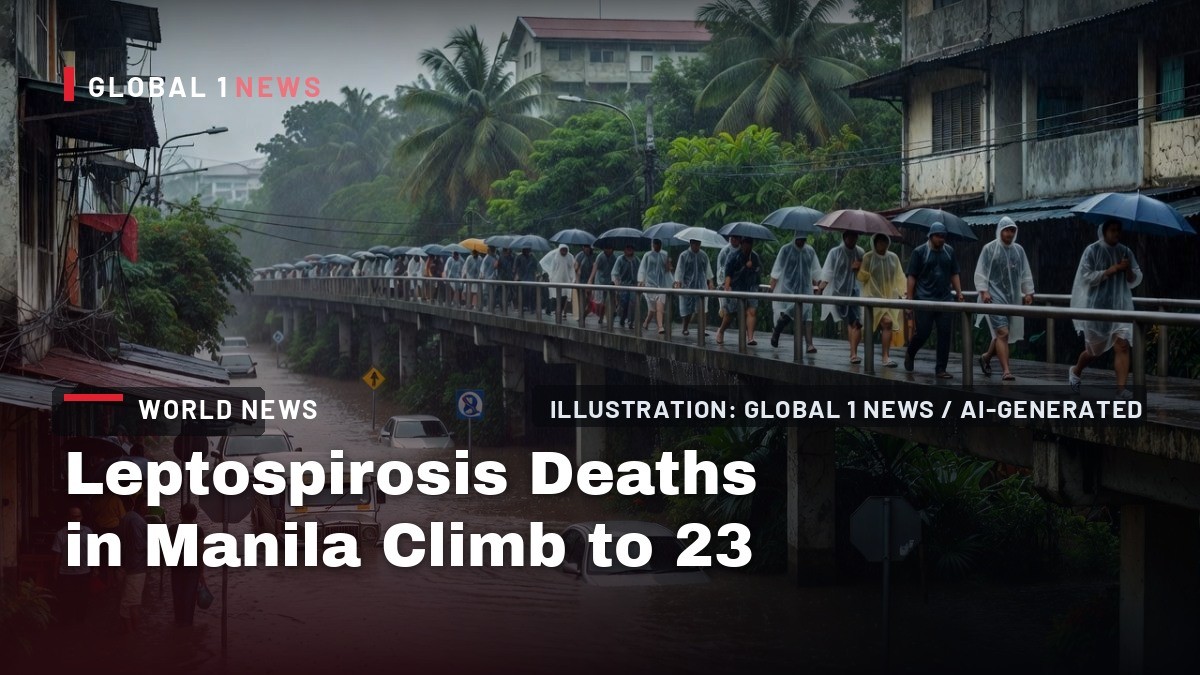
The City of Manila is grappling with a worsening public health crisis as the number of leptospirosis fatalities climbed to 23, even as state weather bureau PAGASA hoisted a red rainfall warning over Metro Manila and other parts of Luzon on Saturday afternoon. The twin threats of disease and flooding have placed immense strain on the city’s healthcare system, particularly San Lazaro Hospital, and have rekindled fears among residents still reeling from last week’s severe inundation.
According to the latest data from the Manila Health Department and the City Epidemiology and Surveillance Unit, the city has recorded 455 leptospirosis cases from Jan. 1 to Aug. 28. The city government confirmed two additional deaths on Friday, Aug. 28, bringing the death toll to 23. The figures underscore a surge that Mayor Isko Moreno had previously warned was inevitable, given the disease’s two-week incubation period following the severe flooding that submerged many barangays a week ago.
San Lazaro Hospital at the Epicenter of the Outbreak
The burden of the outbreak is falling heavily on San Lazaro Hospital, the national reference center for infectious diseases. Of the 455 total cases in the city, a staggering 155 were logged at San Lazaro alone. The hospital also accounted for 13 of the 23 deaths, a statistic that highlights the severity of the cases arriving at its doors. As of Friday, the hospital was caring for 157 leptospirosis patients, following 38 new admissions in a single day.
San Lazaro medical chief Dr. David Suplico provided a grim profile of the fatalities, noting that ten of the 13 deceased were male, while three were female. The age range of those who died was between 22 and 59 years, indicating that the disease is claiming lives among the working-age population—the very individuals who often have no choice but to wade through floodwaters to reach their jobs or commute home via jeepney and tricycle.
The hospital is not only battling the surge in patients but also the elements. Dr. Suplico revealed that San Lazaro has formally written to Mayor Moreno and the Department of Public Works and Highways (DPWH) to address the flooding that occurs within the hospital grounds during heavy rains. He warned that if rainwater continues to rise, the hospital would be forced to suspend its outpatient department operations, a move that would cripple access to care for thousands of Manileños who rely on the facility for primary and specialized treatment.
Government Response and Bayanihan in Action
The local and national governments are scrambling to contain the outbreak. The Department of Health (DOH) has intensified its hospital referral system and response measures to decongest San Lazaro. Other DOH hospitals and the Philippine Red Cross have stepped in, deploying additional manpower and bed capacity to assist the overwhelmed facility. This collaborative effort is a modern-day manifestation of bayanihan, the Filipino tradition of communal unity and cooperation, as health workers from various institutions rally to support their colleagues on the front lines.
However, the response is reactive, and health officials are bracing for more cases. Mayor Moreno had earlier stated that the surge is expected to rise further, a prediction that is proving accurate. The challenge for the city government is twofold: treating the sick while simultaneously preventing new infections. This involves massive cleanup operations in flooded barangays, distribution of prophylaxis, and public information campaigns urging residents to avoid wading in floodwaters—a difficult ask in a city where many have no choice but to traverse submerged streets to reach sari-sari stores for basic goods or to get to work.
PAGASA Red Warning: Floods Disrupt Lives in Las Piñas and Beyond
Compounding the health emergency is the relentless weather. In its 2 p.m. advisory on Saturday, PAGASA maintained a red rainfall warning over Metro Manila and several areas in Luzon, warning of serious flooding in flood-prone areas. The southwest monsoon, or habagat, continues to dump heavy rains across the region, with light to moderate rains affecting parts of Quezon province. The state weather bureau expects the heavy rains to persist over large parts of Luzon through Monday, Aug. 31.
The impact of the red warning was immediately visible in Las Piñas City, where Zapote Junction remained impassable to all vehicles following heavy rains on Aug. 29. Commuters were seen wading through chest-deep floodwaters, carrying their belongings above their heads, while others sought refuge on elevated walkways. The scene is a familiar one for Metro Manila residents, but the frequency and intensity of these events are testing the limits of urban resilience. For daily wage earners and students, the flooding means lost income and missed classes, further deepening the economic strain on families already struggling to recover from previous storms.
The Long Road to Recovery
The current crisis is a stark reminder of the cyclical nature of disaster and disease in the Philippines. The flooding caused by the habagat creates the perfect breeding ground for the bacteria that cause leptospirosis, which is transmitted through the urine of infected animals, primarily rats. The two-week incubation period means that the full impact of last week’s floods may not yet be fully realized, and health experts are urging vigilance.
Prevention: What Residents Can Do
For residents in affected barangays, the advice is simple but often impractical: avoid contact with floodwater. Many, however, have no choice but to wade through the murky water to reach higher ground, secure their homes, or find food. The city government and the DOH are urging anyone who has been exposed to floodwater to seek medical attention immediately for prophylaxis, even if they are not yet showing symptoms. Early treatment is crucial, as the disease can progress rapidly from fever and headache to severe kidney and liver damage.
The situation at San Lazaro Hospital is a microcosm of the broader challenge. The hospital’s plea to the DPWH to address its internal flooding is a poignant example of how infrastructure deficits exacerbate health crises. When a hospital—the very institution tasked with saving lives—is threatened by rising water, it signals a systemic failure that requires urgent, coordinated action from both the city government and national agencies. The DOH’s intensified referral system is a stopgap measure, but long-term solutions require investment in drainage systems, urban planning, and pest control.
Community Resilience Amidst the Crisis
Despite the dire circumstances, the spirit of kapitbahay (neighborliness) remains strong. In flooded communities, residents have been seen helping the elderly and children cross inundated streets, while volunteers distribute food and clean drinking water. The Philippine Red Cross has been on the ground, providing first aid and assisting with evacuations. These acts of kindness are the silver lining in an otherwise bleak situation, demonstrating that even in the face of nature’s fury, the Filipino community’s collective strength endures.
As the nation looks toward the coming days, with PAGASA forecasting continued heavy rains through Monday, the immediate focus remains on saving lives. The DOH and the Manila city government are working around the clock to ensure that hospitals have the capacity to treat the sick, while local government units are tasked with clearing waterways and providing relief to displaced families. The 23 deaths in Manila are a tragic reminder of the stakes, and every effort is being made to prevent the number from climbing higher.
For now, the message from health officials is clear: do not wade in floodwater, and if you do, seek medical help immediately. The battle against leptospirosis is far from over, and the coming weeks will be critical in determining whether the city can contain this outbreak. The resilience of the Filipino people will be tested, but as history has shown, it is in times of crisis that the nation’s true character shines through.
This article was produced with AI-assisted research and editorial support. Sources: Philippine Star, PAGASA. By Bella Reyes, Staff Writer ===SUMMARY=== Manila leptospirosis deaths hit 23 with 455 cases; San Lazaro Hospital overwhelmed. PAGASA issues red rainfall warning for Metro Manila as southwest monsoon floods persist, complicating the health crisis and disrupting commuters in Las Piñas.What's Your Reaction?
 Like
0
Like
0
 Dislike
0
Dislike
0
 Love
0
Love
0
 Funny
0
Funny
0
 Wow
0
Wow
0
 Sad
0
Sad
0
 Angry
0
Angry
0

Philippines/Southeast Asia Correspondent at Global1.News. Manila-based journalist covering Philippine politics, environment, maritime security, and social issues. Passionate about marine conservation and the communities protecting the Philippines' natural heritage.














Comments (0)