
Jeju Probe Deepens: DNA Discovery Adds New Questions to South Korea's Missing Persons Scandal
The scandal enveloping the Jeju Provincial Police has taken a deeply unsettling turn. What began as an appalling case of administrative negligence—the alleged falsification of missing person reports—has now expanded into a probe involving forensic evidence and questions about the individual conduct of the officer at the center of the storm.
The scandal enveloping the Jeju Provincial Police has taken a deeply unsettling turn. What began as an appalling case of administrative negligence—the alleged falsification of missing person reports—has now expanded into a probe involving forensic evidence and questions about the individual conduct of the officer at the center of the storm. The discovery of Sergeant Bu's DNA in a women's restroom at a police station has transformed a story about systemic failure into a broader crisis of institutional integrity, forcing a nationwide reckoning within South Korea's National Police Agency (NPA).
Jeju Probe Deepens: DNA Discovery Adds New Questions to South Korea's Missing Persons Scandal
Seoul, South Korea – August 29, 2026 — The discovery of Sergeant Bu's DNA in a women's restroom at a police station has transformed a story about systemic failure into a broader crisis of institutional integrity. As the public grapples with the revelation that four bodies were discovered on the island within a 72-hour window in late August, the convergence of bureaucratic dereliction and alleged personal misconduct has ignited a political firestorm, prompting an unprecedented review of hundreds of thousands of closed cases and a direct intervention by the President of the Republic.
The Forensic Twist: A Restroom Encounter and a Sergeant's Explanation
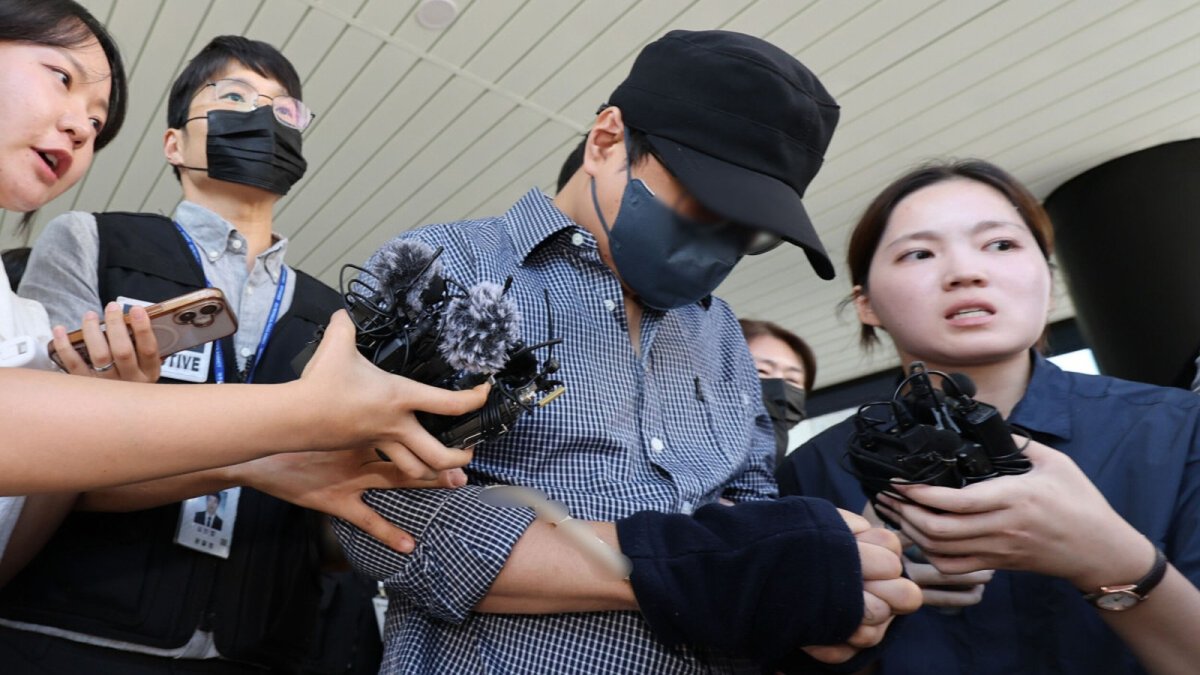
The most recent development involves a forensic examination that reportedly linked Sergeant Bu's DNA to handprints found in a women's restroom at the Jeju Seobu (Western) Police Station. According to reports from Yonhap and Korea JoongAng Daily, the incident in question dates back to July 22, when another officer encountered Bu exiting the facility. A subsequent forensic sweep uncovered handprints near the restroom ceiling and above a door frame; DNA extracted from these prints has been matched to the sergeant.
Bu has been booked on suspicion of entering a public place for sexual purposes, a violation of the Act on Special Cases Concerning the Punishment of Sexual Crimes. His defense, however, is as peculiar as the allegation itself. The sergeant has claimed that a lack of toilet paper in the men's restroom prompted him to use the women's facility, and he has denied any sexual motive, attributing the handprints to a stumble that caused him to brace himself against the wall. The explanation has done little to quell public outrage, particularly given that Bu was already suspended on August 11 over separate allegations involving a sex crime.

This forensic detail, while salacious, is critical for understanding the depth of the institutional failure. It suggests that the officer entrusted with the welfare of vulnerable citizens was not merely incompetent but potentially predatory. For a police force already under siege for its handling of missing persons, this revelation has shattered any remaining veneer of professionalism. The case underscores a dual failure: a systemic breakdown in investigative protocols and a failure to vet the character of those wielding significant state power.
The Human Toll: Jang Mi-ran and the Fabricated Reassurances
The scandal's origin lies in the tragic case of Jang Mi-ran, a 37-year-old woman who disappeared in May 2026. Her boyfriend filed a missing person report on May 15, but Sergeant Bu allegedly closed the case without ever confirming her whereabouts. In a particularly cruel act of deception, Bu reportedly told the boyfriend that he had spoken with Jang by phone and that she did not wish to communicate with him—a fabrication that prevented a timely search.
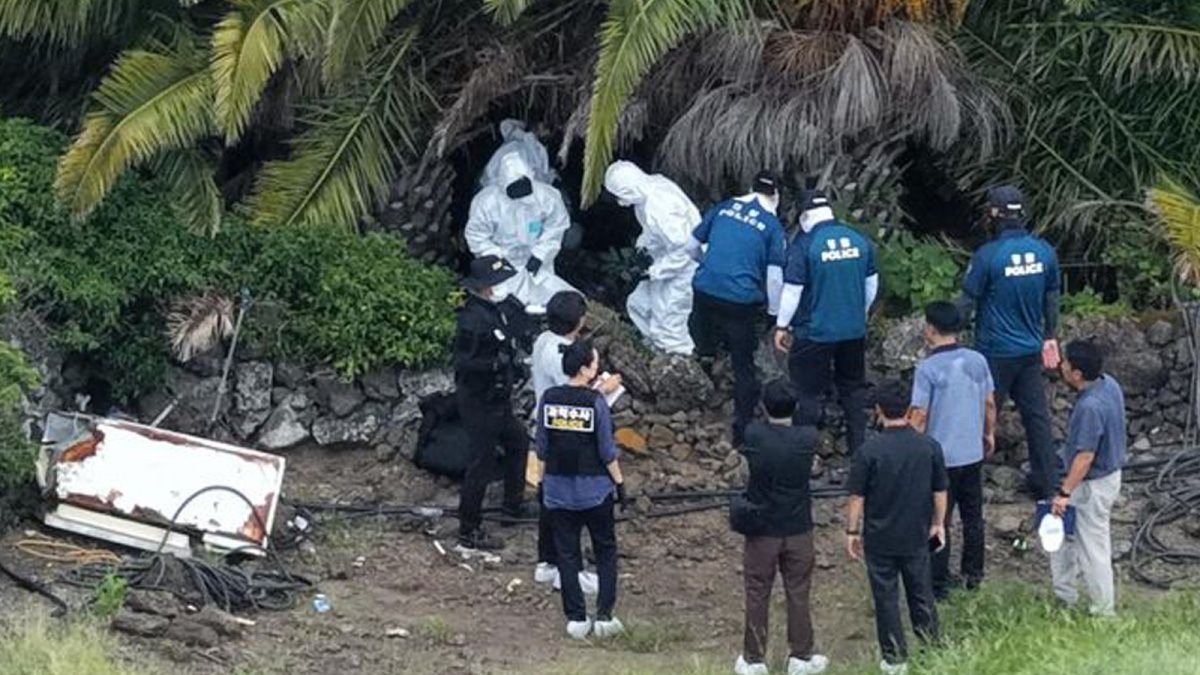
Jang's body was discovered on Monday, August 24, at approximately 10:46 a.m. in a palm tree grove in Hallim-eup, Jeju City. The location was a mere 500 meters from where she had been staying. The discovery came 101 days after the initial report was filed. While police have stated that the presumed cause of death was hanging, with no immediate signs of foul play, the identity is pending confirmation by the National Forensic Service. The fact that her remains lay undiscovered for over three months, despite a formal police report, represents a catastrophic failure of basic police work.
The case of a man in his 60s from Jeju City paints an equally grim picture. He went missing on June 28, and his body was found on Saturday, August 22. Bu allegedly told the family that the man had been found safe but did not wish to disclose his location. The victim's son, speaking to reporters, articulated the profound betrayal felt by the family: "We believed the police when they said my father was safe and waited, but after 51 days, what returned was his body." This quote encapsulates the human cost of the alleged falsification—a family robbed of the chance to search, to hope, or to grieve properly.
Systemic Negligence: The 298 Cases and a Nationwide Review
The scope of the problem extends far beyond these two cases. Jeju police have announced they are reviewing all missing person cases handled by Bu since he joined the missing persons team at the Jeju Seobu Police Station in March of last year—a staggering total of approximately 298 cases. The question of how many of these were closed with the same reckless disregard for human life is now the subject of an urgent internal audit.
Recognizing that this is not an isolated incident but a potential systemic rot, the National Police Agency has launched a comprehensive review of approximately 310,000 missing person cases closed over the past three years nationwide. This review, scheduled for completion by November, represents one of the largest administrative audits in the agency's history. Provincial and metropolitan police agencies are now mandated to review cases closed by their stations weekly and are authorized to order reinvestigations when necessary. This move signals that the NPA is treating the Jeju scandal as a potential indicator of widespread malpractice, rather than an anomaly.
The administrative fallout has been swift. Four officers within Bu's chain of command have been placed on administrative leave, and the entire chain of command at the Jeju Seobu Police Station has been placed on standby duty. This suggests that the failure was not merely one of individual action but of supervisory oversight—a culture where closing a case was prioritized over solving it.
Political Earthquake: Presidential Intervention and the Question of Police Power
The political ramifications have reached the highest levels of the South Korean government. Acting NPA Commissioner General Yoo Jae-sung offered a formal apology for "serious flaws" in the response during a National Assembly Public Administration and Security Committee meeting on Monday, August 24. The Interior Minister has also issued an apology, acknowledging the gravity of the mishandling.
More significantly, President Lee Jae-myung has intervened directly. At a Cabinet meeting on Tuesday, August 25, the President ordered sweeping police reform, stating that the breakdown in discipline and irresponsibility in public safety matters had become serious problems. In a pointed remark that has dominated headlines, President Lee questioned whether the police—which he described as likely the most powerful of all state institutions—deserved that scale of authority. This rhetorical challenge from the presidential office signals a potential shift in the balance of power between the executive and the police, a relationship that has been fraught with tension in recent Korean political history.
This is not merely a matter of administrative discipline; it is a fundamental question about the legitimacy of state power. In a democracy, the police derive their authority from the consent of the governed. When that trust is broken—when the public believes that the police can falsify records, deceive grieving families, and potentially engage in sexual misconduct with impunity—the very foundation of that consent is eroded. President Lee's framing of the issue as a question of whether the police "deserve" their power is a direct appeal to this constitutional anxiety.
Institutional Accountability and the Road to Reform
The Jeju scandal presents a critical juncture for South Korea's law enforcement. The NPA's decision to review 310,000 cases is a tacit admission that the problem may be pervasive. However, the success of this review will depend on its rigor and transparency. Will the review be conducted by internal affairs units with a vested interest in protecting the institution, or will it involve external oversight? The President's call for reform suggests that the latter may be necessary to restore public confidence.
Furthermore, the case highlights the need for a cultural shift within the police force. The alleged actions of Sergeant Bu—falsifying records, lying to families, and the bizarre restroom incident—point to a breakdown in the ethical standards expected of law enforcement. Reform must go beyond procedural changes to address the underlying culture of impunity that may allow such behavior to flourish. This includes robust whistleblower protections, independent oversight mechanisms, and a clear, enforceable code of conduct.
For the families of the missing on Jeju, the reforms are cold comfort. They have lost loved ones, and their trust in the institutions meant to protect them has been shattered. The island, known as South Korea's "honeymoon island" and a major tourist destination, now carries the somber distinction of being the epicenter of a national policing crisis. The coming months will be crucial in determining whether the NPA can rebuild its reputation or whether this scandal marks a permanent erosion of public faith in one of the state's most powerful institutions.
The investigation into Sergeant Bu and the broader review of closed cases are ongoing. The full extent of the damage—both to the families involved and to the integrity of the South Korean police—remains to be seen. What is clear is that the era of unchecked police discretion in missing person cases has come to an abrupt and necessary end.
By Prof. David Park, Staff Writer
This article was produced with AI-assisted research and editorial support. Sources: Yonhap News Agency, The Korea Times, Korea JoongAng Daily, The Chosun Ilbo, Gutzy Asia, and KOREA NOW (YouTube).
What's Your Reaction?
 Like
0
Like
0
 Dislike
0
Dislike
0
 Love
0
Love
0
 Funny
0
Funny
0
 Wow
0
Wow
0
 Sad
0
Sad
0
 Angry
0
Angry
0

East Asia/Technology Correspondent at Global1.News. Seoul-based voice covering Korean politics, technology, business, and culture. Analyzes how technology and geopolitics intersect across East Asia.















Comments (0)