
The Golden Voice Falls Silent: Salif Keita Cancels South Africa Shows, Citing Xenophobic Violence
The news landed like a thunderclap across the African music world this week. Salif Keïta, the 77-year-old Malian maestro known as the "Golden Voice of Africa," has cancelled his scheduled concerts at South Africa's Macufe festival in Free State province next month. His reason was not a scheduling conflict or a health issue. It was a matter of conscience.
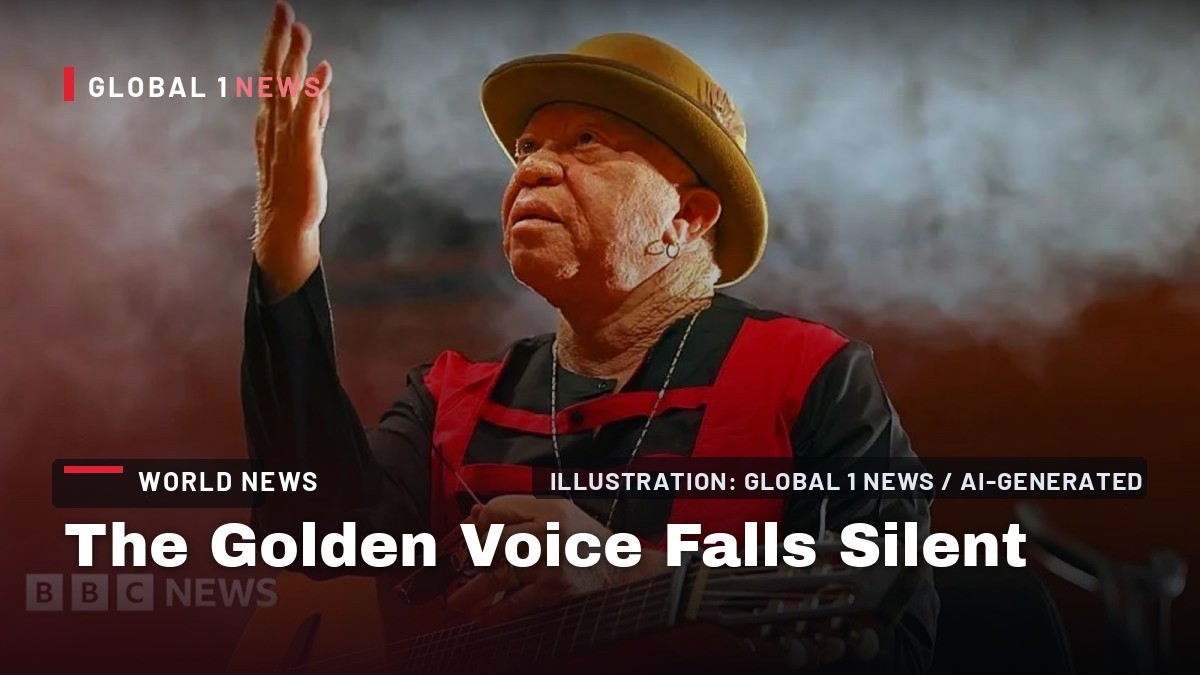
The Golden Voice Falls Silent: Salif Keita Cancels South Africa Shows, Citing Xenophobic Violence
The news landed like a thunderclap across the African music world this week. Salif Keïta, the 77-year-old Malian maestro known as the "Golden Voice of Africa," has cancelled his scheduled concerts at South Africa's Macufe festival in Free State province next month. His reason was not a scheduling conflict or a health issue. It was a matter of conscience. In a public statement, Keïta said he could not "ignore the reports of xenophobic violence against our African brothers and sisters," adding that the attacks did not "match the South Africa I know."
For those of us who grew up with his music echoing from Dakar to Bamako, this is more than a headline. Keïta is not just a musician; he is a living monument of pan-African pride, a man whose voice carried the hopes of a continent long before the term "Afrobeats" entered the global lexicon. When he speaks, we listen. And when he cancels a tour, we must ask why.
A Rejection of Hate, Not a Rejection of South Africa
Keïta was careful to frame his decision with the nuance that has defined his five-decade career. He insisted that cancelling the appearance was "a rejection of hate" rather than a rejection of South Africans, leaving the door open for a return at some point. His words carry the weight of a man who has seen the best and worst of humanity. "When I see migrants attacked, I do not see 'politics'. I see people looking for work, safety, and dignity," he said. This is not the language of a man turning his back on a nation. It is the language of a man turning his back on a behaviour. The distinction matters. South Africa remains Africa's wealthiest nation, a beacon of economic opportunity that has long drawn migrants from across the continent. But the current wave of anti-migrant sentiment, fuelled by protests demanding that undocumented migrants leave the country, has created a climate of fear. The latest unofficial deadline set by protest groups is 30 September, and the pressure is mounting. The Free State's culture department responded with disappointment, saying it "regrets the decision taken by the renowned musician." It emphasised that the Macufe festival was a celebration of African unity. That is precisely the point. When a festival meant to celebrate African unity loses its headline act because of xenophobic violence, the symbolism is impossible to ignore.The Human Cost Behind the Headlines
While Keïta's cancellation has captured international attention, the real story lies in the daily struggles of ordinary people. This week, the first group of 173 Tanzanians returned from South Africa as part of a voluntary repatriation programme. For some, the flight home from Durban—a city that has seen some of the biggest protests—marked the end of decades spent in South Africa. Abdul Idi, who went to South Africa in 2006 hoping to build a better life, said he was grateful to have returned safely after what he described as difficult and dangerous circumstances. "Foreigners are not wanted there," he said on arrival at Dar es Salaam's international airport on Wednesday night. His words are a stark reminder that behind the political rhetoric and protest chants, there are real families, real dreams, and real lives being uprooted. Another returnee, Rashid Ramadhan, spent 30 years in South Africa. The 53-year-old explained how he and others had been forced out of their accommodation in Durban and had been living outside for the past two months, with their jobs gone and life becoming increasingly difficult. Thirty years. That is not a short visit; that is a lifetime. To have that erased by intimidation and violence is a tragedy that should shame us all. According to a count by the AFP news agency, more than 160,000 people have left South Africa on similar repatriation schemes since May. Malawians, Zimbabweans, Zambians, Ghanaians and Nigerians are among those who have returned. These are not just statistics. They are our brothers and sisters, our neighbours, our fellow Africans.The Politics of Protest and the 30 September Deadline
The anti-migrant group March and March has announced a second wave of nationwide protests set for 30 September. Earlier this month, the group called on leaders attending the Southern African Development Community (Sadc) summit in Durban to "fetch your people." The group says its September action will be bigger and better organised than the demonstrations on 30 June, which were accompanied by violence in some areas. This is a deeply troubling development. The South African government has said it is cracking down on illegal immigration while also insisting that those who have taken the law into their own hands have been arrested. But the perception that the state is either unable or unwilling to protect foreign nationals is fuelling the crisis. The protests are not happening in a vacuum; they are a response to real pressures on public services and real concerns about crime. But the response is targeting the wrong people. Illegal immigration has become a highly contentious political issue in South Africa, with protesters accusing undocumented migrants of placing pressure on public services and being involved in crime. These are legitimate concerns that deserve serious policy debate. But when that debate descends into machete attacks and forced evictions, it ceases to be politics and becomes persecution. Keïta saw this clearly. His statement was a reminder that we cannot allow legitimate grievances to become a licence for inhumanity.A West African Perspective: The Pain of a Shared Heritage
For those of us in Senegal, Mali, and across francophone West Africa, this story hits particularly close to home. Salif Keïta is not just a Malian treasure; he is a West African icon. His music, rooted in the traditions of the Mandinka people, has always been a celebration of African identity and resilience. To see him withdraw from a South African stage is to see a piece of our shared cultural heritage being tarnished. The irony is painful. South Africa, the nation that inspired the world with its peaceful transition from apartheid to democracy, is now struggling with its own demons of exclusion. The "Rainbow Nation" that Nelson Mandela envisioned was supposed to be a model of tolerance and unity for the entire continent. Instead, we are witnessing a wave of xenophobia that threatens to undo decades of progress. This is not a South African problem alone. It is an African problem. The way we treat our fellow Africans in times of crisis says everything about who we are as a people. When Ghana's government rejected a donation of about $1.7m (£1.25m) from MTN Ghana, a subsidiary of South African telecoms giant MTN Group, offered to support Ghanaians repatriated from South Africa, it sent a powerful message. The foreign ministry said the government was committed to funding the evacuation and reintegration of its repatriated citizens. That is dignity. That is self-respect. And it is a standard we should all aspire to.The Road Ahead: Solidarity, Not Separation
Keïta's decision to cancel his concerts is a wake-up call. It is a reminder that the bonds of African unity are not abstract concepts; they are lived realities that must be nurtured and protected. The "Golden Voice of Africa" has used his platform to speak truth to power, and we must listen. The South African government has a difficult task ahead. It must address legitimate concerns about illegal immigration while also protecting the rights of all people within its borders. It must crack down on those who take the law into their own hands while also addressing the underlying social and economic pressures that fuel resentment. This is not an impossible task, but it requires political will and moral clarity. For the rest of us, the lesson is simpler. We must stand with our African brothers and sisters, whether they are in Durban, Dakar, or Dar es Salaam. We must reject hate in all its forms, just as Salif Keïta has done. And we must remember that the music of Africa has always been a music of hope, not of fear. As the 30 September deadline approaches, the world will be watching South Africa. Will it choose the path of Mandela, or the path of division? Salif Keïta has made his choice. He has chosen dignity, solidarity, and the belief that the South Africa he knows—the South Africa of warmth and resilience—will eventually prevail. Let us hope he is right. And let us hope that when he returns to that stage, it will be to a nation that has rediscovered its better angels. By Amara Diop, Staff Writer This article was produced with AI-assisted research and editorial support. Sources: BBC AfricaWhat's Your Reaction?
 Like
0
Like
0
 Dislike
0
Dislike
0
 Love
0
Love
0
 Funny
0
Funny
0
 Wow
0
Wow
0
 Sad
0
Sad
0
 Angry
0
Angry
0
Amara Diop
West Africa/Sahel Correspondent at Global1.News. Dakar-based journalist covering politics, security, climate, and development across Francophone and Anglophone West Africa. Tells the stories of a region undergoing profound transformation.










Comments (0)