
Landslide at Unlicensed Colombian Gold Mine Kills 13
The earth gave way on Wednesday afternoon in Policarpa, a municipality in the southern Colombian province of Nariño, and with it, the lives of at least 13 people who were digging for gold in an open-air pit.
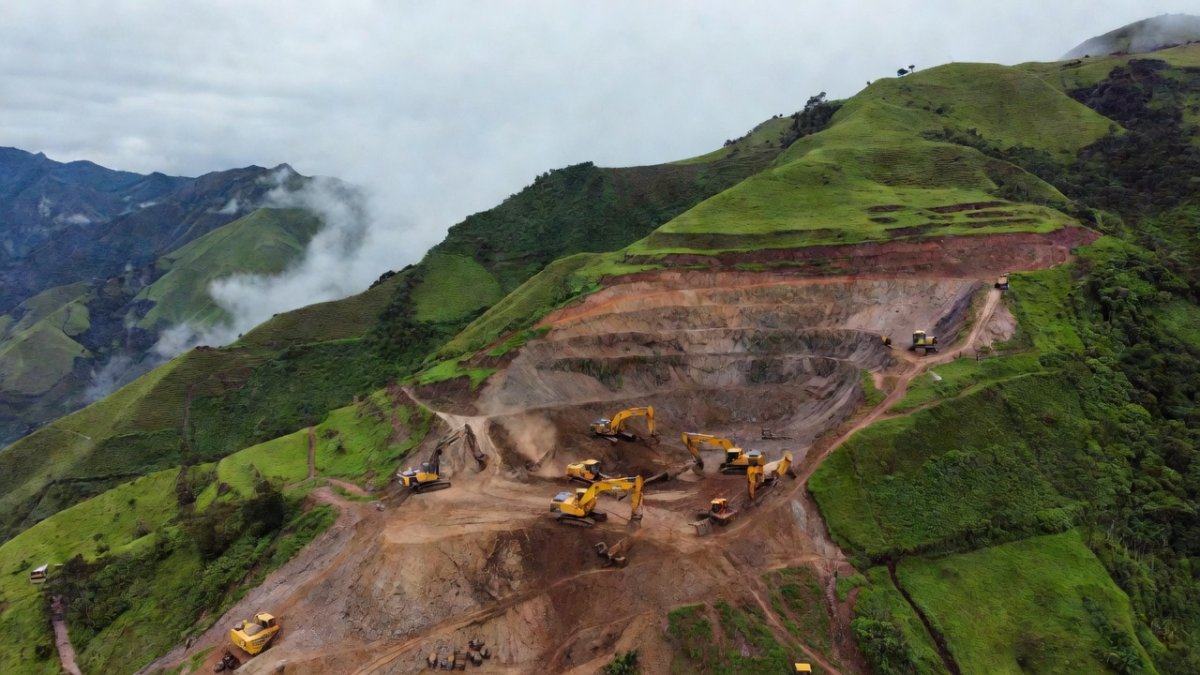
The earth gave way on Wednesday afternoon in Policarpa, a municipality in the southern Colombian province of Nariño, and with it, the lives of at least 13 people who were digging for gold in an open-air pit. The victims, workers at an unlicensed artisanal mine, were trapped beneath tons of mud and rock in a disaster that local officials say was caused by the very mining work itself. Witnesses at the scene described a sound like an explosion ripping through the air moments before the collapse, a detail that remains unconfirmed but underscores the volatile conditions of a trade that operates entirely outside the law. As emergency crews used diggers to pull bodies from the rubble, the grim reality of Colombia's vast informal mining economy—and the human cost it exacts on the country's most vulnerable communities—has once again been thrust into the national spotlight.
A Community in Mourning: The Quillacinga Families of Policarpa
The dead are not just statistics in a government report; they are fathers, brothers, and sons from the surrounding countryside. According to witnesses, four of the 13 victims belonged to a single indigenous family, a devastating blow to a community that has long relied on the mine for its survival. Residents of the area told local media that some 50 people, most of them members of the Quillacinga indigenous group, regularly worked the site near Policarpa. The Quillacinga, an indigenous people whose ancestral territories span the highlands and valleys of Nariño, have been pushed into informal mining as traditional agricultural lands have become increasingly unviable or been claimed by larger economic interests.
For these families, the mine is not a choice but a necessity. The gold they extract, often by hand with picks, shovels, and rudimentary sluices, is sold to middlemen who feed a global supply chain that rarely asks questions about origin or safety. The loss of four members of one family is a catastrophic event that will reverberate through the community for generations, leaving widows, orphans, and a void in the social fabric that no government compensation can fill. The tragedy is compounded by the fact that this was not an unforeseeable act of God but, as a local official stated, a direct consequence of the mining work itself—a collapse triggered by the very act of digging deeper into unstable ground.
The Scale of Colombia's Informal Mining Crisis
This disaster in Policarpa is not an isolated incident but a symptom of a systemic crisis that affects hundreds of thousands of Colombians. Estimates suggest that between 200,000 and 400,000 people are engaged in artisanal mining across the country, a shadow economy that operates without official oversight, safety regulations, or environmental controls. These miners, known locally as barequeros or chatarreros, work in conditions that would be unthinkable in any formalized industry, often descending into unstable pits with no protective equipment, no escape routes, and no emergency protocols.
The numbers are staggering, but they only tell part of the story. Behind each figure is a family that depends on the income from selling precious metals and stones to make ends meet. In regions like Nariño, where state presence is weak and legitimate economic opportunities are scarce, artisanal mining is often the only source of cash income available to rural communities. The government in Bogotá has long talked about formalizing this sector, but progress has been slow, and the gap between policy and reality on the ground remains vast. For the miners of Policarpa, formalization is not an abstract concept; it is the difference between working in a regulated environment with safety standards and working in a death trap where a single misstep can bury you alive.
Explosion or Collapse? The Unanswered Questions
In the immediate aftermath of the disaster, a critical question has emerged: what exactly caused the landslide? Witnesses at the scene reported hearing what they described as an explosion on Wednesday afternoon, moments before the workers below were trapped. This account has fueled speculation that the collapse may have been triggered by the use of explosives, a common but highly dangerous practice in unlicensed mines where workers often use illegal blasting agents to break up rock. However, a local official has pushed back against this theory, stating that the deadly landslide was caused by the mining work itself, likely a structural failure of the pit walls due to over-digging or unstable geological conditions.
The distinction matters, not just for the investigation but for understanding the broader risks of informal mining. If explosives were involved, it would point to a level of recklessness that goes beyond mere negligence, suggesting a pattern of behavior that prioritizes speed and yield over human life. If, on the other hand, the collapse was a simple structural failure, it highlights the inherent instability of unregulated mining operations that lack the engineering expertise to assess ground conditions. Either way, the lack of official oversight is the root cause. In a licensed mine, geologists would have assessed the site, engineers would have designed support structures, and inspectors would have enforced safety protocols. In Policarpa, none of that existed.
Emergency Response and the Grim Task of Recovery
In the hours following the landslide, emergency workers descended on the remote site, facing treacherous conditions as they worked to retrieve the bodies of the trapped miners. The use of diggers was essential, as the volume of earth and rock that collapsed made manual recovery impossible. The operation was a race against time, not to save lives—the chances of survival were slim from the outset—but to give the families of the victims the dignity of a proper burial. For the seven injured workers who were pulled from the rubble, the physical wounds may heal, but the psychological scars of witnessing their colleagues and family members perish will likely last a lifetime.
The response also highlighted the challenges of providing emergency services in Colombia's rural and mountainous regions. Policarpa, located in the rugged terrain of Nariño, is not easily accessible, and the arrival of heavy machinery and medical personnel was delayed by the difficult geography. This is a recurring theme in Colombia's disaster response: the state's capacity to react is often weakest in the very areas where the risks are highest. The miners who lost their lives on Wednesday were not just victims of a geological event; they were victims of a system that has failed to extend basic protections to its most marginalized citizens.
A Pattern of Tragedy: Unlicensed Mines and Deadly Accidents
Deadly accidents are not uncommon in Colombia, especially at unlicensed mines where locals dig for precious metals without any official oversight. The country has a long and tragic history of mining disasters, from coal mine explosions to gold mine collapses, and the vast majority of these incidents occur in the informal sector. In recent years, there have been multiple high-profile tragedies, including a gas explosion that killed nine coal miners and a separate incident where rescuers spent days inching towards trapped miners in a desperate bid to reach them. Each disaster prompts calls for reform, but the underlying conditions that make these tragedies possible remain largely unchanged.
The pattern is clear: unlicensed mines are a deadly gamble, and the odds are stacked against the workers. Without regulation, there is no incentive for mine operators to invest in safety equipment, training, or structural assessments. The miners, many of whom are indigenous or from other marginalized groups, are caught in a cycle of poverty that forces them to accept these risks. They know the dangers, but they also know that the alternative—unemployment, hunger, and destitution—is often worse. This is the brutal calculus of survival in rural Colombia, and it is a calculus that the state has so far failed to address with any meaningful urgency.
Environmental and Labor Justice in Nariño and Beyond
The disaster in Policarpa is not just a labor issue; it is an environmental and social justice issue that speaks to the broader challenges facing Latin America. Unlicensed mining is a major driver of deforestation, water pollution, and soil degradation across the region, from the Amazon basin to the Andean highlands. The use of mercury and cyanide in gold extraction poisons rivers and streams, contaminating water supplies for communities downstream and devastating local ecosystems. In Nariño, a province known for its biodiversity and indigenous heritage, the environmental toll of informal mining is particularly acute, threatening not only the health of the land but the cultural survival of the people who depend on it.
For the Quillacinga and other indigenous groups, the fight for environmental justice is inseparable from the fight for labor rights and economic self-determination. The pressure to engage in mining is often a direct result of land dispossession, economic marginalization, and the encroachment of large-scale extractive industries that leave little room for traditional livelihoods. The tragedy in Policarpa is a stark reminder that the true cost of gold is not measured in dollars but in lives, communities, and ecosystems destroyed in the pursuit of a precious metal that ends up in jewelry stores and electronics far from the scene of the devastation.
As the families of the victims prepare to bury their dead, the questions that remain are uncomfortable and urgent. Who is responsible for this tragedy? What will be done to prevent the next one? And how long will Colombia continue to allow its most vulnerable citizens to risk their lives in a shadow economy that benefits everyone except the miners themselves? The answers are not forthcoming, but the people of Policarpa, and the hundreds of thousands of informal miners across the country, deserve more than empty promises. They deserve a system that values their lives as much as the gold they extract from the earth.
This article was produced with AI-assisted research and editorial support. Sources: BBC News.
By Elena Vasquez, Staff Writer
What's Your Reaction?
 Like
0
Like
0
 Dislike
0
Dislike
0
 Love
0
Love
0
 Funny
0
Funny
0
 Wow
0
Wow
0
 Sad
0
Sad
0
 Angry
0
Angry
0

Latin America Correspondent at Global1.News. Based in Mexico City, covering politics, economics, energy, and culture across the region. Brings an on-the-ground perspective to stories spanning from the Rio Grande to Patagonia.














Comments (0)