
Hamas Uses Gaza Hospital for Torture as Support Plummets, IDF Says
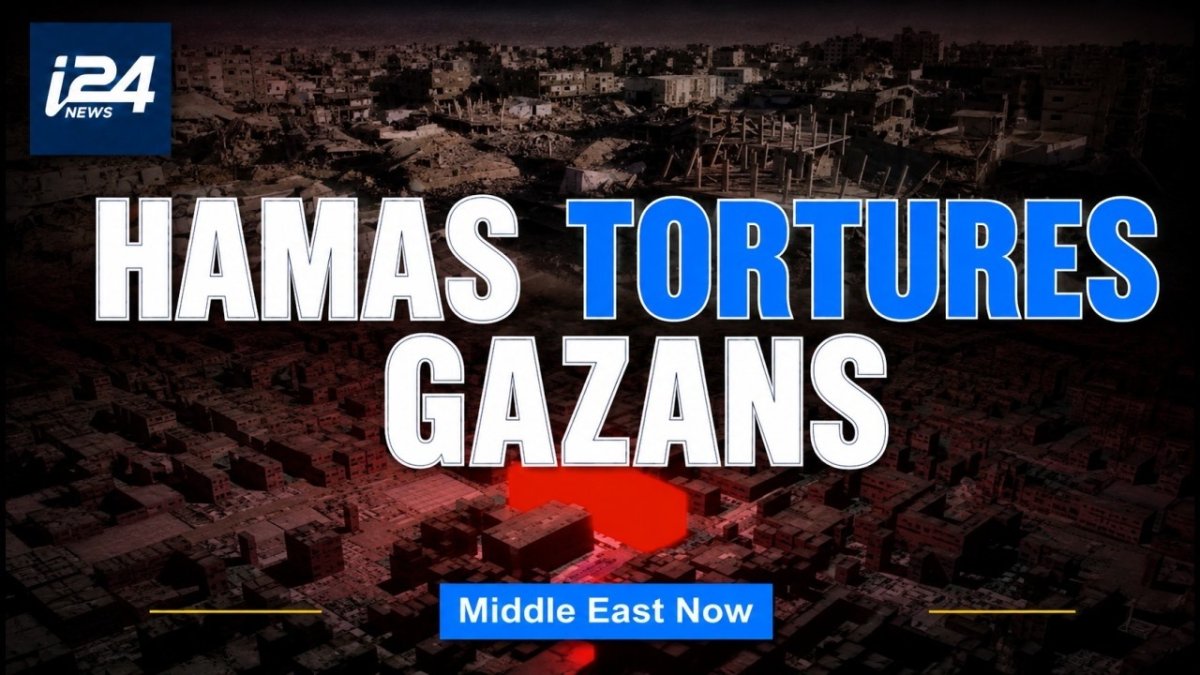
In a recent i24NEWS English report, the IDF and Shin Bet revealed that Hamas is using the Nasser Hospital in Khan Younis, southern Gaza, as a center for interrogations and torture of Palestinian residents, a tactic aimed at crushing dissent amid what Israeli intelligence describes as an "erosion in support" for the group.
In a recent i24NEWS English report, the IDF and Shin Bet revealed that Hamas is using the Nasser Hospital in Khan Younis, southern Gaza, as a center for interrogations and torture of Palestinian residents, a tactic aimed at crushing dissent amid what Israeli intelligence describes as an "erosion in support" for the group. The joint military statement, published on Thursday, marks a significant escalation in the public disclosure of Hamas's operational use of civilian infrastructure, and it comes as new polling data shows a dramatic decline in Hamas's popularity among Palestinians. The revelations raise urgent questions about the protection of medical facilities in wartime, the future of governance in Gaza, and the viability of ongoing ceasefire negotiations mediated by Egypt and Qatar.
Hamas Uses Gaza Hospital for Torture as Support Plummets, IDF Says
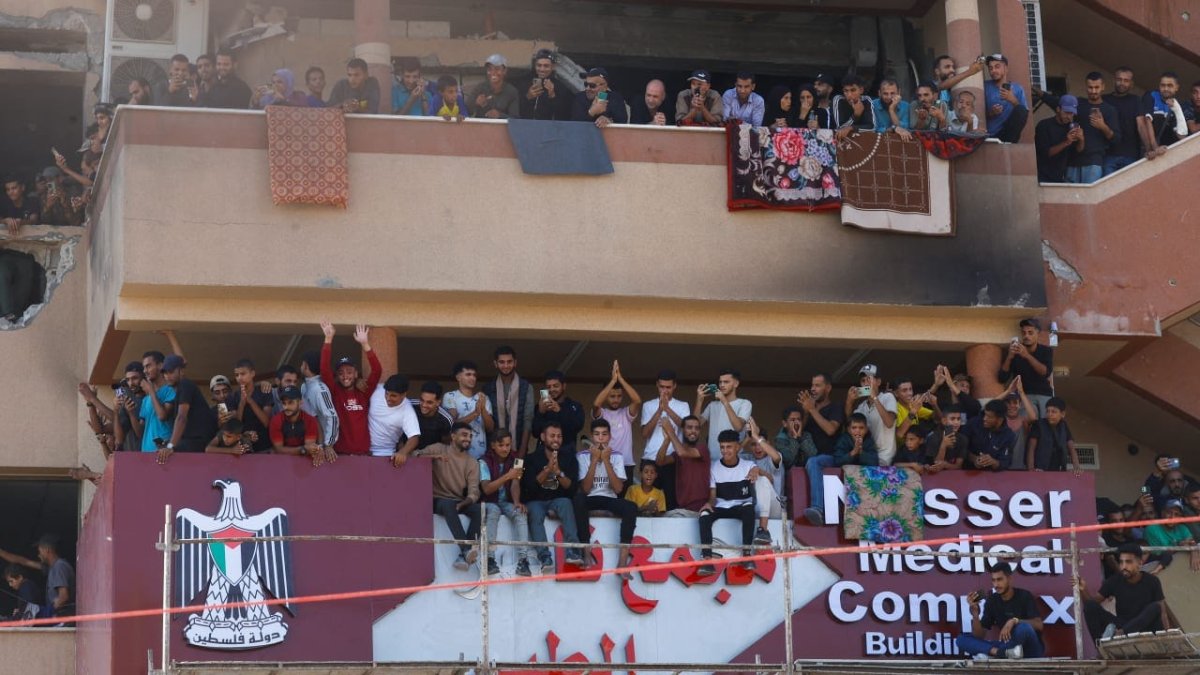
Jerusalem, Israel – August 20, 2026 — The IDF and Shin Bet confirmed on Thursday that Hamas has converted parts of the Nasser Hospital complex in Khan Younis into an interrogation and torture facility, using fear to maintain its grip on the Gaza Strip. The joint statement said Hamas has "increased the activity of its security apparatuses and attempting to impose its rule through intimidation, interrogations, and torture of residents" in response to what Israeli intelligence calls a "declining support" for the terrorist organization among Gazans. The interrogations are being conducted on the second floor of the Yassin building, located in the hospital's outpatient consultation area, according to the military's findings.
Section 1: On the Ground — What the IDF and Shin Bet Revealed
The IDF and Shin Bet detailed that Hamas's Internal Security Forces and military intelligence are jointly operating the interrogation center within the hospital compound. A second facility inside the complex, which previously served as hospital offices, then a cafeteria, and later a prayer room, has been repurposed as a dedicated Hamas interrogation hub. The military described Nasser Hospital as "a central military infrastructure" for Hamas in southern Gaza, noting that patients and medical staff regularly witness masked Hamas operatives moving through different areas of the compound, creating an atmosphere of pervasive fear that endangers both patients and medical personnel.
The military's statement emphasized that these actions constitute a direct violation of international law, which explicitly prohibits the military use of hospitals and protected medical facilities. "Hamas is afraid of losing control of the Strip, and is therefore using hospitals, schools, and other civilian facilities for its own needs and attacking them in spaces intended to serve them," the IDF and Shin Bet said. Since the start of the war, the hospital has served multiple roles for Hamas: administrative offices, weapons storage, a headquarters, and now an interrogation and torture center. In February, the military had already disclosed that the hospital, previously operated by Doctors Without Borders until their expulsion from Gaza, was being used for weapons storage and as a Hamas command post.
Section 2: Regional Context — Khan Younis and the Battle for Gaza's Loyalty
Khan Younis, the largest city in southern Gaza, has been a focal point of intense fighting since the ground offensive began in late 2023. Nasser Hospital, one of the territory's main medical facilities, has repeatedly found itself at the center of military operations. In August of last year, an Israeli airstrike on the hospital killed journalists including Reuters staff and as many as 14 others; the IDF later admitted the strike was a mistake but said it was approved due to a Hamas target being present at the location. The current revelations underscore the complex reality on the ground, where Hamas's entrenchment within civilian infrastructure has made every military decision a calculated risk.
The IDF's statement also highlighted a broader pattern: "For over two years, the IDF and the defense establishment have warned about the cynical use by terrorist organizations in Gaza of hospitals and humanitarian shelters as human shields to conceal terrorist activity." This is not a new accusation — the military has made similar claims about Al-Shifa Hospital in Gaza City and other medical facilities throughout the conflict. However, the specific detail about the interrogation center on the second floor of the Yassin building provides a concrete, verifiable example of how Hamas operates within the very institutions meant to protect civilians.
Section 3: Diplomatic and International Reactions
The revelations come at a delicate moment for ceasefire and hostage negotiations, with Egypt and Qatar serving as key mediators between Israel and Hamas. International bodies, including the United Nations and the World Health Organization, have repeatedly called for the protection of medical facilities in wartime, and the IDF's disclosure is likely to intensify scrutiny of Hamas's conduct. The military's statement was carefully worded to emphasize that Israel's actions are defensive in nature, targeting terrorist infrastructure that is deliberately embedded within civilian sites.
Meanwhile, the Palestinian political landscape is shifting. A new poll by the Palestinian Center for Policy and Survey Research (PCPSR, Public Opinion Poll No. 97, August 2026) shows Hamas support among Palestinians has fallen from 35% to 24%, now tying with Fatah at 24%. Marwan Barghouti, the imprisoned Fatah leader, emerges as the strongest potential presidential candidate, according to the poll. Analysts describe a Palestinian political landscape in transition, with Palestinians increasingly questioning whether armed struggle has delivered tangible results. The erosion of Hamas's popular support is precisely what the IDF and Shin Bet say is driving the group's intensified use of intimidation and torture.
Section 4: Analysis and What This Means for Israel's Security
For Israeli defense officials, the intelligence about Nasser Hospital serves a dual purpose: it justifies past military operations against the facility and it signals to the international community that Hamas, not Israel, is responsible for the continued suffering of Gazan civilians. The IDF's decision to release this information now, in such granular detail, suggests a strategic communications effort to preempt criticism of future operations in the area. It also reinforces the Israeli narrative that there is no "clean" way to dismantle Hamas without confronting its deliberate use of human shields.
The timing is also significant. With ceasefire talks stalled and the fate of the remaining hostages uncertain, Israel is signaling that Hamas's internal weakness is a vulnerability to be exploited. If Hamas is indeed losing support among Gazans, as the polling suggests, then the group's reliance on terror tactics to maintain control may indicate a tipping point. However, Israeli analysts caution that a weakened Hamas could also become more unpredictable, lashing out in desperate attempts to retain relevance. The Shin Bet's involvement in the intelligence gathering underscores the domestic security implications: a Hamas that is losing control in Gaza could shift its focus to attacks against Israel or to destabilizing the West Bank.
Section 5: The Human Cost — Patients, Medical Staff, and the International Legal Framework
The use of Nasser Hospital as an interrogation center places patients and medical staff in an impossible position. The IDF statement noted that "patients and medical staff regularly witness Hamas operatives, some of them masked, in different areas of the hospital compound, creating an atmosphere of fear and putting patients, doctors and medical personnel at risk." This is not merely a tactical concern; it is a humanitarian crisis within a humanitarian crisis. Medical professionals in Gaza have repeatedly reported being threatened by Hamas operatives, and the conversion of hospital spaces into security facilities only deepens the trauma experienced by civilians who have already endured nearly three years of war.
International law is unambiguous on this point: the Geneva Conventions prohibit the use of medical facilities for military purposes, and doing so strips those facilities of their protected status. The IDF's statement is a direct appeal to this legal framework, arguing that Hamas's actions have made hospitals legitimate military targets under international law. Yet the reality on the ground is far more complicated. Striking a hospital, even one used by Hamas, carries immense reputational costs for Israel, as demonstrated by the international outcry following the August 2025 strike that killed journalists. The IDF's careful documentation of Hamas's activities at Nasser Hospital is an attempt to shift the blame and to prepare the international community for the possibility of further operations in the area.
Section 6: What Comes Next — The Future of Gaza's Governance
The revelations about Nasser Hospital come at a moment of profound uncertainty for Gaza's future. The PCPSR poll showing Hamas and Fatah tied at 24% support suggests that the two-state solution's traditional political actors are both failing to capture the public's imagination. Marwan Barghouti's emergence as a leading presidential candidate, despite being imprisoned in Israel, indicates a hunger for new leadership. For Israel, the question is whether any Palestinian leadership can effectively govern Gaza without Hamas's security apparatus, and whether the international community is prepared to support a post-Hamas reconstruction effort.
The IDF and Shin Bet's statement is a clear warning that Hamas will not relinquish control voluntarily. The group's use of torture and intimidation within hospitals is a sign of desperation, but also of resilience. As ceasefire negotiations continue, with Egypt and Qatar pressing both sides for a deal, the situation at Nasser Hospital serves as a stark reminder of the stakes. For Israeli policymakers, the erosion of Hamas's popular support is an opportunity, but it is also a challenge: any post-war arrangement must address the security vacuum that Hamas's decline would create, and it must do so without further endangering the civilians of Gaza.
The coming weeks will be critical. The IDF's intelligence disclosures are likely to continue, as Israel seeks to build a case for its military operations and to shape the international narrative. But the deeper question remains unanswered: can a political solution emerge from the rubble of Gaza, or will the cycle of violence and retribution continue? For now, the patients and staff at Nasser Hospital remain caught in the crossfire, their hospital transformed into a battlefield for control over a population that is increasingly questioning the cost of resistance.
By Hannah Berg, Staff Writer
This article was produced with AI-assisted research and editorial support. Reporting is based on sources cited in the article.
What's Your Reaction?
 Like
0
Like
0
 Dislike
0
Dislike
0
 Love
0
Love
0
 Funny
0
Funny
0
 Wow
0
Wow
0
 Sad
0
Sad
0
 Angry
0
Angry
0

Israel Correspondent at Global1.News. Based in Tel Aviv, covering Israeli politics, security, technology, and society. Provides balanced, deeply-sourced reporting on one of the most closely-watched regions in the world.













Comments (0)