
South Korea's Stray Cat Reckoning Echoes Across Latin America's Islands
South Korea's stray cat debate has erupted into a national crisis, drawing global attention through Al Jazeera English reporting on July 31, 2026. The story highlights how two decades of Trap-Neuter-Release policies have failed to curb rising populations, forcing lawmakers to confront hard choices between welfare and wildlife protection.
South Korea's stray cat debate has erupted into a national crisis, drawing global attention through Al Jazeera English reporting on July 31, 2026. The story highlights how two decades of Trap-Neuter-Release policies have failed to curb rising populations, forcing lawmakers to confront hard choices between welfare and wildlife protection. This tension carries direct lessons for Latin America, where similar feral cat pressures threaten unique island ecosystems from the Galapagos to Chile's Juan Fernandez Archipelago.
South Korea's Stray Cat Reckoning Echoes Across Latin America's Islands
Seoul, South Korea — July 31, 2026 — South Korea's parliament is weighing whether two decades of Trap-Neuter-Release management has failed its growing stray cat population — a decision with direct echoes across Latin America's most fragile island ecosystems.

Two Decades of TNR, and a Population That Keeps Growing
South Korea implemented Trap-Neuter-Release programs more than twenty years ago under MAFRA oversight, yet the stray cat population now stands at roughly 700,000 with some estimates reaching one million. The ministry pursues four explicit goals: advancing animal welfare, achieving population control, reducing community conflicts, and safeguarding public health. Despite sustained efforts, numbers continue climbing because abandonment remains the root driver rather than natural reproduction alone. A citizens' petition launched by a bird-enthusiast YouTuber in July 2026 reached the National Assembly agenda in just thirteen days, according to HuffPost Korea coverage. This rapid mobilization signals deepening public frustration. Historically, authorities once culled so-called thief cats before TNR advocacy strengthened in the late 2000s. Today shelters face chronic overcrowding with few no-kill options available. The classification debate intensifies the standoff: treating cats as wild animals could streamline culling pathways, while managing them strictly as abandoned companions demands expanded infrastructure. Parliament now confronts these realities directly as the petition forces formal debate.
Behind the statistics sits a daily reality visible in every South Korean neighbourhood: volunteer caregivers, often middle-aged women derided online as “cat moms”, maintain feeding stations that critics say sustain the colonies while supporters argue the practice keeps strays fed, vaccinated and out of rubbish bins. Local governments fund TNR under MAFRA guidelines, yet the ministry’s own four goals — welfare, population control, community harmony and public health — are increasingly in tension. Welfare advocates note that neutered cats typically live only a few more years, meaning every new abandonment restarts the cycle that TNR was designed to break.
The Science of the World's Most Lethal Pet
Lepczyk et al. 2023 in Nature Communications delivered a global diet synthesis showing free-ranging cats consume 2,084 species, with 347 or 16.7 percent of conservation concern. Island diets contain roughly three times more threatened species than continental ones. Cats alone account for nine percent of all known bird species, six percent of mammals, and four percent of reptiles, with 97 percent of prey under five kilograms. Medina et al. 2011 established invasive cats as primary drivers of island vertebrate declines and extinctions worldwide. Cats have contributed to at least 63 species extinctions globally, including about 40 birds, 21 mammals, and two reptiles. In Australia feral cats drove 27 native mammal extinctions and now threaten over 120 additional species. Cats also transmit toxoplasmosis caused by Toxoplasma gondii, harming marine mammals such as dolphins and sea otters, livestock, and humans. These data points underscore why conservationists increasingly view free-ranging cats as one of the planet's most destructive invasive predators, demanding evidence-based responses beyond traditional TNR approaches.
The vulnerability is most acute on islands, where birds that evolved without mammalian predators — flightless rails, ground-nesting seabirds, burrow-nesters and small reptiles — have no natural defences against a cat’s hunting instinct. Documented casualties include New Zealand’s Lyall’s wren, driven extinct within years of a lighthouse keeper’s cat arriving on Stephens Island in the 1890s, and the Guadalupe storm-petrel in Mexico. Even small cat populations can push island endemics to local extinction with startling speed, which is why conservation scientists rank feline predation alongside habitat loss and rodent invasions among the deadliest threats to global biodiversity.
Marado: The Island That Tried Removal and Learned a Hard Lesson
Marado Island, South Korea's southernmost outpost, illustrates the complexities of intervention. The Cultural Heritage Administration removed approximately 45 stray cats between 2023 and 2024 after documented predation on the horned guillemot, a protected natural monument. Roughly 24 bird deaths were directly attributed to cats. Following removal, rat populations surged dramatically, with 133 rats exterminated in one control period and costs exceeding 100 million KRW or about 70,000 dollars. Rats themselves prey on bird eggs and chicks, creating a clear trade-one-problem-for-another outcome. This case demonstrates that partial measures without integrated planning can backfire. Authorities learned that successful management requires simultaneous control of multiple invasives rather than isolated cat removals. The episode now informs national discussions as parliament weighs broader policy shifts.
Ecologists caution that Marado’s outcome was not simply a failed cat removal. Human activity — tourism during the guillemot breeding season, rats arriving on supply boats, and decades of island modification — complicates any single-species narrative, a lesson echoed in famous cases like Marion Island in the sub-Antarctic, where cat eradication reshaped predator dynamics in unexpected ways. The 100 million won rat-control bill is now cited across Korea as proof that invasive-species management must be planned as an integrated system, not a sequence of isolated campaigns.
Latin America Is Fighting the Same Battle
Latin American islands confront identical threats. In Ecuador's Galapagos, the Floreana Ecological Restoration Project involving the Galapagos National Park Directorate, Jocotoco Foundation, and Charles Darwin Foundation eradicated both invasive rats and feral cats, enabling the return of breeding Galapagos rails absent for nearly 200 years along with recoveries in doves, lava lizards, and geckos. On Rabida Island, rodent eradication allowed flamingos to reappear after about twenty years. Chile's Juan Fernandez Archipelago, a UNESCO biosphere reserve, sees feral cats directly driving the critically endangered Juan Fernandez firecrown hummingbird toward extinction; CONAF leads management efforts for this species often ranked Chile's most threatened. Brazil's Fernando de Noronha and Mexican-Caribbean islands face parallel pressures, supported by organizations including Island Conservation and Conservacion Islas. These regional cases mirror South Korea's challenges and highlight the urgent need for coordinated, science-driven strategies across the hemisphere.
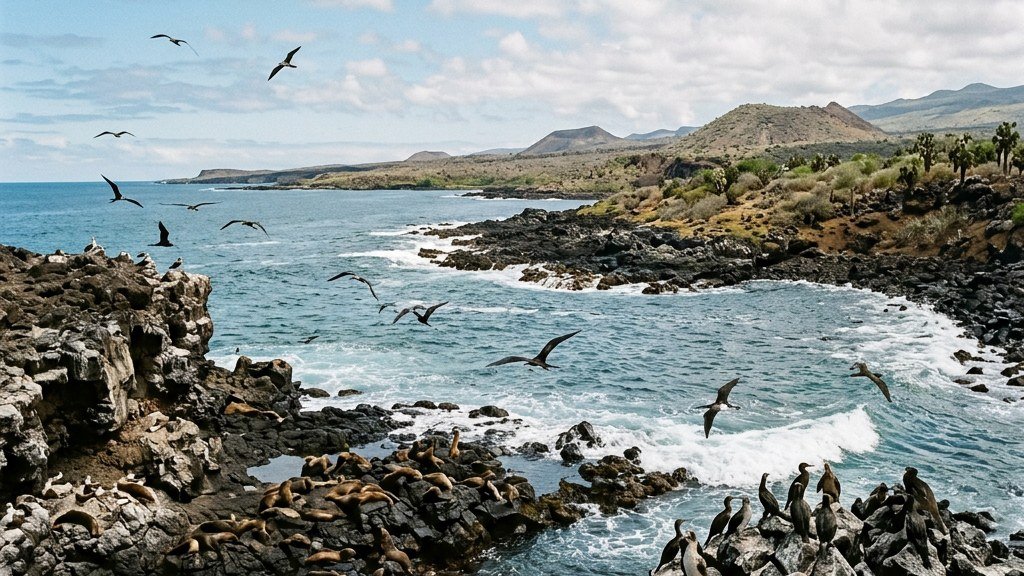
The stakes are measured in species that exist nowhere else on Earth. A widely cited tally counts 45 critically endangered birds, 22 mammals and 30 reptiles whose declines are driven primarily by feral or roaming cats — a disproportionate share of them in the Americas. The Juan Fernández firecrown, or picaflor, survives only on Chile’s Robinson Crusoe Island, where every nesting season is a fight against feline predation. Local conservationists have called the choice between protecting feral cats and protecting species found nowhere else a question of civilisation itself. Across the region, removal programmes are now paired with strict biosecurity — inspection of cargo, control of new pet introductions — because an eradicated island without prevention is simply a waiting reintroduction.
What Actually Works: Eradication Success Stories
New Zealand's Predator Free 2050 program added feral cats to national eradication targets in late 2025, with officials labeling them stone-cold killers. A single week of predation near Ohakune killed over 100 short-tailed bats, one of the country's rarest mammals. Public consultation revealed over 90 percent support, and native birds increased 71 percent in managed areas such as Wellington. Australia's Kangaroo Island Dudley Peninsula project, if successful, would create the largest feral-cat-free zone on any human-inhabited landmass. The Galapagos and Rabida successes prove that combined rat-and-cat eradications restore ecosystems rapidly. Island Conservation and regional partners demonstrate that comprehensive removal, paired with biosecurity, delivers measurable biodiversity gains. These precedents offer Latin America proven models that move beyond ineffective TNR toward lasting solutions.
New Zealand’s programme draws a hard line between feral cats and owned pets: owners are urged to desex, microchip and contain their animals, with enclosed “catios” promoted for urban households. Eradication campaigns pair trapping with detection dogs, community engagement and long-term monitoring, and the Medina review’s island data show that once predators are removed, native species can recover within a few breeding seasons. The combination of public consent — more than 90 percent support in New Zealand — and rigorous technique is what separates successful programmes from symbolic ones.
Voices From the Ground: The Welfare Counter-Argument
Animal welfare advocates reject culling as both inhumane and ineffective, instead promoting Trap-Neuter-Adopt programs, mandatory spay-neuter for adopted pets, breeder regulation, expanded no-kill shelters, and public education. They correctly identify human abandonment as the core problem rather than unchecked cat reproduction. In South Korea, shelters already struggle with overcrowding, and few true no-kill facilities exist. Welfare groups argue that reclassifying cats as wild animals risks normalizing routine killing without addressing root causes. They point to successful community-level TNA initiatives that reduce populations humanely when properly resourced. This perspective insists that ethical management must prioritize prevention through responsible pet ownership and infrastructure investment over lethal control.
The backlash has been fierce. Counter-petitions and online campaigns framed the cull push as hostility toward cats and toward the mostly female volunteers who feed and care for colonies, and animal advocates note that lethal control is expensive — trapping, veterinary care and disposal costs mount quickly — while doing nothing to stop the abandonment pipeline. Korea’s existing system already allows residents to report strays for capture, and overcrowded shelters routinely euthanise unadopted animals, so welfare groups argue the machinery of killing is already in place without a single new cull law.
The Bottom Line — What Comes Next
South Korea's parliament now holds the petition and must decide whether to maintain TNR, shift toward targeted culling, or adopt integrated eradication models proven elsewhere. The data from Lepczyk, Medina, Marado, and Latin American islands leave little room for complacency. For Ecuador, Chile, Brazil, and Mexico, the Korean debate serves as both warning and opportunity. Coordinated action that combines removal with biosecurity and addresses abandonment can protect biodiversity while respecting welfare concerns. The choice is no longer between cats and nothing; it is between evidence-based strategies and continued decline. Latin America stands at a similar crossroads and can learn directly from South Korea's unfolding parliamentary process.
No comprehensive cull bill has yet passed, and the National Assembly’s review is only beginning — the petition now sits alongside competing proposals and expert testimony. What happens in Seoul will be watched closely from Quito, Santiago, Brasília and Mexico City, because the underlying equation is identical: a beloved companion animal, a fragile endemic species, and a public that cannot agree on which one to save. Latin America’s island endemics have no second continent to flee to; the region cannot afford another two decades of waiting for the debate to settle.
By Elena Vasquez, Staff Writer
This article was produced with AI-assisted research and editorial support. Reporting is based on sources cited in the article.
What's Your Reaction?
 Like
0
Like
0
 Dislike
0
Dislike
0
 Love
0
Love
0
 Funny
0
Funny
0
 Wow
0
Wow
0
 Sad
0
Sad
0
 Angry
0
Angry
0

Latin America Correspondent at Global1.News. Based in Mexico City, covering politics, economics, energy, and culture across the region. Brings an on-the-ground perspective to stories spanning from the Rio Grande to Patagonia.















Comments (0)