
Katrina Cooper Chairs Thailand-Cambodia UNCLOS Talks
BANGKOK — Thailand's Ministry of Foreign Affairs announced on Saturday that Australian diplomat and international lawyer Katrina Cooper has been appointed chair of the Conciliation Commission handling the Thailand-Cambodia maritime-boundary dispute under the 1982 UN Convention on the Law
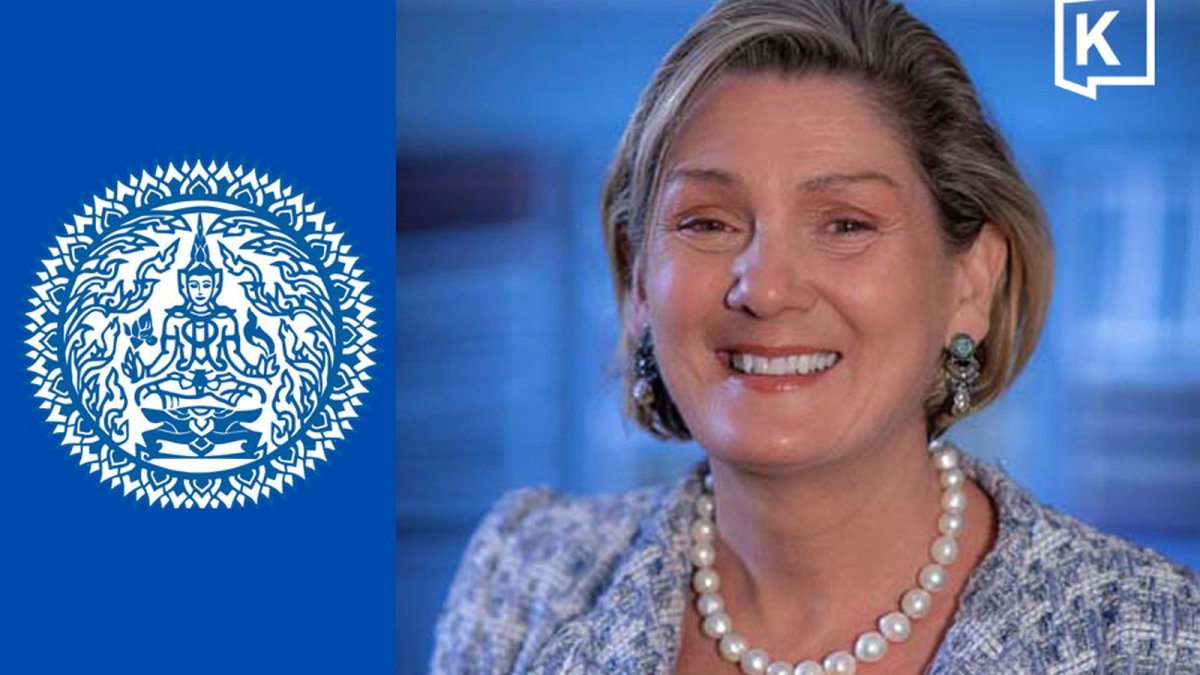
BANGKOK — Thailand's Ministry of Foreign Affairs announced on Saturday that Australian diplomat and international lawyer Katrina Cooper has been appointed chair of the Conciliation Commission handling the Thailand-Cambodia maritime-boundary dispute under the 1982 UN Convention on the Law of the Sea (UNCLOS). The appointment, confirmed by the Permanent Court of Arbitration (PCA) in a statement issued on Friday, marks a significant step forward in a process that could reshape the two neighbours' relationship over the resource-rich waters of the Gulf of Thailand.
Cooper, who currently serves as Australia's Deputy Secretary for Southeast Asia at the Department of Foreign Affairs and Trade (DFAT), was among the candidates supported by Thailand, according to the Thai foreign ministry. She will serve as both chair and the fifth conciliator on the commission, which is now fully constituted with five independent members. The first meeting of the completed commission is preliminarily expected in September 2026, with a key agenda item being the preparation of the Rules of Procedure.
A Commission Takes Shape
The appointment of Cooper completes a process that began in earnest on June 2, 2026, when Cambodia transmitted its notification of compulsory conciliation to Thailand. That notification came after Thailand ended the 25-year-old 2001 Memorandum of Understanding (MoU) governing the Overlapping Claims Area (OCA) in the Gulf of Thailand. Prime Minister Anutin Charnvirakul announced the withdrawal, citing a lack of progress under the MoU that had been in place since the early 2000s.
Thailand formally submitted its response on June 19, 2026, accepting participation while reaffirming that its objective was limited solely to maritime-boundary delimitation under UNCLOS. The commission now comprises five independent conciliators: Cambodia appointed Ambassador Peter Taksøe-Jensen, a Danish diplomat, and Professor Jean-Marc Thouvenin, a French academic; Thailand appointed Judge Albert J. Hoffmann of South Africa and Judge Rüdiger Wolfrum of Germany, both former presidents of the International Tribunal for the Law of the Sea. The four party-appointed conciliators then selected Cooper as chairperson, in consultation with both governments.
The original deadline to select a chair was July 19, but the four conciliators requested more time in late July, and both countries agreed to extend the deadline to August 14. The fact that both sides agreed to the extension without public friction suggests a willingness to keep the process on track, even as the underlying dispute remains deeply sensitive.
Who Is Katrina Cooper?
Cooper brings a rare combination of diplomatic experience and technical legal expertise to the role. Before her current position as Deputy Secretary for Southeast Asia at DFAT, she served as Deputy Secretary at the Department of Prime Minister and Cabinet, responsible for national security and international relations. Her earlier career includes service as Australia's ambassador to Mexico from 2008 to 2012 and as Deputy Head of Mission at the Australian Embassy in Washington from 2017 to 2021. She also served as G20 Sherpa to Prime Minister Anthony Albanese from 2021 to 2022.
Most relevant to her new role, Cooper served as Australia's Co-Agent in the world's first compulsory conciliation proceedings under UNCLOS — the Australia/Timor-Leste Timor Sea conciliation, which culminated in the signing of a maritime boundary treaty between the two countries. She is currently Australia's special envoy for the Greater Sunrise Project, facilitating high-level bilateral talks with Timor-Leste over Timor Sea gas fields. She also visited Cambodia in 2022 as Australia's envoy to ASEAN, giving her familiarity with the region and its diplomatic landscape.
The Thai foreign ministry described Cooper as "an experienced diplomat and international lawyer with expertise in international law and negotiations, and experience handling sensitive issues in international relations." That description is apt: the Timor Sea conciliation is widely regarded as a successful model of how a non-binding process can lead to a binding outcome when both parties are committed to finding a way forward.
The Dispute Behind the Process
The maritime-boundary dispute between Thailand and Cambodia is rooted in differing interpretations of the 1907 Franco-Siamese Treaty, which established the land border between Siam and French Indochina. The two countries have overlapping claims to a 26,000-square-kilometer area in the Gulf of Thailand, an area disputed since the early 1970s and estimated to hold abundant oil and natural gas reserves. The OCA has been a persistent source of tension, with successive Thai and Cambodian governments unable to reach a mutually acceptable delimitation.
The 2001 MoU was long opposed by Thai nationalists who argued it could lead to a loss of Thai sovereignty over Koh Kood island, a popular tourist destination in the Gulf of Thailand. Tensions over Koh Kood collapsed bilateral talks in late 2024 and contributed to land-border clashes in the first half of 2025. A ceasefire was agreed in late December 2025, but the underlying issues remained unresolved. Thailand ratified UNCLOS in 2011, and the compulsory conciliation mechanism under the convention provides a structured path for addressing such disputes when bilateral negotiations have stalled.
Thailand has said that while the UNCLOS process is moving forward, it will not hold other two-way talks with Cambodia. This position underscores the significance of the conciliation commission: for now, it is the only game in town for resolving the maritime dispute.
How the Commission Works
The conciliation commission is not a court. The Thai foreign ministry has stressed this point repeatedly, noting that conciliators act as independent experts, not legal representatives of either party, and are tasked with hearing both sides and helping identify a balanced way forward. The commission is expected to prepare a report with recommendations in around 12 months, unless the parties agree that more time is needed. That report will not be legally binding, but it may provide a basis for continued bilateral negotiations toward a mutually acceptable settlement.
The distinction between conciliation and adjudication is important for Thai domestic audiences, where nationalist sentiment runs strong on the issue of Koh Kood and the broader maritime boundary. By framing the process as a peaceful dispute-settlement mechanism under UNCLOS, the Thai government is seeking to reassure the public that no sovereignty will be ceded through the commission's work. The ministry has said Thailand is ready to cooperate fully with and support the commission.
Thailand's Agent in the proceedings is Deputy Prime Minister and Foreign Minister Sihasak Phuangketkeow, with Songchai Chaipatiyut, Thailand's ambassador to Kuwait, serving as Deputy Agent. Cambodia's Agent is Deputy Prime Minister and Minister of Foreign Affairs and International Cooperation Prak Sokhonn, with Lam Chea, Minister in charge of the State Secretariat of Border Affairs, as Deputy Agent. The appointment of such senior figures on both sides signals that the process is being taken seriously at the highest levels of government.
Official Reactions
The Cambodian foreign ministry issued a statement on Friday expressing gratitude to Cooper for agreeing to undertake the role. "Cambodia is grateful to Katrina Cooper for agreeing to undertake this important responsibility and for joining the other eminent international experts on the Commission," the statement read. Cambodia expressed confidence that the process will create an opportunity to resolve differences over the maritime border and develop significant oil and gas resources in the overlapping claims area. "Progress on both comes at a critical time for regional energy security," the statement added.
The Thai foreign ministry's statement was more measured, emphasising the technical and legal nature of the process. The ministry stressed that conciliation is not a court process and that the commission's work will be conducted by independent experts. Thailand is ready to cooperate fully with and support the commission as a peaceful dispute-settlement mechanism under UNCLOS, the statement said.
The contrast in tone reflects the different domestic pressures on the two governments. In Cambodia, the prospect of developing offshore oil and gas resources is a popular narrative, particularly given the global energy crisis. In Thailand, the government must navigate a politically sensitive issue where nationalist groups have historically opposed any concession to Cambodia over the maritime boundary.
Expert Analysis: A Framework, Not a Solution
Legal and diplomatic experts are cautious about the prospects for the conciliation process. Douglas Guilfoyle, professor of international law and security at UNSW Canberra, noted that legal frameworks "cannot substitute for political commitment," though they can create diplomatic pressure and establish a structured process that encourages compromise. In other words, the commission can provide a face-saving mechanism for both sides to move toward a settlement, but it cannot force them to do so.
Pou Sothirak, a retired diplomat who served as Cambodia's energy minister from 1993 to 1998 and is now distinguished senior advisor at the Cambodian Center for Regional Studies (CCRS), echoed this view. Because the process is non-binding, he said, the dispute cannot be fully resolved through conciliation alone. "This process will only bear fruit if both sides exercise the political will to collaborate and compromise," he said. He described conciliation as a potentially "face-saving and stabilising framework" — a way for both governments to step back from the brink without appearing to capitulate.
The case is only the second compulsory conciliation ever conducted under UNCLOS, following the Australia/Timor-Leste precedent. That first case is instructive: it took years of patient diplomacy, and the final outcome was a treaty that both sides could present as a victory. Whether Thailand and Cambodia can achieve a similar result remains to be seen, but the appointment of Cooper — who was intimately involved in the Timor Sea process — suggests that both sides are looking to that precedent as a model.
What It Means for Thailand and the Region
For Thailand, the conciliation process represents both a risk and an opportunity. The risk is that the commission's recommendations, while non-binding, could create political pressure on the Thai government to accept a compromise that nationalist groups oppose. The opportunity is that a successful resolution of the maritime dispute could unlock significant energy resources and remove a persistent source of tension with Cambodia.
The OCA's oil and gas potential has become more pressing amid the global oil supply crisis and regional energy security concerns. Both Thailand and Cambodia are net energy importers, and the development of offshore reserves in the Gulf of Thailand could enhance their energy security and reduce dependence on external suppliers. The Cambodian foreign ministry's reference to "regional energy security" is a clear signal that Phnom Penh sees the dispute's resolution as linked to broader geopolitical considerations.
For the ASEAN region, the case is a test of whether the bloc's commitment to peaceful dispute settlement can be translated into practice. Thailand and Cambodia are both ASEAN members, and their ability to resolve a long-standing bilateral dispute through a UNCLOS mechanism would be a positive signal for regional stability. It would also demonstrate that ASEAN's norm of non-interference and peaceful resolution of disputes is not merely rhetorical.
The first meeting of the commission, expected in September, will be an important milestone. The preparation of the Rules of Procedure will set the tone for the entire process, and the way the two sides engage with the commission will signal their genuine commitment to finding a solution. For now, the appointment of Katrina Cooper as chair is a positive step — a sign that both Thailand and Cambodia are willing to engage with a process that, while non-binding, could provide a path toward a durable settlement.
The road ahead is long, and the political obstacles are significant. But for the first time in years, there is a structured, internationally recognised process in place to address the maritime dispute. Whether it succeeds will depend on the political will of both governments — and on their ability to convince their domestic audiences that compromise is not a loss of sovereignty, but a step toward shared prosperity.
This article was produced with AI-assisted research and editorial support. Sources: Khaosod English, The Nation Thailand, Prachatai English, Cambodianess, Thai PBS World, The Diplomat.
By Ann Srisawat, Staff Writer
What's Your Reaction?
 Like
0
Like
0
 Dislike
0
Dislike
0
 Love
0
Love
0
 Funny
0
Funny
0
 Wow
0
Wow
0
 Sad
0
Sad
0
 Angry
0
Angry
0

Southeast Asia Correspondent at Global1.News. Based in Bangkok, covering Thai and Southeast Asian politics, economy, technology, and culture. Deep regional perspective on one of the world's most dynamic regions.














Comments (0)