
Finance Minister Ekniti Unveils Thailand's 15-Year High-Income Roadmap
Thai Finance Minister Ekniti Nitithanprapas unveiled a fiscal strategy at the Bangkok Post Forum to lift Thailand into the high-income bracket within 15 years, targeting 30% investment-to-GDP, an AI and semiconductor push, and a five-point fiscal framework to escape the middle-income trap.
The Finance Minister of Thailand laid out an ambitious roadmap on Friday to lift the country into the high-income bracket within 15 years, unveiling a fiscal strategy built on investment, digital transformation, and a clean energy transition. Speaking at the 80th Anniversary Bangkok Post Forum, Ekniti Nitithanprapas detailed the government's plan to reshape the economy away from legacy industries and toward the high-value sectors of the future.
Thailand's Finance Minister Unveils 15-Year Roadmap to High-Income Status at Bangkok Post Forum
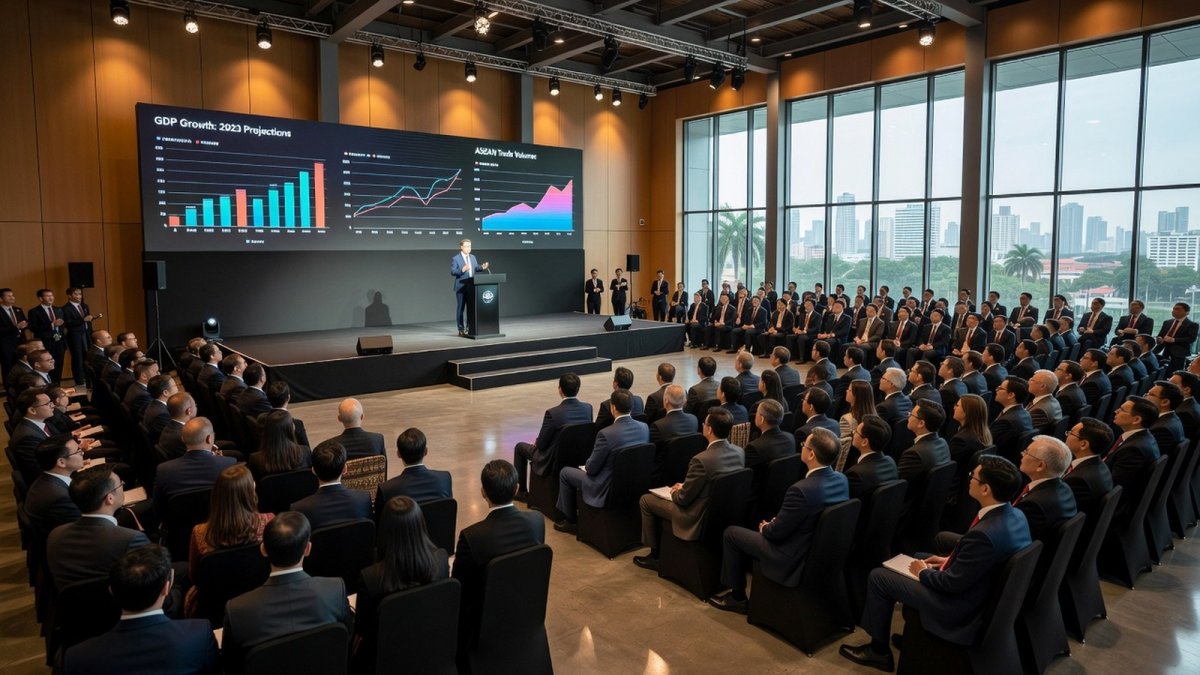
Bangkok, Thailand – 15 August 2026 — Deputy Prime Minister and Finance Minister Ekniti Nitithanprapas delivered a keynote address on Friday evening at the 80th Anniversary Bangkok Post Forum, outlining a comprehensive fiscal strategy designed to transform Thailand into a high-income and inclusive economy. The forum, held under the theme "Vision Thailand — The Next Era Begins," took place at the Convention A1 hall on the 22nd floor of the Centara Grand at Central World, drawing a fully booked audience of government, business, and technology leaders.
Three Pillars for a High-Income Future
In his keynote, titled "Vision Thailand: Fiscal Strategy for the Future Economy," Ekniti explained the three pillars for achieving the mission to make Thailand a high-income and inclusive economy. The strategy comes at a critical juncture, as the World Bank's 2026 income classifications, effective July 1, place Thailand in the upper-middle-income group with a GNI per capita of US$7,690 — still below the high-income threshold of more than US$14,375.
The minister set a clear strategic roadmap to close that gap within 12-15 years, targeting annual economic growth above 3% by 2029. The government also aims to lift Thailand's global competitiveness ranking from its current 26th position into the world's top 20, according to IMD and WEF assessments. "We must have a dream," Ekniti said, drawing on remarks he made earlier this week at the Fiscal Policy Office Symposium. "If we do not set a concrete target and simply claim that the Thai economy will grow 'sustainably' or 'qualitatively', the picture remains floating and intangible. Setting clear, shared goals enables every sector to move forward together."
Investment Surge: From 23% to 30% of GDP
A central component of the fiscal strategy is a dramatic increase in investment. The government plans to raise combined public and private investment to 30% of GDP, up from the current 23%. This will be achieved through tax incentives, fiscal allocations, and public-private partnership projects, while leveraging the Thailand Future Fund to mobilise capital.
To drive this investment push, five working groups have been established focusing on: industrial transformation; AI and digital technology; the green and clean energy economy; regional financial services; and high-value sectors including pharmaceuticals and medical devices. The AI and digital panel has set an ambitious target of drawing 100 billion baht (around US$2.9 billion) in investment into AI, semiconductors, and chip design by 2027, with the goal of raising AI's contribution to GDP to 5%.
"The public and private sectors must act in tandem," Ekniti warned. "Failing to take proactive measures today guarantees economic stagnation."
Shifting Away from Legacy Industries
Ekniti acknowledged that Thailand has relied heavily on past capital investments, citing legacy drivers such as traditional automotive assembly and petrochemical bases established following the 1985 Plaza Accord, as well as development under the Eastern Economic Corridor (EEC). The government is now shifting toward high-value next-generation sectors, including AI and data infrastructure — such as optical transceivers and hyperscale data centres — alongside advanced manufacturing in semiconductor production, electric vehicles, and industrial robotics.
Under the Board of Investment's (BOI) updated framework, foreign investment incentives will strictly require local technology transfers and domestic supply chain sourcing. This condition aims to ensure that foreign capital benefits local workers and small and medium-sized enterprises (SMEs), rather than merely using Thailand as a low-cost production base.
Five-Point Fiscal Framework for a Changing World
Earlier this week, at the FPO Symposium 2026 held on August 11-12, Ekniti announced a five-point fiscal framework that underpins his vision. The framework, reported by The Nation and Krungthep Turakij, is designed to address the structural challenges facing the Thai economy:
Target: Rationalise public spending by replacing unconditional cash handouts with targeted capability-building programmes. Transition: Cushion against external shocks by accelerating clean energy integration, including Direct Power Purchase Agreements (Direct PPA). Transform: Upgrade human capital via modern reskilling platforms such as Skill Bridge, alongside next-generation infrastructure projects. Transparency: Digitise tax administration and budget allocation frameworks to enhance fiscal clarity and data accuracy. Together: Mobilise private capital through Public-Private Partnerships (PPPs) and dedicated Infrastructure Funds to relieve pressure on state budgets.
This framework comes as Thailand's economy is forecast to expand just 1.7-2.7% in 2027, with a midpoint of 2.2%, supported by a recovery in global trade and domestic consumption. Inflation is expected to remain subdued at 0.5-1.5%. The government has proposed a 3.788-trillion-baht fiscal 2027 budget with a 788-billion-baht deficit to support growth, even as public debt nears the 70% ceiling. Potential GDP growth currently sits in the 2.8-2.9% range, and the ministry aims to raise it above 3%.
Thailand's Position in a Fragmented World
Ekniti cited geopolitical strains, rapid AI advancement, population ageing, and the green transition as forces reshaping the global economy, with nations vying for investment and supply chain restructuring. Thailand's strategic position allows trade with both Western and Eastern markets, a significant advantage in a world of increasing fragmentation.
The urgency of the reform agenda is underscored by Thailand's struggle to escape the middle-income trap. The country faces significant headwinds, including population ageing, high household debt, and the challenges of global fragmentation. Vietnam's recent entry into the upper-middle-income group, as noted in the World Bank's 2026 classifications, highlights the competitive pressure Thailand faces from regional neighbours.
ASEAN Implications: A Regional Race for High-Value Investment
Thailand's push toward high-income status carries significant weight across Southeast Asia, where the race to attract next-generation investment has intensified. Vietnam's recent entry into the upper-middle-income group, confirmed in the World Bank's 2026 classifications, signals that regional peers are advancing rapidly. Indonesia, meanwhile, has aggressively courted EV battery and downstream nickel processing investment, positioning itself as a manufacturing hub for the green transition. Thailand's 30% investment target and its focus on AI, semiconductors, and clean energy signal a deliberate move to compete at the higher end of the value chain rather than on labour costs alone.
For ASEAN as a bloc, the restructuring of supply chains — driven by geopolitical fragmentation and the shift toward regional resilience — means that countries must differentiate themselves. Thailand's strategic advantage lies in its ability to trade with both Western and Eastern markets, a position that could attract multinational firms seeking a neutral, well-connected base. The BOI's requirement for local technology transfers and domestic sourcing is a notable shift, one that could set a precedent for how ASEAN nations negotiate with foreign investors. If successful, Thailand's model of pairing fiscal incentives with capability-building could become a template for neighbours facing similar middle-income challenges.
Economists and Business Leaders: Balancing Ambition with Discipline
Economists watching the 30% investment target will likely focus on the feasibility of execution. Thailand's potential GDP growth currently sits at 2.8-2.9%, and raising it above 3% requires not just capital but productivity gains. The shift away from unconditional cash handouts toward targeted capability-building programmes is a fiscally prudent move, particularly as public debt approaches the 70% ceiling. However, the challenge lies in timing: cutting transfers while asking households to invest in reskilling could dampen short-term consumption, which remains a key growth driver.
Business leaders, particularly through the Thai Chamber of Commerce and the Joint Standing Committee on Commerce, Industry and Banking, are likely to watch the implementation of the five working groups closely. The AI and digital panel's target of 100 billion baht in investment by 2027 is ambitious, and the private sector will need clear regulatory certainty to commit capital. Foreign investors, especially in semiconductors and data centres, will be assessing whether the BOI's updated framework — with its technology transfer requirements — strikes the right balance between local benefit and investment attractiveness. The Thailand Future Fund's ability to mobilise private capital will be a key test of investor confidence in the government's fiscal strategy.
Expert Perspectives and Forum Context
The forum, which celebrated eight decades of Bangkok Post journalism since the newspaper's founding in 1946, gathered distinguished leaders from government, business, and technology sectors. Commerce Minister Suphajee Suthumpan, who also serves as a Deputy Prime Minister, delivered a keynote titled "Vision Thailand: Driving Trade, Unlocking Sustainable Growth" at the same event. She discussed the participation gap that needs to be closed to unlock Thailand's economic potential, particularly among SMEs and smaller exporters.
The Finance Minister's keynote was one of several at the forum, which was live-streamed on Facebook and TikTok from 3:25 pm. The event marked a significant milestone for the Bangkok Post, which has chronicled Thailand's economic development for eight decades.
What It Means for Ordinary Thais: From Handouts to Capability
For households across Thailand, the policy shift from unconditional cash handouts to targeted capability-building programmes represents a fundamental change in the social contract. In provinces like Khon Kaen, Udon Thani, and Chiang Rai, where informal employment and agricultural incomes dominate, the transition could be challenging. Families that relied on digital wallet handouts to cover daily expenses will need to see tangible benefits from reskilling platforms like Skill Bridge — such as certifications that lead to better-paying jobs in logistics, digital services, or renewable energy installation.
The government's emphasis on SME participation is particularly relevant for the provinces, where small enterprises form the backbone of local economies. The BOI's requirement for domestic supply chain sourcing could open new opportunities for Thai suppliers, but only if they have the capacity and training to meet quality standards. Regional inequality remains a concern: Bangkok and the Eastern Economic Corridor are likely to attract the bulk of high-value investment, while the Northeast and the North may lag unless targeted programmes address their specific needs. The human side of this transition will depend on whether the government can communicate the long-term benefits clearly — and whether the promised jobs materialise in communities that have historically been left behind by national growth strategies.
What to Watch For
The coming months will reveal whether the government can translate its ambitious vision into concrete action. Key indicators to monitor include the implementation of the five working groups' recommendations, the progress of the Thailand Future Fund in mobilising private capital, and the pace of clean energy integration through Direct PPA mechanisms.
The 2027 budget debate will also be closely watched, as the government balances the need for fiscal stimulus against the constraints of the public debt ceiling. The success of the BOI's updated incentive framework in attracting high-value investment while ensuring local benefits will be another critical test.
For Thai citizens, the shift from unconditional cash handouts to targeted capability-building programmes represents a significant policy change that will reshape the social contract. The government's ability to communicate the long-term benefits of this transition will be crucial for maintaining public support.
As Thailand marks 80 years of the Bangkok Post's journalism, the vision articulated by Ekniti offers a clear — if ambitious — path forward. The challenge now lies in execution. With the global economy in flux and regional competition intensifying, the next few years will determine whether Thailand can finally break free from the middle-income trap and secure its place among the world's high-income economies. The minister's closing message was unambiguous: the time for proactive measures is now, and the cost of inaction is economic stagnation.
By Ann Srisawat, Staff Writer
This article was produced with AI-assisted research and editorial support. Reporting is based on sources cited in the article.
What's Your Reaction?
 Like
0
Like
0
 Dislike
0
Dislike
0
 Love
0
Love
0
 Funny
0
Funny
0
 Wow
0
Wow
0
 Sad
0
Sad
0
 Angry
0
Angry
0

Southeast Asia Correspondent at Global1.News. Based in Bangkok, covering Thai and Southeast Asian politics, economy, technology, and culture. Deep regional perspective on one of the world's most dynamic regions.















Comments (0)