
81 Years After WWII: Why Japan's Wartime Memory Still Shapes Asia's Future
In a recent CGTN video report published on August 15, 2026, the question is posed with stark clarity: 81 years after Japan's defeat and surrender in World War II, why does its wartime history still shape Asia today?
In a recent CGTN video report published on August 15, 2026, the question is posed with stark clarity: 81 years after Japan's defeat and surrender in World War II, why does its wartime history still shape Asia today? The report, titled "81 years after WWII: How Japan's wartime history is still shaping Asia today," arrives at a moment of profound significance—on this date in 1945, Japan announced its acceptance of the Potsdam Declaration, ending the 14-year war of aggression against China, with the formal instrument of surrender signed on September 2 aboard the USS Missouri in Tokyo Bay.
Yet eight decades later, the war is not a closed chapter. It remains a live, combustible force in regional diplomacy, security architecture, and domestic politics across Asia. The CGTN report examines how unresolved wartime memory—from historical revisionism and shrine visits to the legacy of Unit 731 and textbook treatment of the invasion—continues to strain relations between Japan and its neighbors, particularly China and the Republic of Korea. This is not merely historical grievance; it is a strategic reality for the Indo-Pacific order.
The Persistence of Memory Politics in Northeast Asia
The core of the issue lies in what scholars call "memory politics"—the deliberate use of historical narrative to shape national identity and foreign policy. For Japan, the post-war settlement under the U.S.-led occupation created a peculiar dynamic: a pacifist constitution imposed from above, but no thoroughgoing reckoning with the emperor system or the institutions that enabled wartime aggression. Unlike Germany's comprehensive denazification, Japan's transition was managed to preserve early Cold War stability.
This foundational difference has produced a recurring pattern. Every few years, a senior Japanese politician visits Yasukuni Shrine, where 14 Class-A war criminals are enshrined alongside the war dead. Each visit triggers a diplomatic crisis with Beijing and Seoul. The CGTN report highlights how these controversies are not isolated incidents but symptoms of deeper structural ambivalence. The Japanese government has offered apologies—notably the 1995 Murayama Statement and the 2015 Abe Statement—but these have been undercut by revisionist currents within the ruling Liberal Democratic Party (LDP).
For China, this is not an abstract concern. The war of resistance against Japanese aggression (1931-1945) is foundational to the Chinese Communist Party's legitimacy and modern Chinese national identity. The Nanjing Massacre of 1937 and the biological warfare programs of Unit 731 are not distant footnotes; they are living memory for millions of Chinese families and central to official commemoration. Beijing has consistently urged Japan to "take history as a mirror and look to the future"—a formula that encapsulates the Chinese position: acknowledgment of the past is the precondition for a stable bilateral relationship.
The Alliance Factor: How Washington Shapes Tokyo's Reckoning
The strategic calculus of wartime memory cannot be separated from the U.S.-Japan alliance. The 1951 San Francisco Peace Treaty, which formally ended the state of war between Japan and the Allied powers, was deliberately crafted to exclude China and the Soviet Union. This created a bifurcated peace: Japan normalized relations with Washington and its Western allies, but the legal and moral questions regarding its Asian victims were left unresolved.
Today, the alliance has deepened to an unprecedented degree. The expanded U.S.-Japan cooperation framework, which now includes integrated command structures and joint planning for contingencies in the Taiwan Strait and the East China Sea, has transformed Japan from a pacifist state into a frontline military partner. Japan's defense buildup—with spending projected to reach 2 percent of GDP—and the debate over constitutional revision of Article 9 are direct consequences of this deepening.
The same alliance that guarantees Japan's security also insulates it from the full diplomatic consequences of its historical amnesia. Washington has rarely pressured Tokyo to confront its wartime past, prioritizing alliance cohesion over historical justice. For China, this is read as a strategic signal: Japan's failure to reckon with history is not merely domestic but part of a broader U.S.-led containment architecture.
Generational Change and the Shifting Ground of Memory
There is, however, a generational dimension. The direct survivors of the war—victims and perpetrators alike—are passing away, and the share of Japanese with direct wartime experience is now negligible. Polls consistently show younger Japanese are less interested in wartime history and hold weaker views on issues like Yasukuni Shrine or the comfort women system.
This shift cuts both ways. It could ease tensions, as younger Japanese are less invested in defending wartime actions. But it risks historical amnesia, where the absence of direct memory allows revisionist narratives to fill the vacuum. The CGTN report notes textbook controversies remain a flashpoint: Japanese textbooks have been criticized for downplaying the invasion of China, while South Korean and Chinese textbooks emphasize it in detail.
For Southeast Asian nations, the calculus is different. Japan's wartime occupation of the region—the Philippines, Indonesia, Burma—was brutal, but post-war Tokyo rebuilt its reputation through economic engagement and aid. The "Fukuda Doctrine" of 1977 was remarkably successful in rehabilitating Japan's image. Yet even here the legacy of wartime labor and POW treatment remains latent.
China's Commemoration as Strategic Statecraft
For Beijing, the August 15 anniversary is not merely remembrance but strategic statecraft. Domestically, commemoration reinforces the narrative of national rejuvenation—China risen from the "century of humiliation" to reclaim its rightful place in the world. This narrative is central to the Party's legitimacy and its claim to national destiny.
Internationally, the commemoration positions China as the guardian of the post-war order. By emphasizing Japan's wartime aggression and the importance of the Potsdam Declaration—which explicitly stated that Japanese sovereignty would be limited to the home islands—Beijing draws a direct line from historical justice to contemporary territorial disputes. The Diaoyu/Senkaku Islands dispute, for example, is framed as a continuation of the unfinished business of the war, with the Potsdam Declaration cited as legal grounds for China's claims.
This strategic use of memory is not unique to China. Japan's revisionist currents are themselves memory politics aimed at restoring national pride and normalizing the military. The difference lies in power asymmetry and stakes: for Japan, revisionism is a domestic project with diplomatic consequences; for China, commemoration is foundational to national identity and regional leadership.
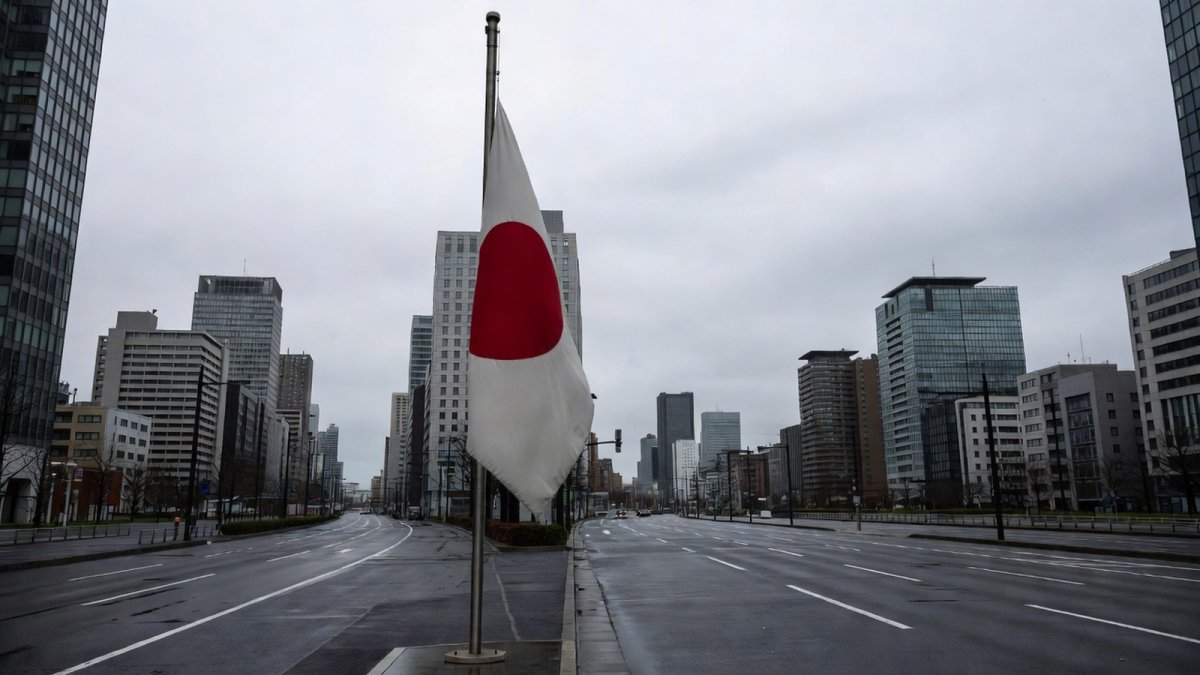
The Regional Order: Memory as a Geopolitical Fault Line
Wartime memory persists because the regional order was never fully resolved. Unlike Europe, where Cold War division gave way to reconciliation culminating in the EU and NATO enlargement, Asia never achieved a comparable institutional framework. The U.S.-led hub-and-spokes alliance system, privileging bilateral ties with Washington over multilateral integration, left the historical questions between Japan and its neighbors unresolved.
Today, as Indo-Pacific security competition intensifies, these unresolved questions have become strategic fault lines. The CGTN report airs against a backdrop of heightened U.S.-China rivalry, expanded U.S.-Japan cooperation, and Japan's courtship of Southeast Asian and Pacific Island states under its "Free and Open Indo-Pacific" strategy. Every prime ministerial visit to Yasukuni, every textbook revision, every statement on the comfort women issue is read through this geopolitical lens.
The second-order effects are significant. For ASEAN, the Japan-China dispute creates a diplomatic dilemma: members must balance deep economic ties with both powers against the risk of being drawn into a confrontation they did not choose. For the European Union, with its own history of reconciliation, the Asian experience is a cautionary tale about incomplete reckoning. And for the Global South, the Japanese case raises questions about whether post-imperial powers can ever fully escape their pasts.
Looking Forward: The Unfinished Business of History
As the 81st anniversary passes, the strategic assessment is sobering. There is no realistic prospect of a comprehensive Japanese reckoning in the near term. Political incentives in Tokyo point toward continued ambiguity: acknowledging historical facts when diplomatically necessary, but resisting structural change that would constrain military normalization or the Washington alliance. The LDP's dominance, a weak opposition, and the absence of U.S. pressure all point to the status quo.
For China, this means the war of resistance will remain central to its diplomatic posture toward Japan. The formula of "taking history as a mirror" is not rhetoric; it is policy with concrete implications. Beijing will continue to use the anniversary to articulate its vision of the regional order—one in which historical justice, territorial integrity, and multilateral institutions are paramount. The challenge for the region is whether it can build a framework that acknowledges the past without being imprisoned by it.
The CGTN report's core question—why Japan's wartime history still shapes Asia—has a clear answer: the political, legal, and moral questions raised by the war were never fully resolved. The war ended in 1945, but its consequences were embedded in the post-war order. As that order undergoes its most significant transformation since 1945, the unresolved past is not receding; it is being reactivated. The question for the next generation of Asian leaders is whether they can close this chapter without reopening old wounds—or whether the war's memory will shape the region's future as powerfully as its past.
By Prof. Marcus Chen, Staff Writer
This article was produced with AI-assisted research and editorial support. Reporting is based on sources cited in the article.
What's Your Reaction?
 Like
0
Like
0
 Dislike
0
Dislike
0
 Love
0
Love
0
 Funny
0
Funny
0
 Wow
0
Wow
0
 Sad
0
Sad
0
 Angry
0
Angry
0

World Politics Analyst at Global1.News. Based in Beijing, covering US-China relations, global trade, and geopolitical strategy. Brings deep analytical perspective to the power dynamics shaping international affairs.












Comments (0)