
Kano's Mass Wedding: 1,500 Couples Wed as Fraudsters Test the System
Kano's Mass Wedding: 1,500 Couples Wed as Fraudsters Test the System Kano, Nigeria For the past week, the northern Nigerian city of Kano has been transformed into a riot of colour and excitement as 1,500 couples tied the knot in a state-sponsored mass wedding. The annual event, funded by the Kano state government, is designed to support low-income individuals who cannot afford the significant financial costs associated with marriage in Nigeria's struggling economy. The…
Kano's Mass Wedding: 1,500 Couples Wed as Fraudsters Test the System
Kano, Nigeria
For the past week, the northern Nigerian city of Kano has been transformed into a riot of colour and excitement as 1,500 couples tied the knot in a state-sponsored mass wedding. The annual event, funded by the Kano state government, is designed to support low-income individuals who cannot afford the significant financial costs associated with marriage in Nigeria's struggling economy.
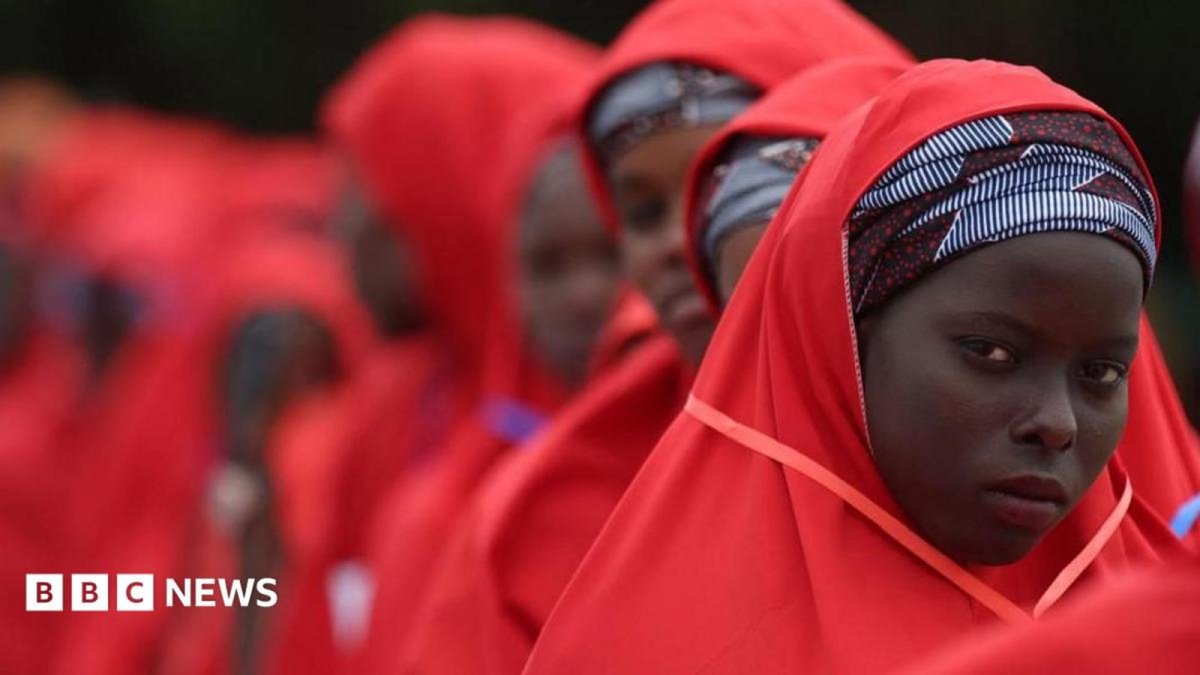
The nuptials reached their climax on Friday when brides in red hijabs and grooms in matching red hats and white robes gathered at the palace of the Emir, the city's traditional Muslim leader, for the main ceremony where they officially became husband and wife. The celebrations continued on Saturday with a wedding breakfast hosted by Governor Abba Kabir Yusuf, who offered his blessing to the newlyweds.
A Multi-Million Naira Initiative to Ease the Cost of Marriage
The Kano state government has invested heavily in this initiative, spending 1.5bn naira ($1m; £815,000) to support those tying the knot. The funding covers the bride’s dowry, household furniture, and essential items needed to establish a new home. According to the Hisbah, the city’s Islamic police force which oversees the programme, the support package includes beds, mattresses, bedsheets, pillows, furniture and food supplies. Each bride receives a dowry of 100,000 naira, while a further 100,000 naira is provided as start-up capital to encourage small-scale entrepreneurship and help couples achieve financial self-reliance after marriage. The state government has spent approximately 1m naira ($735; £544) on each participating couple. The 1.5 billion naira approved for this mass wedding scheme is no small gesture; it is a direct intervention in a marriage market that has become brutally expensive for ordinary Nigerians. Across the country, the full cost of a wedding — from the dowry (sadaki in Hausa) to the ceremony, new clothes, food for dozens of guests, and the basic furnishings of a new home — can run into hundreds of thousands of naira, a sum far beyond what many low-income families can gather in a year. By covering the dowry, providing start-up capital and household goods, and absorbing the cost of medical examinations, the Kano State government has removed, in one stroke, every major financial hurdle that would have blocked these marriages from taking place. For low-income households in north-western Nigeria, wedding costs are not simply a strain; they are often an insurmountable barrier that delays marriage for years or pushes families into heavy borrowing. The specific inclusion of start-up capital suggests a pragmatic understanding that a new couple needs more than a ceremony to build a home — they need a foundation for trade, small business, and daily survival. It is an acknowledgment that poverty, rather than a lack of suitors, is what keeps many widows and divorcees from remarrying, and that the state can play a role in removing that obstacle. For a widow with children, the difference between being married and being on her own is not just emotional but deeply economic, and this package changes that balance in a practical, tangible way. The scale of the spending also invites hard questions. One and a half billion naira could, in other budgets, mean classrooms or hospital equipment, and any responsible assessment must note that a scheme of this size deserves rigorous oversight. Yet for the families who walked into that hall, the calculation is far more personal. They left with a future they could not have afforded on their own — a furnished home, a healthy start, and capital to begin again. That human reality is at the very heart of understanding why this programme matters, and why its effects will be measured not in naira, but in the homes and children that follow.A Tradition Born in 2012 That Has Grown Every Year
The mass wedding was initiated in 2012 by the then-governor, when 100 couples — primarily widows and divorcees — wed at the palace. Since then, the event has continued under subsequent governors, with numbers expanding each year as demand has grown. The scheme has also expanded to include those in polygamous Muslim marriages. Such is the popularity of the programme that 5,000 couples applied for this year’s edition. Kano has a majority Muslim population, and Sharia operates in the state alongside the secular legal system. The event is always overseen by the Hisbah, whose main task is to vet the couples wanting to wed. To outside observers, the Hisbah is often reduced to a single image — a religious police force enforcing moral codes. But in Kano, the institution is woven deep into the social fabric of daily life. Kano adopted the Sharia legal framework in 2000, and the Hisbah has since grown into a familiar presence in neighbourhoods across the state — mediating family disputes, offering guidance to young people, and now channelling widows and divorcees into marriage. Whatever controversies surround its moral policing, for many Kano residents the Hisbah is closer to a welfare and community guidance institution than a coercive force. It carries religious authority, and in a deeply observant society, that authority gives its endorsement of these weddings real meaning.Hisbah Vetting and the Fight Against Fraud
Mujahid Aminudeen, deputy commander-general of the Hisbah, admitted that screening the applicants is not an easy task in a climate of growing economic desperation. “Whenever we find out that there's something dubious or fishy about a couple, we disqualify them,” he told the BBC. He said some couples will go to great lengths to convince the authorities that they are a genuine love match when their eye is more on the benefits on offer. All intending couples must undergo comprehensive medical examinations — including tests for HIV, hepatitis, pregnancy and genotype compatibility — before being cleared for the programme. However, Aminudeen revealed that some couples had been disqualified after being discovered to have altered their medical test results. In one striking case, an intending bride was found to have presented her brother as the groom in an attempt to benefit from the scheme. Local journalist Yusuf Ali Abdallah, who has covered the mass weddings for years, said Nigeria’s struggling economy had been fuelling desperation among applicants this year. “As we all know, marriage involves spending money and the country's economy is not bright at the moment,” he told the BBC. “This makes some people desperate to get on this list.” He noted that one couple who were already married had even attempted to present themselves as an intending pair before being detected and removed from the programme. Given that the scheme provides dowry, start-up capital, household goods, and medical examinations, the potential for abuse is obvious. The vetting process exists precisely because officials know the value of what is being given. In a context of scarcity, the incentive to misrepresent oneself — to rush into a paper marriage purely to claim the benefits — is real, and the Hisbah's screening is the state's answer to that risk. Fraud in such a scheme would not be a small crime; it would divert public resources meant for vulnerable women and would poison public trust in the entire programme, making it impossible to sustain in future years. Still, it is worth understanding why people might risk it. The answer lies in the weight of the benefits relative to local incomes. When the combined value of the package exceeds what many families earn in a year, the temptation becomes understandable even if not excusable. But the Hisbah's cultural role cuts both ways here. Because it is not just a government agency but a religious institution with moral standing, its approval carries weight well beyond paperwork. A couple blessed by the Hisbah is accepted by the community, and that acceptance is itself a form of protection — for the couple, and for the integrity of the scheme itself.Warnings About Bribes and Scammers
The desperation has also attracted charlatans seeking to take advantage of those hoping to secure a place on the sponsored list, which was made public two weeks ago. One Kano resident, who asked to remain anonymous, said he had been asked to pay a bribe to get on the list. “But to be fair to the organisers, I later found out those who asked me for money were not Hisbah staff,” he said. He and his fiancée failed to be chosen for this August’s wedding, but he said he would try again next year. Aminudeen admitted that the Islamic police were aware of such allegations: “We have found that there are some people asking others to pay certain money so they can make the list.” But the Hisbah officer wanted to assure all those wishing to wed in future that the entire process should not cost them a single naira. “We want to announce to the people of Kano that the whole process is free: from the selection to the medicals and the goods set aside for couples — all are covered by the government.”Human Stories: A Clothes Trader and His Customer-Turned-Bride
Among the successful grooms was 43-year-old Rabiu Yusuf, a clothes trader who agreed that the application process had gone smoothly for him. “Personally, no-one asked me for anything. I was told the government would sponsor it all,” he told the BBC. His new wife is Aisha Auwal — the couple met as she regularly visited his shop to buy clothes. Yusuf, who already has five children with his first wife, said he was “very happy and can't wait to start a new life” with his customer-turned-bride. His story reflects the broader social fabric of Kano, where trade and commerce intersect with deep family and community ties. The mass wedding scheme has become a lifeline for many who would otherwise be unable to afford the financial weight of marriage in a country facing persistent inflation and economic uncertainty. In northern Nigeria, marriage is rarely the meeting of two individuals alone; it is an alliance between families, blessed by elders and witnessed by the entire community. The names of Rabiu Yusuf and Aisha Auwal, or Amina Alhassan and Nura Abdullahi, represent something far deeper than entries on a government list. For women who have known the hardship of widowhood or divorce, remarriage carries profound social weight. In a culture where a woman's place in the community is closely bound to being a wife and mother, losing a husband — whether through death or separation — can leave a woman feeling exposed, unsupported, and marginalised. Remarriage restores not only companionship but a recognised, respected position in the social order. The wedding day itself, in the northern Nigerian tradition, is a festival of colour and sound — the bride's hands painted with henna, the ululation of women rising in celebration, the exchange of greetings between two extended families joining together for the first time. For those who have known years of difficulty, the joy is compounded by relief. The household goods provided by the government mean the new couple begins married life with furniture and pots rather than empty rooms. The start-up capital gives the husband — and often the wife, as is common in northern markets — a basis for small trade. These details are not incidental; they are the difference between a marriage that struggles from its first day and one that begins with dignity and hope. When a groom who could not afford the costs of a traditional wedding is given the means to marry, the ripple effect extends far beyond the couple themselves. Relatives who would have been called upon to contribute are relieved of that burden. The celebration becomes a moment of collective pride — the community sees one of its own started respectably, and the story is retold in markets and compounds as an example of what is possible. In a region where faith is central to daily life, the coming together of two families under Islamic rites, witnessed and blessed by the community, is understood as a blessing not only for the couple but for the neighbourhood around them.A Young Bride’s Gratitude and a Family Arranged Union
Twenty-four-year-old Amina Alhassan echoed Yusuf’s sentiments, adding that she had not encountered any problems when applying to marry 40-year-old Nura Abdullahi. Their union was first arranged by their families in Dambatta village before they presented themselves to the Hisbah. “Everything has been free and I want to commend the Kano government for this scheme because without it, many couldn't have afforded to marry due to the high cost of living,” she said. Her story highlights the important role that family-arranged marriages still play in northern Nigeria, and how the state initiative has helped preserve cultural traditions during challenging economic times. For many brides like Alhassan, the scheme offers not just a wedding, but the promise of a stable start to married life, complete with household goods and a small business grant.Celebrations Continue as Newlyweds Set Up Home
After Saturday’s wedding feast, the presentation of household goods began, with each couple receiving their starter kits to furnish their first home. It will take several more days for the excitement to die down in Kano as the newlyweds busy themselves with setting up home together. The streets that have been buzzing with bridal parties and their families for days will slowly return to their normal rhythm, but the impact of this year’s mass wedding will be felt for years to come in the homes of the 1,500 couples who have begun their new lives. The Kano mass wedding is part of a broader regional conversation about marriage, family, and economic survival in northern Nigeria. As the country continues to grapple with a difficult economy, initiatives like this one are likely to remain in high demand. With thousands of applicants already looking ahead to next year, the programme shows no signs of slowing down. For now, the people of Kano are celebrating — and the newlyweds are looking forward to the future with hope.A Senegalese and West African Perspective
Reading the Kano story from Dakar, there is much that feels deeply familiar. In Senegal, a wedding is never a small affair. The family gathers for days, and teranga — the legendary hospitality that defines our culture — is on full display: meals prepared for dozens of guests, the dowry negotiated respectfully between families, elder women overseeing the bride's preparation with patience and joy. The communal nature of the Kano celebration, with entire families brought together to witness a new beginning, is immediately recognisable to any West African reader. From Dakar to Kano, from Bamako to Accra, a wedding is a community project. No one marries alone, and no one celebrates alone. Yet the Kano scheme is distinct in a way worth reflecting on. Senegalese weddings are typically funded by families, by years of savings, by contributions from uncles and aunts and neighbours — we do not expect the state to pay our dowries. In Kano, the government has inserted itself into the most personal of social institutions, using public money to restart the lives of widows and divorcees. This reflects not only an Islamic governance model but an economic reckoning: the authorities clearly concluded that private family resources were insufficient for a large number of people who wished to marry, and that the cost of inaction — in human and social terms — was greater than the cost of intervention. There is something bold in that, and something to study with care. When a state commits itself so directly to the welfare of its most vulnerable families, it invites questions that reach far beyond a wedding register — questions about poverty, about the responsibilities of government, and about what a community truly owes its own. For Senegalese readers, the Kano experiment sits in a familiar cultural landscape of communal solidarity, but in unfamiliar institutional territory. It is neither a model to copy without thought nor a story to dismiss. It is a mirror held up to our own traditions of family and support, asking a difficult question: how far should that solidarity go — and who should pay for it? By Amara Diop, Staff Writer This article was produced with AI-assisted research and editorial support. Sources: BBC News.What's Your Reaction?
 Like
0
Like
0
 Dislike
0
Dislike
0
 Love
0
Love
0
 Funny
0
Funny
0
 Wow
0
Wow
0
 Sad
0
Sad
0
 Angry
0
Angry
0

West Africa/Sahel Correspondent at Global1.News. Dakar-based journalist covering politics, security, climate, and development across Francophone and Anglophone West Africa. Tells the stories of a region undergoing profound transformation.














Comments (0)