
Japan Watches Uneasily as Trump Truncates ROK-US Drills, Raising Questions About Alliance Reliability
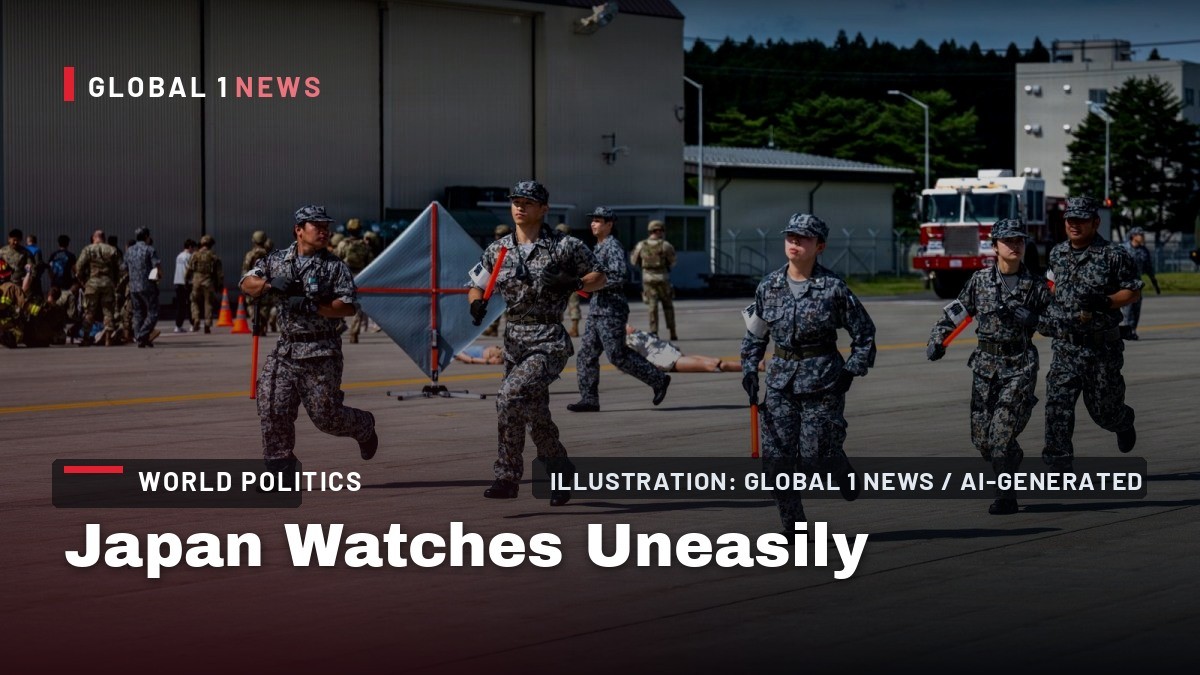
The abrupt scaling back of South Korea-United States military exercises in August 2026 has sent a quiet tremor through Japan’s defense establishment. While Japanese officials have offered only the most anodyne public responses, the episode has crystallized a set of long-simmering anxieties about the reliability of the American security guarantee under the second Trump administration. The developments—ranging from the truncated Ulchi Freedom Shield exercise to the cancellation of the biennial Ssa
The August 16 Decision and Its Immediate Fallout
On August 16, 2026, President Donald Trump announced via his Truth Social platform that he was scaling back military drills with South Korea, offering three distinct justifications: the financial cost of the exercises to the United States, his purportedly friendly relationship with North Korean leader Kim Jong Un, and his displeasure over what he characterized as insufficient South Korean support for the U.S. war effort against Iran. The announcement came on the very day that the annual Ulchi Freedom Shield exercise was scheduled to begin, creating immediate confusion among allies.
The exercise, which commenced on August 17, ran only through August 21 instead of its originally scheduled conclusion on August 27. In practical terms, the first phase of the exercise—focused on defensive operations—was preserved, while the second phase, centered on counterattack scenarios, was canceled outright. Live-training exercises were replaced with simulations, a substitution that carries significant implications for military readiness. The South Korean government was evidently caught off guard. According to Yonhap, South Korean Foreign Minister Cho Hyun told the National Assembly Committee on Foreign Affairs and Unification that "Neither our government nor U.S. officials knew what President Trump wrote on his Truth Social account," adding, "We were not notified in advance."
The disruption continued on August 24, when the United States canceled the biennial Ssangyong exercise, a large joint amphibious landing operation scheduled for September. This time, the stated justification was constraints on force availability caused by the Iran war. Notably, this announcement was less abrupt than the Ulchi Freedom Shield decision, as the U.S. Marine Corps had officially notified Seoul back in June that its force availability would likely be constrained. Nevertheless, the cumulative effect was unmistakable: the rhythm of the ROK-US alliance's military calendar had been disrupted at the highest level, on short notice, and with minimal consultation.
Japan's Muted Official Response and Underlying Concerns
Japan's initial reaction has been notably restrained. Japanese Defense Minister Koizumi Shinjiro responded to the announcements by stating, "As Japan faces the most severe and complicated security environment in the post-war era, the cooperation among Japan, the United States, and South Korea is critical to the peace and stability of the region." The statement, however, conspicuously avoided any criticism of the U.S. decision to scale back joint exercises. This public reticence is understandable given the hierarchical nature of the Japan-US alliance, but it masks a deep well of concern within Tokyo's policy community.
The most immediate worry centers on the possibility that Washington may be preparing a more aggressive push to resume talks with North Korea. Japan has long been wary of any US-North Korea deal that advances American security interests while leaving Japanese concerns unaddressed. A hypothetical agreement could, for instance, secure reductions in Pyongyang's long-range missile arsenal—weapons capable of reaching the United States—while doing nothing to address the substantial stockpile of short-range missiles that directly threaten Japan. This is not an abstract concern. North Korea fired approximately ten short-range ballistic missiles from Pyongyang on August 20, 2026, toward the East Sea, marking the third ballistic missile test in August alone. The threat to Japanese territory remains persistent and undiminished.
There is also the question of whether the United States will maintain denuclearization as a policy objective, and what Japan would do if Washington abandons that goal. Conservative Japanese leaders have a vested political interest in the return of Japanese abductees taken by North Korea in the 1970s and 1980s—an issue that could easily be marginalized in any US-North Korea negotiation focused on broader strategic concerns. Japanese analysts worry about a more emboldened North Korea, though they simultaneously doubt the likelihood of a U.S. overture to Pyongyang succeeding. Yet experts have failed to predict many aspects of this administration's foreign policy, and the August 16 decision itself was a stark reminder of that unpredictability.
Strategic Documents and the Nuclear Question
U.S. overtures to North Korea, whether reciprocated or not, are likely to be reflected in the three strategy documents currently being revised in Tokyo: the National Security Strategy, the National Defense Strategy, and the Defense Buildup Program. Japan intends to finish updating these documents by the end of the year, and the timing of the American decisions could not be more consequential. The revisions will need to account for a security environment in which the United States has demonstrated a willingness to alter alliance commitments on a moment's notice.
More quietly, Tokyo could begin to consider nuclear weapons for itself if questions about the credibility of the U.S. nuclear deterrent begin to mount. This remains a deeply sensitive topic in Japanese domestic politics, given the nation's postwar pacifist constitution and its status as the only country to have suffered atomic attacks. However, the logic of extended deterrence rests on the assumption that the United States would risk its own territory to defend its allies. If that assumption is called into question—by erratic decision-making, by the linking of security commitments to unrelated policy demands, or by a perceived willingness to accommodate North Korean interests—the calculus in Tokyo could shift in ways that would fundamentally alter the regional security architecture.
The Iran War Linkage and Host Nation Support Negotiations
Another deeply worrying aspect of Trump's social media post is the signal that the United States is prepared to make assistance in the Iran war a more explicit condition of continued support for allies. There are, to be sure, different dynamics between the South Korea-US alliance and the Japan-US alliance. Japan has long relied on its constitutional and legal framework to avoid entanglement in U.S. wars, a posture that has been maintained across multiple administrations. However, the Trump administration may be less sympathetic to such justifications. If Washington cannot compel Japan to support U.S. military operations in the Strait of Hormuz due to Japan's legal constraints, it may demand concessions in other areas—reduced joint exercises, increased host nation support payments, or other forms of burden-sharing.
The timing is particularly fraught because Tokyo is beginning negotiations with Washington over host nation support. The current agreement, which covers the costs of maintaining U.S. forces in Japan, is a perennial point of contention. A sudden demand for a large increase is certainly possible, given this administration's demonstrated tendency to link security and economic issues in ways that previous administrations generally did not. The reduction of the training exercise's value to its financial costs in Trump's August 16 post is a telling example of this transactional approach to alliance management.
Trump's decision also makes clear that U.S. military exercises can be scaled down on a moment's notice. Japan has its own exercises with the United States, including Keen Sword, scheduled for October. Though it is expected to be smaller than the 2024 iteration due to U.S. deployments in the Iran war, it could be scaled back even further. Trump could deploy the same three-fold justification he used against South Korea—cost, friendship with Kim Jong Un, and dissatisfaction with allied support for the Iran war—to cancel or reduce these exercises as well.
Alliance Readiness and the Credibility of Deterrence
Beyond the immediate diplomatic concerns, there is a deeper question about what the scaling back of exercises means for U.S. military readiness on the Korean Peninsula and in the Indo-Pacific more broadly. Alliance readiness is a key concern. While North Korean soldiers are returning to the peninsula after gaining real-world battle experience in the Russia-Ukraine war, the best that U.S. and South Korean soldiers can do to prepare is live training. Yet these live trainings are being replaced by simulations at precisely the moment when the adversary is "training" by engaging in real combat.
A U.S. Department of Defense official said in a statement that "These adjustments preserve essential readiness and training objectives," and that "There will be no degradation to U.S. training objectives." But such assurances ring hollow to many analysts in the region. The substitution of simulations for live-fire exercises, the cancellation of the counterattack phase of Ulchi Freedom Shield, and the scrapping of the Ssangyong amphibious landing exercise all point in the same direction: a reduction in the intensity and scope of alliance training at a time when the threat environment is arguably becoming more dangerous.
There is also a troubling signal in Trump's rationale for the decision. His apparent acceptance of Kim Jong Un's argument that the training exercises are aggressive—while the U.S. and South Korean governments have long maintained that these exercises are defensive—suggests a susceptibility to autocrats' talking points. It is remarkable, to say the least, to see a U.S. president describing actions by the South Korea-US alliance as "totally inappropriate and hostile" while characterizing North Korea as "unthreatening and respectful." North Korea, for its part, has rebuffed Trump's overture, saying that merely shortening the drill would not change its "provocative, aggressive nature."
Looking ahead, the trilateral Freedom Edge exercise, announced on August 28, is scheduled for early September in waters off South Korea's southern Jeju Island. The exercise, which tests readiness against North Korea's missile and nuclear threats, represents a continued commitment to trilateral security cooperation among the United States, South Korea, and Japan. But the broader trajectory remains uncertain. The episode has exposed the fragility of alliance arrangements that depend on the whims of a single leader, and it has underscored the extent to which the security architecture of Northeast Asia rests on assumptions that can be upended by a single social media post.
For Japan, the implications are profound. The country's entire postwar security posture has been built on the reliability of the American alliance. If that reliability is now in question—if exercises can be canceled on short notice, if security commitments can be linked to unrelated policy demands, if the United States appears willing to accommodate North Korean interests at the expense of its allies—then Tokyo must reconsider fundamental aspects of its defense strategy. The revision of Japan's three defense documents, due by the end of the year, will be the first test of how seriously Tokyo takes these concerns. The quiet anxiety in Japanese policy circles suggests that the answer may be: very seriously indeed.
This article was produced with AI-assisted research and editorial support. Sources: The Diplomat, Yonhap, Reuters, NK News.
By Prof. David Park, Staff Writer
What's Your Reaction?
 Like
0
Like
0
 Dislike
0
Dislike
0
 Love
0
Love
0
 Funny
0
Funny
0
 Wow
0
Wow
0
 Sad
0
Sad
0
 Angry
0
Angry
0

East Asia/Technology Correspondent at Global1.News. Seoul-based voice covering Korean politics, technology, business, and culture. Analyzes how technology and geopolitics intersect across East Asia.













Comments (0)