
Japan's New Intelligence Centralization Draws Regional Scrutiny
In a recent CGTN report titled "Japan creates a centralized intelligence system: Should Asia be worried?", the program examines Japan's launch of a centralized national intelligence body and asks whether Asia should be worried about the development. The episode highlights the structural upgrade from previous arrangements and places the change within Japan's evolving security posture, framing a question that resonates well beyond Tokyo: whether the institutional machinery...
In a recent CGTN report titled "Japan creates a centralized intelligence system: Should Asia be worried?", the program examines Japan's launch of a centralized national intelligence body and asks whether Asia should be worried about the development. The episode highlights the structural upgrade from previous arrangements and places the change within Japan's evolving security posture, framing a question that resonates well beyond Tokyo: whether the institutional machinery of intelligence centralization will serve regional stability or complicate it.
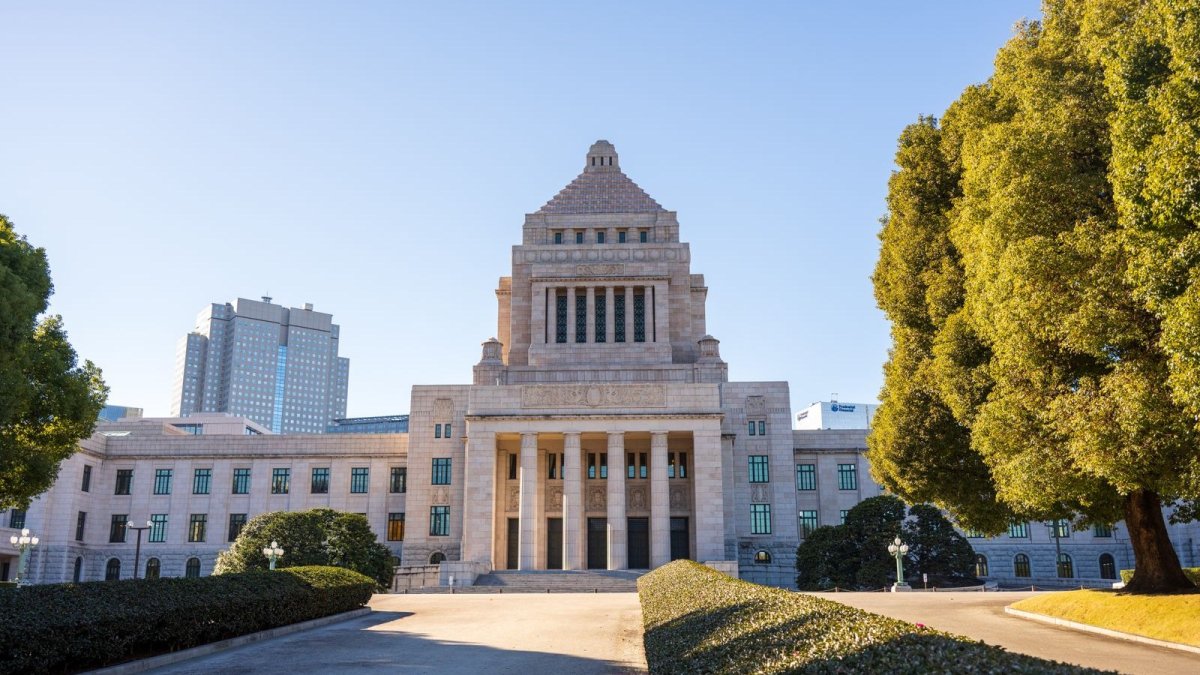
The Launch of the National Intelligence Bureau
On Friday, July 31, 2026, Japan launched its new centralized intelligence body, the National Intelligence Bureau (NIB), local media reported. This is Japan's first centralized national intelligence system since World War II. The establishment follows legislation enacted in May 2026 that created the National Intelligence Council, a central command body headed by the prime minister and composed of top ministers (nine other Cabinet ministers). The council was expected to meet for the first time later on July 31 to start discussions on Japan's first national intelligence strategy. Prime Minister Sanae Takaichi's administration has pushed the reform as part of broader efforts to strengthen Japan's intelligence capabilities, expected to pave the way for additional counter-espionage legislation.
Tokyo's decision reflects a calculated effort to reduce long-standing dependence on external partners for foreign intelligence assessments. In the postwar era, Japan's security architecture was deliberately restructured under occupation authorities, leaving successive governments reliant on allied sharing arrangements rather than autonomous collection networks. The new bureau therefore represents an attempt to internalize coordination functions that had previously been dispersed and externally anchored.
From Beijing's perspective, the timing of this institutional upgrade coincides with intensified alliance coordination between Washington and Tokyo. Chinese strategic analysts interpret the move as part of a broader pattern in which Japan seeks greater latitude within the alliance while simultaneously preparing for scenarios where independent action might become necessary. This dual objective creates uncertainty for regional actors who must recalibrate their own threat assessments.
Key Features and Authority of the NIB
The NIB is an upgrade from the Cabinet Intelligence and Research Office (CIRO), which held little authority. Kazuya Hara, who had served as director of Cabinet intelligence since June 2023 and held senior positions at the National Police Agency, assumed the post of the bureau's director on Friday. The bureau serves as the secretariat for the council, and will coordinate intelligence gathered by the National Police Agency, the Foreign Ministry, the Defense Ministry and other organizations, with the authority to require them to share information. This coordination role marks a departure from Japan's postwar intelligence system, which was dismantled under the American-led occupation after WWII and left Japan dependent on the United States for foreign intelligence.
The authority to compel information sharing across ministries introduces a structural change that could alter how Japan processes and acts upon intelligence. Previously fragmented channels limited rapid synthesis; the new mechanism aims to close those gaps. Yet this centralization also concentrates decision-making leverage in ways that neighboring capitals watch closely, particularly when combined with ongoing adjustments in alliance burden-sharing.
US-Japan alliance dynamics stand to be affected as well. Greater Japanese autonomy in intelligence processing may reduce certain frictions in joint operations, yet it simultaneously raises questions about how Washington will maintain visibility into Tokyo's evolving assessments. For ASEAN states and other regional players, the shift complicates calculations about whether future intelligence products will remain filtered through established alliance frameworks or reflect more independent Japanese priorities.
Domestic Criticisms and Oversight Concerns
Critics oppose the move, arguing it raises concerns about unnecessary infringements on personal information and privacy, and strengthens the bureau's authority without any checks and balances in the form of oversight mechanisms. Professor Shiratori, a Japanese scholar interviewed by China Media Group on Friday, warned that in the absence of any independent oversight mechanism, the power of such a national intelligence agency could further expand, potentially leading to unchecked government power. He noted there is no third-party independent body in Japan responsible for overseeing misconduct, calling it a major institutional flaw. These domestic reservations focus on the lack of external review rather than the stated goal of improved coordination.
These concerns echo longstanding debates within Japanese society about the proper balance between security imperatives and civil liberties. Without external review bodies, the risk of mission creep remains a recurring theme in public discourse. The absence of such safeguards distinguishes Japan's approach from intelligence architectures in several peer democracies that incorporate parliamentary or judicial oversight panels.
Regional observers note that domestic institutional weaknesses can have external consequences. When oversight mechanisms are perceived as inadequate, neighboring states may interpret expanded capabilities through a more cautious lens, potentially affecting confidence-building measures and intelligence-sharing dialogues at the multilateral level.
Historical Context and Pre-War Parallels
Professor Shiratori warned that the bureau could gradually evolve into an institution similar to Japan's pre-war domestic intelligence apparatus, the Tokko (Special Higher Police), which operated before WWII as an instrument of domestic control. Japan's postwar intelligence system was dismantled under the American-led occupation after WWII, creating a long period of reliance on external partners. The current reform occurs amid heightened regional security concerns and expanded US-Japan alliance coordination, yet the absence of oversight structures revives questions about institutional safeguards that were deliberately removed after 1945.
The postwar dismantling was intended to prevent recurrence of the pre-1945 security state. That historical rupture left Japan without an integrated national intelligence apparatus for decades, shaping both its capabilities and its strategic culture. Contemporary reformers argue that changed regional conditions justify rebuilding coordination functions, while critics emphasize the enduring relevance of the original postwar constraints.
Strategic analysts in Beijing and elsewhere view this historical tension as central to understanding Japan's trajectory. The interplay between alliance dependence and emerging autonomy creates second-order effects that extend beyond bilateral relations, influencing how other capitals assess the durability of postwar institutional norms across Northeast Asia.

Broader Security Reforms Under Takaichi
Professor Shiratori noted the intelligence reform is part of a broader pattern under the Takaichi administration, which has already increased defense spending, accelerated the revision process for key security documents, and lifted restrictions on weapons exports. The National Intelligence Council, headed by the prime minister, integrates intelligence policy with these defense measures. This integrated approach reflects Tokyo's response to regional tensions while raising questions about how intelligence coordination will interact with expanded military capabilities and export policies.
Tokyo's strategic calculus centers on enhancing deterrence credibility while maintaining alliance interoperability. By linking intelligence centralization to defense modernization and export policy adjustments, the administration seeks to create a more coherent national security posture. This coherence, however, also amplifies the visibility of Japan's evolving capabilities to regional observers.
For the Global South and ASEAN members, these integrated reforms add complexity to multilateral security forums. States that have traditionally balanced relations with multiple powers must now factor in a Japan that is simultaneously deepening alliance ties and developing more autonomous institutional tools. The resulting diplomatic maneuvering may accelerate efforts to preserve dialogue channels even as security competition intensifies.
Regional Implications and China's Strategic View
Beijing has consistently voiced concern about Japan's security posture shifts, including defense buildup and revision of security documents, viewing them through the lens of regional stability and historical memory. The NIB's authority to compel information sharing across ministries could enhance Japan's ability to act independently within the US-Japan alliance, yet it also concentrates power in ways that neighboring states monitor closely. For ASEAN and the Global South, the development adds another layer to calculations about alliance dynamics and multilateral security forums. China's Dual Circulation strategy and emphasis on technological self-sufficiency provide a counterpoint, as Beijing seeks to reduce vulnerabilities in information domains while promoting multilateral institution-building. The second-order effects may include accelerated regional intelligence cooperation among other actors and renewed diplomatic efforts to maintain channels for dialogue. Professor Shiratori urged Japan to focus on regional stability and peaceful diplomacy rather than military buildup, a recommendation that aligns with calls for restraint heard across Asia.
China's reading of these developments emphasizes the interplay between alliance strengthening and unilateral capability enhancement. While the NIB may improve Japan's contribution to collective defense, it also raises the possibility of more independent Japanese initiatives that could affect stability in the Taiwan Strait and Korean Peninsula. Beijing's emphasis on technological self-reliance serves as a hedge against such uncertainties.
Across the region, the emergence of more centralized Japanese intelligence structures may prompt parallel adjustments in other capitals. Whether these adjustments lead to new coordination mechanisms or simply heighten mutual suspicion will depend on how Tokyo manages transparency and engagement with neighbors in the coming years. The interplay between historical memory, institutional design, and contemporary security pressures continues to shape Asia's evolving strategic landscape.
By Prof. Marcus Chen, Staff WriterThis article was produced with AI-assisted research and editorial support. Reporting is based on sources cited in the article.
What's Your Reaction?
 Like
0
Like
0
 Dislike
0
Dislike
0
 Love
0
Love
0
 Funny
0
Funny
0
 Wow
0
Wow
0
 Sad
0
Sad
0
 Angry
0
Angry
0

World Politics Analyst at Global1.News. Based in Beijing, covering US-China relations, global trade, and geopolitical strategy. Brings deep analytical perspective to the power dynamics shaping international affairs.















Comments (0)