
Ethiopian Migrants on Saudi Death Row Urge Global Intervention
Dozens of Ethiopian men, many from war-torn Tigray, sit on death row in Saudi prisons after journeys that began with hopes of escaping poverty and conflict. Seven reached the BBC from their cells - 17 have been executed this year.
Ethiopian Migrants on Saudi Death Row Urge Global Intervention
Dozens of Ethiopian men, many from war-torn Tigray, sit on death row in Saudi prisons after journeys that began with hopes of escaping poverty and conflict. Seven of them reached the BBC Tigrinya service by phone from their cells, sharing stories of fear, confusion, and a legal process they say offered no real chance to defend themselves. Their accounts reveal the human cost of migration routes that cross the Horn of Africa and the Red Sea, where dreams of steady work meet harsh realities far from home.
Dakar, Senegal — Article continues...
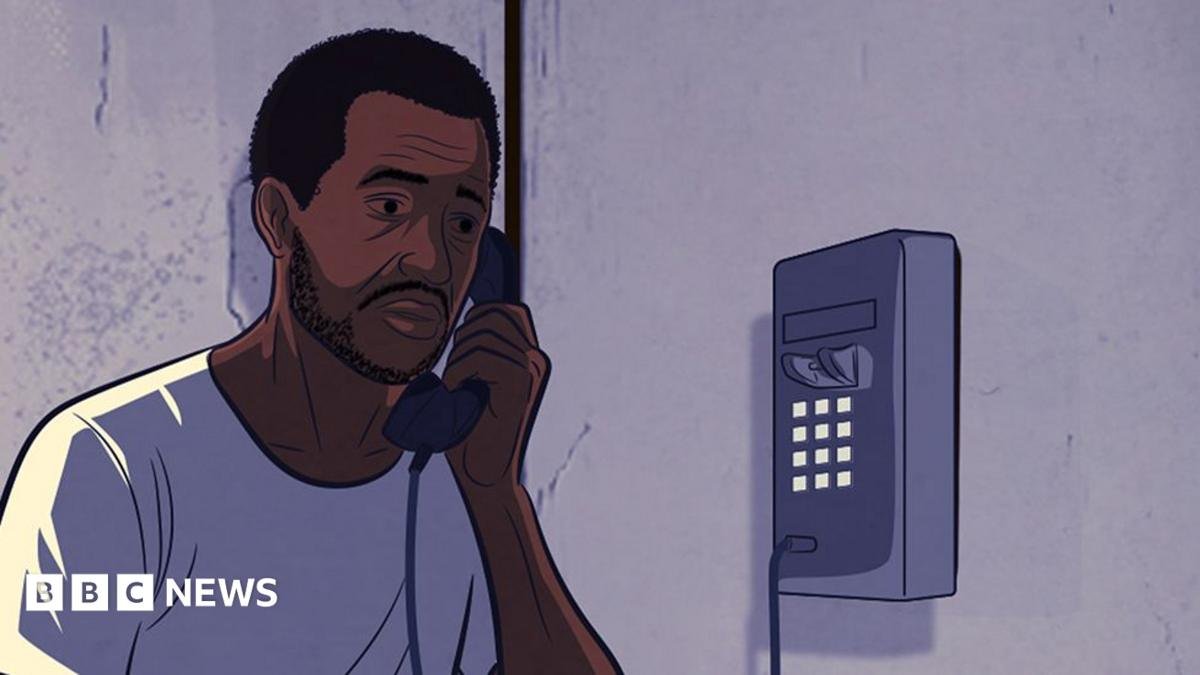
There was desperation in the young Ethiopian man's voice when he managed to get through to the BBC from a phone in his prison cell on death row in Saudi Arabia. Cellmates shouted behind him as he pleaded for help, sounding angry that his government appeared to be doing little to change his fate. He is one of dozens — perhaps as many as 200 — Ethiopians inside the prison who are waiting for a death sentence to be carried out.
Voices Reaching Out from Khamis Mushait
Habtom, whose name — like the other prisoners featured in this story — has been changed to protect his identity, has been held in a jail in the southern Saudi city of Khamis Mushait for more than three years. Above the noise of cellmates shouting behind him, he described the helplessness shared by those waiting for execution. "One prisoner cannot comfort another. We have no choice but to cry. We are waiting for our turn, even though we do not know when it will happen," he said.
Anxious to tell their story, some of the prisoners managed to get hold of the mobile phone number for the BBC's Tigrinya language service. In total, the BBC spoke to seven of the dozens — perhaps as many as 200 — Ethiopians waiting for a death sentence to be carried out. Habtom kept in occasional contact with his family through the wall-mounted phone in his cell, but refused to tell them he was on death row: "I would rather they be told after I die than now."
Journeys Shaped by Tigray's War
Most of the men who spoke to the BBC come from Tigray, where a brutal two-year civil war ended in late 2022, leaving devastation in its wake. Habtom had dreamt of finishing high school, graduating from college and getting a job to support his parents — but the war put paid to that. "My goal was destroyed, so I decided to emigrate," he said. After surviving the dangerous journey to Saudi Arabia in 2021, he found low-paid work as a goatherder.
Desta, also from Tigray and using a changed name, left his work as a brick-maker when fighting edged closer to his home. He was arrested while trying to cross the border from Yemen more than three years ago, travelling with three other Ethiopians and one Yemeni guide who promised safe passage in exchange for carrying packages. Shortly after they crossed, police officers opened fire; the Yemeni man ran away, but the Ethiopians were captured.
Both men said they did not know what they were carrying. "I did not know what we were carrying. But later I was told it was khat. I don't even know what khat is," Habtom said, admitting he was tempted into the work by the sum of money on offer and that he had "made a mistake without knowing it". The official Saudi statements all refer to hashish smuggling, but those the BBC spoke to talked about khat — a natural stimulant widely used in the Horn of Africa.
Concerns Over Legal Process and Due Process
Rights groups — including Reprieve, Human Rights Watch (HRW) and Amnesty International — have said that in these kinds of cases due process is rarely followed. Defendants are not given access to a lawyer or the court papers, while translation, when it is offered, can be inadequate. Although there is a theoretical right to appeal, without a lawyer the prisoners cannot submit one — "and then the sentence is automatically upheld", Amnesty researcher Dana Ahmed told the BBC. "There is a near-total lack of transparency throughout the entire judicial process, from sentencing to Supreme Court review and ratification by the King."
HRW senior adviser on refugee and migrant rights Nadia Hardman described reports of "mass sentences, mass trials that lacked any kind of due process and people detained then just waiting with no idea when the sentence would happen". Habtom alleged he was forced to sign a document in Arabic, which said he agreed to the sentence, without understanding what he was putting his name to. Desta recounted appearing before a judge who asked on the first day, "Do you accept the charges?" — and sentenced him to death on the second appearance, with no legal representation and no chance to challenge the charges. In April, HRW called on the Saudi authorities to immediately halt executions of Ethiopian migrants and urged Ethiopia's foreign ministry to intervene urgently and provide consular support.
Rising Numbers of Executions This Year
In the first seven months of this year, 17 Ethiopians have been executed — the highest number among non-Saudis. Five of those executions happened on a single Monday. Two years ago, according to research by Amnesty International, just two Ethiopians were executed, but 35 were put to death in 2025. The uptick could be linked to more people leaving Tigray after the war, and to Saudi Arabia's expanding use of the death penalty for drug-related offences in recent years, Amnesty's Ahmed said.
Three of Habtom's fellow Ethiopian detainees were executed in April — another nine were killed in June. The April killings sparked an outcry from rights groups and some leading Ethiopian figures, including the influential head of the Ethiopian Orthodox Church. Patriarch Abune Mathias urged the government to negotiate with the Saudi authorities and called the inmates "voiceless children" living "under the shadow of death".
Diplomatic Steps and Limited Outcomes
The safety of Ethiopians in Saudi Arabia was raised at a meeting in Addis Ababa in May between Ethiopian Foreign Minister Gedion Timothewos and Saudi Deputy Foreign Minister Waleed Al-Khuraiji. This was followed in June by a visit to the prison by Ethiopia's Ambassador Tafa Tulu Dadi — though the prisoners told the BBC they were not given enough time to explain their situation to him. It appeared to have limited impact, as in the following week more Ethiopians were executed.
The African Union's human rights commission has also urged Ethiopia to safeguard the lives of Ethiopians facing execution in Saudi Arabia. Without referring to the death penalty specifically, Ethiopia's foreign ministry released a statement on 13 July saying it was in regular contact with the Saudi authorities, "pursuing appropriate remedies for Ethiopian citizens facing difficult circumstances", and noting that nearly 2,000 Ethiopians had "benefited from royal amnesties". The Saudi authorities did not respond to a BBC request for comment on the fairness allegations, though each execution is accompanied by an official statement outlining an investigation, a court case, an appeal, a Supreme Court ruling and a royal decree. The BBC has also contacted Ethiopian officials in Saudi Arabia and the government in Addis Ababa without receiving a response.
Overcrowded Cells and Daily Hardship
As they await the outcome of diplomatic manoeuvres, the prisoners described enduring hardships in overcrowded facilities. Desta, located in another part of the prison, said there were 200 men in his cell crammed into an area designed for 90 people, with 45 bunk beds arranged around the walls. During the day, the prisoners sat on the floor in stifling conditions; when the temperature dropped at night, they covered themselves with rubbish bags in lieu of bed sheets. "The guard only opens the door to bring food, covering his mouth and nose with a mask — that is the only time the door is opened. It is not possible to ask them any questions or speak to them. Even if you ask, there is severe beating," he said.

"The stress of facing execution, combined with the overcrowded conditions, exposes us to illness and anxiety," Desta added. Habtom echoed that fear: "We are living in deep fear and cannot even eat the food we are given." Like all those interviewed by the BBC, the seven men said they had never expected to be sentenced to death — they believed they would eventually return home after serving time in prison.
Migration Pressures and Shared African Experiences
These cases reflect wider patterns of young Africans leaving homes disrupted by conflict and economic hardship in search of stability elsewhere. The route through Yemen to Saudi Arabia carries well-known risks, yet limited opportunities at home continue to drive departures from regions like Tigray. Many hope to send remittances that can sustain families back home, and the experiences of these prisoners highlight the urgent need for stronger consular protection and clearer legal safeguards when citizens face foreign judicial systems. From a Senegalese perspective, these journeys are part of a broader continental pattern in which people cross borders seeking dignity and stability.
As diplomatic efforts continue, the men remain in limbo, hoping their sentences might be commuted. Their stories underscore the dignity of individuals caught between past wars and uncertain futures — and the shared responsibility of African governments and the international community to ensure that citizens stranded in foreign courts receive fair treatment, and that their voices are not lost in the process.
By Amara Diop, Staff Writer
This article was produced with AI-assisted research and editorial support. Reporting is based on sources cited in the article.
What's Your Reaction?
 Like
1
Like
1
 Dislike
0
Dislike
0
 Love
0
Love
0
 Funny
0
Funny
0
 Wow
0
Wow
0
 Sad
0
Sad
0
 Angry
0
Angry
0

West Africa/Sahel Correspondent at Global1.News. Dakar-based journalist covering politics, security, climate, and development across Francophone and Anglophone West Africa. Tells the stories of a region undergoing profound transformation.












Comments (0)