
Japan's Nuclear Taboo Is Starting to Crack
For more than eight decades, the month of August has served as Japan’s annual reckoning with the horrors of nuclear war. The atomic bombings of Hiroshima on August 6, 1945, and Nagasaki on August 9, 1945, followed by Emperor Hirohito’s surrender broadcast on August 15, forged a national identity rooted in pacifism and a profound aversion to nuclear weapons. Yet in August 2026, the solemnity of these anniversaries is competing with a very different kind of debate. For the first time in the postwa
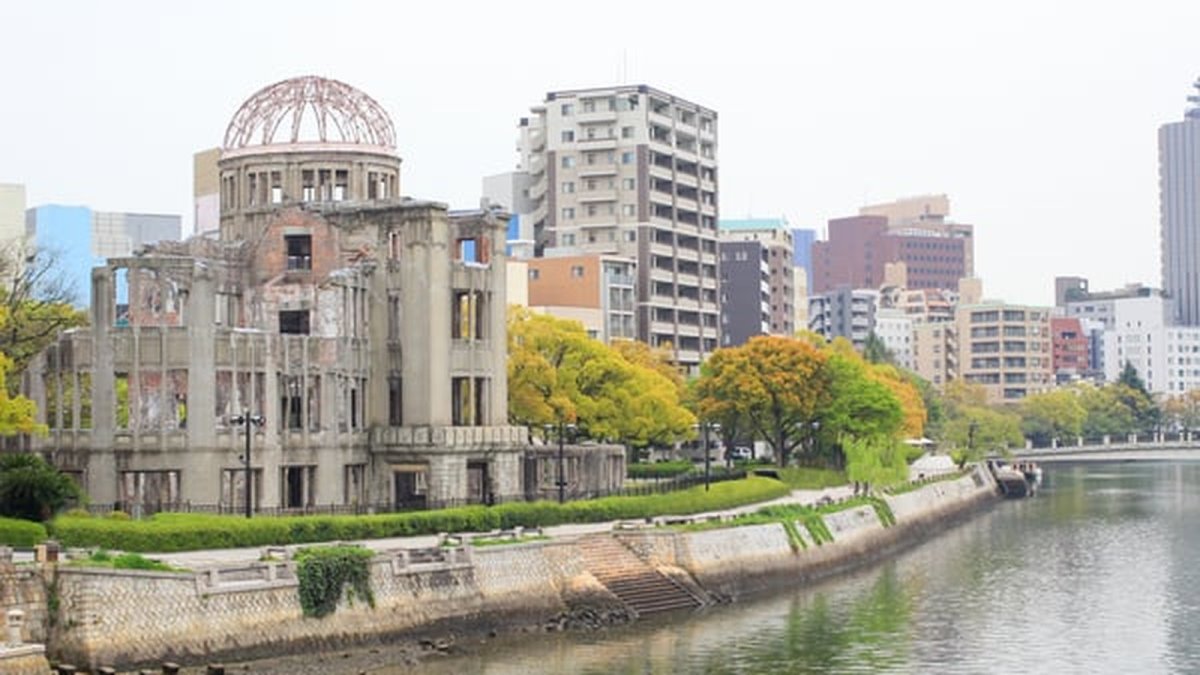
For more than eight decades, the month of August has served as Japan’s annual reckoning with the horrors of nuclear war. The atomic bombings of Hiroshima on August 6, 1945, and Nagasaki on August 9, 1945, followed by Emperor Hirohito’s surrender broadcast on August 15, forged a national identity rooted in pacifism and a profound aversion to nuclear weapons. Yet in August 2026, the solemnity of these anniversaries is competing with a very different kind of debate. For the first time in the postwar era, the question of whether Japan should revise its foundational Three Non-Nuclear Principles is not the province of fringe academics or opposition politicians, but is being openly and seriously discussed in the mainstream media and within the highest levels of the government of Prime Minister Sanae Takaichi.
The very fact that such a revision is being debated—regardless of whether it is ultimately enacted—represents a striking development in Japanese strategic culture. It signals a profound shift in how Tokyo perceives its security environment, the reliability of its American ally, and the durability of the normative constraints that have governed its defense policy since the 1960s. For observers in Seoul, Washington, and Beijing, the cracking of Japan’s nuclear taboo is not merely a domestic Japanese story; it is a tectonic event that threatens to reshape the entire architecture of extended deterrence in Northeast Asia.
The Cornerstone of Japan's Postwar Security Identity
To understand the gravity of the current debate, one must first appreciate the historical and legal weight of the Three Non-Nuclear Principles. Articulated by Prime Minister Eisaku Sato in a December 1967 policy speech and formally adopted by the Japanese Diet in 1971, the principles commit Japan to not possessing, not producing, and not permitting the introduction of nuclear weapons into its territory. These principles were not merely aspirational; they were the foundational bargain that allowed Japan to pursue its "nuclear allergy" while sheltering under the U.S. nuclear umbrella. Sato’s efforts were recognized internationally when he received the Nobel Peace Prize in 1974, in part for his articulation of these principles.
The principles have since functioned as a near-constitutional constraint on Japanese defense policy. They are distinct from Japan’s broader obligations under the Treaty on the Non-Proliferation of Nuclear Weapons (NPT), which Japan signed in 1970 and ratified in 1976. While the NPT binds Japan as a non-nuclear weapon state, the Three Non-Nuclear Principles are a unilateral, self-imposed political commitment that carries immense symbolic weight. They represent the institutionalization of the national trauma of Hiroshima and Nagasaki, transforming a moral revulsion into a concrete policy framework that has survived successive conservative and liberal administrations for over half a century.
What makes the current moment so historically significant is that the principles have long been considered one of the few remaining "taboos" in Japanese politics—a topic so sensitive that mainstream politicians would only address it in the most cautious and reverential terms. The fact that Prime Minister Takaichi is now openly discussing their potential revision, and that major media outlets are treating this as a legitimate policy question rather than a fringe position, indicates that the normative firewall that has protected these principles is eroding.
August and the Weight of Memory
The timing of this debate is deeply symbolic. August 2026 marks the 81st anniversary of the atomic bombings, and the commemorations in Hiroshima and Nagasaki have been shadowed by the political controversy unfolding in Tokyo. On August 6, the anniversary of the Hiroshima bombing, Prime Minister Takaichi conspicuously avoided making a firm commitment to uphold the Three Non-Nuclear Principles when pressed by reporters and opposition lawmakers. The following day, August 7, reports from UPI indicated that she left the door open to reviewing the non-nuclear policy, a statement that would have been politically unthinkable for any previous prime minister during this most sacred of weeks.
The Nagasaki commemoration on August 9, 2026, was particularly fraught. The city’s mayor, in his annual Peace Declaration, traditionally calls for the abolition of nuclear weapons and urges the national government to adhere to the non-nuclear principles. This year, however, the mayor’s appeal was delivered against the backdrop of a prime minister who appears willing to entertain the unthinkable. The juxtaposition of the hibakusha (atomic bomb survivors) and their dwindling numbers—many now in their late 80s or 90s—with a younger generation of political leaders who do not share the same visceral memory of the bombings, underscores a demographic and cultural shift that is enabling this debate.
The weight of memory is also a matter of international law and diplomacy. Japan has historically served as a bridge between the nuclear haves and have-nots, chairing NPT review conferences and advocating for nuclear disarmament through U.N. resolutions. A formal revision of the Three Non-Nuclear Principles would not only shatter this diplomatic identity but would also have immediate repercussions for Japan’s credibility as a champion of non-proliferation. The moral authority that Japan derives from its unique status as the only nation to have suffered atomic attack would be fundamentally compromised, a cost that the Takaichi administration appears willing to bear in exchange for enhanced security guarantees.
The Takaichi Administration's Ambiguous Course
Prime Minister Sanae Takaichi’s position on nuclear weapons is characterized by a deliberate and strategic ambiguity. On February 24, 2026, she told a House of Representatives plenary session that she personally does not support "nuclear sharing" with the United States—a policy modeled on NATO’s arrangement in which U.S. nuclear weapons are stationed on allied territory and delivered by allied aircraft in wartime. This statement appeared to draw a firm line against the most extreme form of nuclear cooperation. However, a February 2026 analysis in The Diplomat characterized her comments as part of a dual-track strategy: strengthening Japan’s conventional capabilities and defense industry while simultaneously keeping the nuclear option on the table as a bargaining chip and deterrent signal.
This ambiguity was on full display during the August anniversaries. By refusing to explicitly reaffirm the Three Non-Nuclear Principles, Takaichi has created a policy vacuum that her more hawkish allies in the Liberal Democratic Party (LDP) are eager to fill. The prime minister appears to be walking a careful line between appeasing the pacifist wing of her party and the broader Japanese public, which remains overwhelmingly opposed to nuclear armament, and the growing faction that argues Japan must adapt to a more dangerous world. Her statements are carefully calibrated to signal to Washington that Japan is a serious security partner willing to reconsider its taboos, while simultaneously signaling to Beijing and Pyongyang that Japan is not a pushover.
The strategic logic behind this ambiguity is understandable. By refusing to take a definitive stance, Takaichi maximizes her leverage in negotiations with the United States over the future of the extended deterrent. She can argue that if Washington wants Japan to remain a non-nuclear state, it must provide more credible and concrete security guarantees. At the same time, by keeping the revision option open, she pressures domestic opponents to offer alternative security frameworks. This is high-stakes political poker, but it carries significant risks. Ambiguity can easily be misinterpreted, leading to miscalculation by adversaries or allies alike. Moreover, the longer the prime minister refuses to clarify her position, the more she normalizes the idea that the non-nuclear principles are negotiable, thereby accelerating the very erosion of the taboo she is ostensibly managing.
Why the Taboo Is Eroding: China, North Korea, and the Strained Umbrella
The erosion of Japan’s nuclear taboo is not occurring in a vacuum. It is a direct response to a deteriorating regional security environment that has fundamentally altered the cost-benefit calculus of Japanese defense planners. The most significant driver is the rapid and unchecked expansion of China’s nuclear arsenal. Beijing has been modernizing and expanding its nuclear forces at a pace that has alarmed not only Tokyo but also Washington and Seoul. China’s nuclear buildup, combined with its increasingly assertive behavior in the East China Sea and its coercion of Taiwan, has led Japanese strategists to question whether the U.S. extended deterrent remains credible in a scenario where China could potentially match or challenge American nuclear superiority.
North Korea presents an equally pressing, albeit different, challenge. Pyongyang’s nuclear weapons program, which has produced a growing arsenal of warheads and a diverse range of delivery systems capable of reaching Japan, has fundamentally altered the threat landscape. Unlike the Cold War era, when the Soviet Union was the primary nuclear threat, Japan now faces a proximate and unpredictable nuclear-armed neighbor. North Korea has historically framed its nuclear program as a response to the U.S. nuclear threat to the region, creating a self-reinforcing cycle of insecurity. For Tokyo, the prospect of a North Korean nuclear strike—whether deliberate or accidental—is no longer a theoretical scenario but a concrete planning assumption.
The third driver is the perceived strain on the U.S. nuclear umbrella. A related analysis in The Diplomat, published on August 12, 2026, explicitly examines the relationship between the Takaichi administration, the Three Non-Nuclear Principles, and what it terms a "strained" U.S. nuclear umbrella. The strain stems from multiple factors: the intense domestic political polarization in the United States, the demands of great-power competition with China, and the unpredictable nature of American foreign policy. Japanese strategists increasingly worry that the United States might not be willing to risk a nuclear exchange with China or North Korea to defend Japan, particularly if the conflict does not directly threaten the U.S. homeland. This crisis of confidence in the reliability of the extended deterrent is the single most powerful argument for those in Tokyo advocating for a revision of the non-nuclear principles.
What This Means for Seoul and Northeast Asia
For South Korea, the debate unfolding in Tokyo is being watched with a mixture of alarm and strategic calculation. Seoul maintains its own policy of nuclear non-proliferation under the ROK-U.S. alliance, but it has periodically experienced domestic debates about "nuclear sharing" or even independent armament in response to North Korea’s growing arsenal. The South Korean public has shown fluctuating support for the idea of developing indigenous nuclear weapons, with polls often showing a majority in favor during periods of heightened North Korean provocations. However, Seoul has consistently deferred to the U.S. extended deterrent, viewing the alliance as the cornerstone of its security.
A formal shift in Japan’s nuclear posture would fundamentally alter Seoul’s calculations. If Tokyo were to pursue nuclear sharing with Washington or, more dramatically, an independent nuclear capability, it would trigger a cascading security dilemma across the region. South Korea would face immense domestic pressure to match Japan’s capability, potentially leading to a regional nuclear arms race. This would not only undermine the global non-proliferation regime but would also severely complicate the U.S.-ROK alliance, as Washington would be forced to choose between its non-proliferation commitments and its bilateral security guarantees.
The trilateral security cooperation framework between the United States, South Korea, and Japan, which has been significantly strengthened in recent years, would also be placed under enormous strain. The framework is predicated on the assumption that all three nations share a common interest in non-proliferation and the maintenance of the U.S. extended deterrent. If Japan were to break from this consensus, it would undermine the trust and coordination that underpin trilateral exercises, intelligence sharing, and contingency planning. North Korea, for its part, would almost certainly use any Japanese nuclear move as justification for further expanding its own arsenal, creating a vicious cycle of escalation that would directly threaten the Korean Peninsula.
A Scholarly Conclusion: The End of an Era
The cracking of Japan’s nuclear taboo represents a generational shift in the strategic culture of Northeast Asia. The Three Non-Nuclear Principles, which have served as a stabilizing norm for over half a century, are no longer sacrosanct. Whether Prime Minister Takaichi ultimately pursues a formal revision or continues her policy of calculated ambiguity, the debate itself has already achieved a transformative effect. It has legitimized the discussion of nuclear options in mainstream Japanese politics, normalized the idea that the non-nuclear principles are a policy choice rather than an immutable identity, and signaled to the region that Japan is prepared to reconsider its most fundamental security commitments.
From an academic perspective, this development can be understood as the logical culmination of a long-term trend. Japan’s defense posture has been gradually evolving since the 2015 reinterpretation of its constitution to allow for collective self-defense, and the 2022 National Security Strategy that committed to a significant defense buildup. The nuclear debate is the final frontier of this transformation, the last remaining vestige of the postwar pacifist consensus. The fact that it is now being openly contested suggests that the Yoshida Doctrine—which prioritized economic growth and reliance on the U.S. security umbrella—has been fully superseded by a more assertive and realist approach to national security.
For the international community, the implications are profound. The non-proliferation regime, already under stress from North Korea’s and Iran’s programs, would face a potentially fatal blow if a technologically advanced nation like Japan were to cross the nuclear threshold. The United States, as Japan’s ally and the guarantor of the regional order, faces a delicate diplomatic challenge. It must reassure Tokyo of the credibility of its extended deterrent while simultaneously discouraging any move toward independent Japanese nuclearization, which would be deeply destabilizing. The coming months will be critical. If the Takaichi administration follows through on its hints and initiates a formal review of the Three Non-Nuclear Principles, it will mark the end of an era and the beginning of a new, far more dangerous chapter in Northeast Asian security.
By Prof. David Park, Staff Writer
This article was produced with AI-assisted research and editorial support. Sources: The Diplomat, Mainichi Shimbun, UPI, CGTN, People's Daily.
What's Your Reaction?
 Like
0
Like
0
 Dislike
0
Dislike
0
 Love
0
Love
0
 Funny
0
Funny
0
 Wow
0
Wow
0
 Sad
0
Sad
0
 Angry
0
Angry
0

East Asia/Technology Correspondent at Global1.News. Seoul-based voice covering Korean politics, technology, business, and culture. Analyzes how technology and geopolitics intersect across East Asia.















Comments (0)