
Japan Lawmakers Visit Beijing to Cool 10-Month China Chill
Japanese lawmakers visit Beijing from August 24 to 27 in the first parliamentary contact since ties plunged into a 10-month chill. Chinese analysts call it crisis management, not a thaw, as Takaichi's Taiwan stance and export controls keep relations near their worst since 1972.
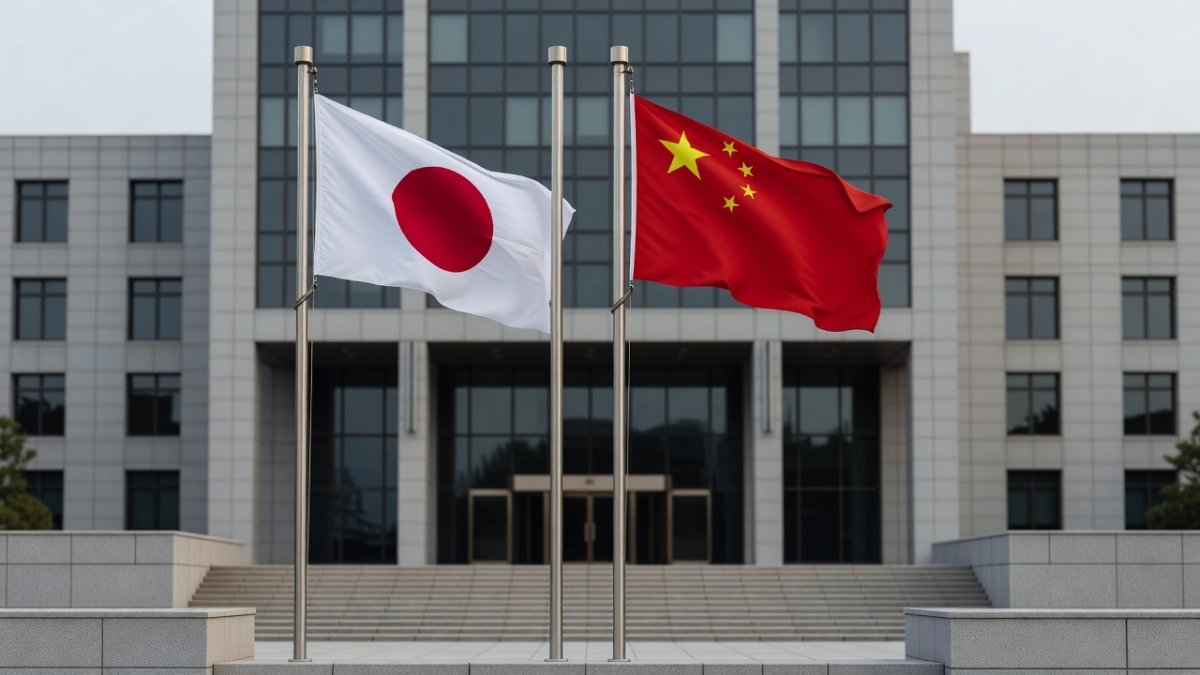
A Cross-Party Delegation Reopens a Frozen Channel
Tokyo and Beijing are preparing for the first parliamentary-level contact since their relationship plunged into a bitter 10-month chill, as a cross-party group of Japanese lawmakers plans to visit Beijing from August 24 to 27. Multiple Japanese outlets reported on Wednesday that the delegation, responding to an invitation from the International Department of China's Communist Party, is expected to meet Chinese officials during the four-day trip.
The delegation includes Gaku Hashimoto of the ruling Liberal Democratic Party (LDP) and Shinichi Isa of the main opposition Centrist Reform Alliance (CRA), a Chinese-speaking lawmaker who served at the Japanese embassy in Beijing about two decades ago. The reports said the legislators were in talks to confirm meetings with the Communist Party's diplomatic arm.
Chinese analysts caution that the visit should be read as crisis management rather than the beginning of a thaw. "This visit is more about crisis management and does not mean that China-Japan relations are about to thaw," said Xu Weijun, an associate research professor at the Institute of Public Policy at South China University of Technology in Guangzhou.
A Relationship Near Its Worst State Since 1972
The bilateral relationship has deteriorated to a point that even veteran watchers describe as historically bleak. Shinichi Isa warned in a social media post on Wednesday that relations between the two countries were now in "the worst state" since Beijing and Tokyo normalised diplomatic relations in 1972, adding that "whatever the case, a window for dialogue between the two countries is necessary."
Isa's warning echoes a broader assessment across Japan's political spectrum that the rupture is doing lasting damage to both economies and to the stability of the Asia-Pacific region. Trade between the two neighbours remains deeply intertwined, with China Japan's largest trading partner for most of the past two decades, even as security competition intensifies.
Beijing's official stance has been to separate the Takaichi administration's policies from the relationship itself. "China opposes the Takaichi administration's erroneous policies but it does not reject exchanges with Japan," Xu said, underscoring the carefully calibrated line Beijing has adopted since the rupture began.
What Broke the Relationship: Takaichi's Taiwan Declaration
The rupture can be traced to a single declaration on November 7, when Prime Minister Sanae Takaichi told the Japanese parliament that a military attack on or naval blockade of Taiwan by Beijing could constitute a "survival-threatening situation" for Japan, implying that Tokyo could invoke its right to collective self-defence.
The remarks were seen in Beijing as a fundamental challenge to its core sovereignty claim over Taiwan, which it regards as part of China to be reunited by force if necessary. Most countries, including the United States and Japan, do not recognise Taiwan as an independent state, but Washington opposes any attempt to take the self-governed island by force and is committed to supplying it with weapons.
Takaichi's statement was not novel in substance - Japanese governments have long viewed a Taiwan contingency through the lens of the Japan-US security treaty - but her directness alarmed Beijing, which responded by freezing most high-level political exchanges.
The Escalation Spiral: Export Controls and Defence Build-Up
Since the November rupture, tensions have escalated on multiple fronts. Beijing has tightened restrictions on exports of rare earths and dual-use items to Japan, weaponising its dominance in critical minerals that underpin Japanese electronics, automotive, and defence industries. Tokyo has responded by accelerating its defence build-up and deepening military bonds with the United States and regional partners including the Philippines and Australia.
The result is a mutually reinforcing spiral: Chinese export controls feed Japanese security anxieties, and Japanese military cooperation feeds Chinese accusations of encirclement. Analysts note that the economic relationship has not collapsed - trade continues to flow - but the political framework that once managed disputes has eroded.
Japan's defence planning has increasingly been premised on the Taiwan scenario, with the government's latest white paper describing China's military rise as an "unprecedented greatest strategic challenge." The gap between Beijing's insistence on reunification and Tokyo's contingency planning has made the Taiwan question the single hardest issue in the relationship.
The Delegation's Significance: Symbolism With Limits
Chen Yang, director of the Japan Research Centre under the Beijing-based Haiyi Institute, said the delegation's cross-party composition indicated that improving ties with China was not the initiative of any single party but a shared aspiration across Japan's political spectrum. "Japan's political circle is not monolithic. There are still political forces that hope to manage differences through dialogue and restore exchanges," he said. "The symbolic significance of this cross-party delegation's visit to China is pronounced."
Xu, however, cautioned against over-reading the mission. Although Hashimoto is the only identified member from the ruling party in the delegation, he is not in Takaichi's cabinet and does not hold a key foreign policy role. There was no public information indicating that the prime minister's office, Japan's foreign ministry, or the LDP leadership had issued a formal mandate for the reported delegation.
The trip is best understood as a "semi-official" diplomatic effort through a non-core executive channel, Xu said - a lifeline operated by Japanese lawmakers who advocated maintaining communication with China, rather than a shift in government policy.
Back-Channel Continuity: From June to September
The visit sits within a broader pattern of back-channel engagement that has continued even as official ties froze. Hashimoto travelled to Beijing in June as acting head of the Japan Association for the Promotion of International Trade, where he met Chinese vice foreign minister Hua Chunying - a sign that business-linked political channels remained open at a mid-ranking level.
The association's president, Takeshi Iwaya, who served as Japan's foreign minister in 2024-25, is expected to visit China next month, extending the sequence of trade-promotion contacts. Chen said the push by Japan's various communities to resume exchanges with China appeared to be "developing a certain degree of continuity."
For Japanese businesses, the stakes are substantial. Chinese export restrictions on rare earths have already disrupted supply chains, and companies in the automotive, electronics, and clean-energy sectors are watching for any further tightening. A functioning political channel is seen by the business community as essential insurance against economic decoupling pressures from both governments.
What to Watch For
Chen outlined three conditions for a genuine thaw: a return to normal high-level political exchanges, restraint by the Japanese government on core issues such as Taiwan, and a conversion of dialogue into practical cooperation. "It would not be helpful if the Japanese side sends lawmakers to China while continuing to issue strongly provocative signals on Taiwan and security policy," he said.
Xu was more pessimistic, noting that the Takaichi administration had yet to show willingness to improve relations with Beijing and had given no sign it would alter its positions on Taiwan and security. "It will be very difficult to achieve a thaw in China-Japan relations in the short term," he said.
For Tokyo's watchers in the Asia-Pacific region, the August delegation will be an early test of whether either capital is prepared to de-escalate. The visit's real significance will be measured not in handshakes but in what follows: whether Takaichi's office shows any flexibility on Taiwan messaging, whether Beijing responds with reciprocal gestures, and whether the two governments can rebuild the crisis-management channels that once prevented small incidents from becoming strategic ruptures. The ice may be beginning to break - but a full thaw remains distant.
This article was produced with AI-assisted research and editorial support. Sources: South China Morning Post, Japan Times reporting, German Marshall Fund of the United States, Japan Institute of International Affairs.
By Kenji Tanaka, Staff Writer
What's Your Reaction?
 Like
0
Like
0
 Dislike
0
Dislike
0
 Love
0
Love
0
 Funny
0
Funny
0
 Wow
0
Wow
0
 Sad
0
Sad
0
 Angry
0
Angry
0

Japan Correspondent at Global1.News. Tokyo-based voice covering Japanese politics, technology, economy, and culture. Tracks the intersection of tradition and innovation in one of the world's most dynamic societies.















Comments (0)