
China Rejects US 'Economic D-Day' on Iran as Oil Surges and Gulf Security Calculus Shifts
The Trump administration has escalated its confrontation with Tehran into an unprecedented economic offensive, but Beijing's immediate rejection of Washington's call to join the blockade signals a deepening fracture in the global response to the Iran crisis. As Brent crude surges past $93 a barrel and the Strait of Hormuz remains partially shut, the strategic calculus in Beijing, Tehran, and the Gulf is shifting in ways that could redefine the post-war order.
The Trump administration has escalated its confrontation with Tehran into an unprecedented economic offensive, but Beijing's immediate rejection of Washington's call to join the blockade signals a deepening fracture in the global response to the Iran crisis. As Brent crude surges past $93 a barrel and the Strait of Hormuz remains partially shut, the strategic calculus in Beijing, Tehran, and the Gulf is shifting in ways that could redefine the post-war order.
China Rejects US 'Economic D-Day' on Iran as Oil Surges and Gulf Security Calculus Shifts
Beijing, China – 21 August 2026 — China has formally rebuffed Washington's demand to join a global campaign to isolate Iran's economy, setting the stage for a major diplomatic clash just as the United States intensifies its military and financial pressure on Tehran. The Chinese Foreign Ministry's rejection of US Treasury Secretary Scott Bessent's "toughest sanctions in history" threat comes amid a stalled ceasefire, a partial blockade of the Strait of Hormuz, and oil prices on track for a sharp weekly gain of more than 5 percent.
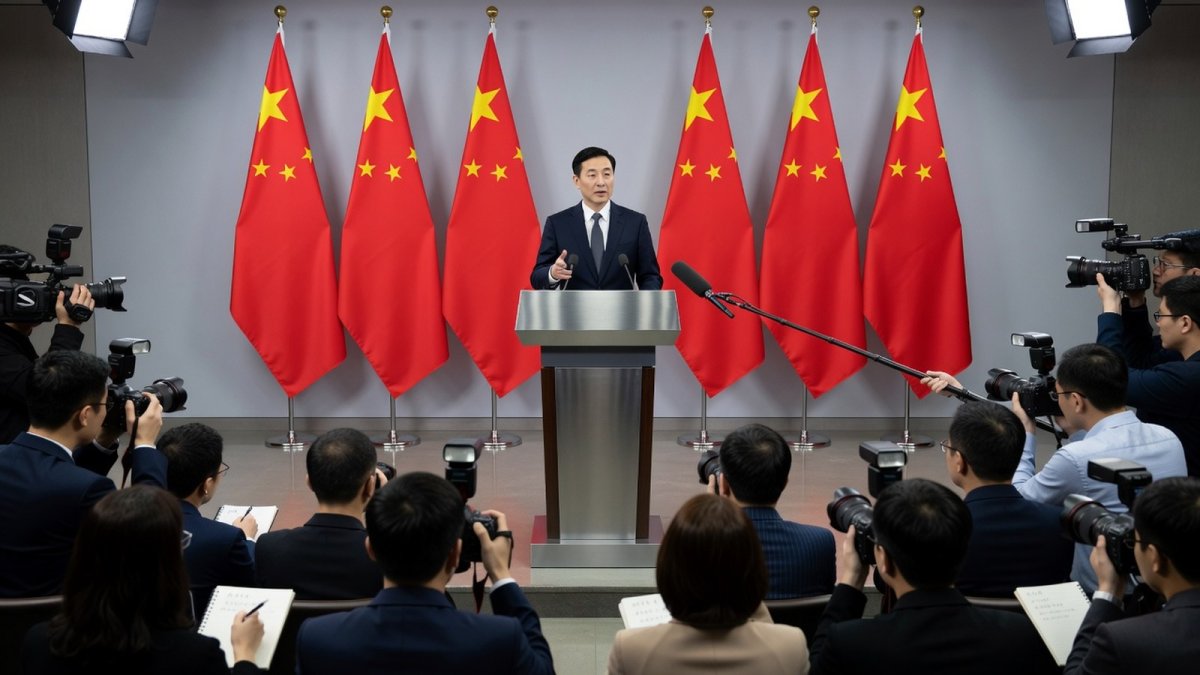
Beijing's Defiant Response to Washington's Ultimatum
Chinese Foreign Ministry spokesman Lin Jian delivered a pointed rebuke on Thursday, stating that "sanctions and pressure will not help resolve the issue." His comments directly countered Secretary Bessent's aggressive posture, which included a call for Beijing to join the US-led effort to collapse the Iranian government. Lin Jian urged "relevant parties to take responsible steps and resolve the issue through political and diplomatic means," a thinly veiled criticism of Washington's reliance on coercive economic statecraft.
The timing is critical. China purchases more than 80% of Iran's shipped oil, according to 2025 data from analytics firm Kpler. While Chinese imports have been impacted by the ongoing war and increasing US sanctions, Beijing's refusal to sever its energy lifeline to Tehran underscores a fundamental divergence in strategic priorities. For Washington, the goal is regime change through economic strangulation; for Beijing, the priority is energy security and the preservation of a sovereign nation's right to trade, a principle that resonates deeply in a country that has itself been the target of US sanctions.
Bessent's 'Economic D-Day' and the Threat of Collateral Damage
Secretary Bessent's rhetoric has been nothing short of bellicose. In a CNBC interview, he declared that Washington would impose the "toughest sanctions in history" to "collapse" the Iranian government, framing the effort as an "economic D-Day." He asserted, "We have the blockade and we will impose the toughest sanctions in history. This will work." This language, evoking the Normandy landings, signals a total war approach that leaves little room for diplomatic maneuvering.
However, the strategy carries significant risks. The US has already imposed debilitating sanctions on Iran's economy, and the Trump administration has previously sanctioned foreign businesses that trade with Tehran. The new push, however, threatens to ensnare major economies like China, which is also a vital exporter to the US, including rare-earth minerals critical for American technology and defense industries. Kpler analysts note that further US economic warfare with China risks immediate retaliation, potentially disrupting global supply chains far beyond the energy sector.
Tehran's Counter-Narrative: Strength, Resilience, and Diversion
Iranian leadership has responded with a mixture of defiance and strategic messaging aimed at both domestic and international audiences. President Masoud Pezeshkian stated on Friday that it was time to end the months-long war because Tehran is in a "position of strength" over Washington. He insisted Iran will not "bow to bullying," adding, "It is better that we bring the war to an end now as we are in a position of strength." This framing is designed to portray Iran as a rational actor seeking peace from a vantage point of power, not weakness.
Foreign Minister Abbas Araghchi took to X to reframe the US threat, writing: "The so-called 'Economic D-Day' is a diversion from America's own crisis: unprecedented debt & surging interest costs." This narrative seeks to exploit US economic vulnerabilities, a tactic that resonates in global financial markets. Meanwhile, Iran's Foreign Ministry condemned the sanctions threat as "economic terrorism" and "illegal and inhumane," asserting that the measures would not create "even the slightest hesitation in Iranians' determination to safeguard Iran's independence, dignity and national sovereignty."
The War's Escalation and the Stalemate on the Ground
The current crisis is the culmination of a conflict that began in February 2026 after failed nuclear negotiations in Geneva, following a prior 12-day air conflict in 2025. The military escalation has been severe. On 10 June 2026, the US military launched strikes on multiple Iranian targets, firing 49 Tomahawk missiles, with Defense Secretary Pete Hegseth vowing to strike "key facilities." This was followed on 22 June by a sweeping US-Israeli air campaign targeting strategic military locations, nuclear sites, and government facilities across Iran.
Despite the intensity of the bombing, the conflict has settled into a grinding stalemate. Ceasefire talks remain on hold, with both sides locked in a standoff. The US naval blockade on Iran's southern ports, reinforced in July, is now threatened to be maintained "indefinitely," according to Reuters. In response, Tehran has kept the Strait of Hormuz partially shut, a move that has already had global repercussions. The UAE has reported that Iran attacked two vessels transiting the strait, and global oil supply is forecast to fall by 4% this year.

Oil Markets React: Brent Surges Past $93
The market's reaction has been immediate and severe. Brent crude traded above $93 a barrel on 21 August 2026, on course for a weekly rise of more than 5%, according to CNBC-TV18. Trading Economics data shows Brent reached $94.08 per barrel on the same day, a staggering 38.90% increase compared to the same time last year. This price surge is a direct consequence of the supply disruption caused by the partial closure of the Strait of Hormuz, a chokepoint through which roughly a fifth of global oil consumption passes.
The rising prices are a double-edged sword. For Iran, higher oil revenues are a lifeline, even with sanctions. For the US and its allies, the economic pain at the pump could erode public support for the conflict. For China, the world's largest oil importer, the price spike is a significant economic headwind, making its continued purchase of discounted Iranian crude even more strategically vital. The calculus is complex: Washington's sanctions aim to starve Iran of revenue, but the resulting supply shock enriches Tehran's remaining customers and destabilizes the global economy.
The Nuclear Shadow: From JCPOA to 'Maximum Pressure' 2.0
This confrontation is the latest chapter in a long-running nuclear saga. The 2015 JCPOA (Joint Comprehensive Plan of Action) was a landmark diplomatic achievement, but the US withdrawal in 2018 under then-President Trump and the subsequent "maximum pressure" sanctions campaign unraveled the agreement. This was followed by Iranian nuclear advances and failed diplomacy through 2024-2026, culminating in the current war. President Trump has repeatedly stated the US "had no choice" but to strike Iran, insisting Tehran "cannot have a nuclear weapon."
The current "Economic D-Day" strategy is effectively "maximum pressure" on steroids. However, the previous campaign failed to achieve its stated goal of forcing Iranian capitulation. Instead, it pushed Tehran to accelerate its nuclear program and develop more resilient economic strategies. The question now is whether the combination of military strikes and unprecedented economic warfare will succeed where the 2018-2020 campaign failed, or whether it will simply harden Iranian resolve and drive it further into the arms of China and Russia.
Gulf States and OPEC+: A Precarious Balancing Act
Saudi Arabia and the Gulf states, as OPEC+ producers, are watching the supply disruption with a mixture of alarm and opportunity. The war has reshaped Gulf security calculations, forcing a reassessment of alliances in a region where the US security umbrella now appears less reliable. While Riyadh and Abu Dhabi have historically viewed Iran as a primary threat, the current conflict risks destabilizing the entire region, threatening their own economic diversification plans, such as Saudi Vision 2030.
The Gulf states are caught in a bind. They are reluctant to alienate Washington, their traditional security guarantor, but they are also wary of being dragged into a prolonged conflict that could disrupt their own oil exports and infrastructure. The partial closure of the Strait of Hormuz affects them directly, and their ability to ramp up production to offset Iranian losses is limited by the ongoing conflict. Their strategic calculus involves hedging: maintaining ties with the US while keeping communication channels open with Tehran and Beijing, a delicate diplomatic dance in a region on the brink.
Regional Implications
The US-China standoff over Iran is not merely a bilateral dispute; it is a defining moment for the post-Cold War global order. China's refusal to join the sanctions regime signals that Washington can no longer unilaterally dictate the terms of global economic engagement. This is a clear victory for the emerging multipolar world, where Beijing and Moscow offer alternative models of economic and political alignment. The "Economic D-Day" may succeed in further isolating Iran, but it also isolates the United States from a significant portion of the global economy.
Looking forward, the path to de-escalation remains unclear. President Pezeshkian's call to "bring the war to an end" suggests a potential opening, but his precondition of being in a "position of strength" is a non-starter for Washington. The stalemate is likely to persist, with the economic war intensifying even as the military conflict remains frozen. The key variable is China. If Beijing can be persuaded to reduce its Iranian oil purchases, the sanctions could bite harder. But given the current trajectory, China is more likely to deepen its economic engagement with Tehran, viewing it as a strategic asset in its broader rivalry with the United States. The world is watching, and the price of oil is the barometer of this high-stakes geopolitical gamble.
By Malik Hassan, Staff Writer
This article was produced with AI-assisted research and editorial support. Reporting is based on sources cited in the article.
What's Your Reaction?
 Like
0
Like
0
 Dislike
0
Dislike
0
 Love
0
Love
0
 Funny
0
Funny
0
 Wow
0
Wow
0
 Sad
0
Sad
0
 Angry
0
Angry
0

Middle East Correspondent at Global1.News. Based in Beirut, covering politics, conflict, energy, and society across the Middle East. Brings context and depth to a region often reduced to headlines.










Comments (0)