
Jaguars Return to Argentina's Iberá Wetlands After 70 Years
The air in Corrientes province is thick, humid, and alive with the chorus of a million insects. It’s a sound that feels ancient, a rhythm that has pulsed through the Iberá wetlands for millennia. But for seventy years, there was a silence within that symphony—a profound, aching void where the roar of the Americas’ largest cat should have been.
The air in Corrientes province is thick, humid, and alive with the chorus of a million insects. It’s a sound that feels ancient, a rhythm that has pulsed through the Iberá wetlands for millennia. But for seventy years, there was a silence within that symphony—a profound, aching void where the roar of the Americas’ largest cat should have been. I remember watching the Al Jazeera documentary in 2021, seeing Teresa Bo walk those same marshy paths, and feeling a lump in my throat as a female jaguar named Mariua hesitantly stepped through a gate and into history. It was a moment of pure, unadulterated hope. Now, as we look at the data from 2025 and 2026, that hope has crystallized into something tangible, something measurable, and something that has fundamentally altered the ecological and social fabric of this corner of Argentina. This is not just a story about a cat; it is a story about how a nation can choose to heal its wounds, one paw print at a time.
Jaguars Return to Argentina's Iberá: How Rewilding Brought the Yaguareté Home
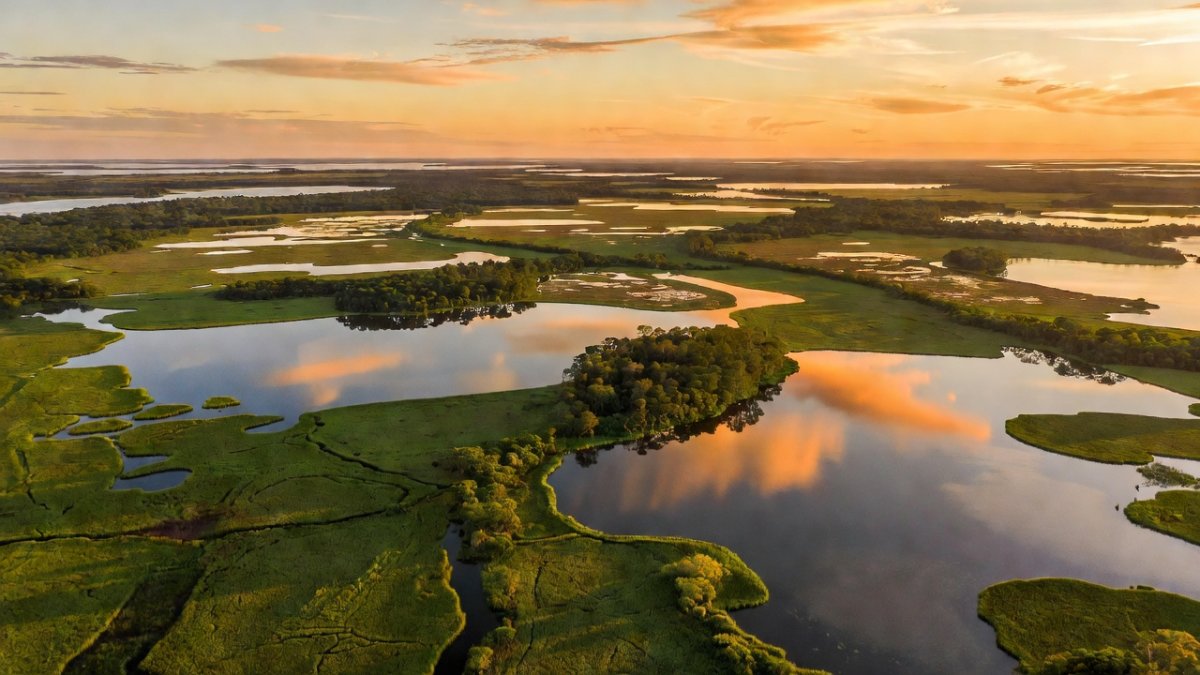
Corrientes, Argentina – August 2026 — The story of the yaguareté’s demise is a familiar, tragic one across Latin America. Here, in the vast expanse of the Iberá wetlands—a 1.3 million-hectare (3.2 million acres) natural reserve in northeastern Argentina—the jaguar was a ghost long before conservationists arrived. The species was locally extinct in Corrientes for about 70 years, vanishing by the mid-20th century. The causes were a brutal confluence of human expansion: relentless hunting for trophies and to protect livestock, the catastrophic loss of habitat to industrialized agriculture, and the decimation of the cat’s natural prey base. Argentina, as one of the world’s top food producers, prioritized beef and grain exports, and the unchecked, rapid development of those industries degraded the wetlands at an alarming rate. The marsh deer and capybaras that once fed the jaguar were pushed out or killed, and the top predator, with nothing left to sustain it, was systematically eradicated. The silence that followed was a testament to our capacity for destruction, a silence that many believed would be permanent.
The Yaguareté's 70-Year Silence
To understand the magnitude of the achievement in Iberá, you must first sit with the weight of that 70-year absence. This wasn't a natural extinction; it was an erasure. The jaguar, or yaguareté as it is known in the Guaraní language, was a foundational piece of this ecosystem, a keystone predator whose presence dictated the health of the entire wetland. When they were wiped out in Corrientes, the ecological balance shifted in ways that were subtle at first but became catastrophic over time. The prey species, no longer culled by a top predator, experienced population booms, leading to overgrazing of the sensitive marsh vegetation and destabilizing the very soil and water systems that make Iberá unique. The loss was also cultural; the jaguar is a figure of reverence in indigenous Guaraní mythology, a symbol of power and the wild. Its absence left a spiritual and psychological scar on the region, a constant reminder of what had been lost to progress.
The silence was finally broken not by a natural migration, but by the sheer will of a few determined individuals. In 2010, an organization called Rewilding Argentina was formed, born from a partnership between Argentine conservationists and the controversial yet visionary Tompkins Conservation. This was the brainchild of Doug Tompkins, the co-founder of The North Face and Esprit, and his wife Kristine McDivitt Tompkins, the former CEO of Patagonia. They were often viewed with suspicion—foreign "gringos" buying up land for what seemed like eccentric purposes. But their vision was clear: to restore complete, functioning ecosystems. The initial focus was on the land itself, purchasing vast tracts of degraded ranchland within the Iberá reserve. But a park without its apex predator is merely a zoo of plants. The ultimate test, the most ambitious and risky goal, was to bring the jaguar home. It was a project that would take a decade of meticulous planning, scientific innovation, and an almost irrational belief that it could be done.
The Release That Rewrote the Story
The path to release was paved with unprecedented scientific challenges. In 2015, the Jaguar Reintroduction Center opened on a remote island within the marshes. The strategy was brilliant in its simplicity and audacity: captive jaguars that could never be released into the wild would be used as surrogate mothers to raise cubs in complete isolation from humans. The goal was to create a generation of "wild" jaguars, animals that had the instincts to hunt and fear people, despite being born in captivity. The first reproductive individuals arrived that year, with a female named Tobuna serving as a pioneer, teaching her cubs the art of stalking capybara in the artificial enclosures. This was a painstaking process, a delicate dance between providing enough care to ensure survival and withholding enough human contact to ensure they could thrive independently.
Then came the moment that rewrote the narrative. On January 7, 2021, a female jaguar named Mariua, herself a rescued orphaned cub from Brazil, walked through an open gate into the Gran Iberá Park with her two cubs, Karai and Porã. It was the first time in 70 years that jaguars roamed the wetlands of Corrientes. The image of Mariua, hesitant yet resolute, stepping into the tall grass was broadcast around the world. It was described as the first jaguar reintroduction anywhere in the world where the cat had been completely wiped out. It wasn't just a symbolic victory; it was a testament to the years of work by the center's staff, who had to resist the urge to bond with the animals they were raising. They had to be ghosts, ensuring the cubs learned to see humans as a threat, not a source of food. The release was the culmination of a decade of doubt, a moment of pure, unadulterated triumph that silenced the critics, at least for a day.
Wild Births and a Population Rebound
The release of Mariua and her cubs was a monumental first step, but the true measure of success would be whether the jaguars could breed on their own, without human assistance. That answer came on July 21, 2022, when camera traps captured the first wild jaguar births in the wetlands. The parents were Jatobazinho, a rehabilitated wild jaguar from Brazil, and Arami, who was herself the first cub born at the center back in 2018. This was the ultimate validation. "With jaguars now breeding successfully without assistance, the species is steadily making its way to a full recovery," Tompkins Conservation announced. The cubs represented a new generation, born free, with no knowledge of cages or human caretakers. They were the true inheritors of the rewilding dream, a sign that the population was not just surviving, but actively rebuilding itself.
By 2026, the numbers tell a story of remarkable resilience. The wild population in Iberá is now estimated at 35 to 40 cats, spanning three generations. Some local reports even suggest the number could be closer to 50. The project has evolved from a rescue mission to a population management strategy; they have stopped adding new cats to the Iberá core and have started moving them out to seed new populations. This is a critical inflection point. The success in Iberá has created a template, a proof of concept that is now being exported to other regions of Argentina. The jaguar is no longer a ghost in Corrientes; it is a resident, a breeder, and a hunter. The silence has been replaced by the rustle of prey and the occasional, spine-tingling roar that echoes across the water at dawn. The rebound is fragile, but it is undeniably real.
Why the Top Predator Matters
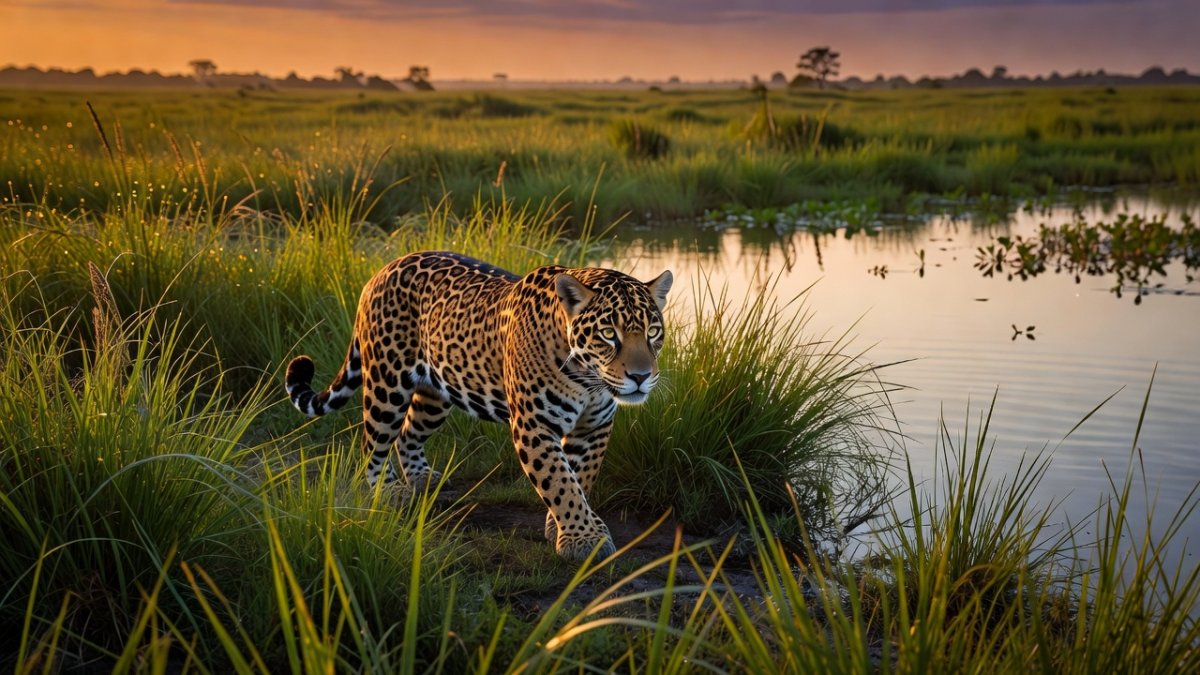
To the uninitiated, the return of a large predator might seem like a threat, a danger to livestock and people. But ecologically, it is the single most important event in the restoration of the Iberá wetlands. The jaguar is an apex predator, and its presence triggers a phenomenon known as a trophic cascade. When jaguars vanish, prey like capybara and marsh deer experience unchecked population growth. These herbivores overgraze the sensitive wetland vegetation, stripping the land bare and destabilizing the soil, which leads to erosion and a decline in water quality. The entire food web, from the smallest insect to the largest bird, is thrown out of balance. The return of the jaguar restores that natural order. They cull the weak and the sick, keeping prey populations healthy and forcing them to move, which allows vegetation to recover.
The impact goes beyond simple predator-prey dynamics. As Guillermo Díaz Cornejo, a lawyer with Argentina's national parks board, so poetically puts it, "Every jaguar is like a moving national park." This is the essence of rewilding. A single jaguar can roam across hundreds of square kilometers, and its presence protects that entire area from development and degradation. The cats are an umbrella species; by protecting them, we protect everything else that shares their habitat. Furthermore, the restoration of the wetlands has made them more resilient to climate catastrophes. In February 2022, devastating wildfires burned 10% of Corrientes province, including 60% of Iberá National Park. The rewilding efforts, which include restoring native vegetation and water flows, have helped the ecosystem bounce back faster. A healthy, biodiverse wetland is a buffer against the increasingly volatile climate, and the jaguar is the guardian of that health.
People, Politics and the 'Gringos'
No rewilding project of this scale succeeds without navigating the treacherous waters of local politics and public opinion. The Tompkins' project was met with fierce resistance in its early years. Conspiracy theories ran rampant: that Doug Tompkins wanted to seize South America's fresh water, or that he was planning to build a nuclear waste dump. The slogan "Los gringos vienen por el agua" (the gringos are coming for the water) became a rallying cry for opponents. Kristine Tompkins has recalled the hostility with remarkable candor: "We had four or five years of being despised. People thought we were a cult." Phones were tapped in Chile, and the foreign couple was portrayed as imperialist land-grabbers. It was a public relations nightmare that threatened to derail the entire project before it even began.
The turning point came not from a PR campaign, but from tangible results and a shift in local perception. The people of Corrientes began to see the jaguars not as a foreign imposition, but as a point of pride. "The people of Corrientes wondered why it took so long... school kids painting their faces with jaguars. The whole province took it on as a point of pride," Kristine Tompkins noted. Senator Sergio Flinta captured this sentiment perfectly, stating the project "generates a sentiment of belonging, to regain the identity of Corrientes." The economic argument was also powerful. The creation of 10 gateways to Iberá Park offering visitor services has transformed the local economy. Colonia Carlos Pellegrini, the main gateway town, has been revitalized. Local guides, lodge owners, boatmen, and park workers all benefit from the influx of ecotourists eager to catch a glimpse of the legendary cat. The jaguar has become an economic engine, proving that conservation and capitalism can coexist.
A Fragile, Brilliant Comeback
Despite the undeniable success, it is crucial to approach this story with clear eyes. The comeback is brilliant, but it is also fragile. The entire reintroduced population in Iberá descends from a tiny founder pool, which creates a narrow gene pool. This makes the cats more susceptible to disease and genetic defects. "We need more jaguars, and for that, the best option right now is to bring in females," says biologist Gerardo Cerón of Rewilding Argentina, acknowledging the genetic bottleneck. The cats also face constant threats: they die from disease, from territorial fights with other jaguars, and from ranchers who see them as a threat to their cattle. The model itself is precarious, leaning heavily on private money and the goodwill of the current government. A change in political winds could easily stall or reverse the progress made.
Yet, the momentum is undeniable. The project has expanded its scope far beyond the jaguar. Rewilding Argentina is also restoring populations of pampas deer, giant anteaters, giant otters, red-and-green macaws, collared peccaries, and bare-faced curassows. They have donated over 400,000 hectares to create 7 natural parks spanning more than 1 million hectares and have protected 90,000 square kilometers of the Argentine Sea. Their work now involves over 20 extinct or endangered species. The Tompkins legacy is staggering: they have helped create or expand 15 national parks protecting 14.8 million acres across Chile and Argentina. The strategy is now to connect these islands of biodiversity. In October 2025, the Jaguar Rivers Initiative was launched, a plan to stitch together fragmented forests in the Paraná Basin using rivers as wildlife corridors, so jaguars can one day cross a continent. The vision is no longer just about saving a species in one park; it is about restoring an entire ecological network.
The Bottom Line — What Comes Next
As we look toward the future, the story of the Iberá jaguar offers a powerful, data-driven counter-narrative to the doom and gloom of the global biodiversity crisis. The evidence is in the numbers: from zero wild jaguars in 2020 to a breeding population of 35-40 by 2026. The proof is in the dispersal. In March 2025, a wild-born female named Mini was captured in Iberá and released into El Impenetrable National Park in the Gran Chaco, marking the first time a wild jaguar was moved from one wild population to another to rebuild a third. Then, on July 30, 2025, a local guide spotted a female named Nalá with a cub on the Bermejo River—the first jaguar born in the wild in the Gran Chaco in roughly three decades. And in May 2026, tourists filmed a young wild-born male named Ombú on public trails near Colonia Carlos Pellegrini, the first tourist video of a jaguar in the area since the species returned. The cats are not just surviving; they are expanding, exploring, and reclaiming their ancient territory.
The bottom line is that this model works, but it requires constant vigilance and expansion. Argentina's jaguar remains Critically Endangered, with only about 200 individuals left in the entire country, having lost more than 95% of its original range. Worldwide, 40% of original jaguar habitat is gone, and the species is extinct in Uruguay and El Salvador. The work in Iberá is a beacon, but it is not a finished job. The next steps involve securing genetic diversity, mitigating human-wildlife conflict, and expanding the protected corridor network. The Al Jazeera documentary from 2021 captured the beginning of this journey, the raw emotion of that first release. Now, five years later, we are witnessing the maturation of that dream. The jaguar is back, and with it, a sense of hope that we can, indeed, heal the wounds we have inflicted on the natural world. The silence has been broken, and the roar of the yaguareté is once again a part of Argentina's identity.
By Elena Vasquez, Staff Writer
This article was produced with AI-assisted research and editorial support. Reporting is based on sources cited in the article.
What's Your Reaction?
 Like
0
Like
0
 Dislike
0
Dislike
0
 Love
0
Love
0
 Funny
0
Funny
0
 Wow
0
Wow
0
 Sad
0
Sad
0
 Angry
0
Angry
0

Latin America Correspondent at Global1.News. Based in Mexico City, covering politics, economics, energy, and culture across the region. Brings an on-the-ground perspective to stories spanning from the Rio Grande to Patagonia.














Comments (0)