
Uzbek Professor Reportedly Convicted of Espionage in Kazakhstan
The sentencing of Dr. Ikboljon Qoraboyev, an Uzbek professor of international relations, to a decade behind bars in Kazakhstan has reverberated through the academic community of Central Asia.
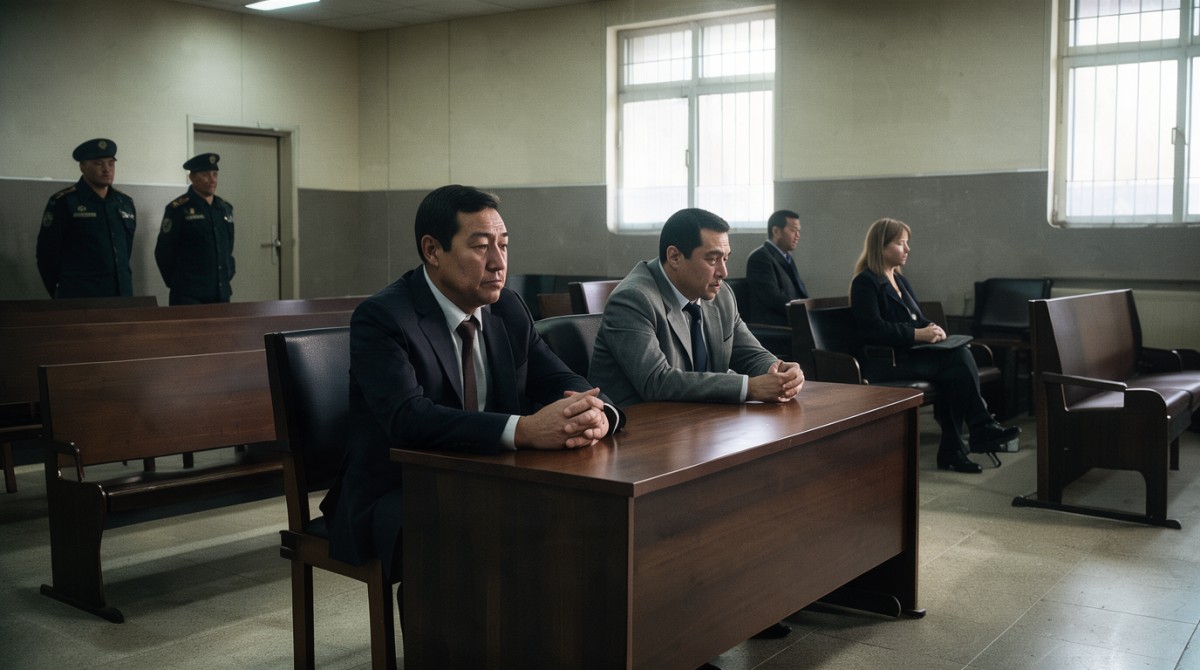
The sentencing of Dr. Ikboljon Qoraboyev, an Uzbek professor of international relations, to a decade behind bars in Kazakhstan has reverberated through the academic community of Central Asia. The case, shrouded in secrecy, raises questions about the balance between national security and academic freedom in a nation that is simultaneously courting foreign scholars and tightening its grip on perceived dissent. This article examines the circumstances of Qoraboyev’s conviction, the broader policy context articulated by President Kassym‑Jomart Tokayev, and the potential impact on regional scholarly collaboration.
Background of the Conviction
Dr. Ikboljon Qoraboyev, a faculty member at Maksut Narikbayev University in Astana, was detained in early July 2026. Public awareness of his arrest only emerged in late August, when reports began to surface. According to his relatives, who spoke to Azattyk Asia, he was charged under Article 176 of Kazakhstan’s Criminal Code, which defines espionage as the collection, theft, or storage of “state secrets” by a foreign national for transfer to a foreign state or organization that could be used against Kazakhstan’s national interests. The law prescribes a prison term of ten to fifteen years for such offenses. Qoraboyev’s relatives assert that he received a ten‑year sentence after a closed‑door trial.
The specifics of the alleged espionage remain undisclosed. Neither Kazakh nor Uzbek authorities have provided details about the nature of the “state secrets” purportedly involved, the means by which Qoraboyev allegedly accessed them, or the foreign entity he was accused of serving. His colleagues emphasize that his research relied on publicly available information, underscoring the opacity of the prosecution.
President Tokayev’s Strategic Vision for Higher Education
On the same day the verdict was announced, President Tokayev delivered remarks at the third Forum of Strategic Partners in Science and Higher Education in Astana. He framed the development of Kazakhstan as an “academic hub for Central Asia,” setting an ambitious target of attracting 100,000 international students by 2029. In support of this vision, Tokayev highlighted the presence of “leading” higher‑education institutions from eleven countries that have opened branch campuses in Kazakhstan, and noted that more than 600 international professors are currently employed at Kazakh universities.
Tokayev’s speech also underscored a broader strategic choice: “Kazakhstan has made a clear strategic choice in favor of human capital. Above all, this means we value talent – both those cultivated in our country and those coming to us from abroad.” The juxtaposition of this pro‑talent rhetoric with the conviction of a foreign academic creates a tension that warrants close scrutiny.
Academic Community’s Reaction
The arrest and sentencing of Qoraboyev sent a “chill” through Kazakhstan’s scholarly circles, according to two anonymous scholars who spoke to The Diplomat under the pseudonyms Amina and Bekzod. Amina, whose research overlaps with Qoraboyev’s focus on critical minerals, described the initial announcement as horrifying, noting concerns about the potential impact on research in that strategically sensitive sector. She also reported that colleagues with planned trips to Uzbekistan were considering canceling them, reflecting anxieties about cross‑border academic mobility.
Bekzod echoed these concerns, emphasizing that Qoraboyev did not have access to state secrets and that the charges appeared to be based on the compilation of publicly available material. He warned that such a precedent could expose both local and foreign scholars to similar accusations, fostering an atmosphere of fear that could stifle collaborative research.
Historical Precedent: The Syroezhkin Case
The Qoraboyev case recalls the 2019 conviction of Konstantin Syroezhkin, a Kazakhstani Sinologist and chief research officer at the Kazakhstan Institute for Strategic Studies. Syroezhkin was charged under Article 175 for treason—a charge distinct from espionage—but similarly faced a closed trial and received a ten‑year sentence. Notably, President Tokayev, himself a Sinologist, pardoned Syroezhkin in 2024, a decision that underscores the political dimension of such prosecutions.
Both cases share the pattern of delayed public disclosure and limited transparency regarding the evidence presented. The recurrence of high‑profile academic prosecutions suggests a broader trend in which state security concerns intersect with scholarly activity, particularly in fields deemed strategically important.
Implications for International Scholars
Since Qoraboyev’s sentencing, The Diplomat has been approached by several foreign academics seeking reassurance about the safety of travel to Kazakhstan. The inquiries indicate a growing apprehension among the international research community, which could undermine Kazakhstan’s goal of becoming a regional academic hub. If scholars perceive a risk of prosecution for routine research, the attractiveness of Kazakhstan’s expanding university infrastructure may diminish.
Moreover, the lack of clarity about what constitutes “state secrets” in the context of academic work creates uncertainty. Without transparent guidelines, researchers may self‑censor or avoid topics that could be construed as sensitive, potentially impairing the quality and scope of scholarship in fields such as critical minerals, security studies, and regional geopolitics.
Potential Legal and Diplomatic Responses
Qoraboyev’s relatives have announced their intention to appeal the conviction, calling for the release of case materials and for his full acquittal, reinstatement to his university position, and restoration of his reputation. Their request aligns with broader calls for due process and transparency in cases that intersect with academic freedom.
The absence of official comment from either Kazakh or Uzbek authorities leaves diplomatic channels largely unexplored. However, the case could become a point of contention in Kazakhstan’s bilateral relations with Uzbekistan, especially given Qoraboyev’s Uzbek nationality and the potential perception of the prosecution as an affront to a neighboring state’s citizen.
Outlook for Kazakhstan’s Academic Ambitions
President Tokayev’s vision of a vibrant, internationally integrated higher‑education sector rests on the promise of openness and talent attraction. Yet the Qoraboyev conviction illustrates the fragility of that promise when national security considerations are invoked without clear evidentiary standards. The tension between securing state interests and fostering an environment conducive to unfettered research will shape Kazakhstan’s ability to meet its target of 100,000 international students by 2029.
For now, the academic community watches closely. The outcome of Qoraboyev’s appeal, the response of foreign scholars, and the degree to which Kazakhstan clarifies its legal thresholds for espionage will determine whether the nation can reconcile its strategic ambition with the fundamental academic freedoms that underpin scientific and cultural exchange in the region.
This article was produced with AI-assisted research and editorial support. Reporting is based on the source material cited below. Sources: The Diplomat; thediplomat.com; Global1.News (22 November 2026).
By Kenji Tanaka, Staff Writer
What's Your Reaction?
 Like
0
 Dislike
0
 Love
0
 Funny
0
 Wow
0
 Sad
0
 Angry
0

Japan Correspondent at Global1.News. Tokyo-based voice covering Japanese politics, technology, economy, and culture. Tracks the intersection of tradition and innovation in one of the world's most dynamic societies.












Comments (0)