
The Researchers Counting Russia’s War Dead, One Name at a Time
In the shadows of Russia’s war on Ukraine, a quiet network of volunteers, journalists and researchers is painstakingly assembling a record of the human cost that the Kremlin refuses to acknowledge.
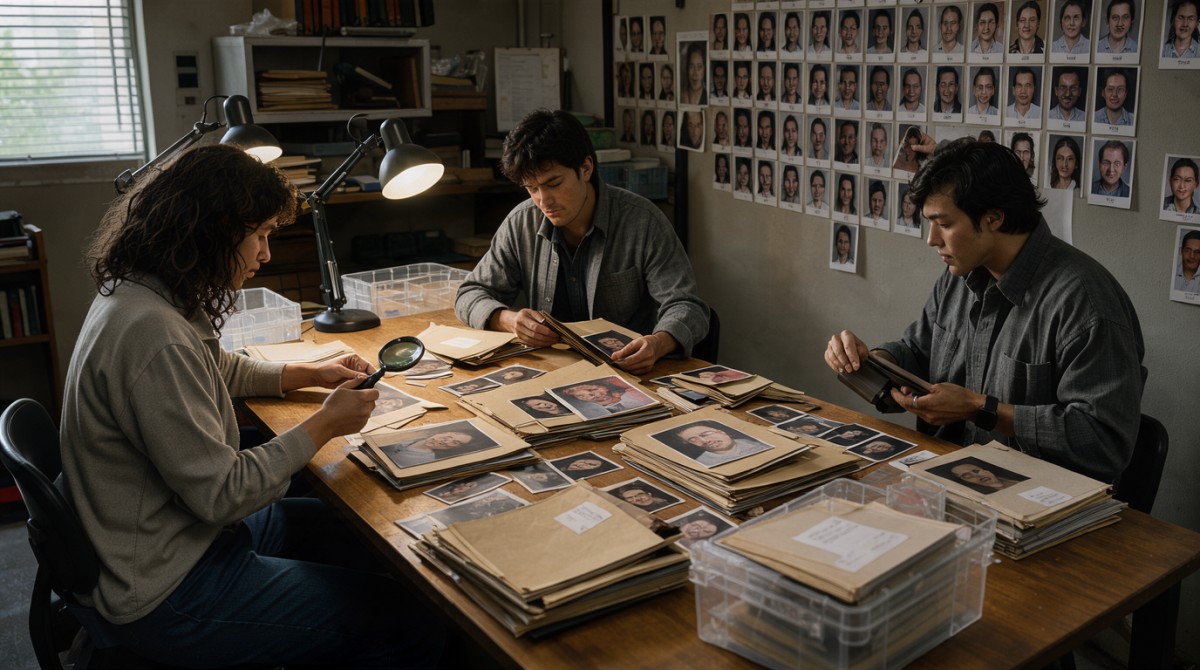
In the shadows of Russia’s war on Ukraine, a quiet network of volunteers, journalists and researchers is painstakingly assembling a record of the human cost that the Kremlin refuses to acknowledge. Their work, part of the joint BBC‑Mediazona project “The Cost of Invasion,” has already catalogued more than 285,000 Russian soldiers who have died, a figure that starkly contradicts the official silence surrounding battlefield losses. The effort is fraught with danger, technical challenges and the emotional weight of each name added to the list.
The Genesis of a Counter‑Narrative
The initiative began as a modest attempt to document the early casualties of the conflict. David Frenkel, who helps lead Mediazona’s data collection, recalls that the database held roughly ten thousand entries in the first months. The original hope, he says, was to “open the eyes of Russian society” by exposing the scale of loss, drawing a parallel to the Soviet‑Afghan war, where public awareness of over fifteen thousand dead contributed to growing distrust of the state.
As the war progressed, the number of Russian dead quickly surpassed the Afghan war’s toll, and the Kremlin tightened its grip on information. Regional officials, once a source of official casualty figures, stopped publishing numbers at the direction of the Defense Ministry. This shift forced the project to evolve from a public‑awareness campaign into a vital archival effort, aimed at preserving evidence of what many now describe as a national crime.
Methodology Behind the Numbers
The team’s methodology blends automated data scraping with painstaking manual verification. Primary sources include social‑media posts from grieving families and statements from regional authorities, which often appear on local government pages despite the central ban on casualty reporting. Once a name surfaces, researchers confirm the individual’s existence, service status and, where possible, the circumstances of death.
Verification can be straightforward when a regional post lists a fallen soldier, but it also ventures into less conventional terrain. The team has traced names from photographs of memorial desks in schools, where teachers honor former students, and even from the cryptic predictions of internet influencers who claim psychic insight into missing soldiers’ fates. These varied sources reflect both the breadth of Russia’s digital landscape and the desperation of families seeking acknowledgment.
Geographic Disparities and Cultural Barriers
Russia’s vast geography and ethnic diversity pose significant obstacles. In regions such as Bashkortostan and Tatarstan, where the project has uncovered the highest absolute numbers of deaths, local officials continue to post about fallen soldiers, providing a relatively richer data stream. By contrast, in remote Siberian and Far‑Eastern settlements, fear of state retaliation silences many families, leaving gaps in the record.
Indigenous languages further complicate the search for obituaries, as automated tools struggle to parse non‑Russian scripts. Moreover, in economically disadvantaged areas, community pressure discourages open discussion of loss, a dynamic captured by Olga Ivshina of BBC Russian: “In a tiny place, if you go against the state, there is nowhere else to go.” This silence suggests that the true death toll may be considerably higher than the already staggering figure in the database.
Personal Stakes and the Human Toll
For volunteers like Andrew, the work is deeply personal. He describes the emotional burden of sifting through stories of soldiers and the children left behind, such as the seven‑year‑old who posted a plea for her father’s return on social media. Andrew’s anonymity underscores the personal risk involved; conducting this research inside Russia carries the threat of imprisonment, a risk that has already materialised for others.
Recent court actions illustrate the peril. A man in Yaroslavl was sentenced to fourteen years in a maximum‑security penal colony for activities linked to the project, a stark reminder that the Kremlin treats independent casualty tracking as a hostile act. This punitive environment forces many contributors to operate covertly, limiting the flow of new information and increasing the reliance on previously collected data.
The Kremlin’s Information Suppression
The Russian government’s refusal to publish casualty figures is a calculated element of its war narrative. Historically, regional officials released some statistics, but the Defense Ministry’s recent directive has halted these disclosures. By keeping the death toll opaque, the Kremlin aims to sustain public support for the war effort and to prevent the emergence of a collective grief that could undermine morale.
Analysts note that the absence of official numbers transforms the casualty count into a proxy for the conflict’s overall cost. As the database now exceeds 285,000 entries, it offers a rare glimpse into the scale of loss that the state deliberately obscures. The project’s existence therefore challenges the official narrative, positioning itself as a counter‑power that holds the regime accountable for the human consequences of its policies.
Implications for Russian Society
The growing body of evidence has begun to shape public sentiment, albeit in a fragmented manner. According to Ivshina, many relatives initially expressed anger toward commanders and the higher chain of command, but over time many have shifted to a fatalistic acceptance, saying “it was destiny.” This psychological transition reflects the limited avenues for dissent and the pervasive sense of powerlessness among ordinary citizens.
Nevertheless, the database serves a crucial function beyond statistics: it offers closure to families who otherwise learn of a loved one’s fate through unofficial channels. By documenting each name, the project creates a historical record that may, in the long term, inform societal reckoning with the war’s legacy, similar to how the Afghan war’s casualty figures contributed to the Soviet Union’s eventual dissolution.
Future Challenges and the Path Ahead
Looking forward, the project faces a mounting backlog of unresolved cases, including soldiers whose status remains ambiguous—particularly those potentially captured by Ukrainian forces. The difficulty of verifying deaths in remote locales and the ongoing crackdown on information gathering threaten to slow progress.
Despite these hurdles, the volunteers remain committed. Their work, described by Frenkel as an “imperfect science,” persists because it fulfills a dual purpose: providing families with answers and constructing an evidentiary foundation that may one day be used to hold the Kremlin accountable. In a regime where silence is weaponised, the act of naming each fallen soldier becomes a form of resistance, ensuring that the human cost of the invasion cannot be erased from collective memory.
This article was produced with AI-assisted research and editorial support. Reporting is based on the source material cited below. Sources: The Moscow Times; themoscowtimes.com; Global1.News (21 November 2026).
By Irina Volkov, Staff Writer
What's Your Reaction?
 Like
0
 Dislike
0
 Love
0
 Funny
0
 Wow
0
 Sad
0
 Angry
0
Russia/Eastern Europe Correspondent at Global1.News. Covering Russian politics, energy, security, and the shifting dynamics of the post-Soviet space. Provides clear-eyed analysis on one of the world's most opaque regions.










Comments (0)