
‘Philippines to buy 100% of farm products, energy from US’
Manila’s farmers and power consumers may soon find their plates and lights lit by American produce and fuel, after President Ferdinand Marcos Jr. walked away from a bilateral meeting with U.S.
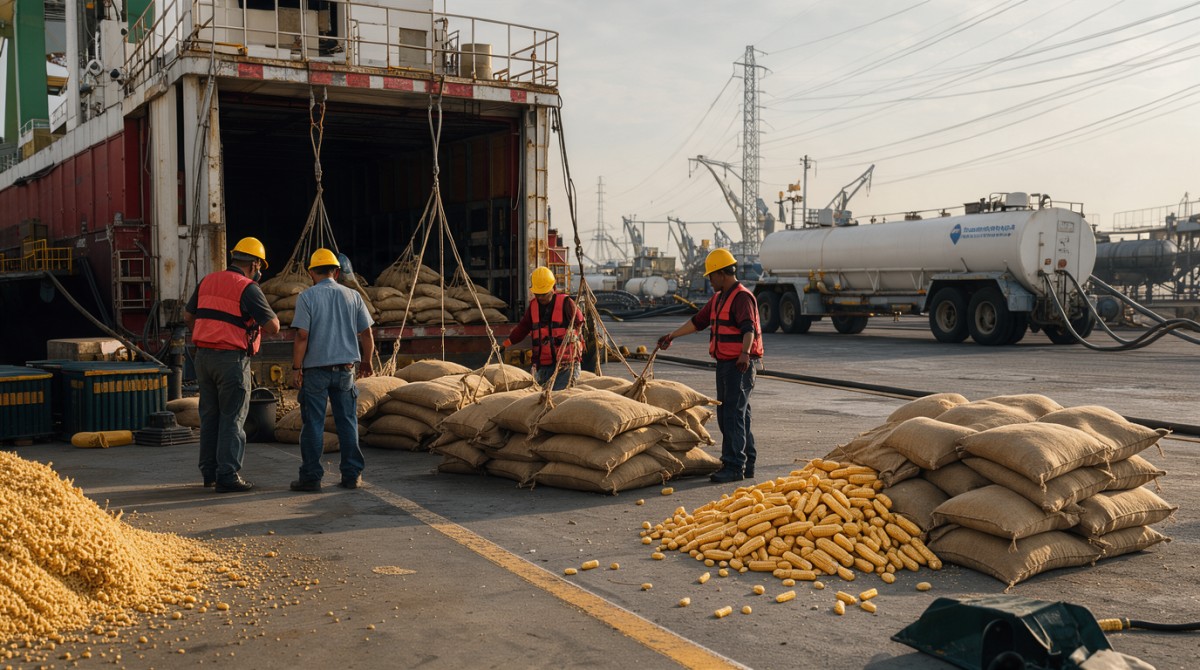
Manila’s farmers and power consumers may soon find their plates and lights lit by American produce and fuel, after President Ferdinand Marcos Jr. walked away from a bilateral meeting with U.S. President Donald Trump with a promise that the Philippines will buy 100 percent of its agricultural and energy needs from the United States. The claim, announced at the White House and echoed in the Philippine press, has set off a wave of questions among barangay leaders, sari‑sari store owners and ordinary families who wonder how such a sweeping commitment will affect daily life, food prices and the nation’s energy security.
From the White House to Manila: Trump’s bold proclamation
President Trump told reporters that the Philippines “was buying a lot of their farm product from other countries, including Brazil, much more than from us,” and that he had offered a deal for Manila to source all its farm products from American farmers starting January 1. He emphasized that the United States “has the greatest equipment in the world” and insisted the Philippines would buy “100 percent, not 90, not 95.” The president also claimed the Philippines would purchase “billions and billions of dollars” of farm products from the United States, though no specific figures were disclosed.
In the same breath, Trump turned to energy, noting that the Philippines currently buys about 20 percent of its energy from the United States and would shift to “100 percent” in the future. He framed the move as a strategic safeguard: “If China attacks you, is the Middle East going to come to your rescue? No. So don’t buy from them anymore.” While the language was vivid, the statement left many practical details—such as which commodities, pricing mechanisms or timelines—unexplained.
Marcos’ perspective: diversification, not dependence
President Marcos, speaking in China shortly after the White House remarks, stressed that the Philippines seeks to diversify its sources of key commodities, not to hand over all its purchases to a single partner. He clarified that no agreement had been signed to buy “all of Manila’s requirements from Washington.” Instead, Marcos described the trade talks as a response to a U.S. tariff schedule that was struck down by the courts, which nevertheless opened the door for broader dialogue on trade.
Marcos highlighted the need for “cheaper sources of food products” and “cheaper sources for energy importation,” noting that the Philippines is looking at a range of partners—Brazil, the Middle East, and others—to avoid “standing on one foot.” He linked the urgency of diversification to the ongoing conflict in Ukraine, which underscored the risks of over‑reliance on any single supplier.
What the deal could mean for Filipino farmers
If the Philippines were to import all its soybeans, wheat and other staples from the United States, local farmers could face a sudden shift in market demand. Many barangay farms rely on a mix of imported and home‑grown produce to meet the needs of nearby sari‑sari stores and family meals. A sudden influx of U.S. commodities—potentially at lower prices due to the “cheaper sources” argument—might undercut local producers who cannot match the scale or technology of American agribusiness.
On the other hand, proponents argue that stable, high‑quality imports could help keep rice and corn prices from spiking during supply shocks, such as those caused by typhoons or pest outbreaks. The promise of “greatest equipment” from U.S. farms could also translate into technology transfer, if the Philippines negotiates joint ventures or training programs for Filipino agronomists.
Energy security and the cost of dependence
President Trump’s claim that the Philippines will buy “100 percent” of its energy from the United States raises questions about the composition of that energy. The United States exports a mix of liquefied natural gas, coal, and increasingly, renewable electricity via offshore wind projects. The statement did not specify whether the energy would be imported as fossil fuels, renewables, or a combination.
For Filipino households, a shift in energy sourcing could affect utility bills, especially if the price of imported natural gas or oil fluctuates with global markets. The Department of Energy has previously warned that over‑reliance on any single source can expose the nation to price volatility. Marcos’ emphasis on “diversify” suggests that the administration may still seek other partners even as talks with Washington progress.
Legal and diplomatic nuances
The backdrop of the talks includes a U.S. tariff schedule that was “struck down in court,” according to Marcos. While the specific case was not detailed, the reference indicates that the United States attempted to impose trade barriers that were later invalidated, perhaps by the Supreme Court or a lower court. This legal episode appears to have catalyzed the current negotiations, turning a dispute into an opportunity for broader trade dialogue.
Both leaders also referenced other bilateral meetings: Marcos and Brazilian President Luiz Inácio Lula da Silva met in the Philippines on November 14 to discuss renewable energy, biofuels, livestock production and law enforcement. The presence of Brazil in the conversation underscores that Manila is still courting multiple partners, even as the U.S. pushes for an all‑or‑nothing arrangement.
Potential impact on the average Filipino
For families in Luzon, Visayas and Mindanao, the most immediate concern is whether food prices will rise or fall. If U.S. soybeans and wheat flood the market at lower cost, the price of bread, noodles and processed foods could drop, easing the burden on household budgets. Conversely, if local corn and rice farmers lose market share, the ripple effect could raise prices for locally produced staples, especially in remote barangays that depend on nearby farms.
Energy costs could follow a similar pattern. A stable supply of imported natural gas might lower electricity rates, benefitting small businesses that rely on consistent power for their operations. Yet, any increase in import bills could be passed on to consumers, especially if the Philippines negotiates a fixed‑price contract that does not account for future market swings.
Looking ahead: what to watch for
The next steps will likely involve detailed negotiations between the Department of Trade and Industry, the Department of Energy and their U.S. counterparts. Key issues to watch include the exact list of agricultural commodities covered, the pricing formula, and whether the deal includes technology transfer or joint‑venture provisions that could benefit Filipino producers.
Meanwhile, civil society groups and agricultural cooperatives are expected to voice concerns in the Senate and the House of Representatives, seeking transparency and safeguards for local farmers. The Commission on Elections may also see heightened interest as the trade pact becomes a campaign issue in upcoming local elections, where candidates will need to explain how the agreement will affect their constituents’ livelihoods.
In the coming weeks, barangay captains will likely hold community meetings to explain the potential changes, while sari‑sari store owners will watch the shelves for any shift in product availability. As the Philippines navigates this unprecedented promise to buy “100 percent” of its farm and energy needs from a single ally, the true test will be whether the arrangement strengthens the nation’s food and energy security without sidelining the very people it aims to serve.
This article was produced with AI-assisted research and editorial support. Reporting is based on the source material cited below. Sources: Philstar.com; Global1.News (22 November 2026).
By Bella Reyes, Staff Writer
What's Your Reaction?
 Like
0
 Dislike
0
 Love
0
 Funny
0
 Wow
0
 Sad
0
 Angry
0

Philippines/Southeast Asia Correspondent at Global1.News. Manila-based journalist covering Philippine politics, environment, maritime security, and social issues. Passionate about marine conservation and the communities protecting the Philippines' natural heritage.













Comments (0)