
Ex-IGP Adamu threatens legal action against Nasarawa SSG over alleged defamation
Former Inspector‑General of Police Muhammad Abubakar Adamu has taken a decisive legal step against the Nasarawa State government after a press release on 4 November linked him to the disruption of Vice‑President Kashim Shettima’s courtesy visit to the Emir of Lafia.
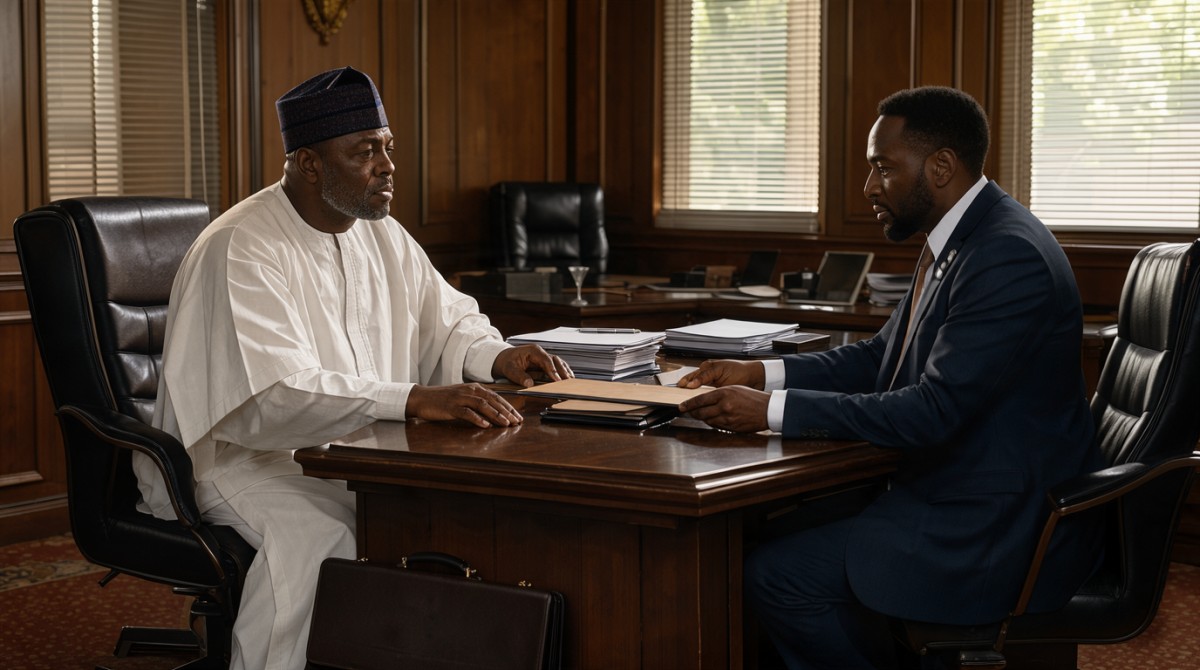
Former Inspector‑General of Police Muhammad Abubakar Adamu has taken a decisive legal step against the Nasarawa State government after a press release on 4 November linked him to the disruption of Vice‑President Kashim Shettima’s courtesy visit to the Emir of Lafia. Through his law firm Greenbridge Partners, the retired police chief issued a seven‑day ultimatum to the Secretary to the Government of Nasarawa State, Barrister Shuaibu Magaji Labaran, SAN, demanding a full retraction, a public apology and compensation for what he describes as an unwarranted assault on his reputation.
Background to the controversy
The incident that sparked the dispute unfolded when Vice‑President Shettima’s scheduled meeting with the Emir of Lafia was interrupted by a group of youths, an event that quickly escalated into a political flashpoint. The Office of the Secretary to the Government of Nasarawa State issued a statement on 4 November asserting that the disruption was tied to “suspected youths” and, crucially, named several prominent figures as allegedly connected to the unrest, among them former Governor Umaru Tanko Al‑Makura and former IGP Adamu.
Adamu’s legal team argues that the statement amounted to a defamatory narrative, portraying their client as a sponsor of “political thuggery” and an instigator seeking to undermine the state government. The notice stresses that no investigative findings had been presented to substantiate such claims, and that the Department of State Services (DSS) was still tasked with identifying the perpetrators.
The seven‑day pre‑action notice
On 16 November, Greenbridge Partners filed a seven‑page pre‑action notice, signed by senior counsel Wale Balogun, SAN. The document outlines a series of demands: an immediate withdrawal of the 4 November statement, an unequivocal public apology in at least three widely circulated national newspapers, and a digital retraction across all official government platforms where the original claim appeared.
Beyond the public retractions, the notice seeks a formal clarification that no investigation has, to date, established Adamu’s involvement, a written undertaking preventing any future repetition of the allegations, and negotiations toward financial compensation for the alleged reputational damage. The solicitors warned that failure to comply within seven days would compel them to commence legal proceedings seeking damages, injunctive reliefs and recovery of legal costs.
Parallel demands from former governor Al‑Makura
The legal pressure on Nasarawa’s Secretary to the Government is not limited to Adamu. On 12 November, former Governor and current Senator Umaru Tanko Al‑Makura, through his lawyer Malla Makpa, Esq., issued a similar seven‑day demand for a retraction and public apology over the same 4 November statement. Al‑Makura’s demand mirrors Adamu’s, underscoring a coordinated effort by two senior political figures to challenge what they view as an unfounded government narrative.
Both demands highlight a broader concern: the use of official statements to pre‑emptively assign blame before investigative bodies, such as the DSS, have completed their inquiries. By linking the two figures to the same alleged “political thuggery,” the state’s press release has drawn criticism for potentially overstepping the bounds of responsible communication.
Legal implications and precedents
Defamation law in Nigeria provides a remedy for individuals whose reputations are harmed by false statements, particularly when those statements are made in an official capacity. The pre‑action notice leverages this legal framework, emphasizing that the government’s claim lacked evidentiary support. If the case proceeds to court, it could set a precedent for how state agencies frame allegations against high‑profile individuals pending formal investigations.
Legal scholars note that the requirement for a public apology in multiple national newspapers adds a layer of reputational redress that goes beyond monetary compensation. Such a remedy aims to restore public perception, a crucial factor for former officials whose legacies hinge on public trust.
Political context and the stakes for Nasarawa
Nasarawa State has been navigating a delicate political climate, with the Vice‑President’s visit intended as a gesture of federal‑state solidarity. The disruption, however, threatened to cast a shadow over that diplomatic overture. By publicly naming former Governor Al‑Makura and former IGP Adamu, the state government may have sought to signal a zero‑tolerance stance against any perceived sabotage.
Yet the backlash illustrates the risk of politicising security incidents. The DSS’s ongoing investigation, as referenced in the 4 November statement, remains the authoritative channel for identifying culpability. Prematurely attaching names to the incident could erode confidence in the investigative process and fuel accusations of partisan bias.
Potential outcomes and next steps
With the seven‑day deadline now looming, the Secretary to the Government faces a strategic decision: comply with the demands, thereby averting a costly legal battle, or contest the allegations, potentially deepening the controversy. Compliance would involve issuing a retraction across print and digital platforms, arranging apologies in at least three national newspapers, and providing the written assurances sought by Adamu and Al‑Makura.
Should the state opt to contest, the matter would likely proceed to the Federal High Court, where both parties would present evidence—or the lack thereof—regarding any involvement in the disruption. The court would then assess whether the government’s statements constituted actionable defamation or fell within the ambit of legitimate public interest reporting.
Broader implications for Nigerian governance
This episode underscores a tension that reverberates across Nigeria: the balance between swift governmental communication and the protection of individual reputations. As officials increasingly rely on digital platforms to disseminate statements, the risk of premature accusations grows, prompting calls for clearer protocols before naming individuals in public releases.
For the nation’s legal community, the case offers a real‑time illustration of defamation law’s role in checking governmental overreach. For the public, it highlights the importance of awaiting investigative findings before forming judgments on politically charged incidents. As the week unfolds, all eyes will be on Nasarawa’s response, which may well shape how future administrations handle the delicate interplay between security, politics and the right to a good name.
This article was produced with AI-assisted research and editorial support. Reporting is based on the source material cited below. Sources: Daily Post Nigeria; dailypost.ng; Global1.News (21 November 2026).
By Sarah Okafor, Staff Writer
What's Your Reaction?
 Like
0
 Dislike
0
 Love
0
 Funny
0
 Wow
0
 Sad
0
 Angry
0

Africa Correspondent at Global1.News. Based in Lagos, covering politics, business, technology, and culture across the continent. Focused on telling African stories beyond the headlines — the innovation, entrepreneurs, and communities shaping the region's future.














Comments (0)