
Israeli Universities Expel 100 Palestinian Students Over Gaza War Criticism
Israeli universities have permanently or temporarily expelled 100 Palestinian students for criticising the war in Gaza since October 2023, according to a new report published Monday by Adalah, the Legal Center for Arab Minority Rights in Israel.
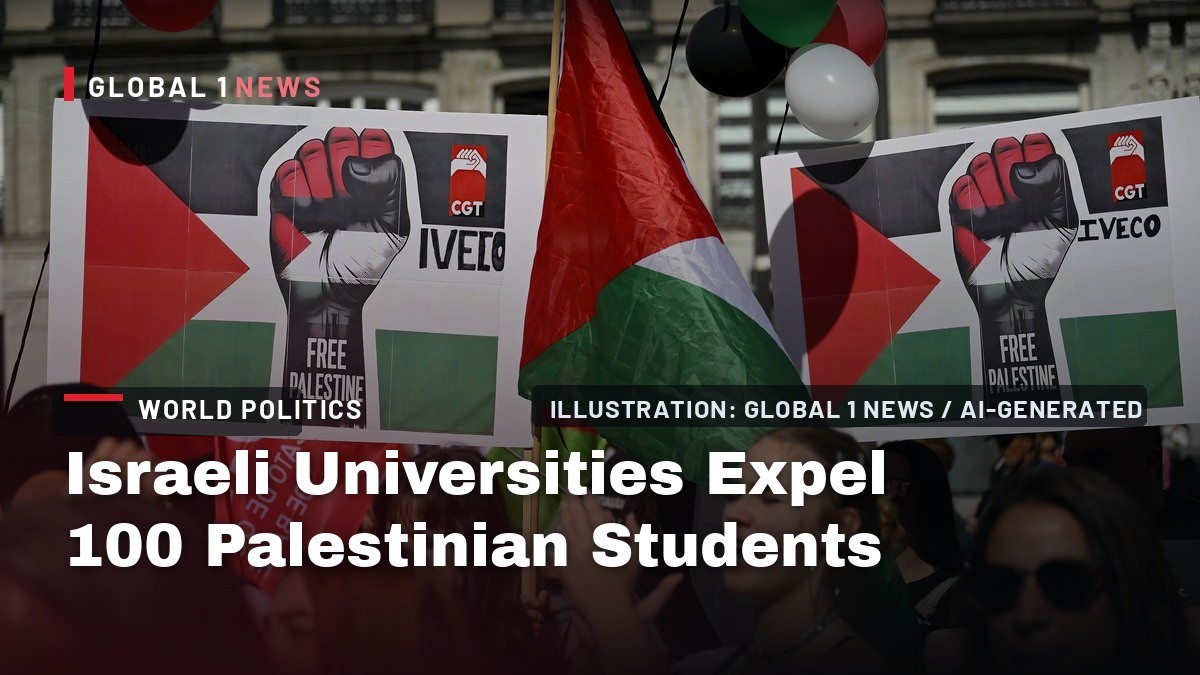
Israeli universities have permanently or temporarily expelled 100 Palestinian students for criticising the war in Gaza since October 2023, according to a new report published Monday by Adalah, the Legal Center for Arab Minority Rights in Israel. The report, titled "Apartheid in Israeli Academia: Palestinian Students After 7 October 2023," documents what it describes as a "two-track" disciplinary system in Israeli higher education that amounts to apartheid between Jewish-Israeli and Palestinian students.
Report Documents Scale of Disciplinary Measures
Adalah's report, published on 7 September 2026, is based on an analysis of dozens of disciplinary proceedings opened against Palestinian students at around 40 academic institutions in response to their social media posts. The group received 132 inquiries from students at close to 40 academic institutions, most of which (76.5%) came from female students. Adalah legally represented or offered legal counsel to 100 students.
The consequences for those students were severe. In more than 80 cases, academic institutions imposed an interim suspension before any hearing took place. In 20 cases, students were permanently expelled or suspended from their studies for periods ranging from one to five years. In a number of cases, Adalah's appeals led to the reversal of convictions or a significant reduction of penalties.
Israeli academic institutions began suspending Palestinian students in the days immediately following 7 October 2023, opening disciplinary proceedings against them and classifying their posts as "support for terror." These actions occurred amid political pressure from state officials, including the Minister of Education, to suspend students and conduct expedited disciplinary proceedings against them. In some cases, academic institutions even reported their own students to the police, leading to arrests.
Expression That Triggered Discipline
According to the report, a wide range of expressions triggered disciplinary proceedings. These included criticism of Israeli government policy, the Israeli military, or the war in Gaza; content related to the 7 October attacks; the dire humanitarian situation in the Gaza Strip; religious expressions including verses from the Qur'an; and visual symbols of Palestinian identity.

"In some cases, a mere 'like' of a post, the display of a Palestinian flag or the word 'Palestine' on a profile, sharing a news report, or posting a prayer for the residents of Gaza was enough to trigger a complaint or disciplinary proceeding," the report states.
The report documents cases in which Israeli universities suspended Palestinian students, launched disciplinary proceedings against them, and classified their social media posts as "support for terrorism." The measures targeted a wide range of forms of expression, including criticism of government and army policies and the war on Gaza, as well as expressions of solidarity with Palestinians in the territory.
Procedural Flaws and Shifted Burden of Proof
The report points to structural, recurring flaws in the manner in which academic institutions handled these proceedings. Students were summoned to appear before disciplinary committees "without being informed of the subject of the complaint," according to Adalah. In other cases, institutions failed to verify when the content had been posted or whether the social media account belonged to the student accused.
Most significantly, the report finds that the burden of proof shifted. Instead of institutions having to prove that an offense had occurred, students had to prove that their posts did not amount to support for terror. This reversal placed Palestinian students in the position of defending themselves against accusations without full knowledge of the allegations against them.
In more than 80 cases, institutions imposed temporary suspensions before holding any hearing and before even determining whether the alleged violation had occurred, the center said. This practice effectively punished students before any determination of guilt had been made.
A 'Two-Track' Disciplinary System
The report concludes that, after October 2023, Israeli academic institutions established two distinct tracks of disciplinary law de facto: an administrative track and a constitutional track. For Palestinian students, the institutions established an emergency "administrative track," characterized by the expansion of academic institutions' authority, the curtailment of procedural protections, the use of vague tests, and the examination of statements within a securitized discourse predicated on concepts of loyalty and "enemy."

Alongside this track, the institutions applied a "constitutional track" for Jewish-Israeli students, in which the boundaries of authority and freedom of expression were largely preserved, even in relation to extreme expression. Notably, Israeli academic institutions ignored students' widespread calls for the annihilation and genocide of the Palestinian people in Gaza and racist posts directed against Palestinian citizens of Israel in general, and their fellow Palestinian students in particular.
Institutions also expanded their disciplinary authority into private posts unrelated to academic studies almost exclusively by Palestinian students, while refraining from doing so for Jewish-Israeli students, even in cases involving extreme, inciting, and racist speech.
Human Impact and Chilling Effect
The report warns that this policy creates a "chilling effect" among Palestinian students, encourages self-censorship, and undermines their sense of security and belonging on campus. As a result, the report argues, Israeli academia has been transformed from a body regulating students' conduct in connection with their studies into a body policing private expression of their students and determining which expressions of Palestinian identity, religion, solidarity, and criticism are legitimate.
The consequences for Palestinian students extend beyond the immediate disciplinary measures. Students who have been suspended or expelled face interrupted education, financial losses, and uncertain academic futures. Those who remain on campus must navigate an environment in which their private social media activity, their religious expressions, and even their display of Palestinian identity symbols can subject them to disciplinary proceedings.
The disproportionate impact on female students, who made up 76.5% of the inquiries Adalah received, adds another dimension to the human cost of these policies.
Wider Context of Crackdown on Palestinian Speech
The report's findings are part of a broader pattern of restrictions on Palestinian speech in Israel since October 2023. Adalah, which has been monitoring this issue since the early weeks of the war, reported in October 2023 that Israeli universities and colleges had initiated an unprecedented number of disciplinary proceedings, suspensions, and even expulsions of Palestinian students based on their private social media posts, often before any hearings took place.
In the opening weeks of the war, Adalah was monitoring 89 cases and providing direct representation to 74 students at 25 Israeli universities and colleges. The academic institutions alleged that the students' posts violated disciplinary regulations by "supporting terrorism" or "sympathizing with terror organizations." The vast majority of posts merely expressed solidarity with the Palestinian people in Gaza and/or quoted verses from the Holy Quran and religious prayers, according to Adalah's earlier reporting.
Adalah and the Follow-up Committee on Arab Education demanded an immediate halt to the practice at that time. The new report demonstrates that the practice has continued and expanded over the subsequent years.
About Adalah
Adalah ("Justice" in Arabic) is an independent human rights organization and legal center founded in November 1996 as a joint project of two leading Arab NGOs, The Galilee Society and the Arab Association for Human Rights (HRA). It became an independent NGO in 1997. Adalah is the first Palestinian Arab-run legal center in Israel and the sole Palestinian organization that works before Israeli courts to protect the human rights of Palestinians in Israel and in the Occupied Palestinian Territory.
The organization is based in Haifa and led by Attorney Hassan Jabareen. Its mission is to promote human rights in Israel in general and the rights of the Palestinian minority, citizens of Israel, in particular (around 1.5 million people, or about 20% of the population), as well as Palestinian residents of the Occupied Palestinian Territory.
The report was co-authored by Adalah Attorneys Lubna Tuma, Adi Mansour, and Attorney Mai Diab, and edited by Dr. Fady Khoury.
This article was produced with AI-assisted research and editorial support. Sources: Middle East Monitor (middleeastmonitor.com) and Adalah - The Legal Center for Arab Minority Rights in Israel (adalah.org).
By Fatima Al-Rashid, Staff Writer
What's Your Reaction?
 Like
0
Like
0
 Dislike
0
Dislike
0
 Love
0
Love
0
 Funny
0
Funny
0
 Wow
0
Wow
0
 Sad
0
Sad
0
 Angry
0
Angry
0

Gulf/MENA Correspondent at Global1.News. Based in Doha, covering Gulf politics, energy markets, diplomacy, and development across the Middle East and North Africa. Tracks the economic transformation of the Gulf states.














Comments (0)