
Herzog Heads to Cyprus as Israel and Turkey Edge Toward a New Confrontation
Israeli President Isaac Herzog travels to Cyprus this week for talks on deepening cooperation as tensions with Turkey mount over Barak MX air defenses, naval encounters in the Mediterranean and Ankara's military moves in Syria.
Israeli President Isaac Herzog will travel to Nicosia on Thursday for a one-day diplomatic visit at the invitation of Cypriot President Nikos Christodoulides, a trip that lands at a moment of acute regional friction between Israel and Turkey. As i24NEWS English reported this week, the visit is officially framed around "deepening cooperation," but it unfolds against a backdrop of naval encounters in the Eastern Mediterranean, an escalating air-defense race, and Turkish military movements inside Syria that Israeli officials view with mounting alarm. Herzog will be received at the Presidential Palace in Nicosia, where he and Christodoulides will hold private talks before leading a bilateral meeting with Israeli and Cypriot delegations.
Herzog Heads to Cyprus as Israel and Turkey Edge Toward a New Confrontation
Jerusalem, Israel – September 2026 — The timing of Thursday’s visit is anything but incidental. Herzog's office did not formally identify Turkey as a subject of the talks, but the agenda of Israeli-Cypriot-Greek strategic cooperation now spans defense, energy, and regional security — precisely the areas where Ankara has expressed the sharpest objections. The visit continues a working relationship established in December 2025, when Christodoulides traveled to Jerusalem and met Herzog at the President's Residence. On Thursday, the two presidents will pick up where they left off, with the Eastern Mediterranean's shifting balance of power hovering over every agenda item.
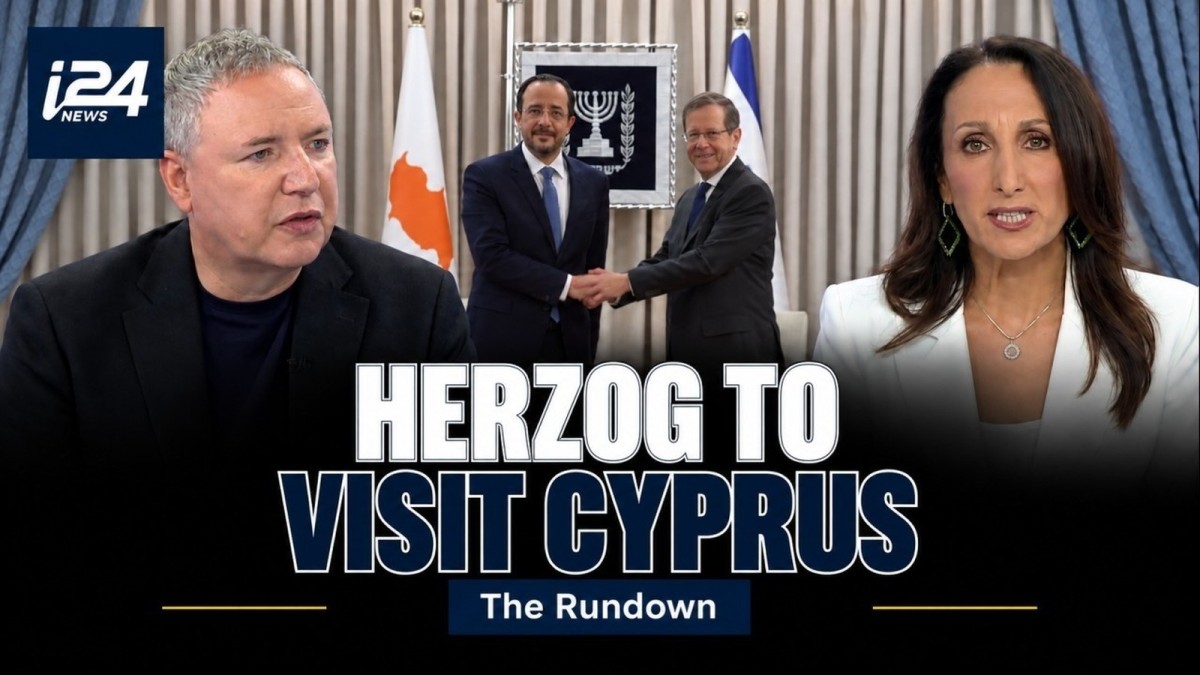
On the Ground: A One-Day Visit With Heavy Symbolism
The visit's structure reflects its carefully calibrated nature. Herzog arrives Thursday morning, holds private talks with Christodoulides, then joins a broader bilateral session with delegations from both countries. The official agenda emphasizes cooperation — trade, energy, technology, and regional stability — without naming Turkey as a subject of discussion. That omission is itself a diplomatic statement: Israel and Cyprus have learned to advance their partnership without provoking Ankara more than necessary.
Cyprus has been divided since 1974, with the internationally recognized Republic of Cyprus governing the south and a Turkish Cypriot administration controlling the north. Turkey is the only country that recognizes the breakaway northern state and maintains troops on the island. Any Israeli presidential visit to Nicosia carries weight in Ankara, where officials view the expanding Israel-Cyprus-Greece axis as an encirclement strategy. Herzog's presence at the Presidential Palace on Thursday will be read in Ankara as another brick in that wall, even if no Turkish official says so publicly.
The visit also comes about seven weeks before Israel's general election on October 27, 2026. Party lists were due this week, and campaign politics color all Israeli security diplomacy. Herzog, whose role is largely ceremonial but diplomatically active, provides a measure of continuity and statesmanship at a time when the government faces intense domestic scrutiny over its handling of Turkish provocations.
The Barak MX Flashpoint: Air Defenses and Turkish Warnings
One of the most immediate sources of tension is Cyprus's acquisition of the Israeli-made Barak MX air-defense system. Turkey has warned that the deployment could destabilize the divided island, while Cyprus argues that upgrading its defenses is necessary amid mounting regional threats. The system, produced by Israel Aerospace Industries, gives Cyprus a modern, multi-layered defense capability that Ankara views as a direct challenge to its military dominance in the Eastern Mediterranean.
The Barak MX dispute is not merely bilateral. It sits within a broader pattern of Israeli defense exports to countries that Turkey regards as rivals. Israel recently signed a roughly 3-billion-euro agreement to help construct a multilayered Greek air-defense network, a partnership developed against the backdrop of Greek-Turkish rivalry and wider concerns over Turkey's regional influence. For Israeli defense officials, these sales serve multiple purposes: they generate revenue, strengthen strategic partnerships, and create a web of interoperable systems across the Eastern Mediterranean that complicates Turkish military planning.
Turkey's warnings about the Barak MX deployment have been pointed. Ankara argues that introducing advanced air-defense systems to Cyprus could trigger an arms race on the divided island and undermine the fragile status quo. Cypriot officials counter that their country faces genuine security threats and has every right to defend itself. Israeli officials privately note that Turkey's objections ring hollow given Ankara's own military buildup, which includes 47 warships under construction and its first aircraft carrier, the TCG Anadolu, expected to launch in 2027 according to public reporting.
A Widening Naval Rivalry in the Eastern Mediterranean
The most concerning developments in recent weeks have occurred at sea. Israeli public broadcaster Kan reported in late August that Turkish warships approached Israeli naval vessels in the Mediterranean in international waters and influenced or forced changes to their routes. Israeli media report several such encounters in recent months, none of which escalated into direct military confrontation. The Israeli Navy has raised its readiness level in response.
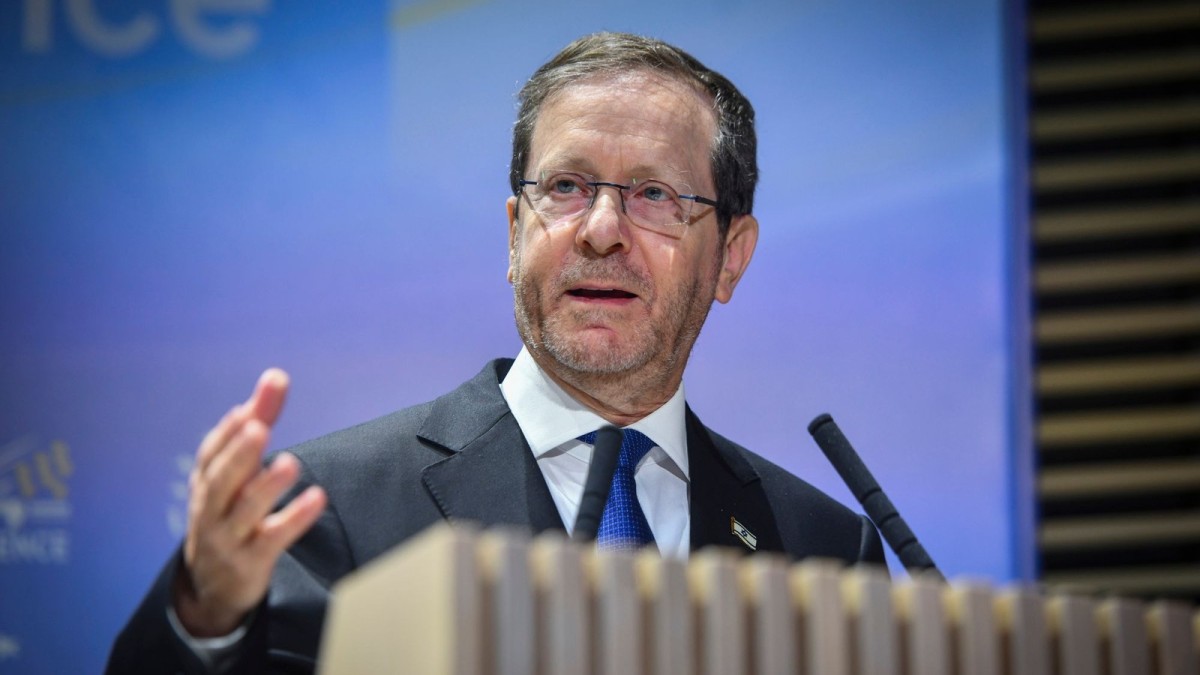
These encounters are widely read as Ankara asserting its naval presence in the Eastern Mediterranean, a region where energy resources, maritime boundaries, and military basing rights intersect. Turkey's growing fleet — including the TCG Anadolu, which will give Ankara its first aircraft carrier capability — signals a long-term ambition to project power far beyond its coastline. Israeli naval officers have adjusted their operational patterns accordingly, maintaining readiness without seeking escalation.
A senior Israeli diplomatic official offered a nuanced assessment this week: "Turkey is not an enemy state, but it is certainly a rival." The same official said Israel does not think anyone wants an exchange of fire — "neither the Turks nor us." That formulation captures the current Israeli posture: vigilance without panic, deterrence without provocation. But the naval encounters have introduced a new element of risk into Israeli-Turkish relations, one that did not exist in this form even a year ago.
Regional Context: Greece, Energy, and the Syrian Battlefield
The Israel-Cyprus-Greece triangle has deepened across multiple dimensions. Energy cooperation, including the EastMed pipeline concept and joint gas exploration, binds the three countries economically. Defense cooperation has expanded with the Barak MX sale to Cyprus and the Greek air-defense agreement. And diplomatic coordination has intensified, with regular visits and consultations at the highest levels. Herzog's Thursday trip to Nicosia is part of this rhythm, not an exception to it.
Syria has become the most dangerous arena of Israeli-Turkish friction. Israel recently struck the Abu al-Duhur military airfield in northern Syria's Idlib region, near the Turkish border, saying it was acting to prevent Turkey from deploying air-defense assets there. Turkey denied any such plans and called the strikes unprovoked. Prime Minister Benjamin Netanyahu has said Israel "will not tolerate a Turkish military entrenchment moving southward" toward its border, a red line that Israeli officials have repeated in various forums.
In early September, the Turkish army, working with Syrian counterparts, moved into Deir ez-Zor in eastern Syria to erect a temporary bridge across the Euphrates. That operation deepened Israeli concerns about Turkish entrenchment along a broad front. Turkey has also expanded its military footprint inside Syria more generally, establishing bases and supporting local forces in ways that Israeli intelligence monitors closely. For Israel, the Syrian arena is no longer just about Iran and Hezbollah — it now includes a NATO member state with a growing military presence on Israel's northern approaches.
Diplomatic and International Reactions
The United States has signaled that it wants to prevent an Israeli-Turkish escalation in Syria and has been described as working on a deconfliction mechanism among Israel, Turkey, and Syria. Israeli analysts say Washington's pressure favors Israeli restraint toward Turkey, a calculation that constrains Israeli freedom of action even as the IDF prepares for potential contingencies. The American role is complicated by Turkey's status as a NATO member and by Washington's broader interests in the Eastern Mediterranean.
Turkey's President Recep Tayyip Erdogan has been one of Israel's most vocal critics since the Gaza war, accusing Israeli leaders of "schemes and provocations." Last month, Turkey sought an Interpol "red notice" against Netanyahu, according to Israeli reports — a move widely seen as politically motivated but nonetheless indicative of the depth of Ankara's hostility. The red notice request has not produced tangible consequences, but it has further poisoned the atmosphere between the two countries.
Within Israel, the political class is divided on how to handle Turkey. Some argue for a firm deterrent posture, pointing to the naval encounters and Turkish movements in Syria as evidence that Ankara is testing Israeli resolve. Others counsel restraint, noting that Israel has no interest in a two-front conflict and that the United States is pressing for de-escalation. The election campaign has amplified these debates, with opposition parties accusing the government of being either too aggressive or too passive toward Turkey, depending on their audience.
Analysis: Rivalry, Not War — But the Margin Is Thin
The phrase "rival, not enemy" captures the current Israeli assessment, but it also reflects a hope rather than a certainty. Turkey's naval buildup, its military presence in Syria, and its confrontational rhetoric all point toward a sustained challenge to Israeli interests. Yet neither side appears to want a direct military confrontation. The naval encounters have remained below the threshold of violence, and both countries have avoided actions that would force the other to respond with force.
Herzog's visit to Cyprus on Thursday should be understood in this context. It is a signal of continuity in the Israel-Cyprus-Greece partnership, a reminder to Ankara that Israel has regional allies, and a demonstration that Israeli diplomacy continues even as security tensions rise. The visit also carries a domestic dimension: with elections on October 27, Herzog's presidential diplomacy offers a measure of stability and bipartisanship in a polarized political environment.
The coming weeks will test whether the rivalry can remain contained. Turkey's bridge operation in Deir ez-Zor, its naval encounters with Israeli vessels, and its objections to the Barak MX deployment all create potential flashpoints. The United States is working behind the scenes to prevent escalation, but Washington's leverage over Ankara is limited. Israeli officials say they are prepared for a range of scenarios, from continued friction to more serious incidents.
For now, the watchword is vigilance. The Israeli Navy has raised its readiness level. The IDF continues to monitor Turkish movements in Syria. And Herzog will sit down with Christodoulides in Nicosia on Thursday to reaffirm a partnership that has become central to Israel's regional strategy. The visit may be officially about cooperation, but its deeper message is about alignment — and about who Israel's friends are in a rapidly shifting Eastern Mediterranean.
By Hannah Berg, Staff Writer
This article was produced with AI-assisted research and editorial support. Sources: i24NEWS English, i24NEWS, Israeli President's Office, Kan, Ynetnews.
What's Your Reaction?
 Like
0
Like
0
 Dislike
0
Dislike
0
 Love
0
Love
0
 Funny
0
Funny
0
 Wow
0
Wow
0
 Sad
0
Sad
0
 Angry
0
Angry
0
Israel Correspondent at Global1.News. Based in Tel Aviv, covering Israeli politics, security, technology, and society. Provides balanced, deeply-sourced reporting on one of the most closely-watched regions in the world.











Comments (0)