
Israeli Soldiers Number Palestinian Detainees on Their Foreheads in West Bank Raid
In a recent Middle East Eye report, disturbing footage emerged from the occupied West Bank showing Israeli soldiers marking Palestinian detainees with numbers written on their foreheads, arms, and stomachs during a large-scale raid in the town of Qabatiya, south of Jenin.
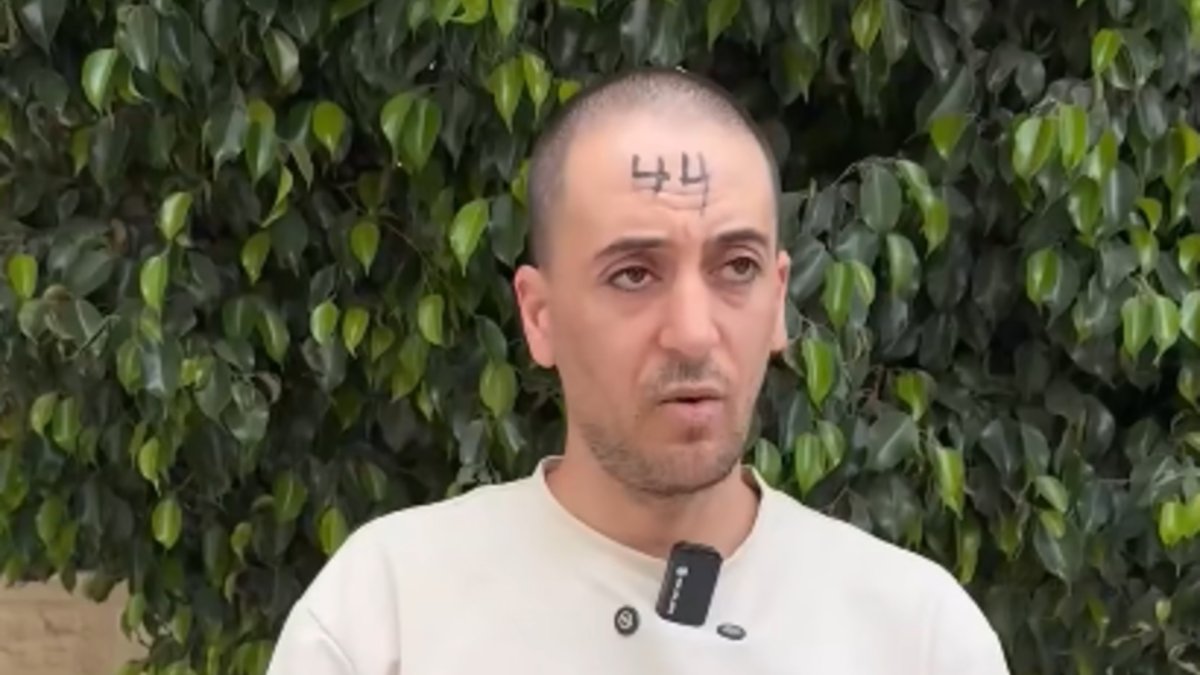
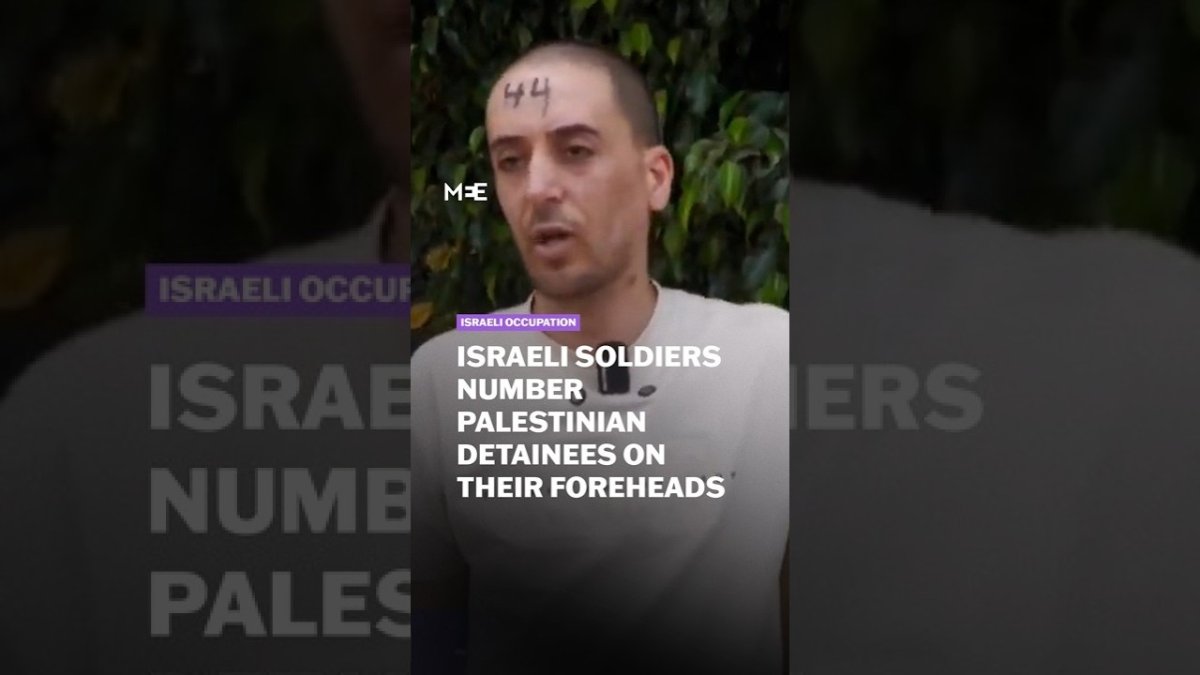
In a recent Middle East Eye report, disturbing footage emerged from the occupied West Bank showing Israeli soldiers marking Palestinian detainees with numbers written on their foreheads, arms, and stomachs during a large-scale raid in the town of Qabatiya, south of Jenin. The video, which circulated widely on social media, shows a Palestinian man with the number 44 scrawled across his forehead, a practice that has drawn immediate comparisons to historical atrocities and sparked outrage across the region. The incident, which took place on Monday, August 17, 2026, has reignited concerns about the treatment of Palestinians under military occupation and the increasingly aggressive tactics employed by Israeli forces in the northern West Bank.
Israeli Soldiers Number Palestinian Detainees on Their Foreheads Amid West Bank Raids, Drawing International Condemnation
Qabatiya, Occupied West Bank – August 19, 2026 — The Israeli army has confirmed that its soldiers marked Palestinian detainees with identification numbers on their bodies during a sweeping military operation in Qabatiya, a town of roughly 20,000 residents that has become a frequent target of Israeli raids. The operation, which involved the army's elite Duvdevan unit and the Menashe Regional Brigade, saw troops search approximately 100 buildings, detaining dozens of residents in what witnesses describe as a coordinated campaign of intimidation and collective punishment.
The confirmation from the Israeli military, which stated that "lessons have been learned" according to Israeli media reports, comes after similar incidents in April 2026 when Palestinian women from Jenin were marked with numbers on their arms, and in 2024 when soldiers marked detainees from Hebron. The repetition of this practice, despite previous acknowledgments of wrongdoing, suggests a systemic pattern rather than isolated misconduct by individual soldiers.
A Morning of Terror in Qabatiya
Ahmad al-Hathnawi, the man seen in the viral footage with the number 44 on his forehead, told Middle East Eye that at least 50 people were detained during the raid, including women. For al-Hathnawi, who has been arrested four times previously, this experience was uniquely dehumanizing. "This is the first time they've put these numbers on me," he said, his voice carrying the weight of someone who has grown accustomed to the indignities of occupation but remains shaken by this latest violation.
Al-Hathnawi explained that soldiers explicitly told detainees the purpose behind the numbering system. "They are basically trying to send a message that if settlers come into the area, there will be no problems, and that the settlers are going to remain here for a long time," he recounted. This statement reveals a chilling connection between the marking of detainees and the broader project of settlement expansion in the Jenin area, where illegal outposts and settler violence have intensified in recent months.
The interrogations, al-Hathnawi said, were designed not merely to gather intelligence but to terrorise families and deter them from resisting the encroachment of settlements. "They are trying to break our will," he added, describing how soldiers used the numbering system to strip detainees of their individual identities, reducing them to mere digits in a military ledger.
Seventy Detainees, Ten Hours of Horror
Mahmoud Nazzal, a resident of Qabatiya, provided a harrowing account of the raid on his family's three-storey home. Soldiers stormed the building after dawn prayers, breaking down doors before gathering his parents and his brother's family inside. Nazzal said the number of detainees exceeded 70, a figure significantly higher than initial estimates, suggesting the operation was far more extensive than the army has acknowledged.
"I was sitting in the corner and couldn't see everything that happened, but I witnessed pushing and hitting as the detainees were taken away and interrogated. They were also numbered on their hands, foreheads and stomachs," Nazzal told Middle East Eye. The detention lasted from approximately 5 am until 2 pm, a nine-hour ordeal during which basic human needs were denied.
Nazzal described how soldiers initially refused to give women and children water or milk, a decision that had serious medical consequences. His diabetic mother suffered a dangerous drop in blood sugar and required insulin before soldiers allowed assistance to reach her. "I was left lying on the ground, unable to move, for 10 hours while handcuffed. I was also prevented from using the bathroom. I saw someone being beaten as he left the house after his interrogation," he said, his account painting a picture of systematic humiliation and neglect.
Elderly Detainees and Medical Emergencies
The raid's toll on vulnerable residents was particularly severe. One elderly detainee with a pre-existing heart condition became seriously unwell during his detention and required an ambulance to transport him to hospital after his release. The incident highlights the particular dangers faced by older Palestinians during these military operations, who are often subjected to the same harsh treatment as younger detainees despite their fragile health.
Mufid Nazzal, Mahmoud's 67-year-old father, was the first person arrested during the raid. He described how soldiers marked his hand and forehead with a number, as they did with other detainees, and kept him handcuffed throughout his detention. Approximately 10 people were held in each room, with three floors of the house used to detain prisoners while the second and third floors were designated for interrogations.
"They released me after 10 hours, and I was in a bad state because I was handcuffed the whole time. I felt severe pain after my release," Mufid said, his words reflecting the physical toll of prolonged restraint. The use of a family home as an ad-hoc detention facility and interrogation center represents a significant escalation in tactics, transforming private residences into sites of military operations and psychological warfare.
International Law and the Prohibition of Degrading Treatment
The practice of marking detainees with numbers is widely viewed as degrading and humiliating treatment, prohibited under international humanitarian law. The Fourth Geneva Convention, which governs the protection of civilians in occupied territory, explicitly forbids "outrages upon personal dignity, in particular humiliating and degrading treatment" of protected persons. The numbering of detainees, which strips individuals of their names and identities, falls squarely within this prohibition.
Legal experts note that the practice evokes historical parallels that are impossible to ignore. The systematic numbering of prisoners was a hallmark of concentration camps during the Holocaust, and the visual imagery of numbered Palestinians has drawn sharp comparisons on social media. While the Israeli military has framed the practice as an operational necessity for tracking detainees, human rights organizations argue that such methods serve no legitimate security purpose and are designed primarily to humiliate and intimidate.
The Israeli army's response, acknowledging that "lessons have been learned," rings hollow to residents of Qabatiya who have witnessed this practice repeated across different operations and different years. The April 2026 incident involving women from Jenin and the 2024 incident in Hebron demonstrate that despite previous assurances, the practice continues unabated, suggesting either a failure of military discipline or a deliberate policy that has been tacitly approved at higher levels.
Wider Context: Escalating Raids Across the Northern West Bank
The Qabatiya raid is part of a broader pattern of intensified military operations across the northern West Bank, particularly around Jenin and Tulkarm. For months, Israeli forces have been conducting large-scale raids that involve the deployment of hundreds of soldiers, the destruction of infrastructure, and the mass detention of Palestinian residents. These operations have transformed daily life in the region, with residents living under constant threat of nighttime incursions and daytime arrests.
The United Nations expressed deep alarm at the worsening situation on August 18-19, 2026, with spokesperson Stephane Dujarric reporting that Israeli forces had instructed approximately 10 Palestinian families in the Jabal al-Nasr neighbourhood of Tulkarm to leave their homes. The UN also documented how Israeli military bulldozers excavated part of a road in the area, damaging water and sewage networks and further deteriorating the humanitarian situation for Palestinian civilians.
These operations occur against a backdrop of expanding Israeli settlements, which are illegal under international law but continue to grow with government support. The connection between military raids and settlement expansion, as articulated by al-Hathnawi, reflects a coordinated strategy to reshape the demographic and geographic reality of the northern West Bank. Settlers, protected by military escorts, are moving into areas that have been systematically weakened by repeated raids and detentions.
Psychological Trauma and Community Resilience
Mahmoud Nazzal described the experience as "a horror movie," a phrase that captures the surreal and terrifying nature of the raid. The psychological impact of such operations extends far beyond the immediate physical discomfort of handcuffs and confinement. Families who have watched their homes invaded, their loved ones bound and numbered, and their dignity stripped away carry trauma that will persist for years.
"We need specialised help to overcome the psychological trauma," Nazzal said, acknowledging that the community lacks access to adequate mental health services. The cumulative effect of repeated raids, each more aggressive than the last, has created an atmosphere of chronic anxiety and fear. Children who witness their parents being handcuffed and numbered, elderly relatives who suffer medical emergencies during detention, and families who are denied water and milk for their infants all bear psychological scars that may never fully heal.
Despite the trauma, residents of Qabatiya have shown remarkable resilience. The community has rallied around the affected families, providing support and solidarity in the aftermath of the raid. Local organizations have documented the events, ensuring that the testimony of survivors is preserved and shared with the international community. This documentation serves both as a form of resistance and as a crucial record for potential future accountability efforts.
Implications and the Road Ahead
The Qabatiya raid and the numbering of detainees raise serious questions about the direction of Israeli military policy in the occupied West Bank. Israeli Defense Minister Israel Katz has announced that the military will present a plan within two weeks to transfer West Bank civilian enforcement from the IDF to police, a move that could fundamentally alter the nature of the occupation. Critics warn that such a transfer may lead to even harsher treatment of Palestinians, as police forces may operate with less oversight than the military.
The international community's response to the numbering incident has been muted, with no major powers issuing formal condemnations. This silence stands in stark contrast to the outrage expressed on social media, where images of numbered Palestinians have been widely shared and compared to historical atrocities. The gap between grassroots outrage and diplomatic inaction reflects the broader failure of the international community to hold Israel accountable for violations of international law in the occupied territories.
For the residents of Qabatiya, the immediate concern is recovery and the prevention of future incidents. The demand for accountability, for a genuine commitment from the Israeli military to cease the practice of numbering detainees, and for the international community to take meaningful action, remains unmet. As the Israeli military continues its operations across the northern West Bank, the people of Qabatiya and surrounding towns live with the knowledge that they could be next, their names replaced by numbers, their dignity stripped away by soldiers who see them not as people but as obstacles to be managed.
The numbering of Palestinian detainees is not an isolated incident but a symptom of a broader system of occupation that dehumanizes and degrades. Until the international community treats these violations with the seriousness they deserve, and until the Israeli military genuinely reforms its practices, the people of Qabatiya will continue to live under the shadow of a horror that they did not choose and cannot escape. Their testimony, preserved in their own words, stands as a powerful indictment of a practice that has no place in the 21st century.
By Fatima Al-Rashid, Staff Writer
This article was produced with AI-assisted research and editorial support. Reporting is based on sources cited in the article.
What's Your Reaction?
 Like
0
Like
0
 Dislike
0
Dislike
0
 Love
0
Love
0
 Funny
0
Funny
0
 Wow
0
Wow
0
 Sad
0
Sad
0
 Angry
0
Angry
0

Gulf/MENA Correspondent at Global1.News. Based in Doha, covering Gulf politics, energy markets, diplomacy, and development across the Middle East and North Africa. Tracks the economic transformation of the Gulf states.














Comments (0)