
Gaza's Farmland Collapses: UN Finds 97 Per Cent of Cropland Damaged or Inaccessible
ROME — The United Nations Food and Agriculture Organisation (FAO) has documented a catastrophic collapse of Gaza's agricultural capacity, finding that 97 per cent of the enclave's cropland is now damaged or inaccessible, according to a new assessment conducted with the UN.
Gaza's Farmland Collapses: UN Finds 97 Per Cent of Cropland Damaged or Inaccessible
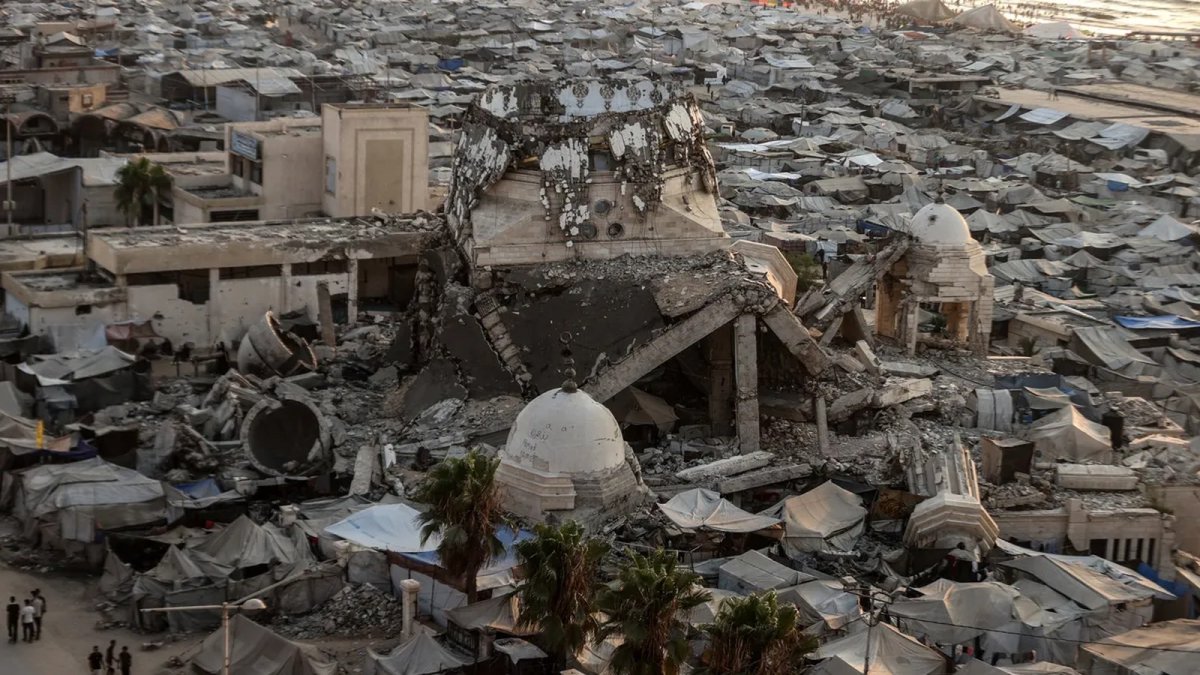
ROME — The United Nations Food and Agriculture Organisation (FAO) has documented a catastrophic collapse of Gaza's agricultural capacity, finding that 97 per cent of the enclave's cropland is now damaged or inaccessible, according to a new assessment conducted with the UN Satellite Centre (UNOSAT). The report, published Tuesday, reveals that only 448 hectares of agricultural land remain usable and undamaged — a sharp decline from 601 hectares recorded in October 2025, representing a 25.5 per cent decrease in just eight months.
The assessment, based on satellite imagery dated 24 June, paints a dire picture of a food system systematically dismantled. Before the war, Gaza's farmland, orchards, and greenhouses fed hundreds of thousands of people and employed a large share of the workforce. Today, the vast majority of that productive capacity has been destroyed or placed beyond the reach of farmers, deepening what humanitarian agencies describe as a man-made famine.
Access Restrictions, Not Just Bombs, Are Shrinking Gaza's Farmland
The FAO report makes clear that the reduced growing space for Gaza's farmers today is primarily the result of a lack of access, rather than additional physical damage from the war — which was already massive. In June 2026, just over 4,000 hectares of cropland in Gaza — or 27 per cent — could be reached by farmers. However, approximately 3,600 hectares of this was unfit for planting, leaving only a sliver of viable agricultural land.
This inaccessibility is largely driven by the "westward expansion" of the so-called 'Yellow Line' that separates the ceasefire zone from the Israel Defense Forces' military-controlled area. As the line has moved, it has swallowed up agricultural land, pushing Gaza's 2.1 million residents into an area less than half the size of the enclave. Just this weekend, UN partners reported multiple air strikes and incidents of shelling, gunfire, and naval fire, primarily west of the Yellow Line, where most of the population is now confined.
"This latest assessment paints a stark picture of the continued deterioration of Gaza's agriculture sector," said Rein Paulsen, Director of FAO's Office of Emergencies and Resilience. "Without urgent action to restore safe access and provide farmers with the support they need, opportunities to restore local food production will continue to diminish."
Rafah Bears the Brunt of Inaccessibility, North Gaza the Worst Damage
The geographic breakdown of the assessment reveals a dual crisis. Rafah, in the far south of Gaza, recorded the highest levels of inaccessible cropland and greenhouse growing areas, at 97.2 per cent and 98.4 per cent respectively. Only 16.6 per cent of the total greenhouse area across Gaza remains accessible and undamaged, according to the FAO.
Meanwhile, "the most extensive physical damage remains concentrated in North Gaza and Gaza governorates," the agency noted. This means that even where the land has not been physically destroyed, farmers in Rafah cannot reach it, while in the north, the land itself has been ravaged by repeated ground operations and bombardment.
The combination of these two factors — physical destruction in the north and access denial in the south — has effectively dismantled Gaza's agricultural sector from both ends, leaving a narrow, degraded strip in the middle that cannot sustain the population's needs.
Farmers Return to Ruins: 'Nothing Was Left'
For Gaza's farmers, the statistics translate into a daily struggle for survival. Taysir Dahdouh, a cucumber and tomato grower, described returning from displacement to find his livelihood erased. "I had a good income before the war. Suddenly, we were left with nothing," he told UN News. "Even the steel frames of the greenhouses disappeared, along with our homes, belongings, and irrigation pipes. Nothing was left."
Dahdouh and his family returned to their land with basic tools, attempting to rehabilitate what they could. "We managed to rehabilitate about one dunum (about one-tenth of a hectare) of our land to bring it back to life," he said. It is a fraction of what he once cultivated, but for his family, it represents a fragile foothold in a landscape of loss.
Wajiha Dahdouh, another farmer, echoed the desperation of those trying to restart their lives. "We came back to support ourselves and return to farming so we could survive," she said. "Unfortunately, there is not enough water, there are no fertilizers, no seeds, and none of the basic necessities that would allow people to continue their lives."
These testimonies underscore a critical finding of the FAO report: even where land is physically accessible, the inputs needed to farm — seeds, fertilisers, fuel, irrigation supplies, and animal feed — are critically scarce. The agency warned that these shortages, combined with access restrictions, are hindering any meaningful recovery of the agricultural sector.
A Food System Dismantled: The Human Cost of Starvation Tactics
The destruction of Gaza's agriculture must be understood within the broader context of the war that began on 7 October 2023. Since that date, Israel — with US and European support — has carried out a campaign that human rights organisations and legal experts have described as genocide in the Gaza Strip, involving killing, starvation, destruction, displacement, and detention, despite international appeals and orders from the International Court of Justice to halt it.
Gaza's Health Ministry reports that the overall death toll from the war exceeds 73,000, with more than 174,000 wounded. The Israeli campaign has damaged approximately 90 per cent of Gaza's civilian infrastructure, and the UN has estimated reconstruction costs at around $70 billion. The FAO report documents how the destruction of farmland, greenhouses, and irrigation systems — alongside the starvation it describes — has dismantled Gaza's food system, severing the enclave from its ability to feed itself.
The ceasefire that took effect in October 2025 has been repeatedly violated. The Gaza Health Ministry reports that more than 1,200 Palestinians have been killed in Israeli violations of the ceasefire since it took effect. Each violation further erodes the already fragile conditions for farmers trying to work their land, and each expansion of the Yellow Line pushes agriculture further out of reach.
Urgent Action Needed to Prevent Total Agricultural Collapse
The FAO is calling for urgent action to ensure farmers can access their land, rehabilitate damaged areas, and receive essential production supplies. Without this, the agency warns, the opportunity to restore local food production will continue to diminish, locking Gaza into a future of dependency on external aid.
Before the war, agriculture was a lifeline of Gaza's economy and food supply. The enclave's farmland, orchards, and greenhouses fed hundreds of thousands of people and employed a large share of the workforce. The loss of this sector is not just an economic catastrophe; it is a cultural and social one, severing communities from their land and their means of self-sustenance.
The international community's response has been woefully inadequate. Despite the ICJ orders and repeated UN resolutions, the machinery of destruction continues to operate. The FAO's satellite imagery provides irrefutable evidence of what is happening on the ground, but documentation alone does not feed a population. What is needed is political will to enforce a real ceasefire, to open crossings for agricultural inputs, and to protect farmers' rights to their land.
For now, the 448 hectares of usable farmland stand as a stark symbol of what has been lost. For farmers like Taysir and Wajiha Dahdouh, the question is not just whether they can plant this season, but whether there will be a future for farming in Gaza at all. The answer, as the FAO's assessment makes clear, depends on actions that have not yet been taken.
This article was produced with AI-assisted research and editorial support. Sources: Middle East Monitor, UN News.
By Fatima Al-Rashid, Staff Writer
What's Your Reaction?
 Like
0
Like
0
 Dislike
0
Dislike
0
 Love
0
Love
0
 Funny
0
Funny
0
 Wow
0
Wow
0
 Sad
0
Sad
0
 Angry
0
Angry
0

Gulf/MENA Correspondent at Global1.News. Based in Doha, covering Gulf politics, energy markets, diplomacy, and development across the Middle East and North Africa. Tracks the economic transformation of the Gulf states.












Comments (0)