
Israeli occupier kills Palestinian teenager outside his home in occupied West Bank
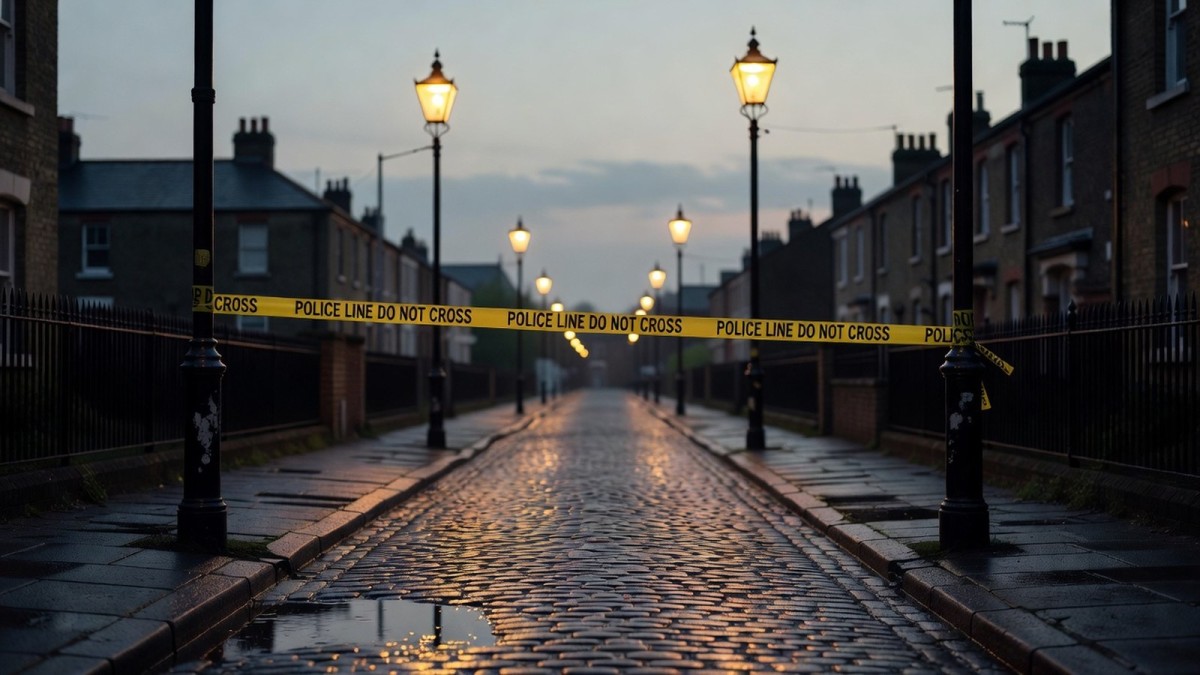
Teenager Shot Dead Outside Family Home in Hebron-Area Village SA'IR, occupied West Bank — A 17-year-old Palestinian was shot and killed outside his family home in the Hamroush area of Sa'ir, north of Hebron, on Friday, according to his family and a medical source.

Teenager Shot Dead Outside Family Home in Hebron-Area Village
SA'IR, occupied West Bank — A 17-year-old Palestinian was shot and killed outside his family home in the Hamroush area of Sa'ir, north of Hebron, on Friday, according to his family and a medical source. The killing marks the latest in a sustained wave of settler violence that has gripped the occupied West Bank since October 2023.
Karim Sanad Shalaldeh died from a gunshot wound sustained during the attack, a medical source at Al-Mizan Hospital in Hebron told Anadolu Agency. The Palestinian Ministry of Health confirmed his death on Friday, identifying him as a resident of Sa'ir, a town in the Hamroush area, north of Hebron, in the southern occupied West Bank.
The circumstances of the killing remain contested. The family maintains Karim was unarmed and standing in front of his home when he was shot at close range. Other reports, citing the Palestinian Health Ministry, described a rock-throwing incident earlier in the day in Sa'ir, after which settler gunfire killed the teenager and wounded others. The family's account does not mention any rock-throwing.
Father's Account: 'They Shot Him in Cold Blood'
Karim's father, Sanad Shalaldeh, told Anadolu Agency that around 50 Israeli occupiers attacked the family home on Friday. He described his son as having been caught in a confrontation he did not initiate.
"My son was standing in front of the house and did nothing. When he asked them to move away, one of them shot him in the chest and killed him in cold blood," the father said.
Shalaldeh said his son was shot while trying to drive the Israeli occupiers away from the house. He added that two other people were seriously wounded in the attack. The father's testimony paints a picture of a family under siege in their own yard — a scenario increasingly common in the southern West Bank.
The family's account could not be independently verified by Global1.News, and the Israeli military had not issued a statement on the incident as of Friday evening.
Health Ministry Confirms Death, Two Wounded
The Palestinian Ministry of Health announced Friday that Karim Sanad Shalaldeh was killed after being shot by Israeli settlers in the town of Sa'ir, northeast of Hebron, according to the official Palestinian news agency WAFA. The ministry's statement did not provide additional details on the circumstances.
Medical sources at Al-Mizan Hospital in Hebron confirmed that two other individuals were brought in with serious wounds from the same attack. Their identities and conditions were not immediately available. The wounded included a 70-year-old man, according to reporting from The New Arab, which cited the Health Ministry. The age of the second wounded person was not specified.
Settler Violence Surges Across the West Bank
Friday's killing is not an isolated incident. It is part of a broader pattern of intensifying settler violence that has swept the occupied West Bank since October 2023, when the war in Gaza began. According to OCHA's humanitarian situation report from July 23, 2026, about 880 Palestinians have been injured in the context of settler attacks since the beginning of 2026. Of those, 720 were injured by Israeli settlers and the remainder by Israeli forces. These injuries account for 56 per cent of all Palestinian injuries in the West Bank during that period.
The data reflects a dramatic escalation. OCHA's July 31, 2026 report noted that eight Palestinians, including one child, were killed in Nablus, Jenin, and East Jerusalem during the month of July. The report also stated that July was, jointly with March 2026, the deadliest month for Palestinians in incidents involving settlers since October 2023.
The Israeli military has conducted near-nightly raids across the West Bank since the start of the Gaza war, but the settler attacks are distinct in their character. They often involve groups of armed settlers entering Palestinian villages, sometimes with military escort, targeting homes, vehicles, and agricultural land. In Sa'ir, the attack on the Shalaldeh family home fits this pattern: a large group, a direct assault on a residence, and gunfire at close range.
Forced Displacement: A Growing Crisis
The violence is not only causing injuries and deaths; it is driving Palestinians from their land. Human Rights Watch, in a report released on August 20, 2026, found that attacks by settlers in the occupied West Bank are increasingly driving the forced displacement of Palestinian communities, with dozens at risk of erasure.
The report documented cases in which entire hamlets, particularly in the southern West Bank's Masafer Yatta region and the Jordan Valley, have been abandoned after repeated settler raids, threats, and the destruction of homes and water infrastructure. These communities, many of which are herding and farming villages, have lived on the land for generations. Their displacement, Human Rights Watch argues, amounts to a form of forced transfer prohibited under international humanitarian law.
The phenomenon is not new, but its pace has accelerated. The Israeli government has not commented on the Human Rights Watch findings, but Israeli officials have repeatedly described settler activity in the West Bank as legal and have defended the settlements as part of Israel's historical and security interests.
Attacks Shift Toward Areas Earmarked for a Palestinian State
One of the most concerning developments, according to reporting from The Guardian on August 21, 2026, is that violent settler attacks are shifting from Israeli-controlled areas to areas earmarked for a future Palestinian state. Under the Oslo Accords, the West Bank is divided into Areas A, B, and C. Area C, which is under full Israeli military and administrative control, comprises about 60 per cent of the West Bank and contains most Israeli settlements. Areas A and B, which are under full or partial Palestinian control, are the areas where a future Palestinian state would most likely be established.
The Guardian's reporting indicates that settlers are increasingly targeting villages in Area B, which is nominally under Palestinian security control but where the Israeli military operates freely. This shift is significant because it suggests a deliberate strategy to undermine the territorial contiguity of a future Palestinian state. By attacking communities in Areas A and B, settlers are effectively shrinking the land available for Palestinian development and self-governance.
Israeli army leaders have warned of a "West Bank eruption" over settler attacks, according to Middle East Monitor reporting. These warnings reflect a growing concern within the Israeli security establishment that the unchecked violence could spark a broader uprising. The military's concern, however, has not translated into meaningful action against settler violence. According to OCHA, the vast majority of settler attacks are not followed by any Israeli investigation or prosecution.
What This Means for Palestinians in the West Bank
For Palestinians in the West Bank, the killing of Karim Shalaldeh is a reminder that the occupation is not a distant political abstraction but a daily, violent reality. Sa'ir is a town of farmers and laborers, many of whom work in Israel or in the nearby settlement industrial zones. The attack on the Shalaldeh family home occurred in a residential area, not on a contested hilltop or a military checkpoint. It happened where people live, sleep, and raise their children.
The father's account — that his son was standing in front of the house, that he asked the attackers to move away, and that he was shot in the chest — speaks to a level of impunity that has become normalized. When a 17-year-old can be killed in his own yard and the attackers face no apparent consequences, the message to Palestinian communities is clear: you are not safe anywhere, not even in your own home.
The broader data supports this sense of vulnerability. With 880 Palestinians injured in settler attacks in the first seven months of 2026, and with displacement accelerating, the West Bank is experiencing a level of violence not seen in years. The international community has issued statements of concern, but no meaningful pressure has been applied to halt the attacks. The United States, Israel's closest ally, has continued to provide military and diplomatic support without conditioning it on a reduction in settler violence.
For the residents of Sa'ir, the immediate future is one of mourning and fear. The Israeli military has not announced an investigation into Friday's shooting.
The killing also underscores the fragility of the Palestinian Authority, which exercises limited self-rule in parts of the West Bank but has no authority over Israeli settlers or the Israeli military. Palestinian security forces cannot intervene in settler attacks, and the Israeli military, which is supposed to protect all residents of the West Bank, has consistently failed to do so in the case of Palestinian civilians.
As the sun set over the Hebron hills on Friday, the Shalaldeh family joined a long and growing list of Palestinian families who have lost loved ones to settler violence. Their story is not unique, but it is no less tragic for its familiarity. In a land where the occupation has persisted for nearly six decades, the killing of a teenager outside his own home is both a personal tragedy and a political statement — one that says, with chilling clarity, that the lives of Palestinians in the West Bank remain expendable.
By Fatima Al-Rashid, Staff Writer
This article was produced with AI-assisted research and editorial support. Sources: Middle East Monitor/Anadolu Agency, WAFA, The New Arab, OCHA, Human Rights Watch, The Guardian.
What's Your Reaction?
 Like
0
Like
0
 Dislike
0
Dislike
0
 Love
0
Love
0
 Funny
0
Funny
0
 Wow
0
Wow
0
 Sad
0
Sad
0
 Angry
0
Angry
0
Gulf/MENA Correspondent at Global1.News. Based in Doha, covering Gulf politics, energy markets, diplomacy, and development across the Middle East and North Africa. Tracks the economic transformation of the Gulf states.









Comments (0)