
Israeli Demolition Orders Near Jenin Threaten Palestinian Livelihoods as Settlement Drive Accelerates
Israeli demolition orders handed to Palestinian shop owners near Jenin this week arrive at a politically charged moment, as settlement expansion accelerates ahead of Israel’s October 2026 elections and Washington’s posture on annexation reshapes calculations across Arab
Israeli demolition orders handed to Palestinian shop owners near Jenin this week arrive at a politically charged moment, as settlement expansion accelerates ahead of Israel’s October 2026 elections and Washington’s posture on annexation reshapes calculations across Arab capitals. The notices, which give commercial owners near Marj Ibn ‘Amer seven days to dismantle their own businesses, threaten dozens of families and deepen the slow-motion erasure of Palestinian economic life in the northern West Bank — a dynamic that now tests the Abraham Accords framework and the credibility of the two-state solution alike.
Israeli Demolition Orders Near Jenin Signal Intensified Settlement Drive Before October Elections
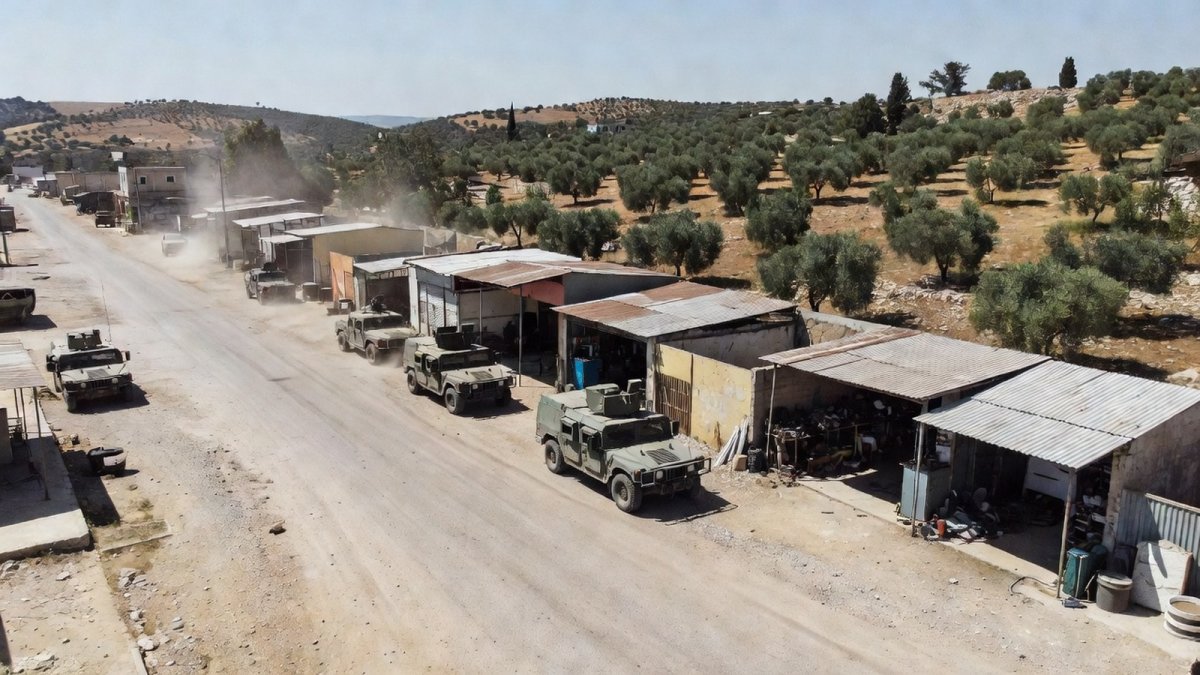
Jenin, West Bank – August 5, 2026 — Israeli occupation forces distributed demolition notices to multiple commercial structures around Duwwar al-Badia in Marj Ibn 'Amer on August 3, ordering owners to dismantle shops, restaurants, garages, and workshops within seven days. Shop owner Fayez Rawajba and others including Ishaq Mahamid, Ahmad 'Eleyat, Muhammad 'Eleyat, Mer'ey Sa'adi, Mahmoud Sa'adi, Talal Yasin, Mustafa Turkman, 'Amer 'Azmouti, and Osama 'Azmouti received the orders under directives from the Israeli military commander. The actions form part of coordinated demolitions across Jenin, Nablus, and Ramallah districts that also destroyed agricultural structures, a home under construction, and a horse farm.
Geopolitical Context
The October 2026 elections create immediate pressure on the current coalition, with Smotrich's Religious Zionism Party positioned near the electoral threshold and facing direct competition from Ben-Gvir's faction for the same hard-right constituency. This dynamic accelerates settlement approvals as a means of consolidating voter bases ahead of the vote. The recent embedding of the Settlements Administration within the Defence Ministry institutionalizes these policies, allowing routine implementation of the 104 settlements and 160 settlement farms approved since 2022 without requiring separate cabinet votes each time.
Demographic shifts in Area C follow directly from these approvals, as new construction alters the balance of control over the roughly 60 percent of the West Bank designated under Oslo for eventual negotiation. US policy signals under the Trump administration have included references to annexation options and the Board of Peace framework, which regional reporting links to potential recognition of settlement blocs. These positions interact with the existing pattern of state-property registration measures initiated in February 2026, reducing the scope for Palestinian development in the same zones.
Electoral calculations intersect with broader regional maneuvering, where accelerated demolitions serve as tangible proof of commitment to maximalist territorial claims. Analysts note that such moves preempt potential diplomatic resets after the vote, locking in facts on the ground that future governments would find costly to reverse. The strategy also tests the resilience of Arab states still navigating normalization pathways under the Abraham Accords, as visible settlement growth complicates their domestic political calculations.
Historical Background
Under the Oslo Accords division of the West Bank into Areas A, B, and C, Area C remains under full Israeli administrative and security control, with fewer than 1 percent of Palestinian building permit applications approved according to OCHA data. This mechanism, established in the 1993-1995 agreements, has produced the current pattern of demolition orders for structures lacking permits, including the commercial facilities targeted near Jenin and the agricultural buildings in Beit Dajan. The policy framework predates October 2023 but has recorded its highest demolition totals since OCHA tracking began in 2009.
The 2004 ICJ advisory opinion on the separation barrier and the July 2024 opinion declaring the occupation unlawful provide the legal backdrop against which current demolitions occur. UN Security Council Resolution 2334, adopted in 2016, explicitly called for an end to settlement activity. The 1967 Green Line continues to define the occupied territory, while projects such as E1 illustrate how incremental construction can bisect remaining Palestinian contiguity between the northern and southern West Bank.
Settlement expansion has followed a consistent trajectory since 1967, with successive Israeli governments advancing infrastructure that fragments Palestinian space. The current wave builds on earlier precedents of land registration and zoning restrictions that systematically limit Palestinian access to resources. These patterns have produced cumulative effects visible in the loss of over 1,000 dunams around 'Arbouna and 1,500 dunams near Faqqu'a, alongside 22 dunams in the Arraba and Qabatiya areas, underscoring the long-term erosion of agricultural viability.
Regional Dynamics
The Palestinian Authority operates under sustained fiscal strain from Israeli withholding of tax revenues, which directly limits its capacity to respond to displacement or support affected communities in Jenin and surrounding areas. Security coordination mechanisms established under Oslo remain in place but face increasing domestic pressure as daily displacement averages 17 people, including 8 children, throughout 2026. This rate doubles the average recorded over the prior three years and compounds the displacement of more than 33,000 residents from Jenin, Tulkarm, and Nur Shams camps since early 2025.
Jordan maintains its peace treaty with Israel alongside Hashemite custodianship of Jerusalem holy sites, giving it a direct stake in preventing further Area C changes that could affect the two-state framework. Egypt's position rests on its own 1979 peace treaty and its role in Gaza-related diplomacy. Gulf states weigh continued normalization under the Abraham Accords against domestic public opinion shaped by the Gaza war, creating constraints on any new economic or diplomatic initiatives that appear to accommodate expanded settlement activity.
Settler violence has intensified in parallel, with 2,256 recorded attacks in the first half of 2026 alone, many targeting agricultural assets and commercial routes. These incidents compound the economic isolation of Palestinian communities already navigating permit denials and demolition threats. Regional actors view the trend as a direct challenge to stability, particularly as it risks spillover effects into neighboring states already managing refugee flows and border security concerns.
Strategic Calculus
The seven-day removal deadlines attached to the August 3-4, 2026 orders allow irreversible changes on the ground before the October elections, converting contested commercial sites into cleared land that can be incorporated into future settlement planning. This approach aligns with the economic objective of removing Palestinian commercial activity from zones targeted for settlement expansion, thereby reducing the viability of sustained Palestinian presence. The settler movement has long pursued policies framed as encouraging voluntary emigration through sustained restrictions on construction and agriculture.
International legal exposure remains a factor, given ICC jurisdiction over the occupied territories and the possibility of arrest warrants for officials involved in settlement policy. Palestinians retain avenues through UN forums and international courts, alongside the institutional tools still available to the Palestinian Authority. Escalation risks tied to resistance operations in the northern West Bank add another variable that Israeli planners must weigh against the domestic political gains from accelerated demolitions.
Israeli planners also factor in the timeline for physical transformation, with some sites slated for bulldozing within ten days of notice issuance. This compressed schedule maximizes the political signaling effect ahead of elections while minimizing opportunities for organized local resistance or international intervention. The calculus prioritizes rapid implementation over prolonged legal contestation, betting that completed demolitions will prove difficult to undo regardless of electoral outcomes.
The Human Cost and Legal Arena
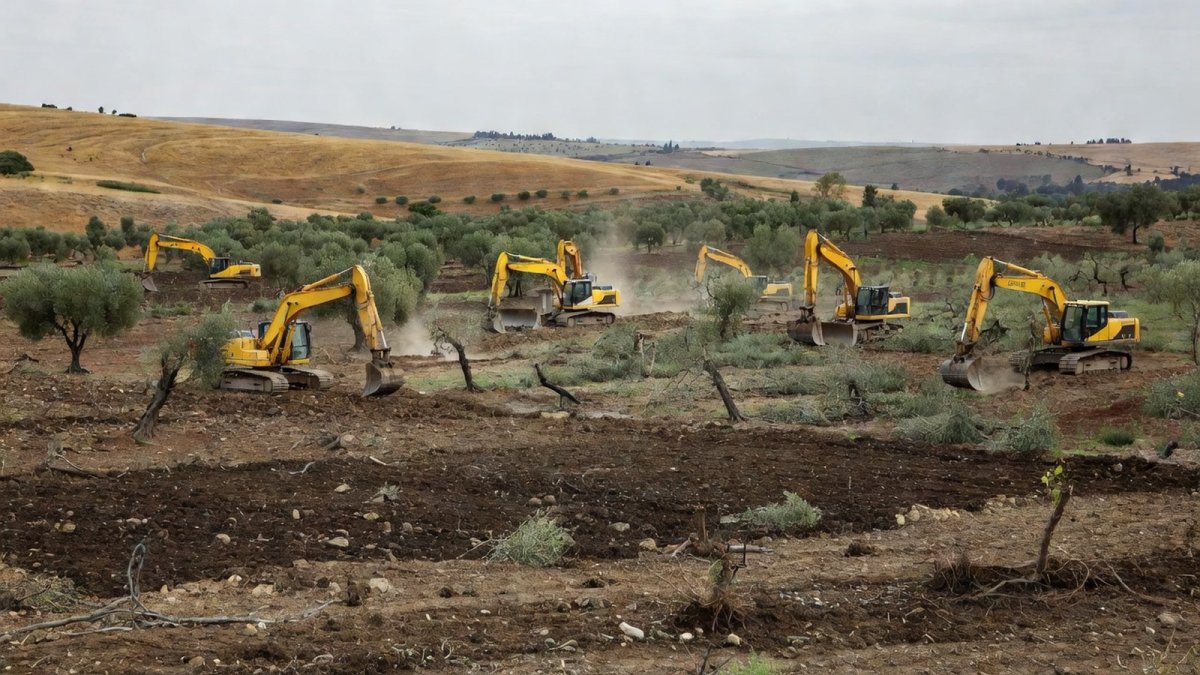
The seven-day ultimatum imposes immediate psychological and economic strain on dozens of families whose livelihoods depend on the targeted businesses near Duwwar al-Badia. Shop owners face the sudden loss of income streams that support extended households, while the destruction of a 140-square-meter home under construction and a 460-square-meter horse farm eliminates both shelter and agricultural assets built over years. These measures disrupt local economies already weakened by restricted access to markets and resources, leaving families with limited alternatives in an environment where permit approval rates remain below one percent.
The International Criminal Court maintains jurisdiction over the occupied Palestinian territory and continues its investigation into settlement-related crimes, raising the prospect of future accountability for officials overseeing demolition campaigns. Palestinian petitioners have pursued cases before the Israeli Supreme Court, yet success rates for Area C challenges remain exceedingly low, reflecting structural barriers in the judicial process. International humanitarian law, particularly Article 49 of the Fourth Geneva Convention prohibiting the transfer of civilian population into occupied territory, provides the overarching framework that legal experts invoke to characterize the settlement enterprise as a violation, though enforcement mechanisms have proven limited in practice.
Regional Implications
Annexation steps could trigger diplomatic rupture with Jordan and Egypt, both of which have warned against changes that undermine the territorial basis of their peace treaties. Saudi-Israel normalization talks would face renewed obstacles if settlement expansion accelerates, as Gulf publics continue to link any normalization to concrete progress on Palestinian statehood. A third intifada scenario remains possible if displacement rates and settler attacks continue at the levels recorded in July 2026, the deadliest month for Palestinians from settler violence since October 2023.
US domestic politics would register effects through the Muslim-American voting bloc and existing congressional divisions over Israel policy. These developments would also complicate Gaza ceasefire diplomacy by reinforcing perceptions that territorial changes in the West Bank are irreversible. The broader legacy of prior US initiatives, including the deal of the century framework, would be further distanced from any negotiated outcome. In strategic terms, the current trajectory converts short-term electoral calculations into long-term territorial facts that constrain future negotiation space for all parties.
By Malik Hassan, Staff WriterThis article was produced with AI-assisted research and editorial support. Reporting is based on sources cited in the article.
What's Your Reaction?
 Like
0
Like
0
 Dislike
0
Dislike
0
 Love
0
Love
0
 Funny
0
Funny
0
 Wow
0
Wow
0
 Sad
0
Sad
0
 Angry
0
Angry
0

Middle East Correspondent at Global1.News. Based in Beirut, covering politics, conflict, energy, and society across the Middle East. Brings context and depth to a region often reduced to headlines.













Comments (0)