
Kamal Adwan Hospital Suspends Operations as Israeli Forces Advance in Northern Gaza
BEIT LAHIA — Kamal Adwan Hospital, the last major medical facility serving the northern Gaza Strip, temporarily suspended operations and evacuated its staff on Thursday after Israeli military vehicles advanced toward the facility, according to the hospital administration and Palestinian media reports. The one-day suspension was announced as a protective measure for medical personnel, patients, and visitors amid the movement of Israeli forces near the hospital's perimeter.
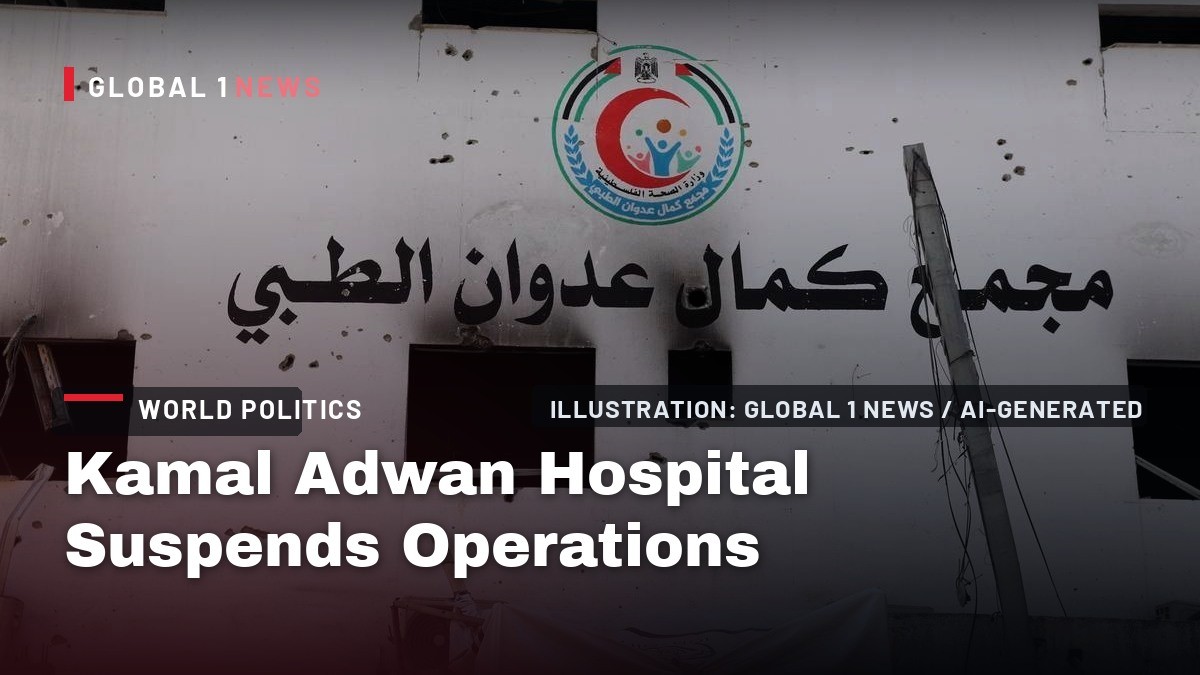
BEIT LAHIA — Kamal Adwan Hospital, the last major medical facility serving the northern Gaza Strip, temporarily suspended operations and evacuated its staff on Thursday after Israeli military vehicles advanced toward the facility, according to the hospital administration and Palestinian media reports. The one-day suspension was announced as a protective measure for medical personnel, patients, and visitors amid the movement of Israeli forces near the hospital's perimeter.
The hospital administration said the decision to halt operations was taken to safeguard those inside the facility as Israeli military vehicles approached the area. According to the Quds News Network, hospital staff were instructed to evacuate as gunfire was reported near the facility. The scene echoed a familiar and devastating pattern for Kamal Adwan, which has been repeatedly targeted, raided, and damaged throughout successive Israeli military operations in northern Gaza since late 2023.
Medical Aid for Palestinians (MAP) issued an urgent statement on the evacuation, underscoring the gravity of the situation for a hospital that has become a symbol of the decimation of Gaza's healthcare system. The facility has been forced to suspend services multiple times over the past three years, each time leaving thousands of civilians in Beit Lahia, Beit Hanoun, and Jabalia without access to emergency care, maternity services, or treatment for chronic conditions.
Two Killed in Beit Lahia Incursion, Including a 13-Year-Old Boy
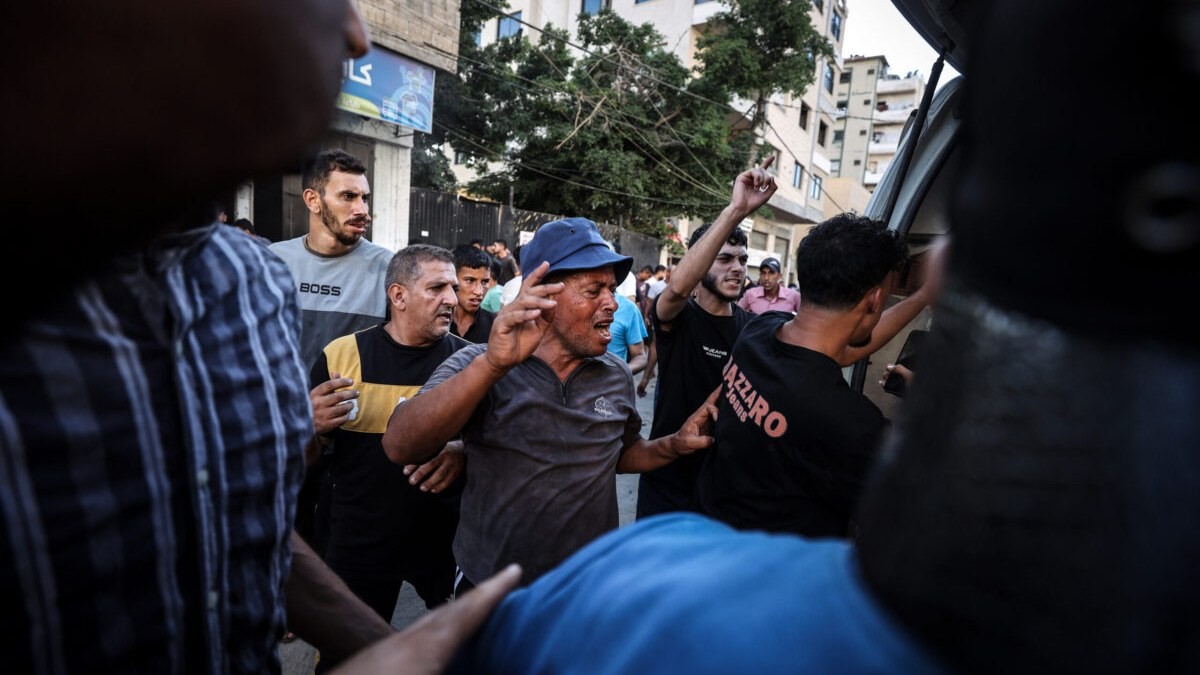
Elsewhere in northern Gaza, the Israeli military incursion into Beit Lahia claimed the lives of two Palestinians, including a child. Palestinian medical sources identified those killed as Hisham Hani Subh and Aed Mohammed Salama, aged 13. The sources said the two were struck by Israeli gunfire near Khalifa School as military vehicles advanced in the vicinity of Al-Ribat Mosque. Several other people were wounded in the same incident, though precise numbers were not immediately available from the source material.
The killing of Aed Mohammed Salama marks yet another child lost to violence in a territory where UNICEF reported in August 2026 that at least 300 children had been killed in the 300 days since the ceasefire was announced in October 2025. That figure, which averages one child killed per day, represents a grim continuity of suffering despite the formal end of large-scale hostilities. For the children of Gaza, the ceasefire has not meant safety; it has meant a slower, but no less lethal, erosion of their right to life.
Palestinian reports described the killings and the incursion as violations of the ceasefire agreement currently in effect in Gaza. The agreement, which came into force on 10 October 2025, was intended to halt the devastating Israeli military campaign that had killed tens of thousands of Palestinians and reduced much of the enclave to rubble. Nearly one year on, Palestinians describe a reality in which the ceasefire exists on paper but is routinely breached by Israeli ground incursions, air strikes, and artillery fire.
Southern and Central Gaza Under Fire
The violence was not confined to the north. In the southern Gaza Strip, Israeli military vehicles reportedly opened fire near a cemetery west of Khan Younis, with gunfire reaching tents sheltering displaced Palestinians. The area west of Khan Younis is home to vast tent encampments where hundreds of thousands of displaced families have sought refuge after being driven from their homes in Gaza City, the north, and other areas. Israeli helicopters were also reported operating and firing east of the city, adding to the atmosphere of constant fear and unpredictability.
In central Gaza, Israeli artillery reportedly struck an area northwest of Al-Bureij refugee camp, while gunfire from Israeli military vehicles was reported east of the Al-Da'wa neighbourhood, northeast of Al-Nuseirat camp. These are densely populated areas where refugee families, many of whom have been displaced multiple times, live in makeshift shelters and damaged buildings. The artillery and gunfire serve as a reminder that no corner of the Gaza Strip is beyond the reach of Israeli firepower, even under a ceasefire.
Days of Palestine reported heavy Israeli gunfire and a limited ground incursion toward Kamal Adwan Hospital on Thursday morning, stating that medical teams began evacuating after the facility came under direct fire. The same report noted that tanks opened heavy fire south of Khan Younis, corroborating the accounts of gunfire reaching displacement tents. The coordination of ground incursions, tank fire, and helicopter strikes across multiple areas of the Strip on a single day paints a picture of a military that is actively operating throughout Gaza, ceasefire notwithstanding.
UN Documents 24 Killed in Five Days, Warns of Enduring Danger
The United Nations Human Rights Office in the Occupied Palestinian Territory released a statement on Thursday documenting the scale of recent violence. According to the UN office, 24 Palestinians, including four children and a woman, were killed in Israeli attacks in Gaza over a five-day period from 28 August to 1 September. Of those killed, 21 died in air strikes. The UN office warned that civilians remain unsafe nearly a year after the ceasefire was announced, stating bluntly: "There is no safe place, nor safe person, in Gaza."
The UN documentation provides harrowing detail of individual cases. On 1 September, the Israeli military carried out a raid in the Al-Katiba area west of Gaza City, reportedly accompanied by Palestinian armed groups and under the cover of air strikes. The raid killed a three-year-old girl, a 13-year-old boy, and a 31-year-old man. A fourth victim was a 49-year-old woman killed while Israeli forces were arresting her husband, 51-year-old Muein al-Arbid. The killing of a woman during the arrest of her husband underscores the extent to which military operations in Gaza are conducted without regard for civilian life or family integrity.
The UN Human Rights Office's warning that civilians remain unsafe is not a theoretical observation. It is a lived reality for the families of the 24 Palestinians killed in those five days, for the parents of the four children among the dead, and for the thousands of displaced families in Khan Younis whose tents were raked by gunfire. The ceasefire was supposed to end this. Instead, it has become a framework within which violence continues, albeit at a reduced scale, with devastating cumulative effect.
The Collapse of Northern Gaza's Healthcare Lifeline
The suspension of operations at Kamal Adwan Hospital is not merely a logistical disruption; it is a matter of life and death for the civilian population of northern Gaza. Kamal Adwan has served as the primary referral hospital for Beit Lahia, Beit Hanoun, and the wider northern governorate, providing emergency services, surgical care, maternity and paediatric services, and treatment for the chronically ill. Its repeated incapacitation throughout the conflict has forced patients to undertake perilous journeys southward to hospitals in Gaza City or beyond, journeys that many are too sick, too injured, or too impoverished to make.
The hospital's location in Beit Lahia, an area that has seen repeated Israeli ground incursions, has made it a recurring target. The facility has been damaged by shelling, raided by Israeli forces, and had its staff detained and harassed on multiple occasions. Each suspension of operations creates a gap in an already shattered healthcare system. The World Health Organization has repeatedly documented the destruction of Gaza's hospitals, with most facilities damaged or destroyed and those still functioning operating at a fraction of their capacity due to shortages of fuel, medicine, and personnel.
For the people of northern Gaza, the evacuation of Kamal Adwan means that even the most basic medical care is now out of reach. A child with a fever, a woman in labour, a diabetic in need of insulin, a wounded man bleeding from shrapnel — all must now either wait for the hospital to reopen or attempt to reach facilities elsewhere, assuming they can navigate checkpoints, active fire zones, and destroyed roads. The suspension, even if temporary, sends a chilling message: the ceasefire does not protect hospitals, and it does not protect the sick and wounded who depend on them.
Ceasefire Under Strain: A Pattern of Violations
The events of Thursday are part of a broader pattern of ceasefire violations that Palestinians and human rights organizations have documented since the agreement took effect on 10 October 2025. The ceasefire, brokered after months of negotiations, was hailed as a turning point that would allow for humanitarian relief, reconstruction, and a political path forward. Instead, the intervening months have seen a steady drumbeat of Israeli military operations across the Gaza Strip, from targeted raids to large-scale incursions, each resulting in civilian casualties and further destruction of infrastructure.
The UN Human Rights Office's documentation of 24 killings in five days, including four children, is a statistical snapshot of a much larger tragedy. The killing of a three-year-old girl in Al-Katiba, the death of a 13-year-old boy in Beit Lahia, the shooting of a woman during her husband's arrest — these are not anomalies or accidents. They are the predictable outcomes of a military doctrine that operates with impunity in densely populated civilian areas, under a ceasefire that appears to carry little weight with the Israeli military.
The international community's response to these violations has been muted. Nearly a year into the ceasefire, there has been no meaningful mechanism established to monitor compliance, no accountability for those who breach the terms of the agreement, and no political pressure sufficient to compel a full cessation of hostilities. The UN Human Rights Office's warning that "there is no safe place, nor safe person, in Gaza" is a damning indictment not only of the Israeli military's conduct but of the international community's failure to enforce the very agreement it helped broker.
Displacement and Dispossession Continue
The ongoing military operations in Gaza are occurring against a backdrop of mass displacement that shows no signs of resolution. The tent encampments west of Khan Younis, which came under gunfire on Thursday, house families who have been displaced multiple times over the past three years. These are people who fled their homes during the initial Israeli offensive, sought refuge in so-called safe zones, and were then displaced again as those zones came under attack. Their existence is defined by impermanence, their lives reduced to whatever they could carry when they fled.
The firing on tents sheltering displaced Palestinians is particularly egregious under international humanitarian law, which prohibits attacks on civilian objects and requires parties to conflict to distinguish between combatants and civilians at all times. Tents housing families are the most civilian of civilian objects, and firing on them constitutes a grave violation of the laws of war. Yet such incidents have become routine in Gaza, documented by human rights organizations, reported by Palestinian media, and met with silence by the international community.
The displacement crisis is also a children's crisis. The UNICEF figure of 300 children killed since the ceasefire is accompanied by an untold number of children who have survived but lost parents, siblings, homes, and any semblance of a normal childhood. These children live in tents, attend makeshift schools, and have known nothing but war and its aftermath. The psychological toll is incalculable, and the physical dangers remain ever-present, as Thursday's killing of 13-year-old Aed Mohammed Salama demonstrates.
A Fragile Existence Under a Broken Ceasefire
The suspension of Kamal Adwan Hospital, the killings in Beit Lahia, the gunfire on tents in Khan Younis, and the artillery strikes in central Gaza all point to a single conclusion: the ceasefire is not holding, and the people of Gaza are paying the price. The agreement that was supposed to end their suffering has instead become a framework for a lower-intensity but still lethal occupation of their lives. Every day brings new violations, new casualties, new destruction, and new evidence that the international community's commitment to protecting Palestinian civilians is little more than rhetoric.
For the medical staff of Kamal Adwan Hospital, Thursday's evacuation was a familiar ritual of fear and duty. They have done this before, and they will likely do it again. They will return to their posts, resume treating the wounded and the sick, and hope that the next incursion does not come. For the families of Hisham Hani Subh and Aed Mohammed Salama, there is no return. Their loved ones are gone, killed by gunfire near a school, their deaths added to the mounting toll of a ceasefire that has failed to protect them.
The people of Gaza are not asking for charity or sympathy. They are asking for the ceasefire to be honoured, for hospitals to be protected, for children to be allowed to live, and for the international community to act with the urgency that the situation demands. Until that happens, the suspension of Kamal Adwan Hospital will be followed by other suspensions, other evacuations, other funerals. The cycle of violence will continue, and the world will watch, document, and issue statements, while the people of Gaza endure yet another day of a broken ceasefire.
By Fatima Al-Rashid, Staff Writer
This article was produced with AI-assisted research and editorial support. Sources: Middle East Monitor, Medical Aid for Palestinians, UN News.
What's Your Reaction?
 Like
0
Like
0
 Dislike
0
Dislike
0
 Love
0
Love
0
 Funny
0
Funny
0
 Wow
0
Wow
0
 Sad
0
Sad
0
 Angry
0
Angry
0
Gulf/MENA Correspondent at Global1.News. Based in Doha, covering Gulf politics, energy markets, diplomacy, and development across the Middle East and North Africa. Tracks the economic transformation of the Gulf states.












Comments (0)