
Israel Rejects Trump Gaza Peace Plan: What Next for UK?
The carefully choreographed diplomacy that was supposed to deliver a durable peace in Gaza has hit its most significant roadblock yet. Israeli Prime Minister Benjamin Netanyahu's categorical rejection of Donald Trump's 15-point peace plan has thrown the entire process into uncertainty — and Downing Street, which has invested considerable political capital in a ceasefire, is watching with growing unease.
The carefully choreographed diplomacy that was supposed to deliver a durable peace in Gaza has hit its most significant roadblock yet. Israeli Prime Minister Benjamin Netanyahu's categorical rejection of Donald Trump's 15-point peace plan has thrown the entire process into uncertainty — and Downing Street, which has invested considerable political capital in a ceasefire, is watching with growing unease.
Netanyahu's Rejection Throws Trump's Gaza Blueprint into Chaos — and Puts Starmer's Diplomatic Gamble on the Line
London, UK – August 11, 2026 — The fragile architecture of the Gaza peace process, painstakingly assembled over the past year by Trump's US-led Board of Peace, is now hanging by a thread. At a cabinet meeting on Sunday, Benjamin Netanyahu delivered a blunt verdict: "Israel rejects the 15-point document." The Israeli military, he insisted, "will not carry out any withdrawal until Hamas is genuinely disarmed and will continue to thwart threats against our forces and our citizens."
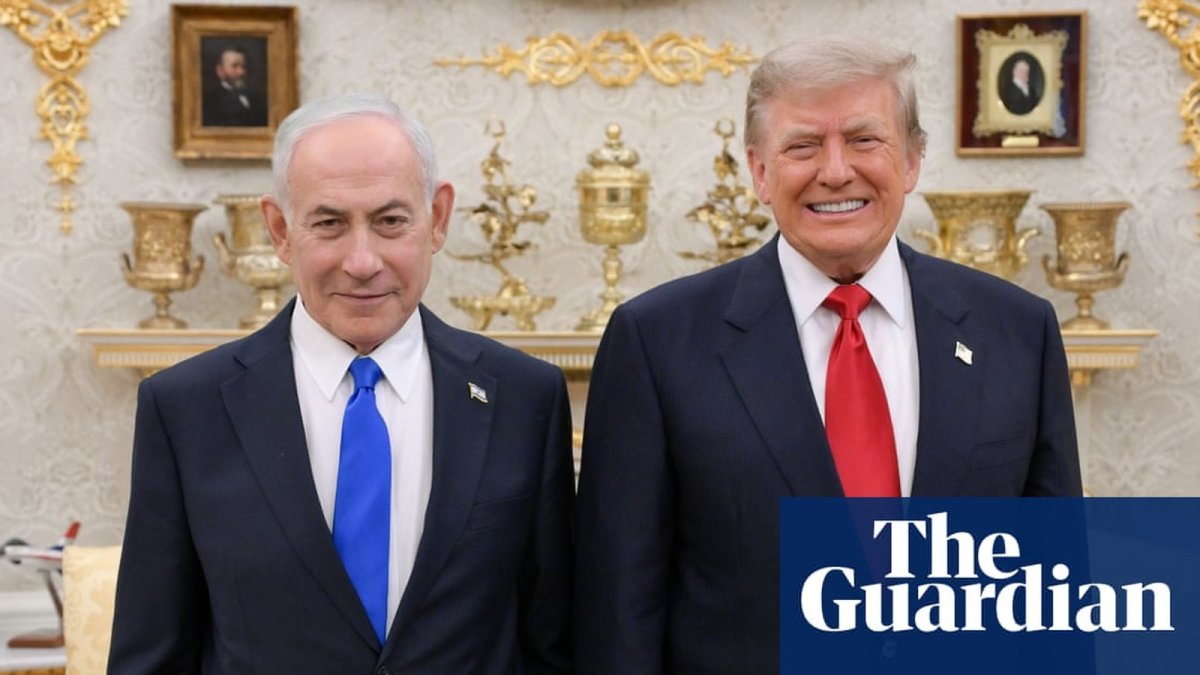
The 15-Point Plan: A Blueprint Under Fire
The plan, unveiled on July 31, 2026, was ambitious in scope. It proposed that Hamas and other armed groups disarm in exchange for a full Israeli military withdrawal from Gaza and the eventual transfer of power to an independent Palestinian National Committee — a technocratic body backed by the US and the Board of Peace, tasked with running the territory and supervising the storage of weapons. Trump had announced just over a week earlier that Hamas had, for the first time, agreed to disarm, calling it a "monumental step toward lasting peace and security" — conditional, crucially, on Israel withdrawing its forces.
But Netanyahu's rejection was emphatic and detailed. "When I say the disarming of Hamas, it means heavy weaponry, lighter weaponry, all weaponry," he told his cabinet. "And we are talking about genuine disarmament, not fictitious disarmament." He went further, telling ministers that "no Palestinian state will arise as long as I am prime minister" — a statement that cuts to the heart of the plan's long-term vision.
Yet despite the prime minister's categorical language, the Board of Peace is refusing to concede defeat. An official on the board insisted on Monday that the plan remains "very much operative" (Reuters). Nickolay Mladenov, the former UN special coordinator who now serves as the board's high representative for Gaza, defended the blueprint on Sunday as "the only way forward" to ensure there is no repeat of the 7 October 2023 attack. He emphasised that the process is "verifiable, that is reversible, that at each stage can be stopped" — meaning Israel would not be required to withdraw until it could be verified that Hamas was genuinely taking steps to disarm.
What This Means for the UK
For the British government, this is more than a distant diplomatic squabble. The UK recognised a Palestinian state in September 2025 under Foreign Secretary David Lammy, a landmark move announced at the UN General Assembly and intended, in the Foreign Office's own words, to "affect the situation on the ground" and pressure both parties towards a ceasefire. That decision, which broke with decades of British policy, was a calculated bet that recognising statehood would strengthen the hand of moderates and accelerate a peace process.
That bet now looks increasingly exposed. The Foreign, Commonwealth and Development Office (FCDO) has consistently called for a ceasefire, hostage release, and unfettered humanitarian access, with Lammy describing the humanitarian situation in Gaza as intolerable. British officials are expected to urge restraint on all sides in the coming days, though no formal statement on Netanyahu's rejection had been confirmed by Monday evening. The UK has also provided significant humanitarian aid packages to Gaza since the war began, and British Palestinians in cities including London, Birmingham, and Bradford have watched the diplomatic manoeuvring with a mixture of hope and deep scepticism.
There is another layer to the UK's involvement. Downing Street has been reported to be weighing whether Prime Minister Keir Starmer should take up a role on Trump's "Board of Peace" transitional committee (LBC). Such a move would place Britain at the heart of the reconstruction effort — but it would also tie the UK's reputation to a process that is now visibly fracturing.
Election Calculus: Netanyahu's Domestic Tightrope
To understand Netanyahu's rejection, one must look at Jerusalem, not Washington. The Knesset voted to dissolve itself on July 17, 2026, with elections required by late October — the default date is set for October 27. The prime minister faces a heated contest, and polls show his Likud-led coalition falling short of a majority. His political survival depends on holding together a fractious right-wing base that views any concession to Hamas as a betrayal of the October 7 dead.
The far-right pressure is intense. National Security Minister Itamar Ben Gvir has already dismissed the draft plan as "not acceptable," and other coalition figures are urging Netanyahu to kill it outright. Against that backdrop, the prime minister's public stance is as much about domestic political positioning as it is about security policy. His comment that "right now, we are talking with the Americans about this issue" — adding that "they have ideas; some of them are acceptable to us and some are not, and we know how to stand our ground on these matters" — suggests the door is not entirely closed, but the threshold for Israeli acceptance has been raised considerably.
Trump, for his part, sought to project calm on Monday, describing his relationship with Netanyahu as "very good." But the White House is also juggling multiple foreign policy crises, including pressing for peace with Iran over the Strait of Hormuz, which has direct implications for global oil and petrol prices. With US midterm elections due in November, the political calendar on both sides of the Atlantic is crowded with domestic considerations that may not align with the patient, incremental diplomacy the Board of Peace blueprint requires.
Hamas's Response and the Reality on the Ground
Hamas, meanwhile, is positioning itself as the more cooperative party. The group told the BBC on Sunday that it "reaffirms its commitment" to the agreement and is ready "to engage seriously and responsibly in implementing" the 15-point plan, calling on mediators to ensure "that all parties comply with what has been agreed."
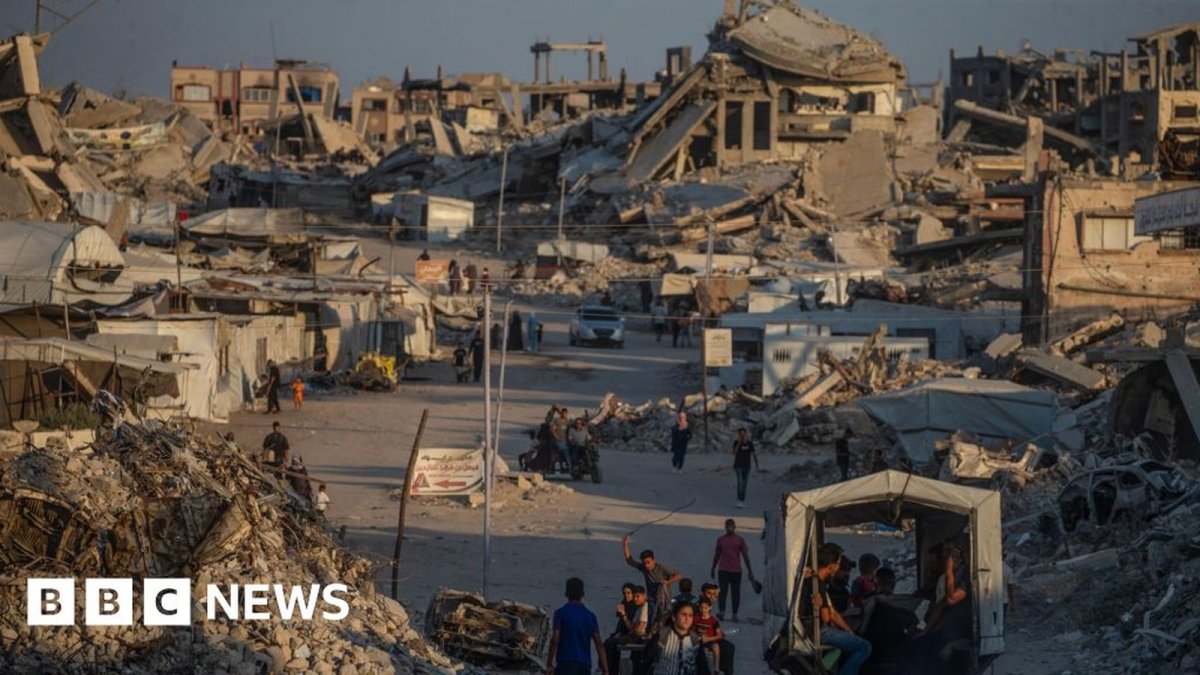
But the reality on the ground remains brutal. Israel has continued strikes on Gaza since agreeing to an initial ceasefire in October 2025, and bombing was stepped up after the plan was announced. Strikes killed 18 people on Sunday, August 2, and the humanitarian toll continues to mount. The United Nations estimates that about 1.9 million people — 90% of Gaza's population — have been displaced since the war began in October 2023. On August 4, a mass funeral was held in Gaza City for 112 people, including 40 children, from the Hassayna and Abu Sharia clans, whose remains were recovered from a November 2023 Israeli strike on a residential block in the Al-Sabra neighbourhood. It was described as one of the largest funerals of the war.
The original trigger for this catastrophe remains raw: the October 7, 2023 attack by Hamas killed about 1,200 people in Israel and took roughly 250 hostages. The subsequent war has killed tens of thousands in Gaza, according to the Gaza health ministry. Any peace plan must contend with the profound trauma on both sides — a reality that no 15-point document can wish away.
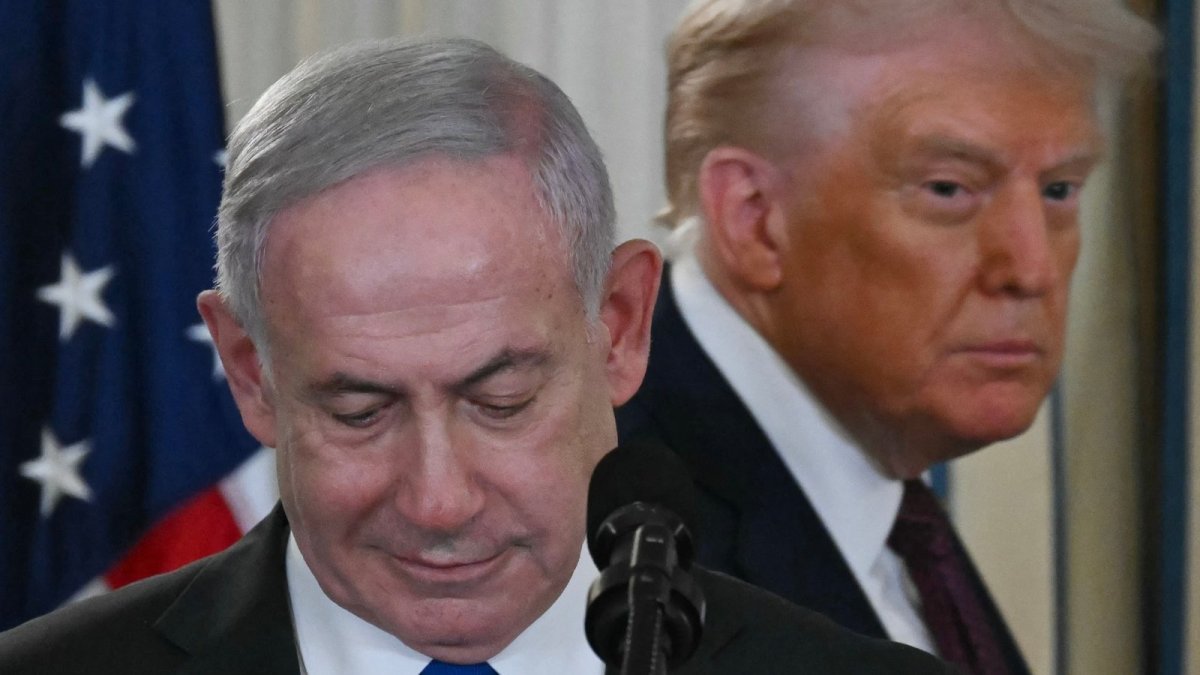
Reaction and Response: The Diplomatic Chessboard
The Board of Peace itself was announced in September 2025 as part of Trump's initial 20-point plan for Gaza, tasked with setting the framework and handling the funding for the territory's redevelopment. A pilot scheme has already seen a small number of Moroccan and Kosovan officers arrive in Israel as the kernel of an International Stabilization Force (ISF) to protect a pilot camp. That force's future is now uncertain.
In the UK, the political reverberations are being felt across the spectrum. Labour backbenchers, Muslim communities, and pro-Palestinian groups have long pressed the Starmer government to take a harder line on Israel, and the recognition of a Palestinian state was seen as a significant concession to that pressure. If the peace process now collapses, those voices will demand to know what the government's strategy is — and whether British recognition achieved anything beyond symbolism.
The UK Jewish community, equally, has watched the process with concern, mindful of the security implications for Israel and the rise in antisemitic incidents at home whenever tensions in the Middle East spike. The government's balancing act — maintaining a special relationship with Israel while championing Palestinian statehood — was always going to be difficult. It just got considerably harder.
The Bottom Line — What Comes Next
The next few weeks will be decisive. Netanyahu's rejection may be posturing ahead of October's election, or it may be a genuine red line. The Board of Peace insists the plan is still operative, but a plan that one of the two principal parties has publicly rejected is, in diplomatic terms, on life support. If Israel's position hardens further, the ceasefire could unravel entirely, with catastrophic consequences for Gaza's 1.9 million displaced people.
For the UK, the stakes are existential for its Middle East policy. The FCDO has invested heavily in the recognition of a Palestinian state as a lever for peace; if that lever fails, the government will face difficult questions about what it has achieved. British officials are expected to intensify diplomatic contacts with all parties in the coming days, but their leverage is limited. The White House, not Whitehall, holds the keys to this particular negotiation.
What is clear is that the window for a negotiated settlement is narrowing. With Israeli elections due in late October and US midterms in November, the political incentives for bold compromise are scarce. The 15-point plan may yet survive — but it will require a level of statesmanship from Netanyahu, Trump, and Hamas that has been conspicuously absent throughout this conflict. For the people of Gaza, and for the families of the hostages still held, the cost of failure is unthinkable.
By Erica Thornton, Staff Writer
This article was produced with AI-assisted research and editorial support. Reporting is based on sources cited in the article.
What's Your Reaction?
 Like
0
Like
0
 Dislike
0
Dislike
0
 Love
0
Love
0
 Funny
0
Funny
0
 Wow
0
Wow
0
 Sad
0
Sad
0
 Angry
0
Angry
0

US Politics and Policy Correspondent at Global1.News. Based in Washington DC, covering American politics, policy, elections, and the courts. Knows how the system works and tells you what it actually means.













Comments (0)