
South Africa Mine Dump Collapse Kills 14 Suspected Illegal Miners; Search Continues for Trapped
JOHANNESBURG — South African police have launched an investigation after a mine dump site collapsed on Monday night, killing 14 suspected illegal miners and injuring eight others, with an unknown number of people potentially still trapped beneath the rubble.
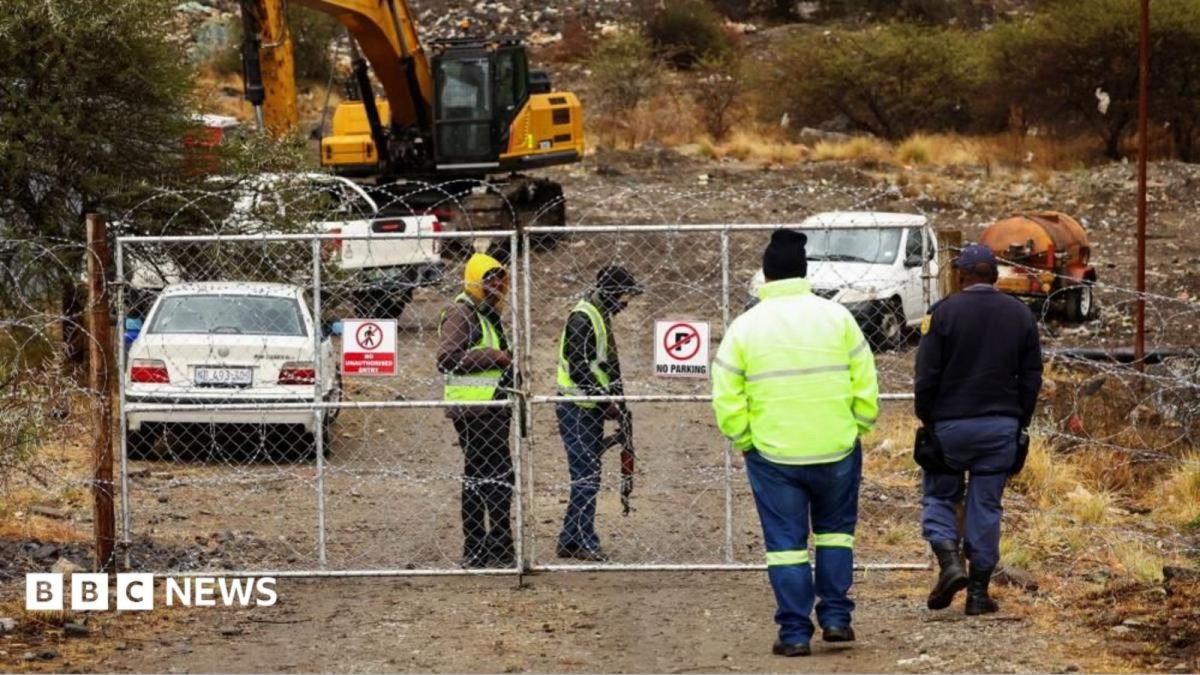
South Africa Mine Dump Collapse Kills 14 Suspected Illegal Miners; Search Continues for Trapped
JOHANNESBURG — South African police have launched an investigation after a mine dump site collapsed on Monday night, killing 14 suspected illegal miners and injuring eight others, with an unknown number of people potentially still trapped beneath the rubble. The incident occurred at a site that was being legally operated by a mining company, raising immediate questions about how the victims, most believed to be from neighbouring Lesotho, gained access to the property.
Regional police chief Lt-Gen Arthur Adams, who visited the scene on Tuesday morning, confirmed that the dump site was being used to mine platinum and other metals by a local company. Speaking to local broadcaster Newzroom Afrika, Adams described the moment of disaster: "The walls of the dumping site... caved in on them [the zama zamas]." He added that excavation operations have ceased for now, as the focus shifts to determining whether any additional miners remain trapped underground.
A Deadly Night at the Dump Site
The collapse took place late Monday evening, catching the illegal miners, known locally as "zama zamas" — a Zulu term meaning "those who try their luck" — as they worked inside the dump site. Police said in a statement that eight people were injured in the incident, and that an "unknown number" of individuals "may still be trapped underground." The exact circumstances leading to the collapse remain under investigation, with authorities yet to determine how the miners breached security to access the operational site.
Lt-Gen Adams confirmed that three of the injured miners have since been released from hospital and have been detained by police. He stated that all the zama zamas involved are undocumented foreign nationals and will face illegal mining and trespassing charges. The search for any remaining trapped miners continues, though Adams noted that "as it stands, the excavation operations have ceased," a decision that may complicate rescue efforts while safety assessments are conducted.
The tragedy underscores a persistent and deadly reality across South Africa's mining landscape, where the promise of precious metals draws thousands of desperate individuals into hazardous, informal operations. For the families of the victims, many of whom are likely in Lesotho, the wait for news is agonising, compounded by the legal status of the deceased and the complexities of cross-border identification.
The Zama Zama Phenomenon: Desperation and Risk
Illegal mining is rife in South Africa, a country whose economy was historically built on gold and mineral extraction. The term "zama zama" has become synonymous with a shadow economy that operates in abandoned shafts, disused mines, and even active dump sites like the one that collapsed on Monday. These miners, often undocumented migrants from Lesotho, Zimbabwe, Mozambique, and other neighbouring countries, risk their lives daily for the chance to extract residual platinum, gold, and other metals that larger companies have deemed unprofitable to recover.
The motivations are starkly economic. As the formal mining industry — once the backbone of South Africa's economy — has shrunk over recent decades, multinational corporations have closed operations in many areas, deeming them no longer profitable. Yet the ground still holds value, and the promise of finding gold deposits proves a powerful magnet for people with few alternatives. For undocumented migrants, the informal mining sector offers a rare, albeit dangerous, source of income, often with no questions asked about legal status.
This desperation is not unique to South Africa. Across the African continent, from Ghana's galamsey operations to artisanal mining in the Democratic Republic of Congo, informal miners risk cave-ins, toxic exposure, and violence for a share of the earth's wealth. The collapse on Monday is a grim reminder that the human cost of this underground economy is measured in lives, not just in lost revenue or legal violations.
A History of Tragedy: The Stilfontein Disaster
Monday's collapse is not an isolated incident. Injuries and deaths of illegal miners are not uncommon in South Africa, especially at abandoned mine shafts where safety measures are virtually non-existent. In January of last year, a far deadlier tragedy unfolded at a disused shaft in Stilfontein, south-west of Johannesburg, where 78 bodies were recovered. Those miners had been trapped underground following a nationwide police operation aimed at ending illicit mining at disused sites.
The Stilfontein incident highlighted the extreme lengths to which zama zamas will go, as well as the policy dilemmas facing South African authorities. The police operation that preceded that disaster was part of a broader crackdown on illegal mining, but it also drew criticism for potentially exacerbating the danger faced by miners who were cut off from escape routes and supplies. The recovery of 78 bodies was a national shock, prompting debates about how to address the root causes of illegal mining rather than merely its symptoms.
In the wake of that tragedy, authorities vowed to intensify efforts to secure disused mines and prosecute illegal miners. Yet the problem persists, driven by economic hardship, high unemployment, and the enduring allure of mineral wealth. The collapse at the dump site on Monday suggests that even active, legally operated sites are not immune to infiltration by determined zama zamas, who may see such locations as safer or more productive than abandoned shafts.
Legal and Humanitarian Tensions
The response to Monday's collapse reflects the dual pressures facing South African authorities: enforcing the law while managing a humanitarian crisis. Lt-Gen Adams confirmed that the injured miners who have been released from hospital are now in police custody, and that all the zama zamas involved are undocumented foreign nationals. They will face illegal mining and trespassing charges, a standard legal response in such cases.
However, the focus on prosecution raises uncomfortable questions. For the families of the dead, the priority is recovering loved ones and understanding what happened. For the survivors, the immediate future involves hospitalisation, detention, and potential deportation. The legal status of the victims complicates the investigation, as authorities must coordinate with Lesotho and other countries to identify the deceased and notify next of kin.
There is also the question of the mining company's responsibility. The dump site was being legally operated, and it is unclear what security measures were in place to prevent unauthorised access. Police have not yet indicated whether the company will face any scrutiny over the incident, but the investigation is likely to examine how the zama zamas entered the site and whether any warning signs were missed. The company's cooperation with authorities will be crucial in determining the full sequence of events.
The Broader African Context: Migration, Poverty, and Dignity
The tragedy at the dump site is a stark illustration of the desperation that pushes people into informal mining across Africa. For many undocumented migrants, the decision to become a zama zama is not a choice but a necessity. Unemployment in Lesotho is persistently high, and South Africa, despite its own economic challenges, remains a regional magnet for labour. The mining sector, even in its informal form, offers a semblance of opportunity in a landscape where formal jobs are scarce.
This desperation is compounded by the shrinking of the formal mining industry. As multinationals retreat from operations that are no longer profitable, they leave behind not just abandoned infrastructure but also communities that depended on mining for their livelihoods. The promise of still finding gold deposits — or platinum, or other metals — becomes a beacon of hope for those who have few other options. The result is a cycle of risk and tragedy that shows no signs of abating.
For Senegal and other West African nations, the parallels are evident. The same forces that drive zama zamas in South Africa — poverty, migration, and the search for dignity through work — are at play in artisanal mining operations across the continent. Whether in the goldfields of Mali or the gemstone mines of Tanzania, informal miners face similar dangers and similar legal vulnerabilities. The collapse on Monday is a reminder that these are not isolated problems but a continental challenge that demands coordinated responses.
What Happens Next: Investigation and Prevention
As the investigation unfolds, the immediate priority is determining whether any miners remain trapped under the rubble. Lt-Gen Adams has confirmed that excavation operations have ceased, but the search continues. The decision to halt digging may be driven by safety concerns, as further collapses could endanger rescue workers. However, it also raises the agonising possibility that survivors could be waiting for help that may not come in time.
Beyond the immediate rescue effort, the incident will likely reignite debates about how to address illegal mining in South Africa. The Stilfontein disaster led to calls for more robust policing and better security at disused sites, but Monday's collapse shows that active sites are also vulnerable. Some experts argue that the solution lies in formalising artisanal mining, providing legal pathways for small-scale miners to operate safely and sustainably. Others advocate for stronger border controls and stricter enforcement against undocumented workers.
For now, the focus remains on the victims and their families. The 14 dead, the eight injured, and the unknown number still missing are more than statistics; they are individuals who took a risk in pursuit of a better life. Their deaths are a tragedy for their families, a challenge for South African authorities, and a stark reminder of the human cost of an industry that operates in the shadows.
The investigation will take time, and the legal proceedings against the survivors will follow their own course. But the deeper questions — about poverty, migration, and the value we place on human life — will not be resolved by any single inquiry. As South Africa mourns another mining tragedy, the hope is that the lessons learned will lead to meaningful change, not just in enforcement but in addressing the root causes that drive so many to risk everything for a chance at survival.
By Amara Diop, Staff Writer
This article was produced with AI-assisted research and editorial support. Reporting is based on sources cited in the article.
What's Your Reaction?
 Like
0
Like
0
 Dislike
0
Dislike
0
 Love
0
Love
0
 Funny
0
Funny
0
 Wow
0
Wow
0
 Sad
0
Sad
0
 Angry
0
Angry
0

West Africa/Sahel Correspondent at Global1.News. Dakar-based journalist covering politics, security, climate, and development across Francophone and Anglophone West Africa. Tells the stories of a region undergoing profound transformation.











Comments (0)