
At Least 17 Killed in Russian Strike as Ukraine Pummels Moscow with Drones
In a recent BBC News report, the scale of the latest escalation became clear: Russia has struck Ukraine with missiles and drones overnight, killing at least 17 people, as Kyiv launched one of its largest drone barrages of the war against Moscow. The twin offensives mark a dangerous new phase of a conflict that has dragged into its fifth year, with civilian casualties surging and air defences on both sides stretched to their limits.
In a recent BBC News report, the scale of the latest escalation became clear: Russia has struck Ukraine with missiles and drones overnight, killing at least 17 people, as Kyiv launched one of its largest drone barrages of the war against Moscow. The twin offensives mark a dangerous new phase of a conflict that has dragged into its fifth year, with civilian casualties surging and air defences on both sides stretched to their limits.
Russia's Deadly Strikes and Ukraine's Drone Barrage Push War to New Intensity
Kyiv, Ukraine – 18 August 2026 — Overnight attacks killed at least 17 people across Ukraine, officials said, as Ukrainian forces simultaneously mounted one of the biggest drone assaults of the war on the Russian capital. The escalation came as Moscow repeated its threat of "consequences" for London over the use of British-made drones inside Russia.
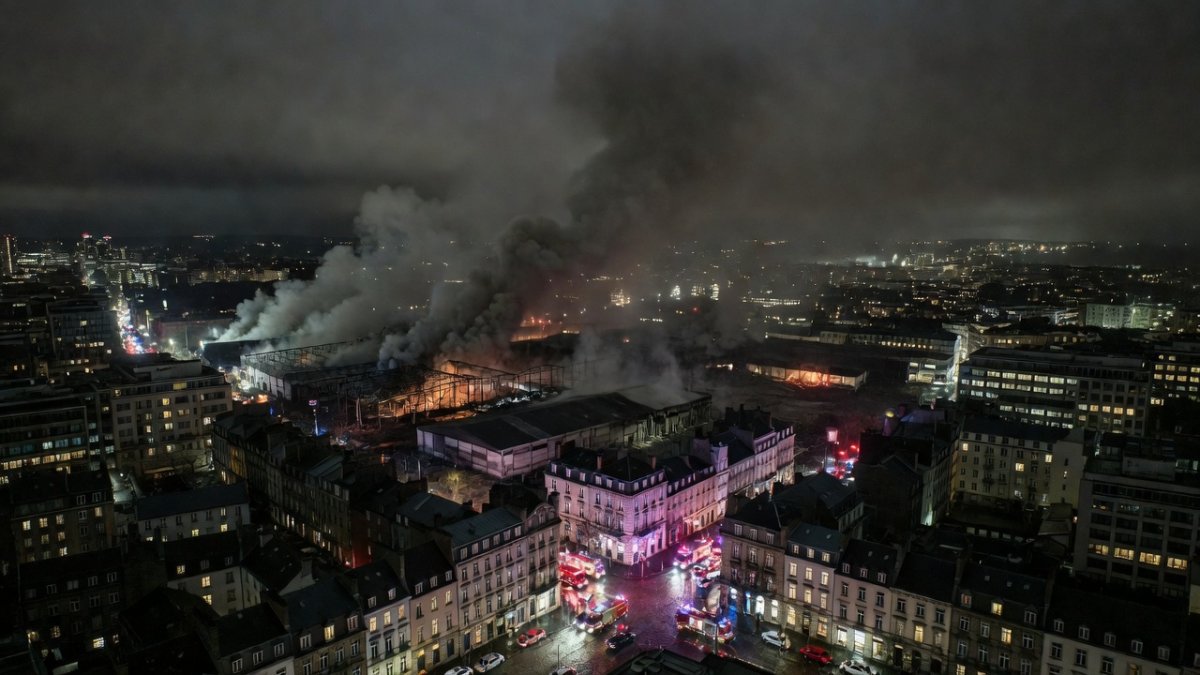
Seventeen Killed as Russia Targets Kyiv
The latest wave of Russian missile and drone attacks killed at least 17 people across Ukraine overnight into Tuesday, Ukrainian officials said, with the capital Kyiv among the primary targets. The strikes, which began late Monday and continued through the night, represent a continuation of a sustained campaign that has seen civilian casualties climb sharply in recent weeks. Regional authorities reported that residential buildings, energy infrastructure and transport links were hit, though the full extent of the damage was still being assessed as emergency crews worked through the morning.
Ukrainian officials said the surge in civilian casualties is a direct result of Russian forces exploiting weaknesses in the country's air defence systems. The capital's anti-aircraft batteries were active throughout the night, with residents reporting multiple waves of explosions as interceptors engaged incoming targets. Kyiv's military administration said debris from downed missiles and drones fell in at least three districts, causing fires and damaging parked cars and apartment facades. No official casualty figures for the capital alone had been released by midday, but witnesses described a night of sustained bombardment unlike anything seen in months.
The BBC News report highlighted the growing strain on Ukraine's air defence network, which has been forced to prioritise the protection of critical infrastructure and major population centres over smaller towns and villages. This strategic calculus, while understandable, has left many communities exposed. The overnight attacks appear to have been designed to test the limits of Ukraine's coverage, with missiles launched in waves from multiple directions in an attempt to saturate air defences. Ukrainian air force commanders have repeatedly warned that the current inventory of interceptors is insufficient to counter the scale of Russian launches, a concern that has now been borne out in the rising death toll.
Pechenihy: A "Brutal Attack" in the Kharkiv Region
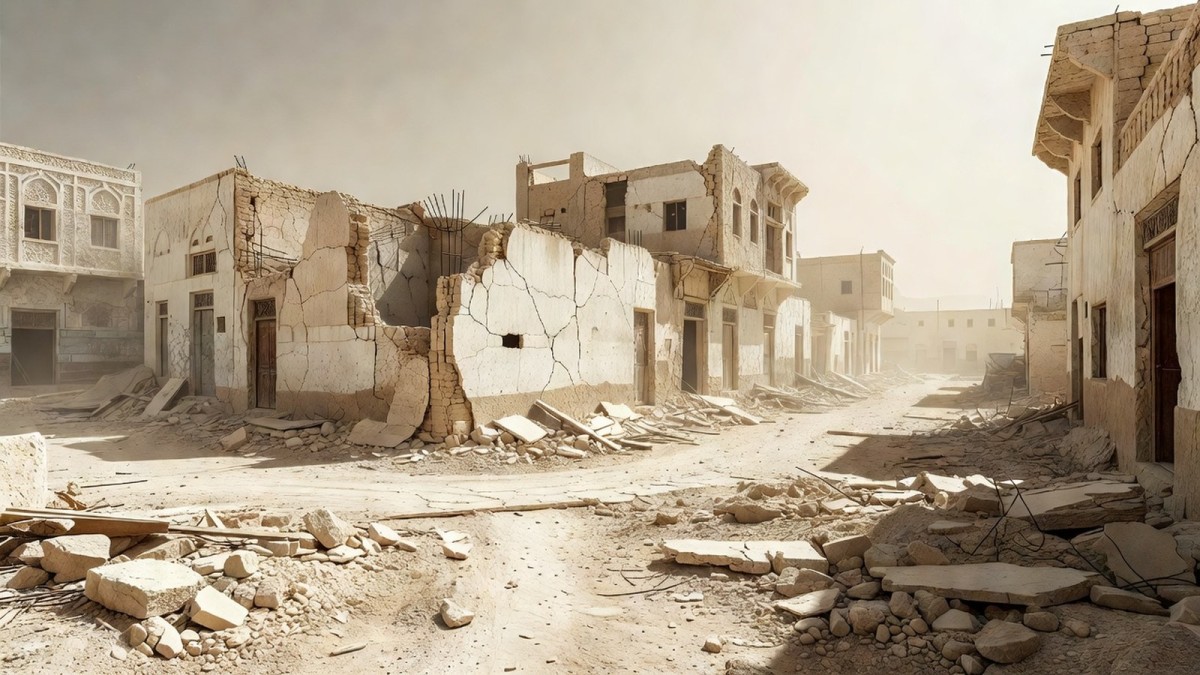
Among the deadliest strikes was a missile attack on the village of Pechenihy in the north-eastern Kharkiv region, where preliminary information from regional officials indicated that at least 10 civilians were killed. The village, located near the banks of the Donets River and close to the border with Russia, has been repeatedly targeted throughout the war, but Tuesday's strike was described by local authorities as one of the worst single incidents in recent memory. Homes and civilian infrastructure were damaged in the attack, with rescue teams working through the rubble to search for survivors.
President Volodymyr Zelensky condemned the strike, describing it as "a brutal attack" on a community that had already suffered immensely. In his nightly address, he said the victims were ordinary people going about their lives, and he reiterated his urgent appeal to international partners for more air defence systems. The Pechenihy attack underscores a troubling trend identified by BBC Verify: Ukraine's interception rate has fallen dramatically over the past year. Data analysed by the verification unit shows that Ukraine intercepted 156 of 351 Russian missiles launched between 6 July and 5 August 2026, a success rate of just 44.4%. During the same period in 2025, Ukraine intercepted 128 of 192 missiles, a rate of 66.7%.
The decline in interception rates is even more concerning given the dramatic increase in Russian launch volumes. Russian missile launches are up 83% this month compared with the same period last year, according to the BBC Verify analysis. This combination of more missiles and fewer successful interceptions has created a lethal equation for Ukrainian civilians. The Kharkiv region, which borders Russia and has been a constant target since the full-scale invasion began in February 2022, has borne the brunt of this shift. Local officials said the Pechenihy attack was carried out using a ballistic missile, which travels at high speed and is notoriously difficult to intercept without advanced systems such as the US-made Patriot.
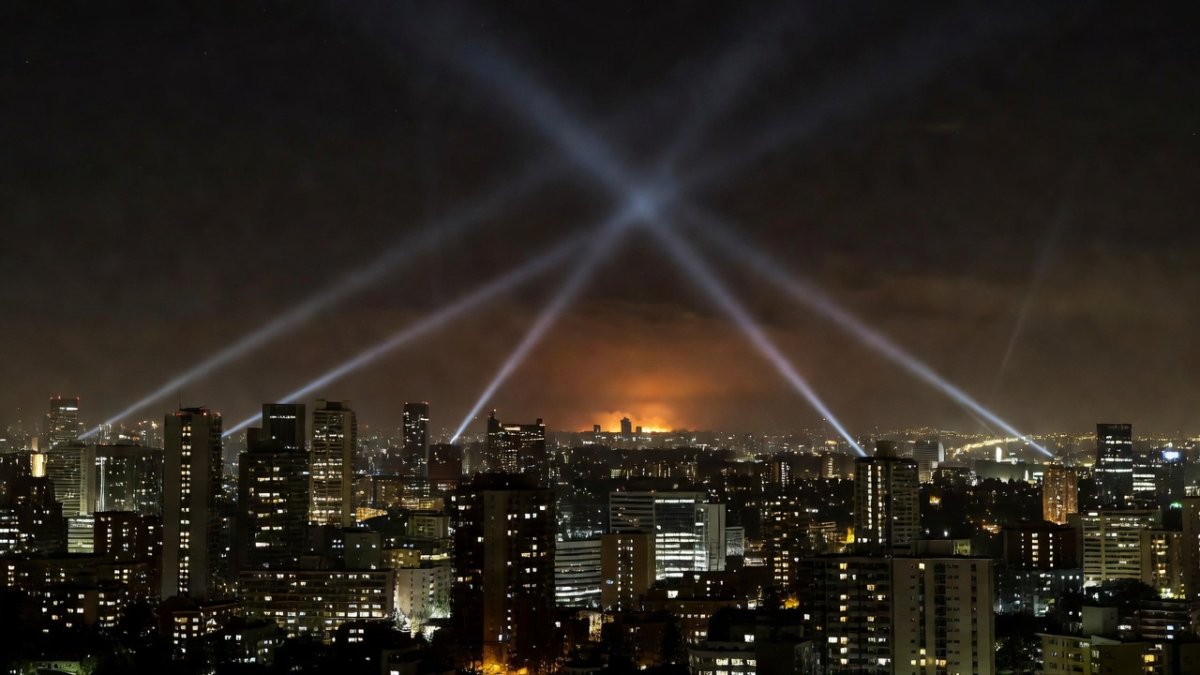
Ukraine's Record Drone Barrage on Moscow
While Russia was striking Ukrainian cities, Ukraine launched one of its largest drone offensives of the war against Russian territory, targeting Moscow for the second consecutive night. Moscow Mayor Sergei Sobyanin said at least 637 drones were aimed at the Russian capital, of which around 197 were shot down by Russian air defences. The sheer scale of the assault overwhelmed normal operations, with Moscow temporarily restricting flights at its airports as a precautionary measure. Residents of the capital reported hearing continuous explosions and air defence fire throughout the night, with debris falling in several districts.
The barrage followed an even larger attack over the previous weekend, when Ukraine fired some 822 drones towards Russia, with approximately 600 aimed at Moscow. That assault resulted in five deaths in the Rostov region, a woman killed in Belgorod, and an 83-year-old man who died in a drone attack in the Moscow region. The back-to-back attacks represent a significant escalation in Ukraine's long-range strike capability, which has grown substantially with the introduction of longer-range drones and, according to some reports, the use of Western-supplied components.
One notable target in the recent attacks was a warehouse belonging to Wildberries, the Russian online retailer often described as "Russia's Amazon". Ukraine's defence ministry claimed that seven out of 10 of the largest Wildberries logistics centres had been "disabled" in successive attacks, a statement that could not be independently verified but which, if true, would represent a significant blow to Russia's domestic logistics network. The targeting of commercial infrastructure, rather than purely military objectives, signals a deliberate strategy by Kyiv to impose costs on the Russian economy and disrupt daily life for ordinary Russians.
Moscow's Warning to London
The escalating drone war has taken on an increasingly international dimension, with Moscow explicitly threatening the United Kingdom over its military support for Ukraine. The Russian embassy in London said on Monday that reports British-made drones were used in strikes on Russian territory confirmed that "London is deliberately opting for an escalation of the Ukraine crisis". In a statement that was notable for its confrontational tone, the embassy warned: "London's actions will inevitably carry consequences for which it will have to answer. The deeper its involvement in the conflict and the greater its support for Kyiv's terrorist machinery, the higher the price it will pay."
The British government responded swiftly and firmly. Prime Minister Andy Burnham said the UK would continue to "support Ukraine 100%", adding: "We are not fair-weather friends. We will be there in Ukraine's hour of need, and that won't change." A Ministry of Defence spokesperson echoed this sentiment, stating that Britain stands "shoulder to shoulder" with Ukraine and will not be deterred by Russian threats. The exchange highlights the growing direct tension between Moscow and London, which has positioned itself as one of Ukraine's most vocal military backers.
Former Russian Deputy Foreign Minister Andrei Fedorov, speaking to the BBC, offered a stark assessment of what Moscow's "consequences" might entail. He said the threats could include the possibility of attacks on British territory or British interests, and he claimed that many military experts advising the Kremlin are convinced NATO would not respond forcefully if Russia were to hit the UK. "Trump will not allow NATO to answer," Fedorov said, referring to the former US president who has been critical of NATO and has questioned the value of the alliance. While Fedorov's comments represent analysis rather than confirmed policy, they reflect a dangerous calculation taking hold in Moscow that Western unity is fragile and that the risk of retaliation is limited.
The Interceptor Gap
At the heart of Ukraine's vulnerability is a growing gap between the missiles Russia is launching and the interceptors Ukraine has available to shoot them down. President Zelensky has consistently urged allies to provide more US-made Patriot missile interceptors, which are among the few systems capable of reliably destroying Russian ballistic missiles. In recent public statements, he has said that delays in receiving anti-ballistic systems from partners lead to "horrific casualties and destruction", and he has warned that the supply of interceptors from allies had been "significantly reduced" this year.
The statistics support his concern. The BBC Verify data showing a drop in interception rates from 66.7% to 44.4% over the past year illustrates the practical consequences of this shortfall. Each Patriot interceptor that is not supplied represents a potential civilian death, as Ukrainian commanders are forced to make agonising choices about which targets to defend and which to let through. The problem is particularly acute with ballistic missiles, which fly at speeds of several kilometres per second and give defenders only minutes — sometimes seconds — to react.
Ukraine's foreign minister, Andrii Sybiha, framed the issue in diplomatic terms, saying: "Putin continues to drag out the war instead of accepting Ukraine's realistic ceasefire proposals and ending the bloodshed." But behind the diplomatic language lies a stark military reality. Without a reliable supply of interceptors, Ukraine's cities remain exposed to Russian strikes, and the civilian toll will continue to mount. The question of whether Western allies will step up their deliveries in the coming months is therefore not merely a matter of policy — it is a matter of life and death for thousands of Ukrainians.
Analysis — A War of Attrition in the Air
The current escalation represents a new and dangerous phase in a conflict that has already claimed tens of thousands of lives. Analysts note that there has been no major progress on the roughly 1,250-kilometre front line in eastern and southern Ukraine, where large numbers of drones and ground robots have restricted troop movement on both sides. The ground war has become a static, grinding affair, with neither side able to achieve a decisive breakthrough. In this context, both Russia and Ukraine have increasingly turned to long-range strikes as a way of inflicting damage and demonstrating resolve.
This is, at its core, a war of production and logistics. Russia is manufacturing missiles at a rate that allows it to launch hundreds per month, while Ukraine depends on a finite supply of Western interceptors. The 83% increase in Russian missile launches compared with last year suggests that Moscow's defence industry has ramped up production significantly, despite sanctions and export controls. Ukraine, for its part, has developed a domestic drone industry that is capable of launching mass attacks on Russian territory, but it remains dependent on Western technology and financial support to sustain this effort.
For ordinary Russians, the war has come home in a way it has not since the early days of the invasion. The drone attacks on Moscow, while causing relatively few casualties, have disrupted daily life, closed airports, and reminded residents that the conflict is not something that only happens "over there". For ordinary Ukrainians, the situation is far more dire. The falling interception rate means that more missiles are getting through, and more families are mourning loved ones killed in strikes on homes, schools and hospitals. The psychological toll of living under constant threat, with no end in sight, is incalculable.
Looking ahead, the outlook for the coming months is grim. The approaching winter will bring new challenges, as Russia has historically targeted Ukraine's energy infrastructure during the cold months, seeking to break civilian morale. Ukraine's air defence network, already stretched thin, will face its toughest test yet. The diplomatic track remains frozen, with Moscow showing no willingness to accept Ukraine's ceasefire proposals and Kyiv insisting on the restoration of its territorial integrity. The war of attrition in the air shows no signs of abating, and the human cost continues to rise on both sides.
What is clear is that the conflict has entered a new and more dangerous phase. The use of British-made drones inside Russia, the explicit threats from Moscow to London, and the escalating aerial duels over both capitals all point to a war that is expanding rather than contracting. The international community faces a stark choice: step up support for Ukraine's air defences and help protect its civilian population, or watch as the death toll climbs and the conflict spirals further out of control. The decisions made in the coming weeks will shape the course of the war for years to come.
By Irina Volkov, Staff Writer
This article was produced with AI-assisted research and editorial support. Reporting is based on sources cited in the article.
What's Your Reaction?
 Like
0
Like
0
 Dislike
0
Dislike
0
 Love
0
Love
0
 Funny
0
Funny
0
 Wow
0
Wow
0
 Sad
0
Sad
0
 Angry
0
Angry
0
Russia/Eastern Europe Correspondent at Global1.News. Covering Russian politics, energy, security, and the shifting dynamics of the post-Soviet space. Provides clear-eyed analysis on one of the world's most opaque regions.












Comments (0)