
How Central Asia Fixed Its Most Dangerous Borders
In the early twenty‑first century, the Fergana Valley—an intricate mosaic of enclaves and interlocking frontiers—became a flashpoint that tested the limits of post‑Soviet statecraft in Central Asia.
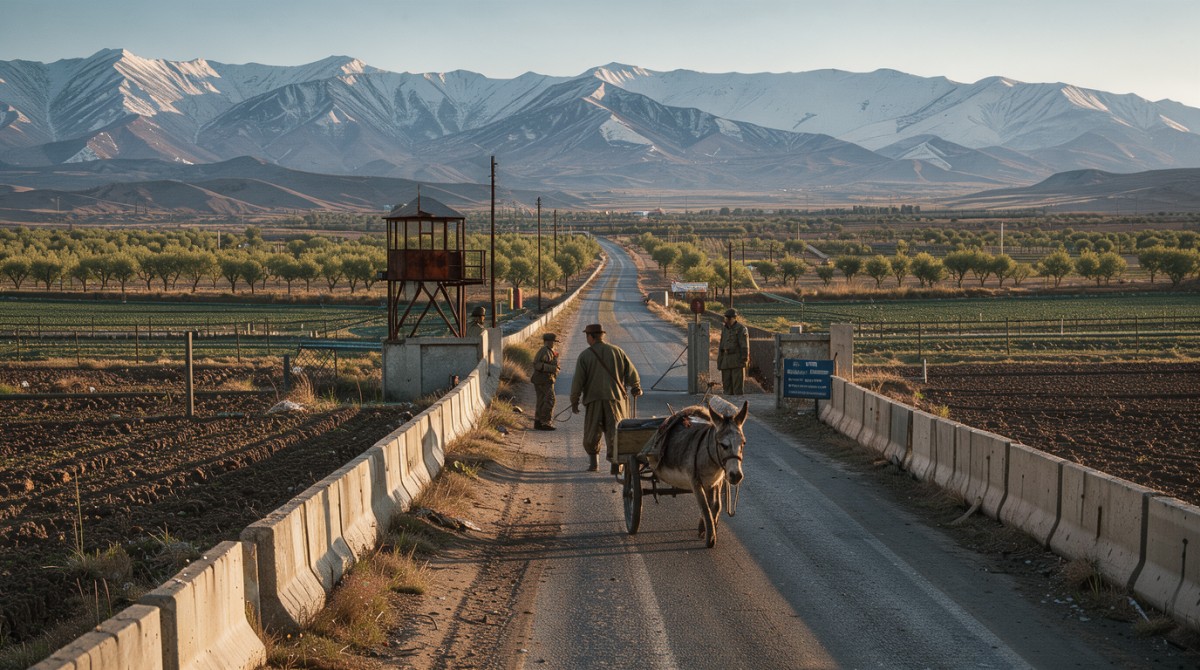
In the early twenty‑first century, the Fergana Valley—an intricate mosaic of enclaves and interlocking frontiers—became a flashpoint that tested the limits of post‑Soviet statecraft in Central Asia. The valley’s tangled borders, a legacy of Soviet administrative delineations, erupted into violent confrontation in 2021 and again in 2022, before a historic trilateral summit on 31 March 2025 ushered in a rapid de‑escalation. This article traces the evolution of those borders, the geopolitical stakes that animated them, and the diplomatic choreography that transformed a near‑war scenario into a valley‑wide peace, drawing parallels to Korean border negotiations and the broader regional security architecture.
Historical Roots of the Fergana Border Complex
The contemporary border irregularities in the Fergana Valley stem from Soviet‑era decisions that carved administrative units without regard for ethnic or geographic continuity. As the source notes, “the borders in this part of Central Asia curl around each other, as if swirling into a vortex,” producing a pattern of enclaves: Tajik territories wrapped in Kyrgyzstan, Uzbek towns surrounded by Kyrgyzstan, and Kyrgyz villages hemmed in by Uzbekistan. These quirks were inherited by the three newly independent states in 1991, each claiming sovereignty over the patchwork of lands that had once been internal Soviet districts.
For decades, the enclave‑laden map functioned as a source of low‑level friction, but the lack of a comprehensive settlement meant that any flare‑up could quickly spill over into broader conflict. The historical inertia of these borders, combined with limited cross‑border infrastructure, entrenched mutual suspicion and hampered confidence‑building measures—an environment not unlike the early post‑war demarcation challenges faced by the Korean Peninsula.
Escalation of the Kyrgyz‑Tajik Border Conflict (2021‑2022)
In 2021, the simmering dispute between Kyrgyzstan and Tajikistan “escalated dramatically,” moving beyond sporadic skirmishes to sustained low‑level violence. The following year, the situation “exploded nearly into an outright war,” marked by heavy shelling, drone strikes, and significant casualties on both sides. These developments underscored how the enclave geography could amplify local grievances into strategic confrontations, especially when coupled with nationalist rhetoric and competition over scarce water and arable land.
The intensity of the 2022 clashes highlighted the fragility of the regional security architecture. While the source does not enumerate the precise number of casualties, it emphasizes “scores of dead on both sides,” indicating a humanitarian toll that reverberated across the valley’s intertwined communities. The conflict threatened to destabilize not only Kyrgyzstan and Tajikistan but also Uzbekistan, whose enclaves were directly implicated in the hostilities.
The 2025 Trilateral Summit: A Diplomatic Turning Point
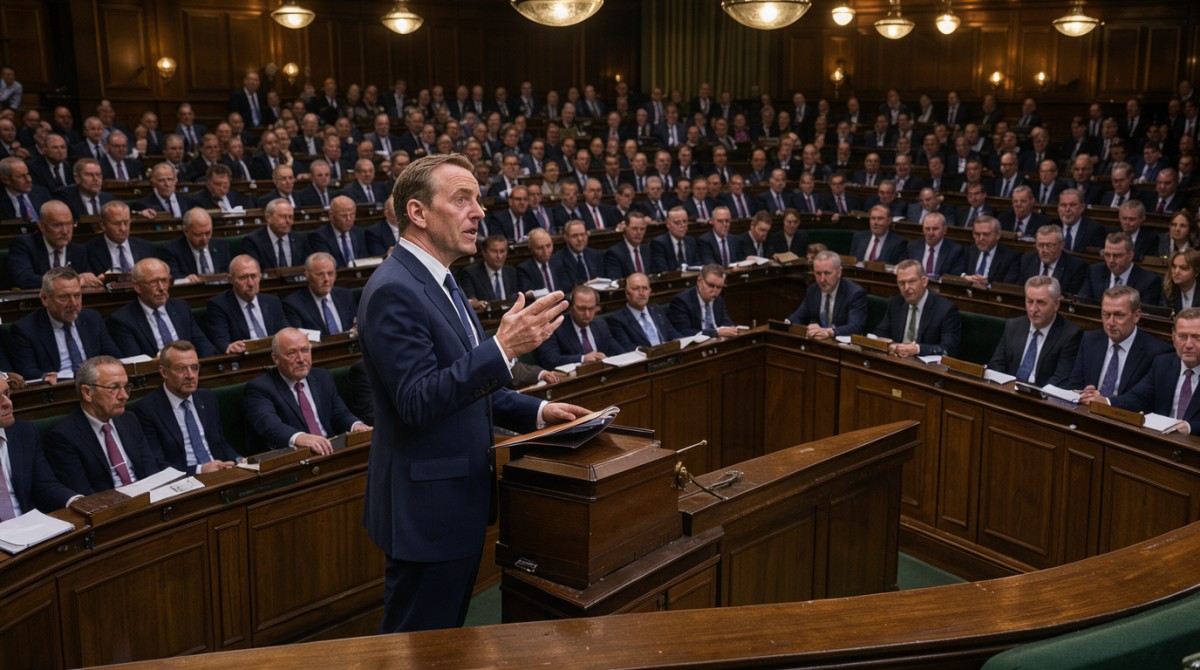
Against this backdrop of violence, the summit on 31 March 2025 represented a decisive diplomatic intervention. The presidents of Kyrgyzstan, Tajikistan, and Uzbekistan convened in Khujand, the capital of Tajikistan’s Sughd province, deliberately choosing a location “outside a national capital city.” This neutral setting symbolized a collective willingness to transcend bilateral deadlocks and address the shared border conundrum.
The summit’s agenda, while not detailed in the source, can be inferred as focusing on “the end to three decades worth of arguments over their borders.” By gathering the three heads of state, the meeting signaled a coordinated approach to a problem that had previously been tackled through fragmented, often unilateral, negotiations. The rapidity of the transition—from “major fighting to a valley‑wide peace” in less than three years—suggests that the summit succeeded in establishing a framework for de‑escalation and future border management.
Mechanisms of Rapid De‑escalation
The source describes the post‑summit period as a “miraculous” shift, but the underlying mechanisms can be discerned through comparative analysis. First, the trilateral format allowed each state to voice its security concerns directly, reducing mistrust that had been exacerbated by bilateral confrontations. Second, the choice of Khujand—a city within Tajikistan’s own territory—may have provided a symbolic concession, acknowledging the centrality of the valley to all parties.
Third, the summit likely produced a set of confidence‑building measures, such as joint border patrols, shared monitoring of enclave movements, and perhaps the establishment of a multilateral commission to oversee implementation. While the source does not enumerate these specifics, the swift cessation of hostilities implies that concrete, mutually acceptable protocols were agreed upon, echoing the incremental confidence‑building steps seen in the Korean Peninsula’s inter‑Korean dialogues.
Implications for Regional Stability and Governance
The resolution of the Fergana border dispute carries broader implications for Central Asian governance. By addressing the enclave issue—a longstanding source of friction—the three states not only averted further bloodshed but also opened avenues for deeper economic integration. The valley, historically a hub of agricultural productivity, could now benefit from smoother cross‑border trade, joint infrastructure projects, and coordinated water management, all of which are essential for long‑term stability.
Moreover, the successful trilateral engagement sets a precedent for addressing other “confusing borders” in the region. It demonstrates that even deeply entrenched territorial disputes, rooted in Soviet‑era cartography, can be mitigated through high‑level political will and inclusive negotiation formats. This lesson resonates with Korean diplomatic practice, where multilateral forums—such as the Six‑Party Talks on nuclear issues—have been employed to manage complex security dilemmas.
Comparative Reflections: Lessons for Korean Border Diplomacy
The Fergana experience offers a comparative lens for Korean scholars and policymakers. Both contexts involve borders drawn without full consideration of ethnic, geographic, or strategic realities, leading to protracted tensions. In Korea, the demarcation of the Military Demarcation Line and the presence of enclave‑like “frontline villages” have similarly complicated peace efforts.
Key takeaways include the utility of neutral venues for high‑level talks, the importance of trilateral or multilateral frameworks when multiple actors are affected, and the necessity of addressing enclave‑type anomalies through joint administration rather than unilateral claims. Korean diplomatic practice, which increasingly incorporates third‑party mediation and confidence‑building measures, can draw on the Fergana model to refine its own approaches to inter‑Korean negotiations and broader regional security dialogues.
Future Trajectories and Scholarly Outlook
Looking ahead, the durability of the 2025 peace settlement will depend on sustained institutional mechanisms and the political continuity of the three governments. Monitoring the implementation of any border‑management agreements, as well as the evolution of enclave governance, will be crucial for scholars tracking post‑conflict reconstruction. The valley’s experience also underscores the broader principle that “a valley‑wide peace” can be achieved when neighboring states prioritize collective security over narrow territorial ambitions.
In sum, the rapid transformation of the Fergana Valley from a war‑prone frontier to a collaborative zone illustrates the potency of high‑level, inclusive diplomacy in resolving complex border disputes. For Korea, the lesson is clear: enduring peace in contested borderlands requires not only historical awareness but also innovative diplomatic architectures that accommodate the intricate realities of the terrain and its peoples. As Central Asia moves forward, continued scholarly attention to the mechanisms that underpinned the 2025 summit will enrich the comparative literature on border conflict resolution and inform future diplomatic endeavors across the Eurasian continent.
This article was produced with AI-assisted research and editorial support. Reporting is based on the source material cited below. Sources: The Diplomat; thediplomat.com; Global1.News (24 November 2026).
By Prof. David Park, Staff Writer
What's Your Reaction?
 Like
0
 Dislike
0
 Love
0
 Funny
0
 Wow
0
 Sad
0
 Angry
0

East Asia/Technology Correspondent at Global1.News. Seoul-based voice covering Korean politics, technology, business, and culture. Analyzes how technology and geopolitics intersect across East Asia.












Comments (0)