
Iran Vows to Counter US Sanctions, Warns Gulf States on Cooperation
As the United States escalates its economic warfare against Tehran with what Treasury Secretary Scott Bessent calls "the toughest sanctions in history," Iran is firing back with a diplomatic counter-offensive aimed squarely at the Gulf states and the international community.
As the United States escalates its economic warfare against Tehran with what Treasury Secretary Scott Bessent calls "the toughest sanctions in history," Iran is firing back with a diplomatic counter-offensive aimed squarely at the Gulf states and the international community. The nearly six-month-old conflict, which began with US-Israeli strikes on February 28, has now entered a new and potentially more dangerous phase - one that pits Washington's unilateral leverage against Tehran's multilateral maneuvering, with the world's energy markets caught in the crossfire.
Iran Warns Against US Cooperation, Vows Multilateral Counter to "Crushing" Sanctions Campaign
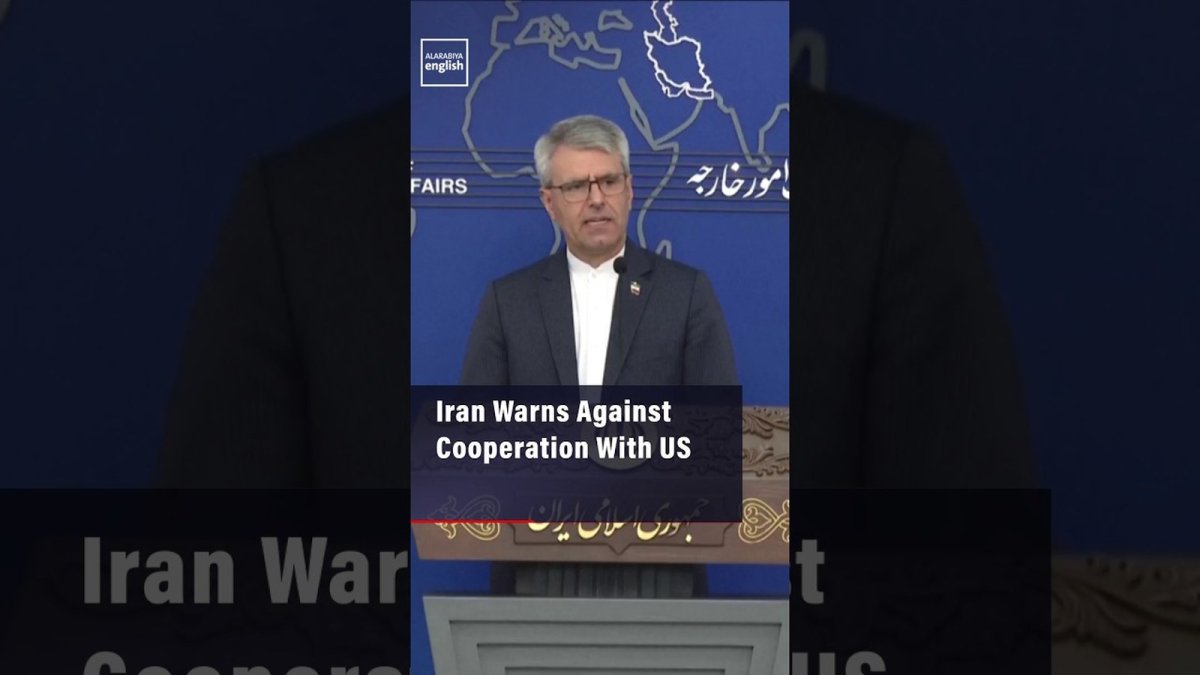
Tehran, Iran - August 24, 2026 - Iran's Foreign Ministry spokesperson Esmaeil Baghaei issued a stark warning on Monday to any nation contemplating cooperation with Washington's new economic pressure campaign, vowing that Tehran would deploy its "multilateral capabilities" to counter the sanctions. The statement comes just days after President Donald Trump announced the "most crushing economic operation" in US history against the Islamic Republic, threatening what he termed "ECONOMIC D-DAY" for any country whose financial institutions, businesses, or government entities provide a lifeline to Iran.
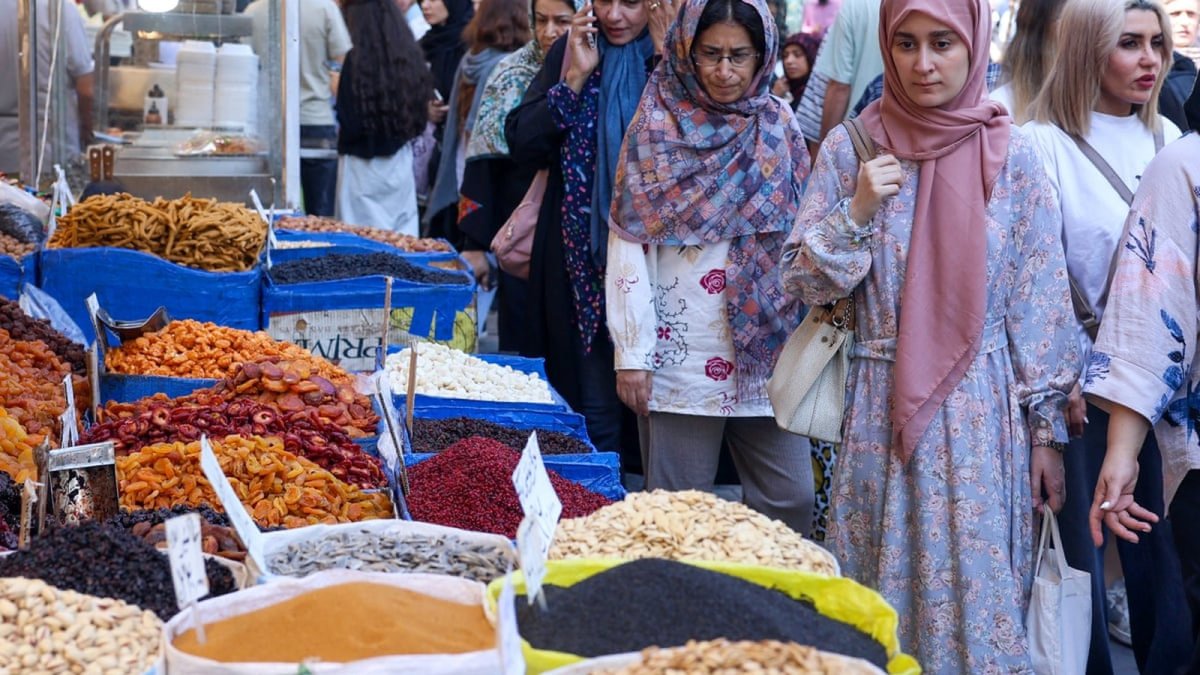
Tehran's Diplomatic Counter-Offensive
Baghaei's remarks, delivered at a press conference in Tehran, were carefully calibrated to frame the US campaign not merely as an economic dispute but as a fundamental assault on the post-war international order. "Obliging or intimidating other countries to stop or limit their trade relations with another country means violating the most important foundation of international relations and the most fundamental pillar of the United Nations charter, which is respect for the national sovereignty of countries," he said.
The spokesperson argued that repeating methods that have previously failed will not produce different results, except showing "the extent to which America is hostile and spiteful towards each and every Iranian" - a pointed reference to the fact that sanctions effects fall disproportionately on ordinary citizens rather than the political leadership. In a post on X, Baghaei went further, describing the US announcement as "an assertion of extraterritorial sovereignty" against UN member states. "The end result would be the complete erosion of sovereignty as the foundational basis of the UN-based inter-State system, and a recipe for an abysmal return to full-scale classic colonialism," he wrote.
This is not merely rhetorical posturing. Tehran is signaling to the Gulf states, in particular, that cooperation with Washington carries consequences beyond economic retaliation - a message reinforced by Iran's security chief and Supreme National Security Council secretary Mohsen Rezaei, who warned of an "earthquake-like" retaliation if Washington proceeds. Rezaei described a three-stage strategy: negotiate first, then strike a country's interests if they do not step aside. "If the countries surrounding Iran join the Americans in their economic war, not a drop of oil will leave the Persian Gulf and the strait of Hormuz," he threatened.
Washington's "Operation Economic Fury"
The scale of the US campaign is unprecedented. On August 19, Trump took to Truth Social to announce the "most crushing economic operation" against Iran, threatening sanctions on ANY country whose financial institutions, businesses, airports, or government entities provide support to Tehran. "Oil smuggling, swap lines, cash transfers, exchange houses, ship registries, front companies - it all needs to stop NOW," he wrote. The following day, Treasury Secretary Bessent formalized the strategy, calling it "the single greatest financial offensive ever marshalled against an adversary" and "the greatest coordinated economic isolation in the history of the world." His message to the international community was blunt: "You're either with us or against us."
The campaign, dubbed "Operation Economic Fury," goes beyond traditional sanctions. It includes a naval blockade of Iranian ports designed to prevent oil exports - a measure that has already proven devastatingly effective. Iran's central bank governor Abdolnaser Hemmati admitted that crude exports had "virtually stopped" due to the blockade, and the White House believes the Iranian economy is on the brink of collapse, citing hyperinflation and a severe shortage of foreign exchange. The rial traded at 1.992 million per dollar on the unregulated market Monday, down 4.5% since Trump's announcement and a record low, having crossed the psychologically significant threshold of 2 million rials per dollar on the open market.
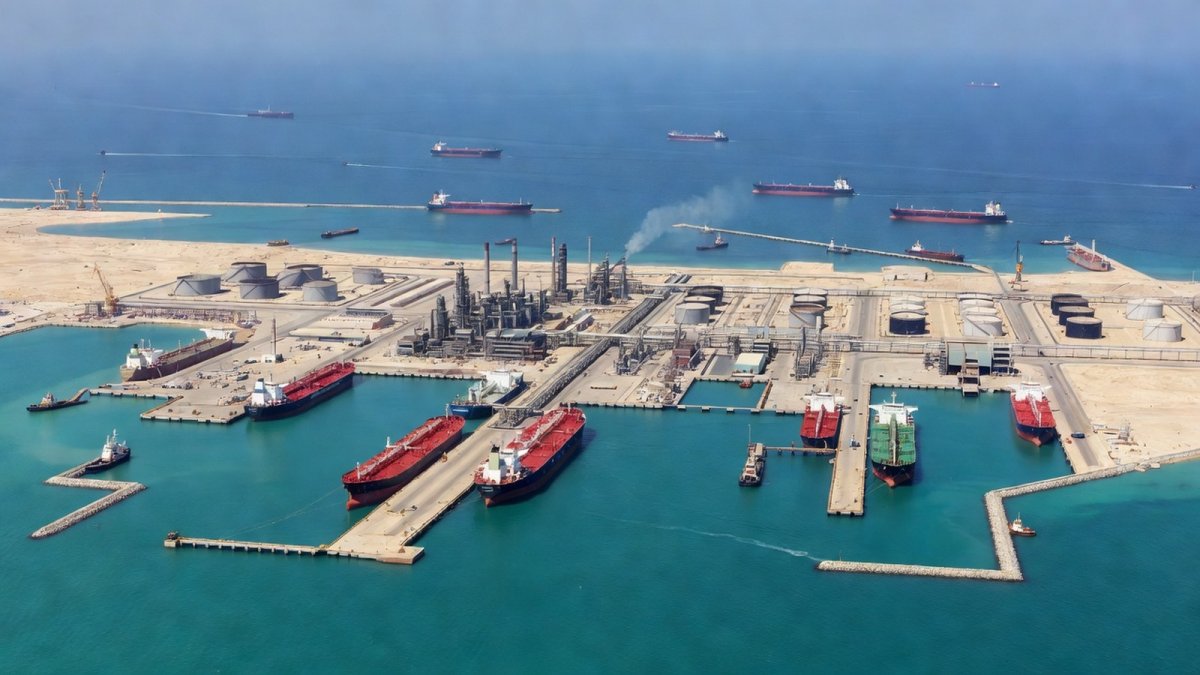
The UAE Break and Gulf States Caught in the Middle
The most significant regional development has been the United Arab Emirates' decision to end all trade with Iran - its single biggest trading partner in the Middle East. The UAE acted after accusing Iranian forces of firing two ballistic missiles at the country, an allegation Tehran denies. But Iranian officials believe the move was coordinated between Washington and Abu Dhabi, part of a broader effort to isolate Tehran economically.
The Gulf states now find themselves in an impossible position. Energy and other facilities in Qatar, Kuwait, Saudi Arabia, Bahrain, and the UAE have suffered damage since the war began, mostly from debris from intercepted strikes. They are caught between Iran and the US, and as analysts note, they "can't change geography." Simon Mabon of Lancaster University captured the dilemma succinctly: "They don't want the instability that would come from the fall of the Islamic Republic." A collapsed Iran would likely mean chaos, refugee flows, and potential proxy wars - a nightmare scenario for Gulf rulers who prefer a contained, predictable adversary to a failed state.
Yet Washington is demanding they choose sides. The UAE's trade break is a significant victory for the US campaign, but it comes at a cost: it validates Tehran's narrative that the Gulf states are complicit in American aggression, potentially making them targets for retaliation. Rezaei's warning about the Strait of Hormuz - through which roughly one-fifth of global oil and gas exports pass in peacetime - is a direct threat to Gulf energy infrastructure. Shipping through the strait remained severely disrupted over the weekend, putting additional pressure on already volatile global energy markets.
China, Russia, and the Limits of Unilateral Sanctions
The fundamental weakness of Washington's approach is that it lacks the multilateral coordination that made previous sanctions regimes effective. Paul Musgrave of Georgetown University in Qatar noted that Trump is trying to "unilaterally assert the kind of coordinated sanctions that traditionally has taken multilateral coordination" - an approach that is very difficult without China, Russia, and the UN Security Council P5 on board.
China, which bought 80 percent of Iran's shipped oil in 2025 according to Kpler analytics, has already pushed back. Foreign Ministry spokesman Lin Jian said China opposes unilateral sanctions lacking basis in international law, adding that military means, sanctions, and pressure tactics are not the solution. More significantly, China's commerce department has directed Chinese firms to ignore US warnings over Iranian oil imports, deploying a statute designed to render US sanctions ineffective in Chinese jurisdictions. The US had sanctioned Hengli Petrochemical's Dalian refinery in April but largely backed off to avoid a wider trade war - a sign of the limits of American leverage over Beijing.
Russia maintains commercial and military links with Tehran, and Iran has provided Shahed drones to Moscow for its war on Ukraine. This axis, while not a formal alliance, provides Iran with a degree of economic and diplomatic cover that it lacked during previous maximum pressure campaigns. Iran has also diversified its economic relationships: it has finalized preferential trade deals with Oman, deepened gas links with Turkey and Iraq, and counts on China absorbing the vast majority of its oil exports.
The Economic Toll: A Nation Under Siege
The human cost of the campaign is mounting. With crude exports virtually halted and the rial in freefall, ordinary Iranians are bearing the brunt of a confrontation they had no role in starting. Hyperinflation has eroded purchasing power, and the lack of foreign exchange has disrupted imports of essential goods, including medicine and food. The White House believes the economy is on the brink of collapse, but Tehran's leadership has weathered similar storms before.
Iran has faced US sanctions for more than 20 years under various maximum pressure campaigns. The 2018 withdrawal from the Joint Comprehensive Plan of Action (JCPOA) under the first Trump administration marked the beginning of the current cycle, but the pattern is older. As analyst Hassan Ahmadian of the University of Tehran observed: "There isn't a single new sanction. Everything in Iran has been under primary and secondary sanctions since 2018... After failing militarily, Washington is clearly stepping back to square one - the economy."
Foreign Minister Abbas Araghchi dismissed the expected sanctions as a sign of US desperation, saying "We have seen this movie before" and citing a 2012 Obama-era sanctions tweet. The implication is clear: Iran has survived maximum pressure before, and it believes it can survive again - particularly with Chinese and Russian support that did not exist in previous decades.
Strategic Calculus: What Each Side Wants
For Washington, the goal is regime change or, failing that, a comprehensive capitulation on Iran's nuclear program, ballistic missile capabilities, and regional proxy network. The economic campaign is designed to create enough domestic pressure to force Tehran to the negotiating table on American terms. But the strategy carries significant risks: it could backfire by rallying the Iranian public around the flag, or it could trigger the very escalation - including closure of the Strait of Hormuz - that the US seeks to avoid.
For Tehran, the calculus is equally complex. The leadership believes that survival depends on outlasting American political will, which historically has been limited by electoral cycles and international opposition. Iran's "multilateral capabilities" include its relationships with China and Russia, its leverage over the Strait of Hormuz, and its ability to retaliate against US allies in the region. The three-stage strategy outlined by Rezaei - negotiate first, then strike - suggests Tehran is keeping channels open while preparing for escalation.
For the Gulf states, the priority is survival and stability. They want the Iranian threat contained but not eliminated, because the alternative - a chaotic collapse - is far worse. They are being forced to choose between Washington's demands and Tehran's threats, with no good options. The UAE's decision to break trade ties may be followed by others, but each such move increases the risk of Iranian retaliation and regional conflagration.
Regional Implications: Energy Markets, Gulf Stability, and Alliances
The broader implications of this confrontation extend far beyond Iran's borders. The Strait of Hormuz carries roughly one-fifth of global oil and gas exports in peacetime, and the severe disruption to shipping over the weekend has already put upward pressure on energy prices. If Iran follows through on its threat to close the strait, the global economic impact would be catastrophic - a scenario that Washington and its allies are presumably working to avoid, but which cannot be ruled out given the escalation dynamics at play.
Gulf stability is also at risk. The damage to energy facilities in Qatar, Kuwait, Saudi Arabia, Bahrain, and the UAE from debris of intercepted strikes is a reminder that the war is already touching the region's critical infrastructure. The UAE's trade break with Iran may provide short-term political cover with Washington, but it also makes Abu Dhabi a more prominent target for Iranian retaliation. The Gulf states' traditional hedging strategy - maintaining ties with both Washington and Tehran - is becoming increasingly untenable as the US demands absolute loyalty.
The alliance structure of the region is being reshaped. The US is pushing for a unified anti-Iran coalition, but its unilateral approach is alienating even its closest partners. The European powers, which remain committed to the JCPOA framework, have been sidelined. China and Russia are positioning themselves as alternative partners for Iran, deepening their economic and military engagement. The result is a more fragmented and dangerous regional order, one in which the old certainties of US dominance and Gulf alignment can no longer be taken for granted.
As the conflict enters its seventh month, both sides appear locked in a test of wills. Washington believes economic pressure will eventually force Tehran to capitulate; Tehran believes it can outlast American political will and is preparing for a long siege. The Gulf states, caught in the middle, are being forced to make choices they have long sought to avoid. And the world's energy markets are watching nervously, aware that the next escalation could come at any moment - and that the consequences would be felt far beyond the Persian Gulf.
By Malik Hassan, Staff Writer
This article was produced with AI-assisted research and editorial support. Reporting is based on sources cited in the article.
What's Your Reaction?
 Like
0
Like
0
 Dislike
0
Dislike
0
 Love
0
Love
0
 Funny
0
Funny
0
 Wow
0
Wow
0
 Sad
0
Sad
0
 Angry
0
Angry
0
Middle East Correspondent at Global1.News. Based in Beirut, covering politics, conflict, energy, and society across the Middle East. Brings context and depth to a region often reduced to headlines.









Comments (0)