
Commissioner of Police Allister Guevarro Returns After Emergency Leave, Defends Actions Amid Questions Over Undisclosed Intelligence
Trinidad and Tobago's Commissioner of Police, Allister Guevarro, has returned to the jurisdiction following a sudden five-day emergency leave that took him outside the country, a trip that has sparked political questions and public speculation.
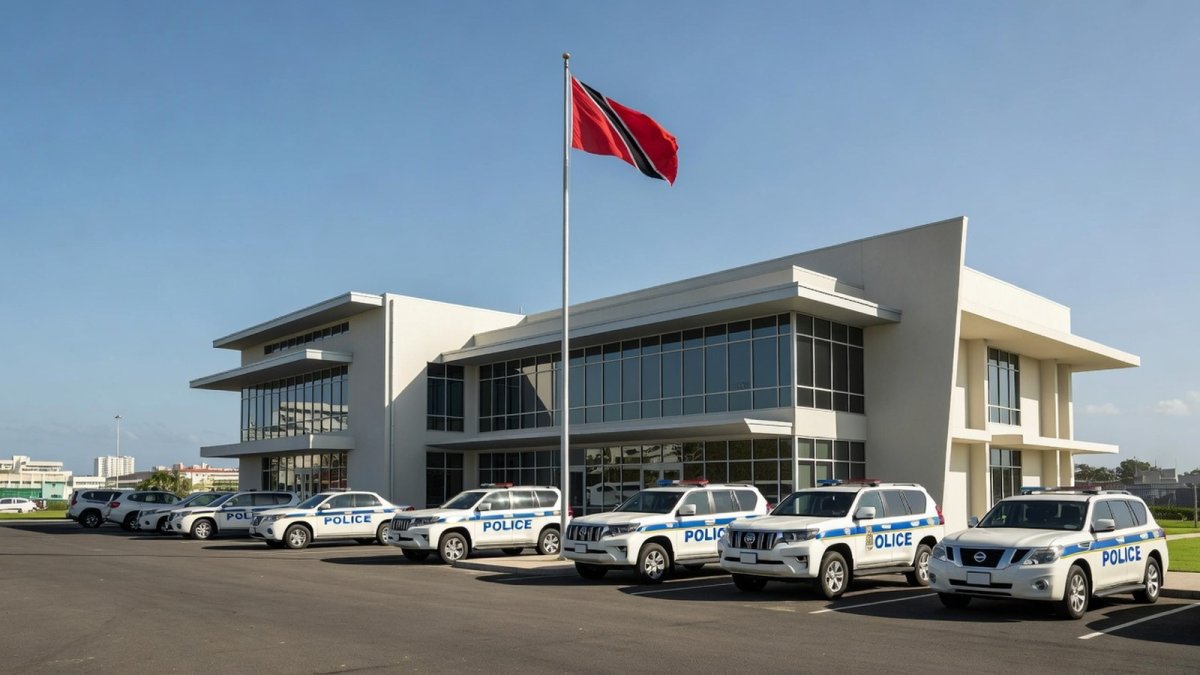
Trinidad and Tobago's Commissioner of Police, Allister Guevarro, has returned to the jurisdiction following a sudden five-day emergency leave that took him outside the country, a trip that has sparked political questions and public speculation. In a nearly three-minute audio voice note released via the TTPS Corporate Communications Department on Wednesday, the top cop confirmed his return and moved to quell rumours, insisting that he followed established procedure and breached no protocols.
The controversy began last week, during the week of 17 August 2026, when news broke that the Commissioner had abruptly left Trinidad and Tobago. With no official explanation initially forthcoming, speculation swirled about the purpose of his travel, ranging from health concerns to more serious security matters. The mystery deepened when it emerged that the leave had been granted under unusual circumstances, and that no acting commissioner had been appointed in his absence-a departure from established practice that has now drawn sharp questions from the Opposition.
Guevarro's Voice Note Defence
In his audio statement, Guevarro sought to set the record straight, addressing both the public and his officers directly. "I wish to reassure you that I followed the requirements of the established process, and I breached no protocols or policies," he said, according to reports from the Trinidad Guardian. The Commissioner dismissed rumours about the purpose of his travel, including speculation that he had fallen ill, and pushed back against concerns about the leadership vacuum during his brief absence, insisting that the Trinidad and Tobago Police Service (TTPS) remained under capable leadership.
The Commissioner's tone was one of reassurance, but his words also carried a weight of confidentiality. He refused to disclose the specifics of the intelligence that prompted his sudden departure, leaving the public and the political class with more questions than answers. The voice note, released through official channels, appeared designed to project control and normalcy, yet it also underscored the extraordinary nature of the situation-a sitting Commissioner of Police leaving the jurisdiction on an emergency basis, citing confidential intelligence that he cannot share.
The Known Timeline: A 10 August Application
According to the Commissioner's own account, the sequence of events began on 10 August 2026. On that date, Guevarro said, he received information from the Director of the Strategic Services Agency (SSA) as well as the head of Special Branch. Acting on that intelligence, he applied to Homeland Security Minister Roger Alexander for five days of emergency leave to travel out of the jurisdiction. The leave was granted, and the Commissioner departed.
The timeline raises significant questions. The application was made on 10 August, yet the Commissioner did not leave until the week of 17 August-a gap of roughly a week. What happened in that intervening period? Was the intelligence being assessed? Were security arrangements being put in place? The source material does not clarify this, and the Commissioner has not elaborated. What is clear is that the leave was approved by Minister Alexander, the same minister who, on 27 June 2026, exercised powers under the Emergency Powers Regulations 2026 to issue Preventive Detention Orders against businessman Dominic Hadeed and his wife Genevieve Hadeed.
The connection to Minister Alexander adds another layer of complexity. This is a minister who has already demonstrated a willingness to use extraordinary security powers. His approval of the Commissioner's emergency leave, without public explanation, fits a pattern of opaque decision-making that has characterised certain security matters in recent months. Whether this is coincidental or indicative of a broader security operation remains an open question.
Prime Minister's Silence
Perhaps the most striking aspect of this affair has been the silence from the highest office in the land. Prime Minister Kamla Persad-Bissessar has declined to reveal the circumstances that led to the Commissioner's leave. The Trinidad Express captured the mood with its headline: "PM mum on top cop's leave." The Prime Minister did not disclose why the top cop left, nor what the intelligence related to.
This silence is telling. In a small society like Trinidad and Tobago, where information travels fast and speculation faster, the absence of an official explanation from the Prime Minister's office leaves a vacuum. It invites conjecture, fuels rumour, and undermines public confidence in the transparency of security governance. The Prime Minister's decision to stay quiet may be driven by legitimate national security concerns, but it also risks being perceived as a lack of accountability.
The public is left to wonder: what could be so sensitive that the Prime Minister cannot offer even a general statement of support for her Commissioner of Police? What intelligence was so urgent that it required the top cop to leave the country at a moment's notice? These are not idle questions. They go to the heart of how security matters are managed in Trinidad and Tobago, and whether the public can trust that those in power are acting in the national interest.
Opposition Questions and the Acting Commissioner Issue
The Opposition has been quick to seize on the gaps in the official narrative. Their questions have focused not only on the purpose of the travel but also on a procedural anomaly: why was no acting commissioner appointed during Guevarro's absence? The Opposition has raised concerns about the absence of an acting commissioner, questioning why the Police Service Commission (PolSC) did not make a temporary appointment to ensure continuity of leadership at the top of the TTPS.
This is not a trivial matter. The Commissioner of Police is the most senior law enforcement officer in the country, responsible for the strategic direction of the police service and for maintaining public order. A five-day absence without a formally appointed acting commissioner leaves a potential leadership gap, even if, as Guevarro insisted, the service remained under capable leadership. The Opposition's concern is that proper procedure was not followed, and that this lapse could have implications for the chain of command and accountability.
The absence of an acting appointment is particularly striking given the precedent set in October 2025. On that occasion, when Guevarro was scheduled to leave Trinidad and Tobago, the Police Service Commission nominated Deputy Commissioner of Police Junior Benjamin to act as Commissioner. The President issued the notification, and Parliament formally approved Benjamin's acting appointment. That process was transparent, orderly, and followed established constitutional and legal procedures. This time, no such appointment was made-and the Opposition wants to know why.
The October 2025 Precedent: A Contrast in Process
The contrast between October 2025 and August 2026 could not be starker. In the earlier instance, the machinery of state moved with precision: the PolSC nominated a deputy, the President issued the notification, and Parliament gave its approval. The public was informed, and there was no ambiguity about who was in charge during the Commissioner's absence. It was a textbook example of how such matters should be handled.
This time, the process appears to have been bypassed. No acting commissioner was nominated, no notification was issued, and no parliamentary approval was sought. The Commissioner left, and the service operated without a formally designated acting head. Whether this was an oversight, a deliberate choice, or a reflection of the urgency of the situation is unknown. But the departure from established practice is notable, and it has provided the Opposition with a clear line of attack.
The question of why the PolSC did not act is also significant. The Police Service Commission is an independent body responsible for appointments and discipline within the TTPS. Its failure to appoint an acting commissioner-or its failure to be asked to do so-raises questions about communication and coordination between the Commission, the Ministry of Homeland Security, and the Office of the Commissioner. In a security environment that demands seamless coordination, this apparent breakdown is concerning.
Public Trust and the Security Climate
This episode comes at a delicate time for Trinidad and Tobago. The country continues to grapple with serious crime challenges, and public confidence in the police service is a matter of ongoing concern. The Commissioner's sudden departure, the undisclosed intelligence, and the Prime Minister's silence all feed into a narrative of opacity that can erode trust in the institutions charged with keeping the public safe.
For the average citizen in Port of Spain, San Fernando, or Arima, the details of this affair may seem distant. But the implications are not. When the Commissioner of Police leaves the country on an emergency basis citing confidential intelligence, and when the government declines to explain why, it raises questions about the nature of the threats facing the nation. Is there a security situation that the public should know about? Are there risks to public safety that are being managed behind closed doors? These are legitimate concerns, and the lack of answers does little to reassure a public that has grown accustomed to uncertainty.
The nature of the intelligence that prompted the leave remains an open question. Guevarro refused to disclose specifics. The Prime Minister declined to comment. The Director of the SSA and the head of Special Branch have not spoken publicly. This silence may be justified by operational security, but it also leaves the public in the dark. In a democracy, transparency and accountability are essential to maintaining trust, particularly in matters of national security. The balance between secrecy and openness is always difficult, but the burden of proof lies with those who choose secrecy.
As the dust settles on this episode, the questions will not go away. The Opposition will continue to press for answers. The media will continue to investigate. And the public will continue to wonder. What was the intelligence? Why did the Commissioner have to leave? Why was no acting commissioner appointed? And why is the Prime Minister staying silent? Until these questions are answered, the cloud of uncertainty will hang over the TTPS and the government's handling of security matters.
For now, Commissioner Guevarro is back at his post, insisting that he followed the rules and that the service remained in capable hands. But the affair has exposed cracks in the process and raised doubts about the transparency of security governance in Trinidad and Tobago. In a country that values its democratic institutions and the rule of law, those cracks will need to be addressed-not with silence, but with answers.
This article was produced with AI-assisted research and editorial support. Sources: Trinidad Guardian, Trinidad Express, CNC3, WINN FM, TT Gazette.
By Sharon Sahatoo, Staff Writer
What's Your Reaction?
 Like
0
Like
0
 Dislike
0
Dislike
0
 Love
0
Love
0
 Funny
0
Funny
0
 Wow
0
Wow
0
 Sad
0
Sad
0
 Angry
0
Angry
0

Caribbean Correspondent at Global1.News. Based in Port of Spain, Trinidad, covering Caribbean politics, economy, energy, climate, and culture. Amplifying the voices and stories of the Caribbean region.










Comments (0)