
US, China Diplomats Clash Over Chinese Tech in Latin America
US and Chinese diplomats in Latin America traded accusations over Huawei, ZTE and other Chinese tech firms this weekend, as Washington's 'Trump Corollary' pressures the region to drop Chinese suppliers ahead of next month's Xi-Trump summit.
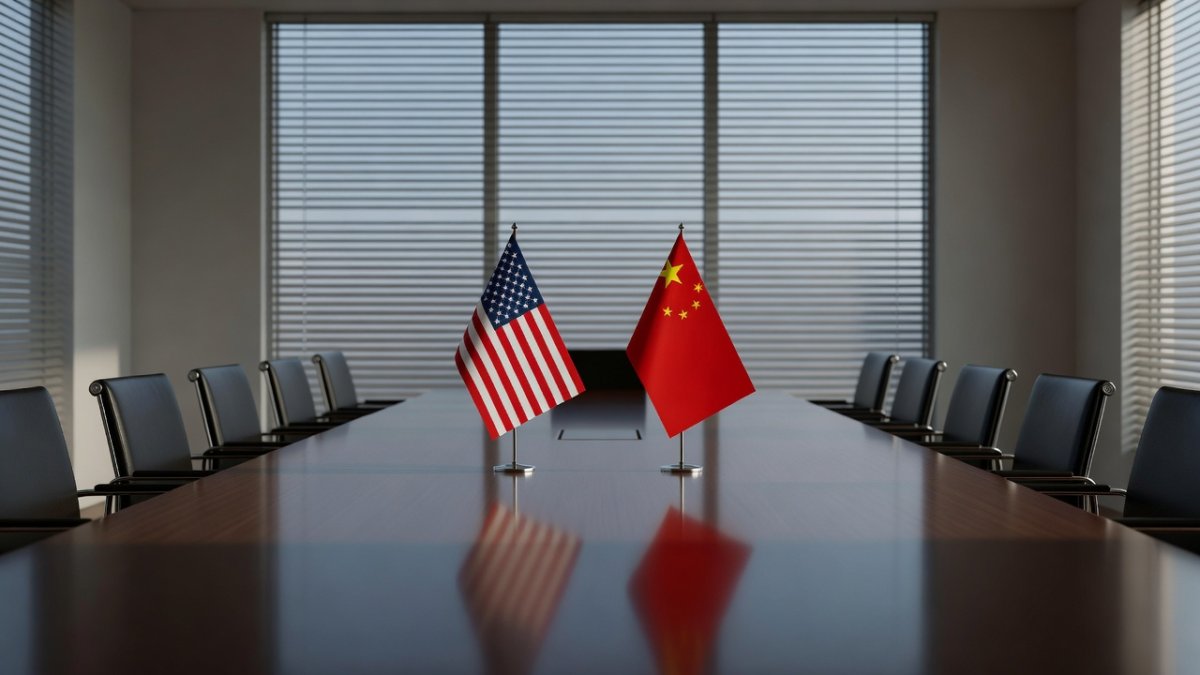
Diplomats Trade Brickbats Over Chinese Tech in the Americas
Diplomats for China and the United States in Latin America have traded brickbats on social media over alleged espionage risks posed by Chinese tech firms in the region, in the latest sign of the two powers' unfolding strategic tensions in the western hemisphere. The verbal sparring, which began with a Saturday social media post by US Assistant Secretary of State for Western Hemisphere Affairs Juan Pablo Segura and drew a sharp rebuttal from Beijing's embassy in Panama on Sunday, comes barely weeks before an expected summit between US President Donald Trump and Chinese President Xi Jinping in Washington next month.
Tags: US-China relations, Latin America, Huawei, ZTE, Hikvision, tech espionage, Trump Corollary, Monroe Doctrine, Panama Canal, 5G, trusted suppliers, Xi-Trump summit, digital sovereignty
Segura's Saturday Salvo Names Six Companies
Segura, sworn into his post on August 14, named telecoms giants Huawei Technologies, ZTE and Hytera, surveillance equipment makers Hikvision and Dahua, and drone heavyweight DJI in his post, describing their products as "high-risk technologies". "Chinese law forces these suppliers to cooperate with Beijing's intelligence services, creating risks of spying, hacking and network shutdowns," Segura warned. "We urge US partners in the Americas to quickly switch to trusted suppliers to protect their people and their sovereignty," he concluded, in a message shared by the US embassy in Panama minutes later and echoed over the weekend by the US embassy in the Dominican Republic and Peter Lamelas, Washington's top envoy in Buenos Aires.
The move extends a playbook Washington has used in Europe and Asia since the late 2010s, when allies were pressed to bar Huawei from next-generation 5G networks. What is different this time is the target: Latin America, where Chinese vendors still hold significant positions. Huawei has been one of the leading suppliers in Chile and Brazil, and Chinese firms have expanded into surveillance, drones and data infrastructure across the region under Beijing's Digital Silk Road umbrella.
Beijing's Counter: "Stop Thief" and Techno-Bullying
Beijing's diplomatic mission in Panama hit back on Sunday with a statement published on its website that rejected Washington's accusation as lacking "the slightest factual basis". The statement suggested that it was the United States that had been engaging in intelligence activities across the region, while acting like a thief shouting "stop thief" and beating the victims. "The true one obsessed with global espionage, without even sparing its own allies, is the US," the Chinese embassy argued, adding: "For those who only think in terms of geopolitical calculations, even the siu mai might be bugged."
The embassy also denounced the US for "blatant techno-bullying" by stretching the concept of national security to "coerce" regional countries into replacing Chinese products. In Beijing, foreign ministry spokesman Lin Jian dismissed Segura's allegations as full of "fact-distorting fabrications" on Monday, saying China "firmly rejects them". "We advise the US to stop its political manipulation [and] stop interfering with sovereign nations' right to independently choose cooperation partners," he said. The Chinese embassy in Argentina had earlier lashed out at Lamelas, issuing a statement more than a week ago after he accused Beijing of requiring companies to give it access to any data passing through their technology and artificial intelligence networks. "The Chinese government never requests, nor will it ever request, companies to provide, collect, or store data for the Chinese government in violation of local laws," that statement said.
The "Trump Corollary": Washington's Hemisphere Push
The clash is not an isolated exchange but part of a broader strategic reorientation. Trump's administration has made the western hemisphere a foreign policy priority, designating it a "Homeland Security Zone" and pledging to deny rival powers control over strategically important assets near US shores. Officials have described the approach as the "Trump Corollary" to the Monroe Doctrine, explicitly linking the competition with China to a policy from more than 200 years ago that aimed to drive European powers' influence away from the Americas.
Latin America has emerged as an arena for the strategic competition between Washington and Beijing, laid bare in the continuing contest over the Panama Canal, a vital artery for global trade. Washington's change of focus has raised concerns in Beijing that China's strategic space in the Americas could come under increasing pressure. For regional governments, the superpower rivalry presents a familiar dilemma: Chinese capital and infrastructure come with fewer political strings than Washington's conditional offers, but embracing them now carries the risk of becoming collateral damage in a great-power standoff.
The Trade Battle Beneath the Rhetoric
The latest verbal sparring over Chinese tech follows a White House report, published on August 13, that describes Latin American countries, including Panama, the Dominican Republic and Argentina, as part of what it calls a "shadow transshipment network". The report portrayed this network as "a distributed system of finishing hubs, logistics platforms, processing corridors, free-zone operators, and re-export centres that allow Chinese goods to enter the US market under new national identities".
In other words, the espionage accusations are layered on top of a trade dispute. Washington sees Chinese goods and Chinese technology as two entry points for the same strategic challenge: Beijing's ability to use the hemisphere to bypass US tariffs and expand its economic leverage. By framing Chinese tech as a national security threat, the administration can pressure regional governments on both fronts at once, using the same "trusted supplier" language it deploys in trade talks. Beijing, for its part, frames the pressure as economic coercion dressed up in security language, a narrative that resonates in countries with long memories of US intervention.
Where Japan Fits: The Trusted-Supplier Lane
For Japan, the exchange carries a familiar echo. When the United Kingdom sought Huawei alternatives for its 5G networks, it turned to Japanese suppliers, a quiet endorsement of NEC and Fujitsu as trusted equipment vendors. Washington's call for Latin American nations to "quickly switch to trusted suppliers" effectively opens a lane that Japanese technology firms are well positioned to fill, provided they can match Chinese pricing and deployment speed in emerging markets.
Japan's stake in Latin America runs deep. The region hosts some of the world's largest Japanese-descendant communities, particularly in Brazil and Peru, and Japanese automakers and electronics manufacturers have operated there for decades. Japanese development finance has backed infrastructure across the region, giving Tokyo a reservoir of goodwill that neither Washington's pressure campaigns nor Beijing's mega-projects can quickly replicate. For Japanese companies, the question is whether the "trusted supplier" label translates into actual contracts, or whether Latin American governments, squeezed between superpowers, simply defer decisions on 5G and surveillance procurement until the geopolitical weather clears.
There is also a cautionary note for Tokyo. The same logic Washington applies to Chinese vendors in Latin America could, in a different political climate, be pointed at Japanese technology exposed to Chinese components or data flows. Japan's own networks have leaned on Huawei equipment in the past, and Japanese firms remain entangled in regional supply chains. The lesson of the weekend's exchange is that the "high-risk technology" designation is a political instrument, not a technical verdict.
What to Watch For
The immediate flashpoint is the expected Xi-Trump summit in Washington next month, where trade, Taiwan and the Americas are all likely to surface. A second signal will come from the annual APEC leaders' meeting later in the year, with China's September visit already previewed in regional diplomacy. In Latin America, watch whether Panama, the Dominican Republic and Argentina push back against the "shadow transshipment" label, and whether any government announces a shift in 5G or surveillance procurement in response to Washington's pressure.
For Asia-Pacific readers, the deeper story is the globalization of the tech-security divide. The same battle lines drawn over Huawei in Europe and Japan's own 5G choices are now being drawn in the Americas, and the outcome will shape not only who builds Latin America's digital infrastructure, but how much room middle powers retain to choose their own partners. As the siu mai line suggests, Beijing is betting that the world has tired of Washington's security sermon; Washington is betting that sovereignty arguments still carry the day. Latin America will be the test.
By Kenji Tanaka, Staff Writer
This article was produced with AI-assisted research and editorial support. Sources: South China Morning Post, US Department of State, Politico, Heritage Foundation.
What's Your Reaction?
 Like
0
Like
0
 Dislike
0
Dislike
0
 Love
0
Love
0
 Funny
0
Funny
0
 Wow
0
Wow
0
 Sad
0
Sad
0
 Angry
0
Angry
0

Japan Correspondent at Global1.News. Tokyo-based voice covering Japanese politics, technology, economy, and culture. Tracks the intersection of tradition and innovation in one of the world's most dynamic societies.












Comments (0)