
Iran Turns to Pakistani Ports to Bypass US Naval Blockade
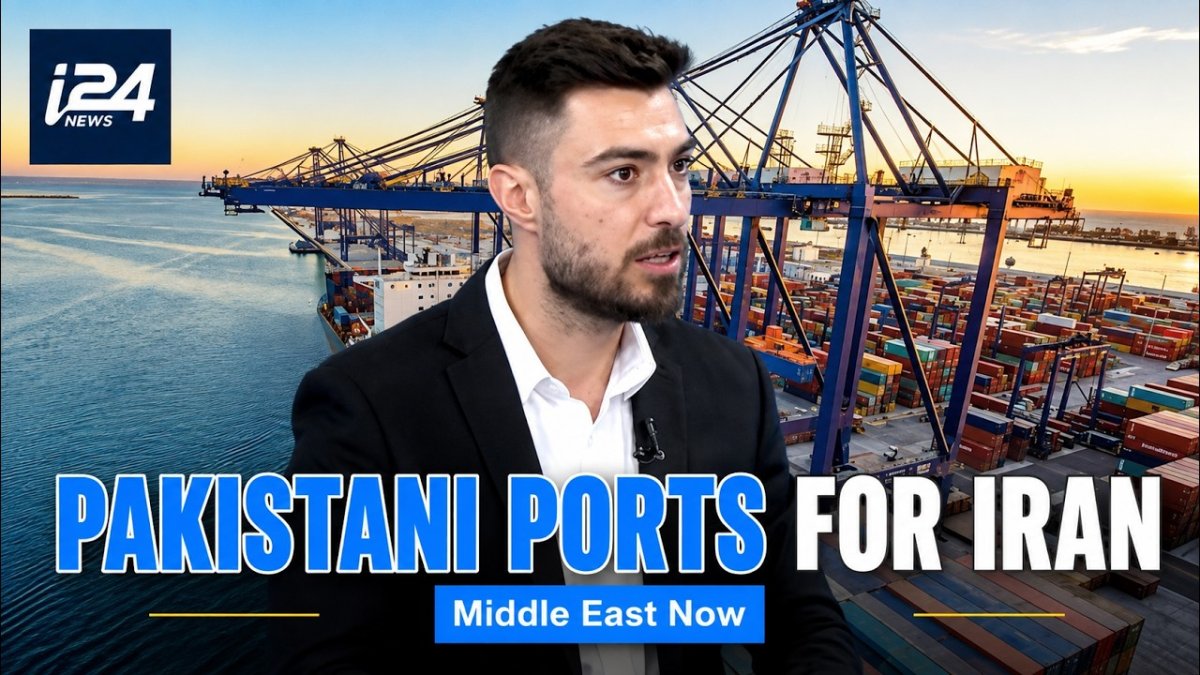
In a recent i24NEWS English video report published this week, titled 'Will Pakistani ports be used for Iranian exports?', the segment examines whether Karachi, Port Qasim and Gwadar will serve as alternative export routes for Iran amid the ongoing US naval blockade. The report highlights Iran's interest in Pakistani and Chinese-owned Pakistani ports following the closure of the Strait of Hormuz.
In a recent i24NEWS English video report published this week, titled 'Will Pakistani ports be used for Iranian exports?', the segment examines whether Karachi, Port Qasim and Gwadar will serve as alternative export routes for Iran amid the ongoing US naval blockade. The report highlights Iran's interest in Pakistani and Chinese-owned Pakistani ports following the closure of the Strait of Hormuz. This development carries direct implications for Israeli security assessments after the February 28, 2026 strikes.
Iran Turns to Pakistani Ports to Bypass US Naval Blockade
Jerusalem, Israel — On February 28, 2026, the United States and Israel launched coordinated military strikes against Iran that killed Supreme Leader Ayatollah Ali Khamenei and degraded Iranian nuclear and military infrastructure. Iran responded by asserting control over the Strait of Hormuz, which normally handles one-fifth of global oil and gas supplies. The United States imposed a naval blockade on Iran in April 2026 and again in July 2026, which remains in force.
US-Israel Strikes and Resulting Blockade Reshape Trade Dynamics
The ceasefire agreed on April 8, 2026, was mediated by Pakistan but remains fragile with repeated violations. In early August, Iran's parliament reviewed a plan to ban ships linked to the United States, Israel and other hostile countries from transiting the Strait of Hormuz until Tehran receives compensation for war damage. Proposed fees reach 7% of cargo value with 20% fines for violations.
Iran is finalizing an agreement with Oman on shipping routes through the strait, with ships entering via a northern corridor near the Iranian coast and exiting via a southern corridor near the Omani coast. The Trump administration rejected the toll plan, stating that any temporary routes will operate without impediments, approvals, permissions, tolls or charges. President Trump noted that the US currently controls the strait through its naval blockade on Iran.
These developments reshape trade dynamics because any successful Iranian toll regime would raise costs for energy shipments worldwide and test whether the US naval presence can maintain open lanes without constant confrontation. The interplay between the blockade and Iran's Hormuz assertion shows how the post-strike conflict has shifted from direct military exchanges to economic containment, with the Houthis' ongoing tanker attacks adding a secondary front that further disrupts shipping patterns in the region. For Israeli and regional readers, the toll plan's significance lies in its potential to generate funds that could sustain Iranian proxies, making sustained US enforcement of the blockade a critical factor in preventing escalation beyond the current fragile ceasefire.
Pakistan Formalizes Overland Corridors to Iranian Border
On April 25, 2026, Pakistan's Ministry of Commerce issued the Transit of Goods through the Territory of Pakistan Order 2026, which formalized six overland corridors from Karachi, Port Qasim and Gwadar to the Iran border at Taftan and Gabd. The government amended the Imports and Exports (Control) Act, 1950 to enable the scheme. Third-country cargo bound for Iran can move across Pakistani territory with an encashable bank guarantee equivalent to Pakistani import duties, regulated under the Customs Act of 1969.
The order explicitly allows cross-stuffing of containers. More than 3,000 containers destined for Iran had piled up at Karachi port after the closure of Iranian ports and the Strait of Hormuz. Al Jazeera reported in late April that Pakistan had opened the road trade routes into Iran amid the Hormuz blockade.
The administrative changes carry weight because they create a structured mechanism that could handle third-country cargo in a legal grey zone, even as US secondary sanctions have constrained Pakistan-Iran trade for over a decade. For Pakistan, the corridors advance ambitions to leverage Gwadar and Karachi as gateways, directly supporting expanded trade with Iran that reached only 1.2 billion dollars in fiscal year 2010 before sanctions intensified. Israeli observers note that scaling these routes could ease pressure on Iran's economy and indirectly affect regional security calculations tied to the ongoing blockade.
August Joint Trade Committee Advances Bilateral Cooperation
On Tuesday, at the 10th session of the Pakistan-Iran Joint Trade Committee in Islamabad, Iranian Minister of Industry, Mine and Trade Mohammad Atabak and Pakistan's Commerce Minister Jam Kamal Khan co-chaired discussions. Iran expressed interest in expanding trade through Karachi and Gwadar ports. Atabak stated that Iran attaches the highest priority to expanding comprehensive cooperation with Pakistan, with negotiations on a Pakistan-Iran Free Trade Agreement progressing well.
Jam Kamal said operationalising joint border markets is essential to strengthening local livelihoods and cross-border commerce. Both sides reaffirmed the commitment to raise bilateral trade to $10 billion, a target set at the 22nd session of the Pakistan-Iran Joint Economic Commission held in Tehran last year. Before sanctions intensified more than a decade ago, bilateral trade surpassed $1.2 billion in fiscal year 2010.
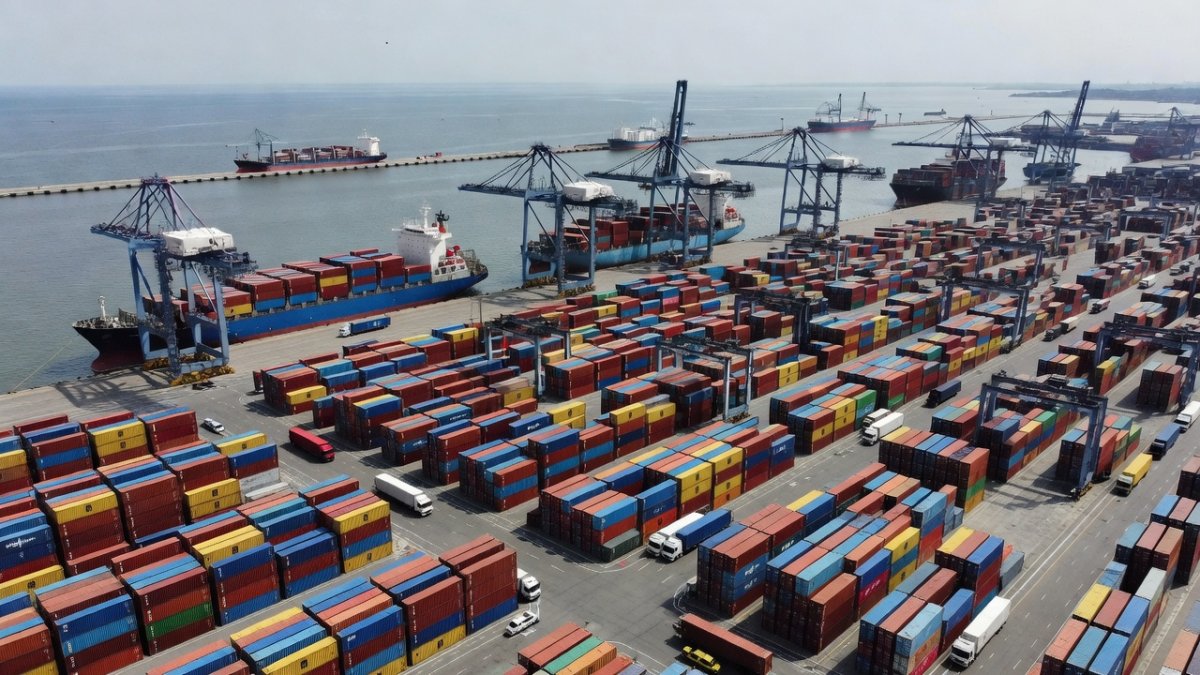
Negotiations on a free trade agreement are progressing, and completion of the Iran-Pakistan gas pipeline could deliver up to 750 million cubic feet per day, addressing Pakistan’s energy needs directly.
These steps imply a deliberate push to normalize economic ties despite the US blockade, with the gas pipeline representing a concrete energy stake that would reduce Pakistan's vulnerability to supply disruptions. Historical trade volumes before sanctions demonstrate the potential scale if barriers ease, yet the current focus on border markets and port access shows both countries adapting to the post-ceasefire environment. For regional stability, expanded cooperation at this level could alter the economic incentives surrounding the fragile April 8, 2026, ceasefire mediated by Pakistan.
China-Pakistan Economic Corridor Strengthens Alternative Routes
Gwadar port is operated by China Overseas Port Holding Company under the China-Pakistan Economic Corridor, which the i24NEWS video identifies as Chinese-owned Pakistani ports. Analysts note that the corridor strengthens CPEC, challenges India's Chabahar port strategy, and reduces Pakistan's reliance on Afghanistan as a transit route. Pakistan has also opened routes to Central Asian markets via its ports.
The rivalry with India's Chabahar project becomes sharper as Pakistan opens these paths, potentially shifting trade volumes away from Iranian ports under direct US scrutiny. By formalizing access for Central Asian markets, Pakistan gains leverage in regional transit dynamics that were previously limited by sanctions and the fragile ceasefire violations. Israeli and US coordination on containment must now account for how CPEC-backed infrastructure could sustain Iranian exports even if Hormuz remains contested.
Sanctions Grey Zone and Israeli Security Monitoring
Pakistan-Iran trade has been constrained by US secondary sanctions on Iran for over a decade. Analysts quoted by The Diplomatic Insight describe the new transit corridor as operating in a legal grey zone for third-country cargo that the United States has not yet publicly addressed. Israeli defense and intelligence officials in Jerusalem continue to track these developments for potential impacts on regional supply lines and proxy funding networks.
Yemen's Houthi movement has also been attacking tankers in the region, adding further complexity to maritime security assessments. The long-delayed Iran-Pakistan gas pipeline would deliver up to 750 million cubic feet of natural gas per day if completed.
Israel monitors Iran's use of Pakistani ports closely because any scaling of these corridors would generate revenue that could support the Iranian war machine and its proxies, especially after the February 28, 2026, strikes that removed Supreme Leader Ayatollah Ali Khamenei. The Houthi attacks on tankers already demonstrate how proxy actions compound the effects of the US naval blockade imposed in April and July 2026, creating additional pressure points that require sustained Israeli-US coordination. The i24NEWS reporting this week highlighting Iranian interest in Pakistani and Chinese-operated ports underscores the immediate security concern that alternative export routes could undermine containment efforts.
If the corridors expand significantly, the legal grey zone described by The Diplomatic Insight would test whether the United States addresses third-country cargo flows that currently lack public clarification. This development would force adjustments in the post-ceasefire strategy, as increased Iranian trade through Pakistan could prolong the economic resilience of Tehran and its regional allies despite the degraded military infrastructure from the initial strikes. Continued monitoring remains essential to prevent these routes from altering the balance established by the coordinated US and Israeli operations.
These shifts in Iranian export logistics after the US-Israel strikes require sustained attention from Israeli policymakers focused on preventing any resurgence of Iranian capabilities that could threaten the security of Tel Aviv, Jerusalem and surrounding areas.
By Hannah Berg, Staff WriterThis article was produced with AI-assisted research and editorial support. Reporting is based on sources cited in the article.
What's Your Reaction?
 Like
0
Like
0
 Dislike
0
Dislike
0
 Love
0
Love
0
 Funny
0
Funny
0
 Wow
0
Wow
0
 Sad
0
Sad
0
 Angry
0
Angry
0

Israel Correspondent at Global1.News. Based in Tel Aviv, covering Israeli politics, security, technology, and society. Provides balanced, deeply-sourced reporting on one of the most closely-watched regions in the world.














Comments (0)