
Iran offers US plan to reopen Hormuz within 7 days
Iran’s foreign minister, Abbas Araghchi, announced on Friday that Tehran had put forward a concrete proposal to the United States for the rapid reopening of the Strait of Hormuz.
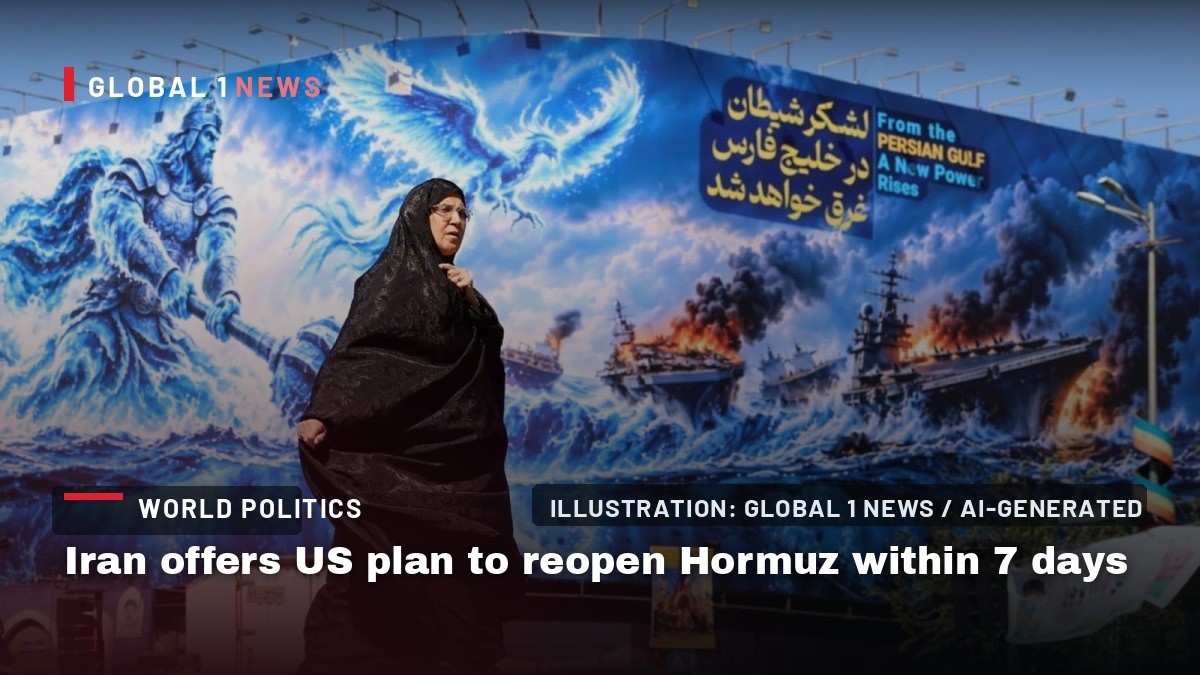
Iran’s foreign minister, Abbas Araghchi, announced on Friday that Tehran had put forward a concrete proposal to the United States for the rapid reopening of the Strait of Hormuz. The plan, conveyed through Qatar, promises to restore normal maritime traffic within seven days once the United States agrees to the stipulated conditions. Araghchi made the statement at the United Nations, emphasizing that the decision now lies with Washington and that Iran will not yield its sovereign rights under coercion.
Background to the Hormuz impasse
The Strait of Hormuz, a narrow waterway linking the Persian Gulf with the Gulf of Oman, handles a substantial share of the world’s oil shipments. Any disruption to its flow reverberates through global energy markets, prompting heightened diplomatic attention whenever tensions flare. In recent months, Iranian and U.S. forces have been locked in a series of confrontations that have raised the specter of a prolonged closure, prompting regional actors and international investors to monitor developments closely.
Against this backdrop, Iran’s diplomatic outreach has sought to frame its actions as defensive rather than aggressive. By positioning the reopening of the strait as a conditional concession, Tehran aims to preserve its strategic leverage while signaling a willingness to de‑escalate if its core demands are met. The latest proposal, therefore, must be read not merely as a humanitarian gesture but as a calculated diplomatic move within a broader contest over regional influence.
The seven‑day proposal
According to Araghchi, the plan is “concrete” and would enable the strait to be reopened within a week of agreement. The wording suggests a detailed operational timetable, although the source material does not disclose the exact mechanisms—such as the deployment of naval escorts, the removal of mines, or the coordination of shipping schedules—that would be required to achieve the rapid turnaround. The emphasis on a seven‑day window underscores Tehran’s desire to present a clear, time‑bound alternative to the status quo, contrasting it with the uncertainty that has characterized previous negotiations.
Crucially, the proposal was transmitted “through Qatar,” indicating a reliance on a regional intermediary to bridge the diplomatic gap between Tehran and Washington. Qatar’s role as a conduit reflects its longstanding practice of facilitating back‑channel communications in the Gulf, a function that has become increasingly valuable as direct U.S.–Iran talks remain stalled. By using a third party, Iran may be seeking to insulate the negotiation from domestic political pressures in both capitals while preserving plausible deniability.
U.S. diplomatic posture
The United States, represented in the talks by Steve Witkoff, an envoy appointed by President Donald Trump, has not publicly detailed its response to the seven‑day plan. The source material notes that Witkoff met with Araghchi on Tuesday, but does not indicate whether any provisional acceptance or rejection was communicated. This silence leaves open the possibility that Washington is weighing the proposal against a broader set of strategic considerations, including sanctions policy, regional security guarantees, and domestic political calculations surrounding the Trump administration’s approach to Iran.
Araghchi’s statement that “the choice now rests with the United States” frames the negotiation as a binary decision: accept the plan and restore maritime traffic, or continue to apply pressure. By asserting that Iran “does not accept coercion, threats, or intimidation,” the foreign minister seeks to cast any U.S. refusal as a continuation of hostile tactics, thereby attempting to shift the narrative toward Iranian restraint and willingness to cooperate.
Implications for regional shipping
Should the United States endorse the seven‑day plan, the immediate effect would be the resumption of normal shipping lanes through Hormuz. This would alleviate the heightened insurance premiums and rerouting costs that have plagued carriers since the strait’s closure became a tangible threat. Moreover, a swift reopening would likely stabilize crude oil price volatility that has been exacerbated by the uncertainty surrounding the waterway’s status.
Conversely, a rejection or delay in response could sustain the current disruption, compelling oil‑producing nations to continue using alternative routes such as the longer passage around the Cape of Good Hope. Prolonged detours not only increase transportation time but also raise the risk of supply chain bottlenecks, especially for countries heavily reliant on Gulf oil imports. The economic calculus for regional exporters and importers alike hinges on the speed and certainty of any resolution.
Strategic calculations behind Tehran’s offer
By presenting a time‑bound, actionable plan, Iran appears to be leveraging its control over the strait to extract concessions on broader war‑ending conditions. The source material references “conditions for ending the war” but does not enumerate them, suggesting that the reopening of Hormuz is part of a larger package of demands. This approach aligns with Tehran’s historical pattern of using strategic chokepoints as bargaining chips in diplomatic negotiations.
The emphasis on “sovereign rights” underscores a narrative of national dignity. By refusing “coercion, threats, or intimidation,” Araghchi signals that any agreement must respect Iran’s territorial integrity and political autonomy. This framing is intended to resonate domestically, reinforcing the government’s image as a defender of national interests while also appealing to regional allies who share concerns about external pressure tactics.
International reaction and the role of Qatar
While the source material does not detail reactions from other nations, the involvement of Qatar as a messenger is noteworthy. Qatar has positioned itself as a diplomatic bridge in several Gulf disputes, and its participation here may encourage other regional actors to support a mediated solution. The country’s own reliance on maritime trade routes amplifies its interest in a swift resolution, potentially prompting Doha to lobby both Tehran and Washington for a constructive outcome.
Beyond the Gulf, major oil‑importing economies are likely monitoring the development closely. A rapid reopening would be welcomed by markets seeking stability, whereas continued uncertainty could fuel speculative trading and heighten geopolitical risk premiums. International organizations, including the United Nations, may also play a facilitative role, given that Araghchi delivered his remarks at the UN platform, indicating an appeal to multilateral legitimacy.
Outlook and next steps
The immediate future hinges on whether the United States will accept the seven‑day plan as presented. If Washington signals willingness to move forward, a coordinated implementation effort—likely involving naval de‑mining, clearance of any blockades, and verification mechanisms—will be required to meet the tight timeline. Conversely, a postponement or rejection would extend the diplomatic stalemate, keeping the strait’s status in limbo and maintaining pressure on both sides.
For observers, the key indicators will be any subsequent statements from the Trump administration, any further diplomatic overtures through Qatar, and the evolution of on‑the‑ground conditions in the Gulf. The interplay of these factors will determine whether the Hormuz corridor can be restored swiftly or remains a flashpoint in the broader Iran‑U.S. confrontation. In any case, the seven‑day proposal marks a significant moment in the ongoing effort to balance regional security, energy stability, and sovereign prerogatives.
This article was produced with AI-assisted research and editorial support. Reporting is based on the source material cited below. Sources: South China Morning Post; scmp.com; Global1.News (26 September 2026).
By Kenji Tanaka, Staff Writer
What's Your Reaction?
 Like
0
Like
0
 Dislike
0
Dislike
0
 Love
0
Love
0
 Funny
0
Funny
0
 Wow
0
Wow
0
 Sad
0
Sad
0
 Angry
0
Angry
0

Japan Correspondent at Global1.News. Tokyo-based voice covering Japanese politics, technology, economy, and culture. Tracks the intersection of tradition and innovation in one of the world's most dynamic societies.











Comments (0)