
Iran's Fragile Bet: Pezeshkian's MoU Defense Exposes Tehran's Strategic Bind
Iran's President Pezeshkian defends the US memorandum of understanding as the best path beyond a state of neither war nor peace, even as the 60-day deadline lapses, hardliners warn neighbors, and the Strait of Hormuz remains closed. Analysis of sanctions, the gas discovery, and Pakistan mediation.
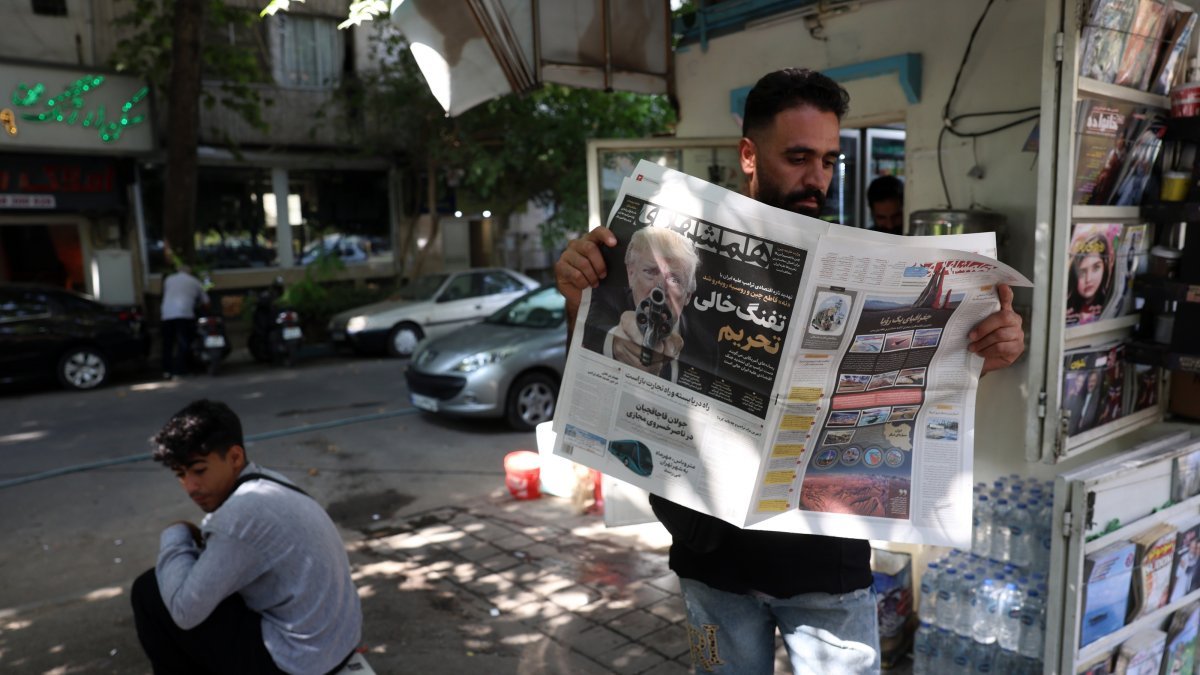
The Islamic Republic of Iran stands at a crossroads that few in its leadership anticipated when the first strikes of the war with the United States and Israel landed in late February. Nearly six months into a conflict that has crippled its energy infrastructure, severed its access to global banking, and triggered a tightening naval blockade, President Masoud Pezeshkian has publicly thrown his political weight behind the Memorandum of Understanding signed with Washington in June. His defense of the deal, published by state-run IRNA on Sunday, is not merely a policy statement-it is a window into a regime grappling with the reality that its "neither war nor peace" posture is no longer sustainable. The 60-day deadline for the MoU has lapsed, the crucial issue of the Strait of Hormuz remains unresolved, and Tehran's internal power structure is visibly fracturing between pragmatists seeking an off-ramp and hardliners preparing for a prolonged siege.
Beirut, Lebanon - Aug 24, 2026 - The diplomatic theater surrounding the Iran-U.S. MoU has entered a perilous new phase. With the ambitious 60-day timeline set by President Donald Trump having expired last week, the agreement-once touted as the framework to end the war and resolve the nuclear impasse-now exists in a state of suspended animation. President Pezeshkian's remarks, delivered to the nation via state media, represent the most explicit endorsement of the deal from the Iranian executive branch since its signing. Yet, the simultaneous warning from Mohsen Rezaei, the newly appointed hard-line head of the Supreme National Security Council (SNSC), underscores a stark reality: Tehran is speaking with two voices, and the world is listening for which one will prevail.
The MoU's Expired Clock and the "Neither War Nor Peace" Trap
President Pezeshkian's defense of the memorandum is rooted in a pragmatic assessment of Iran's current trajectory. He argued that the agreement represents the best possible path forward, crafted under the principles of "dignity, wisdom and the national interest," and insisted that "there is not a single provision in this agreement that amounts to capitulation." This framing is critical for domestic consumption. By explicitly deferring to the supreme leader's authority-stating, "The supreme leader sets the policies, and we will follow that path"-Pezeshkian is attempting to shield the agreement from hard-line accusations of surrender while signaling to Washington that the deal retains the highest level of clerical endorsement.
However, the arithmetic of the deal is unforgiving. The MoU, signed by Trump in June, set a 60-day deadline to end the war and reach a nuclear accord. That period has now elapsed. The two sides remain "far apart," with no signs of compromise on the reopening of the Strait of Hormuz-the chokepoint through which roughly a fifth of global oil consumption passes. For Iran, the strait is its primary strategic lever; for the U.S. and its allies, it is the linchpin of global energy security. The failure to bridge this gap means the MoU is, for now, a framework without a foundation.
Tehran's Internal Power Struggle: The Rezaei Factor
The most telling development in the past 48 hours is the emergence of Mohsen Rezaei as the public face of Iranian intransigence. Named this month to lead the SNSC, Rezaei-a former commander of the Islamic Revolutionary Guard Corps (IRGC) and a veteran of the Iran-Iraq War-has wasted no time in staking out a maximalist position. In an interview with state broadcaster IRIB aired Saturday, he issued a direct threat to Iran's neighbors: if they join the U.S. "economic war," Tehran will retaliate "in a seismic manner." His specific warning to target "oil-shipping routes out of the Persian Gulf, alternatives to the Strait of Hormuz" is a calculated escalation, suggesting that Iran has contingency plans to disrupt the UAE's Fujairah port and Saudi pipelines that bypass the strait.
Rezaei's appointment is widely seen as a hardening of Tehran's political and military stance, a signal that the clerical establishment is preparing for the possibility that the MoU collapses entirely. His rhetoric stands in direct contrast to Pezeshkian's conciliatory tone. This is not merely a difference of opinion; it is a structural conflict within the Iranian state. Pezeshkian, who campaigned on engagement and economic reform, needs the MoU to succeed to attract foreign investment. Rezaei, representing the security establishment, views the agreement as a potential trap designed to strip Iran of its deterrent capabilities. The supreme leader's silence on the specifics of the MoU allows both narratives to coexist, but it also paralyzes decision-making at the exact moment decisive action is required.
The Economic Siege: Sanctions, Blockade, and the Investment Vacuum
Pezeshkian's most compelling argument for the MoU is economic. "Capital and money are extremely sensitive to risk," he said, adding, "We have to remove this risk from the country." This is not hyperbole. The Iranian economy is suffering under the dual weight of U.S. sanctions and a naval blockade that has effectively halted its primary export-oil. The rial has plummeted, inflation is rampant, and the government's ability to subsidize basic goods is eroding. The president's linkage of the MoU to investment is a tacit admission that Iran cannot survive indefinitely in its current state of isolation.
Trump's vow to impose an "unprecedented" level of economic warfare and isolation in the past week is a direct response to the deadline lapse. For Tehran, this is a familiar pressure tactic, but the context is different. Unlike previous sanction regimes, this one is accompanied by active military conflict and a blockade. The discovery of a new gas field in Fars Province, announced Sunday by Oil Minister Mohsen Paknejad, offers a glimmer of long-term hope but does little to address the immediate crisis. The field holds an estimated 7.5 trillion cubic feet (212.4 billion cubic meters) of gas, with a possible recovery of about 5,700 billion cubic feet. While Paknejad noted the gas is "sweet," reducing development and operating costs, the reality is that Iran cannot monetize this asset without the ability to export it-an ability currently denied by the blockade.
Energy Infrastructure: A Bleeding Wound
The war's toll on Iran's energy sector is a critical, often overlooked dimension of the standoff. Prewar production stood at around 650 million cubic meters (mcm) per day, translating to roughly 8.4 trillion cubic feet per year. Since the war began in late February, strikes have cut output by about 230 mcm per day. In July, a senior government official stated that Iran expected to restore about 100 mcm per day of natural gas production capacity "within the coming months." This restoration is essential not only for domestic consumption-which faces severe shortages during the summer heat and winter cold-but also for reinjecting gas into oil fields to maintain crude output.
The new gas discovery is strategically significant, but it is a long-term asset in a short-term crisis. The repairs to damaged infrastructure are ongoing, but they require parts, technology, and financing that are largely inaccessible under the current sanctions regime. The planned U.S. sanctions targeting Iran's energy sector will further strain an economy already in freefall. For Pezeshkian, the calculus is simple: without a deal, the economic bleeding continues; with a deal, there is a chance to stabilize. For Rezaei and the hardliners, the calculus is equally simple: capitulation on the strait or the nuclear program would be a strategic defeat worse than economic pain.
The Strait of Hormuz Deadlock: The Core Sticking Point
The reopening of the Strait of Hormuz remains the irreducible core of the dispute. For the U.S., the strait's closure is an unacceptable act of economic warfare that justifies continued military action. For Iran, the strait is its only meaningful leverage in negotiations. Rezaei's threat to target "alternatives to the Strait of Hormuz" is a clear message that Iran will not limit its retaliation to the strait itself. If neighboring states-particularly Saudi Arabia and the UAE-facilitate the U.S. economic war by increasing their own output or allowing their pipelines to be used as substitutes, they will become legitimate targets in Tehran's eyes.
This dynamic creates a dangerous feedback loop. The more the U.S. pressures Iran economically, the more Tehran threatens the region's energy infrastructure. The more Tehran threatens, the more the U.S. and its Gulf allies view military escalation as necessary. The MoU's failure to address this issue means the core casus belli remains unresolved. Neither side appears willing to blink: Washington sees the strait's reopening as a precondition for any sanctions relief, while Tehran sees it as its final card to play.
Pakistan's Mediation: A Narrow Diplomatic Window
Amid the escalating rhetoric, a quiet diplomatic channel remains open. Pakistan's Field Marshal Asim Munir will lead an official delegation to Tehran on Monday, according to Iranian state television, citing Foreign Ministry spokesman Esmail Baghaei. The visit aims to strengthen bilateral cooperation and continue Pakistan's work to promote regional peace and security. Two regional officials, speaking on condition of anonymity, said the visit is part of Islamabad's ongoing efforts to de-escalate tensions between the U.S. and Iran and urge both sides to return to the negotiating table.
Munir's role is unique. Appointed by Prime Minister Shehbaz Sharif to defuse tensions, he has made several visits to Iran since the war began. Pakistan has a delicate balancing act: it maintains close ties with Saudi Arabia and the Gulf states, but it also shares a long border with Iran and cannot afford a destabilized western neighbor. Munir's visit follows a phone call with Iranian Foreign Minister Abbas Araghchi, indicating that Tehran is willing to engage with intermediaries even as it publicly rejects U.S. pressure. Pakistan's mediation is a long shot, but it represents the only active diplomatic track currently in motion. The question is whether Islamabad can bridge the gap on the strait-an issue that even the MoU's architects could not resolve.
Regional Implications
The standoff between Washington and Tehran is no longer a bilateral issue; it is a regional crisis with global ramifications. The lapse of the MoU's deadline and the hardening of Iran's stance under Rezaei signal that the conflict is entering a more dangerous phase. For the Gulf states, the threat to oil-shipping routes is an existential concern. Saudi Arabia and the UAE have invested billions in alternative pipelines and storage facilities, but these are not sufficient to replace the strait's capacity. The risk of a "seismic" Iranian retaliation against these alternatives could trigger a broader regional war, drawing in not only the U.S. but also Israel, which has already conducted strikes on Syrian airbases in a related but separate conflict.
The broader Middle East is fragmenting into distinct theaters of conflict. The Syria-Israel dynamic, with Damascus expressing gratitude to Türkiye for military rebuilding assistance while seeking a security deal with Israel, illustrates the fluidity of alliances. Washington's attempt to forge a security agreement between Israel and Syrian President Ahmed al-Sharaa's government has proven elusive, adding another layer of instability. For energy markets, the implications are stark: any disruption to Persian Gulf shipping routes would send oil prices skyrocketing, potentially triggering a global recession. The MoU may have been the best path to end the war, as Pezeshkian argues, but with its deadline expired and the strait still closed, the path forward is increasingly obscured by the fog of economic warfare and military brinkmanship.
By Malik Hassan, Staff Writer This article was produced with AI-assisted research and editorial support. Sources: Daily Sabah, IRNA, Reuters.What's Your Reaction?
 Like
0
Like
0
 Dislike
0
Dislike
0
 Love
0
Love
0
 Funny
0
Funny
0
 Wow
0
Wow
0
 Sad
0
Sad
0
 Angry
0
Angry
0
Middle East Correspondent at Global1.News. Based in Beirut, covering politics, conflict, energy, and society across the Middle East. Brings context and depth to a region often reduced to headlines.









Comments (0)