
US-Canada Tariff War Escalates: Mexico Braces for T-MEC Fallout
The US-Canada tariff war escalated sharply as Washington imposed 50% tariffs on roughly $20 billion in Canadian goods and Ottawa vowed dollar-for-dollar retaliation starting September 8. For Mexico, the third USMCA/T-MEC partner, the dispute threatens supply chains, the peso, and the 2026 joint trade review.
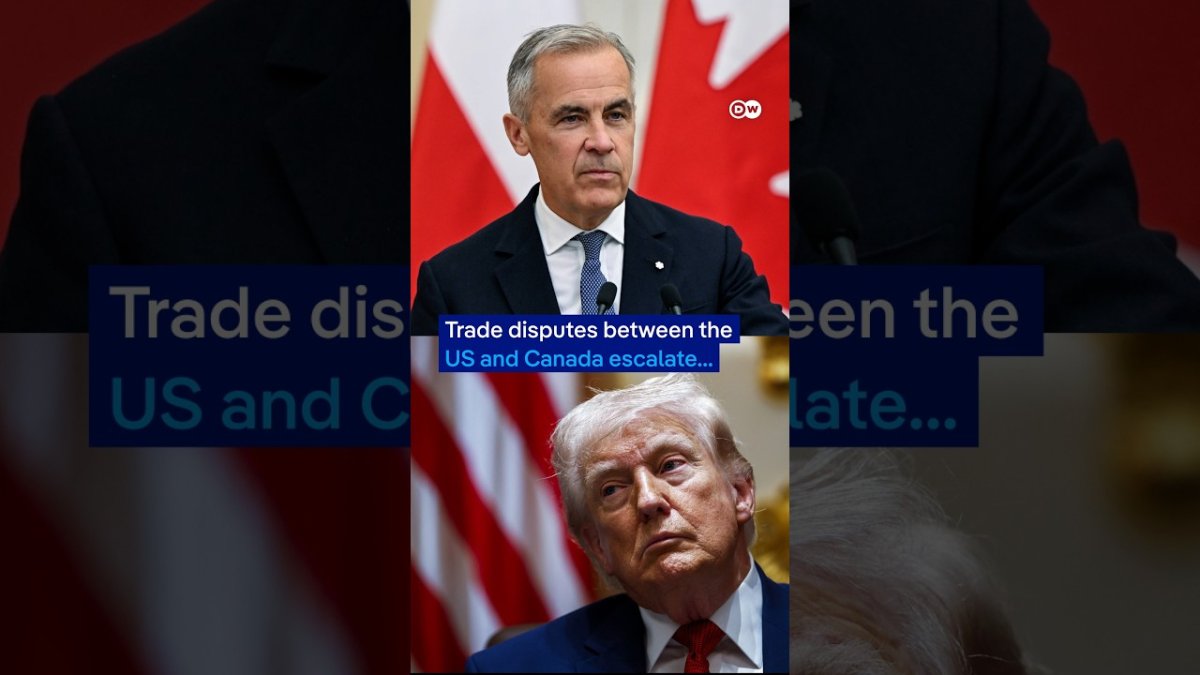
In a recent DW News report, the escalating trade conflict between the United States and Canada took a sharp turn as President Donald Trump called Canada's retaliation "foolish," insisting that Canada cannot win a trade war. For Mexico, the third partner in the USMCA/T-MEC trilateral agreement, this clash is not a distant spectacle — it is a warning siren for the economic integration that has defined North America for three decades.
US-Canada Tariff War Escalates: Mexico Braces for T-MEC Fallout
Mexico City, Mexico — The conflict erupted on Saturday, August 22, when the United States imposed 50% tariffs on roughly $20 billion (€17 billion) worth of Canadian exports. The move came after US-Canada trade talks collapsed on Friday night, leaving wine, furniture, dairy products, cement, clothing, fishing rods, and hockey equipment suddenly more expensive for American consumers. Canadian Prime Minister Mark Carney responded with characteristic defiance, announcing that Canada will retaliate "dollar for dollar," with new tariffs taking effect on September 8—the Tuesday after Labor Day—targeting steel, dairy, appliances, agricultural equipment, pulp and paper, and electronics.
A Fractured Relationship and the 51st State Rhetoric
The breakdown in negotiations reflects a deeper ideological chasm. On Sunday, August 23, President Trump took to Truth Social to accuse Canada of wanting "the benefits of being a [US] State, without being one," adding, "They have also charged our great farmers, for many years, massive amounts of Tariffs. No more!!!" Trump has long argued that tariffs will push manufacturing back to the United States and has repeatedly mused about making Canada the 51st state—a notion that alarms observers far beyond Ottawa.
Prime Minister Carney did not mince words in his response. "We cannot accept what they have offered, and we will not give what they have asked," he stated, capturing the stalemate. He went further, framing the dispute in existential terms: "You're at war when you get attacked. We got attacked." Carney emphasized that Canada has the reserves, resilience, and plan to respond, but he also acknowledged a painful reality: "America has changed" and the two countries "will not return to their old relationship." With the United States accounting for roughly 70% of Canadian exports, the stakes could not be higher.
Political Reactions Across North America
The fallout has reverberated through political corridors on both sides of the border. Ontario Premier Doug Ford, a key voice in Canadian manufacturing, expressed relief that a previous deal had not been signed. "I'm glad he didn't sign that deal because it was a bad deal. It was a bad deal for Ontario. It was a bad deal for the auto sector, the steel sector and manufacturing sector," Ford said, signaling that provincial leaders are bracing for prolonged turbulence. Conservative opposition leader Pierre Poilievre urged Canadians to "stand united to defend our country against these unfair attacks on our jobs and businesses," a rare moment of cross-party solidarity.
In the United States, criticism came from both coasts. New York Governor Kathy Hochul delivered a sharp rebuke: "Needlessly picking fights with our allies and raising prices here at home. That's Trump's economic policy in a nutshell." Michigan Congresswoman Haley Stevens condemned "Trump's reckless and unnecessary trade war," highlighting the anxiety in states that depend on cross-border supply chains. According to the Associated Press, no further US-Canada talks are planned, leaving the dispute in a dangerous holding pattern.
Mexico's Delicate Balancing Act Under T-MEC
For Mexico, the US-Canada conflict is not merely a spectator sport. The USMCA/T-MEC is a trilateral agreement, and Mexico is the third member. On July 1, 2026, Washington declined to renew the pact for another 16 years, meaning it now continues through annual reviews. The 2026 joint review is currently underway into the third quarter, and the timing could not be more precarious. Just weeks ago, on July 24, US Trade Representative Jamieson Greer and President Claudia Sheinbaum closed a third round of bilateral US-Mexico trade talks in Washington, with Mexico's baseline tariff held at 10 percent. A fourth round is scheduled for September, and the outcome will shape Mexico's economic trajectory for years to come.
Economy Secretary Marcelo Ebrard, who leads Mexico's 2026 USMCA review, has adopted a measured tone. He has repeatedly said that Mexico needs "cold blood and intelligence" in negotiating with Trump. That strategy is now being tested as the US-Canada dispute threatens to spill over into the trilateral framework. Mexico's position is unique: it is the United States' largest trading partner, having surpassed China. In 2025, Mexican exports to the US reached US$534.3 billion, with about 85% entering duty-free and an effective tariff rate of just 3.66% on total exports. These numbers are not abstract statistics—they represent the livelihoods of millions of Mexican workers.
Human Impact: Maquiladoras, Auto Plants, and the Peso
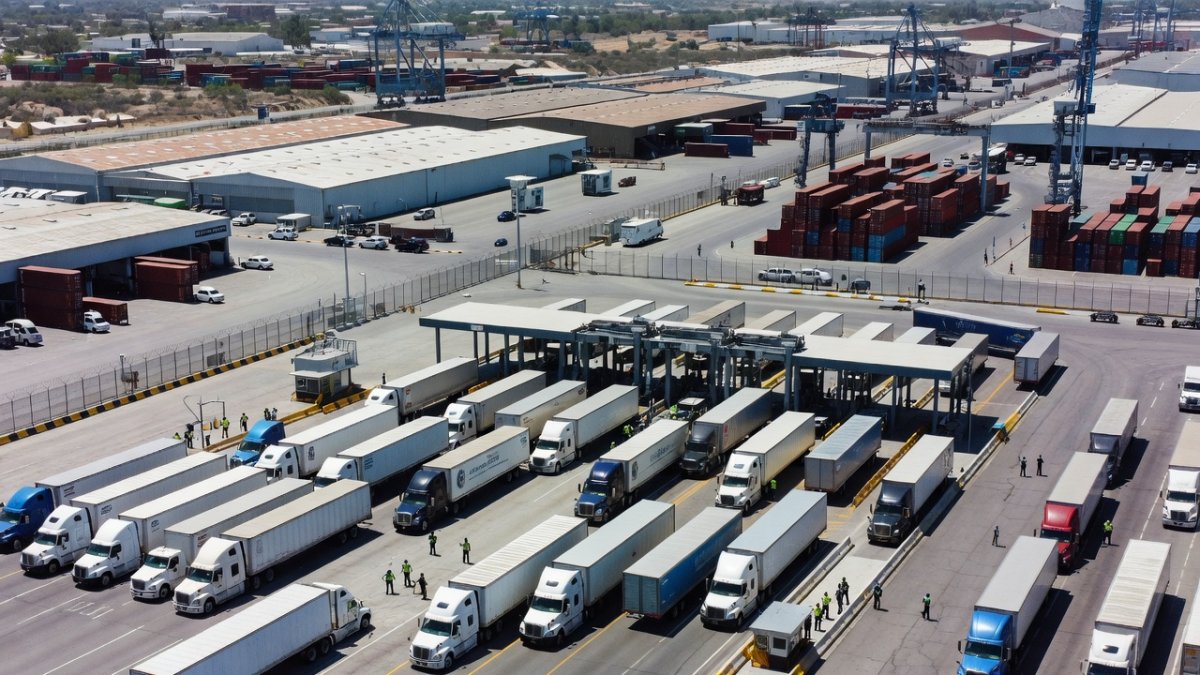
The human cost of trade instability is most visible in Mexico's maquiladora zones—Ciudad Juárez, Monterrey, Tijuana, and Guadalajara. These industrial hubs have flourished under nearshoring, attracting record foreign direct investment to northern Mexico. Workers in these factories assemble everything from auto parts to electronics, and their jobs depend on the seamless flow of goods across borders. Mexican auto, auto parts, and steel exports are deeply integrated with US and Canadian supply chains under USMCA rules of origin. A disruption in one link of the chain reverberates through all three countries.
In Ciudad Juárez, families in colonias like Anapra and Riveras del Bravo rely on maquiladora wages to put food on the table. In Monterrey, engineers and technicians at steel plants watch the news with anxiety, knowing that a tariff on Canadian steel could shift production patterns. The peso, ever sensitive to trade headlines, has become a barometer of uncertainty. Mexican financial markets watch each round of US tariff threats, and the currency's volatility directly affects the cost of imported goods, from corn to machinery, for ordinary Mexican families.
Sheinbaum's Sovereignty Defense and the Road Ahead
President Claudia Sheinbaum has consistently defended Mexico's sovereignty against US pressure, and the "51st state" rhetoric that Trump has aimed at Canada also alarms Mexican observers. For Sheinbaum, the principle is clear: Mexico is an independent nation with its own interests, and any trade agreement must respect that reality. Her administration has worked to diversify trade relationships while maintaining the crucial US market, a delicate dance that requires both strength and flexibility.
As the September talks approach, the atmosphere is charged with uncertainty. The US-Canada dispute has exposed the fragility of North American economic integration, and Mexico cannot afford to be caught in the crossfire. Ebrard's call for "cold blood and intelligence" reflects the administration's approach: steady, pragmatic, and focused on protecting Mexican jobs and industries. The fourth round of bilateral talks will be a critical test of whether Mexico can navigate the storm without sacrificing its economic gains.
What to Watch For
For now, the immediate focus is on the September 8 Canadian retaliation and the potential for further escalation. Mexican exporters, particularly in the agricultural and manufacturing sectors, are watching closely. The effective tariff rate of 3.66% that Mexican goods enjoy is a hard-won achievement, and any change could have cascading effects. The USMCA's annual review mechanism, born out of the 2026 non-renewal, means that Mexico must renegotiate its position every year—a constant state of vigilance that demands diplomatic skill and economic resilience.
The road ahead is fraught with challenges, but Mexico has navigated trade turbulence before. From the peso crisis of the 1990s to the renegotiation of NAFTA into the USMCA, the country has shown an ability to adapt and persevere. The current moment, however, feels different. The US-Canada tariff war is not a bilateral squabble; it is a symptom of a broader shift in American trade policy that threatens the very foundations of North American cooperation. For Mexican families, workers, and business owners, the stakes have never been higher.
As the world watches the US-Canada standoff, Mexico is quietly preparing for its own negotiations. The September talks will determine whether the trilateral framework can survive the pressures of nationalist politics and economic nationalism. President Sheinbaum and Secretary Ebrard have signaled their commitment to defending Mexico's interests, but they also know that in the world of trade, nothing is guaranteed. The peso will continue to fluctuate, the maquiladoras will keep humming, and Mexican families will keep hoping that their leaders can steer the country through these turbulent waters.
In the end, the US-Canada tariff war is a reminder that economic integration is not a one-way street. It is a complex web of relationships, dependencies, and shared interests. Mexico, as the third partner in the USMCA, understands this better than most. The coming weeks will reveal whether the trilateral agreement can withstand the strain—or whether North America is entering a new era of fragmentation. For now, all eyes are on September, and on the leaders who hold the future of the continent in their hands.
By Rosa Martinez, Staff WriterThis article was produced with AI-assisted research and editorial support. Reporting is based on sources cited in the article.
What's Your Reaction?
 Like
0
Like
0
 Dislike
0
Dislike
0
 Love
0
Love
0
 Funny
0
Funny
0
 Wow
0
Wow
0
 Sad
0
Sad
0
 Angry
0
Angry
0

Latin America/Andes Correspondent at Global1.News. Based in Bogota, covering politics, environment, energy, and social movements across the Andean region. Passionate about environmental journalism and communities protecting their land.













Comments (0)