
India slams Pak, says Islamabad has a 'long-standing practice of cross-border terrorism'; warns of consequences
India used the United Nations General Assembly platform on 26 September 2026 to deliver a forceful rebuke of Pakistan, linking the latter’s alleged support for cross‑border terrorism to broader concerns about democratic legitimacy and regional stability.
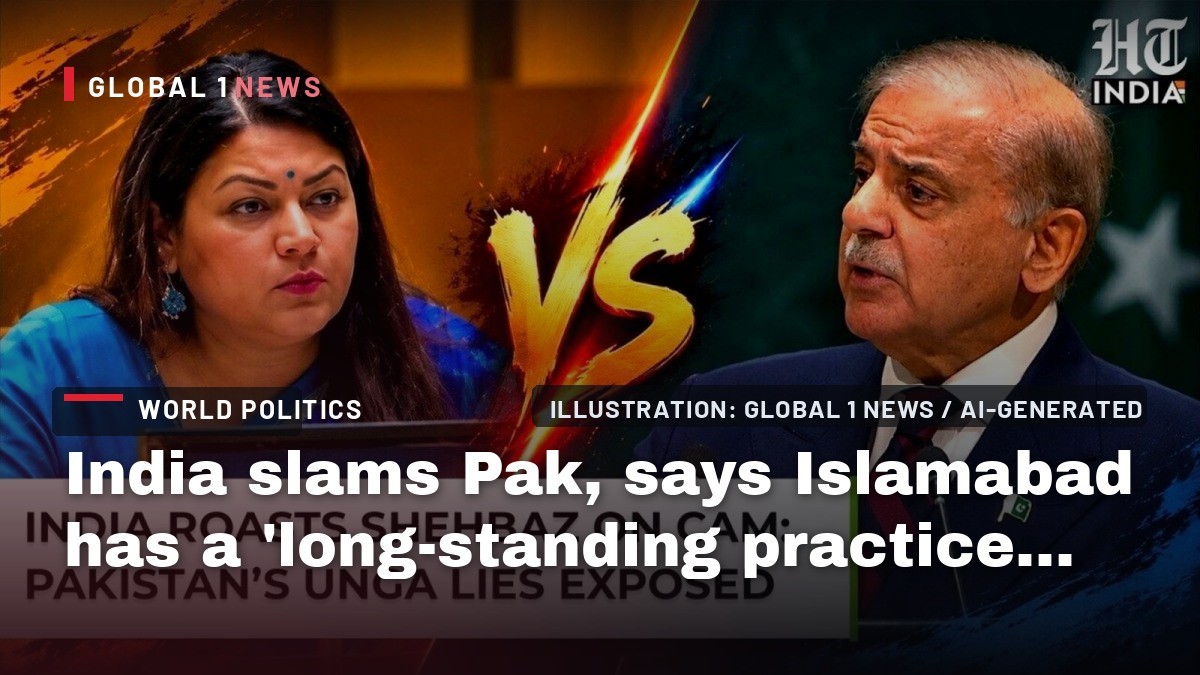
India used the United Nations General Assembly platform on 26 September 2026 to deliver a forceful rebuke of Pakistan, linking the latter’s alleged support for cross‑border terrorism to broader concerns about democratic legitimacy and regional stability. The exchange, framed by the lingering memories of the 2025 India‑Pakistan military standoff and the 25th anniversary of the 9/11 attacks, underscored how diplomatic rhetoric at the UN is increasingly intertwined with on‑the‑ground security calculations and domestic political pressures in both capitals.
India’s diplomatic retort to Pakistan’s UNGA address
First Secretary Petal Gahlot, representing India’s Permanent Mission to the UN, seized the floor to counter Pakistani Prime Minister Shehbaz Sharif’s remarks. She characterised Islamabad as a “puppet regime” and highlighted what she described as “hypocritical homilies about democratic rights and human values” coming from a government whose capital is allegedly being fortified against its own citizens. By invoking the recent commemoration of the 9/11 attacks, Gahlot sought to remind the assembly that the mastermind of that tragedy, Osama bin Laden, was once “living right on the doorstep of the Pakistani Army’s premier academy,” thereby casting a long shadow over Pakistan’s security establishment.
The Indian delegation framed its response around the notion of a “longstanding practice” of cross‑border terrorism by Pakistan. Gahlot asserted that New Delhi’s right to self‑defence would be exercised and warned that “continued terrorism by Pakistan will have consequences,” implying that any future diplomatic overtures would be conditioned on demonstrable restraint from Islamabad.
Context of the 2025 military confrontation and Operation Sindoor
The 2025 four‑day military confrontation between India and Pakistan, which Sharif thanked US President Donald Trump for “timely intervention,” remains a recent memory that shapes today’s diplomatic discourse. India’s subsequent Operation Sindoor, a limited offensive aimed at neutralising terrorist sanctuaries along the Line of Control, was presented by New Delhi as a decisive response to cross‑border attacks. Gahlot’s reference to this operation reinforced the narrative that India has already taken “the necessary steps” to deny terrorists safe havens, and that any further aggression would be met with “nowhere to run or hide.”
By linking the UNGA exchange to these recent military actions, the Indian side signalled that its diplomatic posture is calibrated to its security calculus. The emphasis on operational success serves to bolster domestic confidence in the armed forces while also reminding international partners that India is prepared to act unilaterally if diplomatic channels fail to curb terrorism.
Pakistan’s internal challenges and their diplomatic spill‑over
Sharif’s address was delivered against a backdrop of acute domestic turmoil. The source material notes a “failing economy,” mass protests over the detention of former Prime Minister Imran Khan, and unrest in both Balochistan and Pakistan‑occupied Kashmir (PoK). These pressures likely informed Sharif’s decision to raise the Kashmir issue at the UNGA, positioning it as a lever to rally international sympathy and divert attention from internal dissent.
The mention of “large‑scale protests for several months over 12 contentious refugee seats” in PoK, coupled with allegations of electoral rigging, underscores the volatility of the region. By foregrounding Kashmir, Sharif aimed to frame the India‑Pakistan relationship as one of contested territorial claims rather than solely a security dilemma, hoping to elicit broader diplomatic support for Pakistan’s position.
The Kashmir narrative: competing claims and human rights allegations
India’s rebuttal to Sharif’s Kashmir focus was swift and unequivocal. Gahlot reiterated that Jammu and Kashmir is an “integral and inalienable part of my country” and warned against conflating the Indian Union territory with the “Pakistan‑occupied Jammu and Kashmir.” She called for attention to alleged “wanton killings, brutal violence, and denial of basic rights” in Rawalkot, a location within the contested region, thereby shifting the human‑rights discourse onto Pakistan’s administration of the area.
This exchange reflects a broader pattern in South Asian diplomacy where each side leverages human‑rights narratives to bolster its territorial claims. By invoking specific incidents in Rawalkot, India sought to internationalise alleged Pakistani abuses, while Pakistan’s emphasis on a “fair and lasting resolution” to Kashmir aimed to keep the issue on the global agenda, especially in the wake of the 2025 standoff that heightened regional anxieties.
The Indus Waters Treaty and water security rhetoric
Sharif also used the UNGA platform to warn against any Indian attempts to “stop, impede, or divert” Pakistan’s share of the Indus waters, describing such actions as an “act of war.” This rhetoric follows a recent Hague tribunal ruling affirming that the Indus Waters Treaty (IWT) remains fully in force, a judgment that India has kept “in abeyance.” By framing water as the “lifeblood” for Pakistan and the wider region, Sharif sought to elevate water security to a matter of existential importance, thereby deterring any Indian moves perceived as threatening to Pakistan’s water allocation.
The emphasis on water underscores how resource security is increasingly weaponised in Indo‑Pakistani discourse. While the source material does not detail any specific Indian policy shifts regarding the IWT, the diplomatic warning signals that any future water‑related negotiations will be conducted under the shadow of heightened mistrust and the spectre of conflict.
Implications for regional security and diplomatic strategy
The UNGA exchange illustrates how both capitals are intertwining security imperatives with diplomatic messaging. India’s insistence on the right to self‑defence against terrorism, coupled with its portrayal of Pakistan as an army‑run regime, aims to consolidate international support for a hardline stance. Conversely, Pakistan’s focus on Kashmir, water rights, and the legacy of 9/11 seeks to cast India as the aggressor and to rally sympathy from nations concerned about human rights and resource scarcity.
For regional security analysts, the key takeaway is that diplomatic posturing at multilateral forums is now a direct extension of on‑the‑ground strategies. The continued reference to the 2025 confrontation and Operation Sindoor suggests that India will maintain a proactive posture, while Pakistan’s internal crises may limit its capacity to engage constructively, potentially leading to further escalation of rhetoric if not matched by concrete de‑escalation measures.
Looking ahead: potential policy trajectories
In the coming months, India is likely to reinforce its counter‑terrorism operations along the Line of Control, while simultaneously seeking to deepen diplomatic engagements with allies who share concerns about cross‑border militancy. The emphasis on “consequences” for continued terrorism could translate into tighter border controls, enhanced intelligence sharing, and possibly a more assertive stance in international forums on issues ranging from terrorism financing to cyber‑security.
Pakistan, grappling with economic distress and political unrest, may double down on its narrative of external threats to deflect domestic criticism. The water security warning suggests that Islamabad could pursue legal or diplomatic avenues to challenge any perceived Indian encroachments on its IWT entitlements, potentially invoking international arbitration mechanisms.
Both nations will need to balance domestic imperatives with the risk of further inflaming a volatile bilateral relationship. The UNGA episode serves as a reminder that every diplomatic statement is now read through the prism of security, human rights, and resource competition, shaping policy choices that will reverberate across South Asia’s political and strategic landscape.
This article was produced with AI-assisted research and editorial support. Reporting is based on the source material cited below. Sources: Livemint; livemint.com; Global1.News (26 September 2026).
By Dr. Raj Patel, Staff Writer
What's Your Reaction?
 Like
0
Like
0
 Dislike
0
Dislike
0
 Love
0
Love
0
 Funny
0
Funny
0
 Wow
0
Wow
0
 Sad
0
Sad
0
 Angry
0
Angry
0

India/South Asia Correspondent at Global1.News. Analytical voice with a background in science and health journalism. Based in New Delhi, covering Indian politics, education, healthcare, technology, and policy. Breaks down complex data into clear, actionable reporting.











Comments (0)