
Ukraine Claims the Ilsky Refinery Strike as Russia's Refining Crisis Deepens
Ukraine's Unmanned Systems Forces said the 1st Separate Center and the 414th Brigade, known as Madyar's Birds, hit the Ilsky oil refinery in Krasnodar Krai overnight on Sept. 26, sparking a fire. Russia's Defence Ministry claimed 645 drones downed the same night, while Kyiv counted its dead.
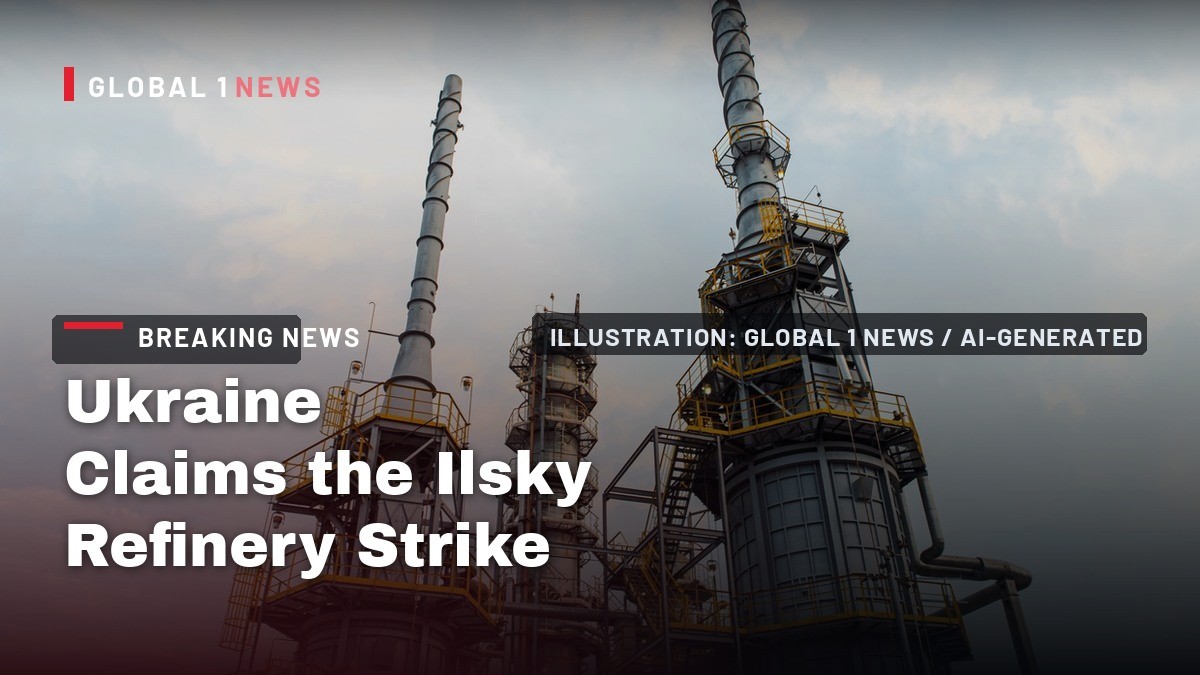
Ukraine's Unmanned Systems Forces named the units that flew the strike on the Ilsky oil refinery in Krasnodar Krai, hours after residents reported explosions and air-defence fire around midnight. The same night, Russian drones killed and injured people in Kyiv, and Moscow's Defence Ministry claimed 645 Ukrainian drones downed. The two halves of that night are now one story.
Ukraine Claims the Ilsky Refinery Strike as Russia's Refining Crisis Deepens
Krasnodar Krai, Russia - 26 September 2026 - The O.A. Shamar Ilsky Oil Refinery sits about 50 kilometres southwest of Krasnodar, with six primary crude-processing units and roughly 6.6 million metric tons of annual capacity.
The Fire at Ilsky
Residents began reporting explosions and Russian air-defence activity around midnight, according to the monitoring project ASTRA, and reports of an air-raid alert appeared only about two hours later. ASTRA said its analysis of eyewitness footage showed the fire was at the Ilsky refinery - the O.A. Shamar plant in the settlement of Ilsky, in Seversky District, about 50 kilometres from Krasnodar, as Ukrainska Pravda reported. The monitoring resource Exilenova+ published videos and photographs from eyewitnesses, the defence outlet militarnyi reported. The plant is one of the leading oil-refining facilities in southern Russia, with six primary crude-processing units and roughly 6.6 million metric tons of annual capacity. Its products are used, among other purposes, to supply Russian forces, and crude reaches it through Russia's Transneft pipeline system, according to the New Voice of Ukraine. The Kyiv Independent said it could not independently verify that the Ilsky refinery was one of the facilities struck, or assess the extent of the damage. No Russian official has confirmed a damage assessment.
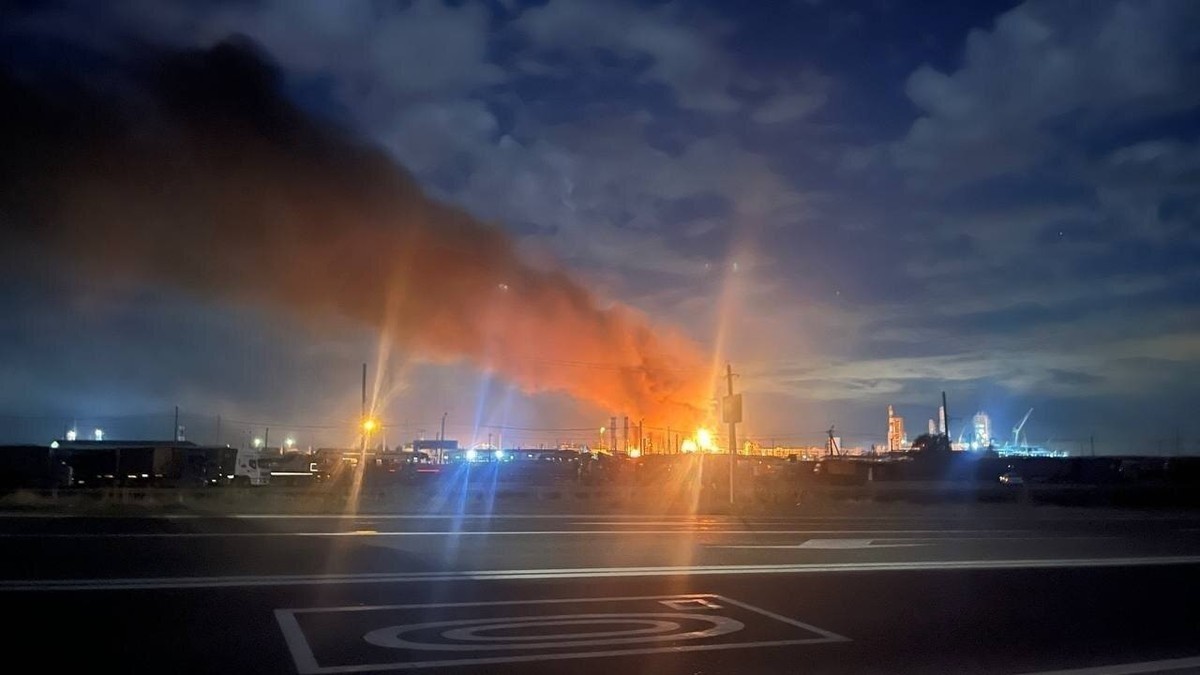
Ukraine Names the Units That Flew It
Ukraine's Unmanned Systems Forces said the strike on the oil refinery, about 400 kilometres from where the Ukrainian drones were launched, was carried out by the 1st Separate Center of the Unmanned Systems Forces and the 414th Separate Brigade, known as "Madyar's Birds", along with other Ukrainian units, the Kyiv Independent reported. The same outlet carried the story under a headline reading "Ukraine strikes Russia's Ilsky oil refinery, causing fire, General Staff confirms." The attribution came later than the first reports: NV noted that as of the morning of Sept. 26, Ukrainian authorities had not publicly claimed responsibility. The two units are not new to this target set. On 21 September, the Unmanned Systems Forces said the Yaroslavl refinery, more than 700 kilometres from the Ukrainian border, was hit by operators of the same centre and brigade, with aircraft and helicopters also struck at Rostov airfield, ArmyInform reported. On 20 September, the night of the Moscow election, Madyar's Birds and units from the SBS, SSO, SBU and GUR hit the Moscow Oil Refinery, damaging the AVT-6 primary processing unit, the integrated oil processing unit and the isomerization unit, according to the unit's own account carried by ukrainetoday.org.
What the Governor Confirmed, and What He Did Not
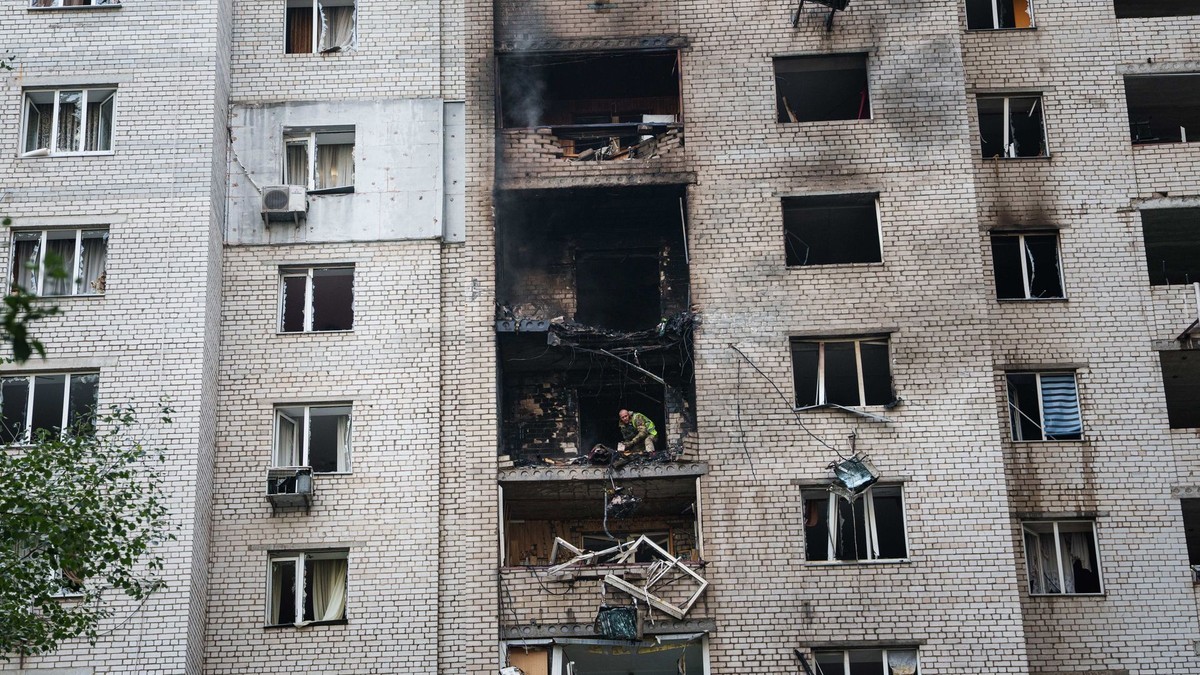
Krasnodar Krai Governor Veniamin Kondratyev confirmed that drones attacked the Seversky district, where the refinery is located. He said there were fatalities and one person seriously injured, that drone debris damaged a residential building, and that fires had broken out at two enterprises in the district. He did not identify the two facilities. He did not say whether the casualties were connected to the Ilsky refinery, and he did not give a number for the fatalities. NV reported that the seriously injured person was hospitalised. No casualty figure has been publicly tied to the refinery itself. The Kyiv Post reported that the governor said two businesses were struck without specifying which ones, and that Ukraine had not commented at the time of its publication. A district-level confirmation, with no facility-level attribution and no toll, is what stands on the record.
The Seventeenth Time
The Ilsky refinery had been struck at least 16 times by June 2026, according to ASTRA. The outlet has also reported attacks on the plant on 10 July, 2 June, 17 February and 1 January, as well as strikes in 2023, 2024 and 2025, NV reported. On 8 August 2026, Russian authorities said falling drone debris caused a fire at the refinery and injured six people; the blaze was later extinguished. Ukraine's General Staff confirmed a previous strike on the same plant on 2 June, saying a fire followed the attack and that the extent of the damage was being assessed. Ilsky is not the plant that proves the campaign works. bne IntelliNews points to Slavneft-YANOS in Yaroslavl - a refinery hit eight times this year that kept running - as the counter-example to the plants that stopped. Repeated strikes do not automatically stop a refinery, and the ones that have stopped took months of them. What Ilsky shows is the frequency: a southern Russian plant that keeps being entered on the list.
The Other Half of the Same Night
Russian forces attacked Ukraine overnight on Sept. 26 with 173 Shahed-type drones, 50 of them jet-powered, Ukraine's Air Force said, according to the Kyiv Independent. Russian attacks on Kyiv killed at least five people, including a 14-year-old boy, and injured 43, with drone strikes continuing into daytime; 25 people, including two children, were hospitalised, Mayor Vitali Klitschko said. The figures moved during the day. The Kyiv Independent's own front-page listing for the same story read "kill 7 ... injure 59", and its most-popular module carried the same numbers. Ukrinform later reported: "Death toll in Russian drone attacks on Kyiv rises to seven, 46 injured." A drone hit an office building during the daytime attack. At least 16 garage units were destroyed in Kyiv's Obolonskyi district, Ukrinform reported.
Moscow's Own Count
Russia's Ministry of Defense claimed 645 Ukrainian fixed-wing drones had been intercepted and destroyed over Russian regions and the waters of the Black Sea and the Sea of Azov overnight into Saturday, TASS reported, carrying the ministry statement. The ministry listed the Astrakhan, Belgorod, Bryansk, Voronezh, Kaluga, Kursk, Oryol, Rostov, Ryazan, Tula and Moscow regions, Krasnodar Krai, Stavropol Krai and the Republic of Crimea. It is a Russian Defence Ministry claim, not a count of targets hit. The night before, 24-25 September, the same ministry said it intercepted 592 Ukrainian drones, according to bne IntelliNews and mezha. Moscow Mayor Sergei Sobyanin claimed Russian defences had downed more than 1,600 drones since 19 September, including 450 approaching Moscow, the Kyiv Independent and battlepolicy.com reported. Putin claimed more than 1,600 Ukrainian drones entered the Moscow area on the night of 19-20 September - the largest reported Ukrainian drone assault on the Russian capital since the start of the full-scale invasion.
From Fires to Fuel Shortages
Reuters reported on 15 September that three of Russia's six primary diesel-producing facilities had shut down or significantly scaled back output in September. The six - Kirishi in Leningrad Oblast, NORSI in Nizhny Novgorod, Taneco in Tatarstan, the Omsk refinery in Siberia, the Perm refinery and Volgograd - account for half of Russia's total diesel production. Kirishi has shut down completely, while NORSI and Volgograd are running at about a quarter of capacity. The Moscow Oil Refinery, state-controlled Gazprom Neft's plant in Kapotnya, supplies roughly 40% of Moscow's fuel. Three industry sources told Reuters that fires at both of its primary crude-distillation units halted processing, that repairs could take weeks, and that its fuel has not appeared on the St Petersburg Exchange since 21 September. Robert "Madyar" Brovdi, commander of Ukraine's drone forces, said on 23 September that drones had engaged 412 energy facilities and neutralised 38 critical targets, according to 112.ua.
Forty-Five Percent, and What It Really Counts
Ukraine's General Staff said on 21 September that the long-range campaign had knocked out 45% of Russia's total refining capacity, a day after the strikes on the Moscow Oil Refinery. The figure is contested. A battlepolicy.com analysis reads it as "best read as a cumulative ledger of plants and units hit, not a snapshot of capacity offline that day", noting that the General Staff gave no plant-by-plant calculation. Fire Point, a Ukrainian drone maker, puts capacity offline at about 14% after the Moscow strike. bne IntelliNews records plants halted or cut in September at about 108.5 million tonnes a year, or 33% of Russia's 327 million tonnes nameplate total, and up to 49% if earlier halts still hold. Deputy Prime Minister Alexander Novak said in early September that about 10% of capacity was under repair. The International Energy Agency put the strike rate at one Russian refinery every three days on average in the first eight months of 2026. Crude runs fell to 3.8 million barrels a day in June, down 30% year on year and the lowest since May 2004, with gasoline output down about 20%, Oil & Gas Journal reported. Repair times run from one to two weeks for a simple crude unit to six to eight months for complex ones, and the damaged Moscow plant is reportedly offline until early 2027.
The Kremlin's Answer: Let Business Defend Itself
On 26 August 2026, Vladimir Putin signed a decree that could place privately owned businesses under state management if the government judges they have failed to protect themselves against Ukrainian drone attacks, Euronews and NDTV reported. The edict covers energy, transport, logistics and any facility deemed critical to national security, and can be imposed by presidential instruction alone. Political analyst Abbas Gallyamov called it "hybrid nationalisation": "After they have bombed you, the state will come to you and, accusing you of failing to protect yourself from the attack, will seize it from you." A representative of one of Russia's largest agribusiness holdings, speaking anonymously to Forbes Russia, called it "a tool that will allow large assets to be taken away from business under the pretext of non-compliance with security measures." The direction of travel is older than the decree: on 27 May 2026 The Guardian reported that the Russian government had told top banks, including its federal reserve, to shoot down Ukrainian drones themselves. RBC, citing sources in and close to the Defence Ministry, reported that a mechanism had been set up for businesses to buy weapons and equipment to protect themselves, PBS NewsHour and the Associated Press reported.
The Talks That Keep Slipping
Putin said on 25 September that Russia had been prepared to return to talks after the Sept. 18-20 State Duma election, but claimed the attacks had changed Moscow's calculus. "After everything they have done, we will think carefully about what we need to do," he said, adding that any decision would rest on what he described as Russia's interests, the Kyiv Independent reported. French President Emmanuel Macron claimed the Kremlin had been waiting to hold elections before launching another wave of mobilisation, citing "several signs" Russia is preparing to mobilise 300,000 people. Leaders are due to discuss a mutual pause on energy and Black Sea strikes at the UN General Assembly - a pause that would give Russia the weeks it needs to repair Moscow, Yaroslavl, Syzran and Saratov. Ukraine has said it is ready for an energy ceasefire. The Kremlin has not accepted.
By Jessica Ali, Staff Writer
This article was produced with AI-assisted research and editorial support. Sources: Kyiv Independent, Ukrainska Pravda, the New Voice of Ukraine, Ukrinform, the Kyiv Post, ASTRA, Exilenova+, militarnyi, TASS, bne IntelliNews, mezha, Euronews, NDTV, PBS NewsHour and the Associated Press, The Guardian, 112.ua, ArmyInform, ukrainetoday.org, battlepolicy.com, Reuters, Oil & Gas Journal, and Forbes Russia.
What's Your Reaction?
 Like
0
Like
0
 Dislike
0
Dislike
0
 Love
0
Love
0
 Funny
0
Funny
0
 Wow
0
Wow
0
 Sad
0
Sad
0
 Angry
0
Angry
0

Editor-in-Chief at Global1.News. Atlanta-based journalist who cuts through the BS and tells it like it is. Lead anchor, host, and the voice you hear when the spin stops and the truth starts.













Comments (0)