
Hyderabad Spice Scam: Industrial Dyes in 25,300 kg Seized, Health Alert Issued
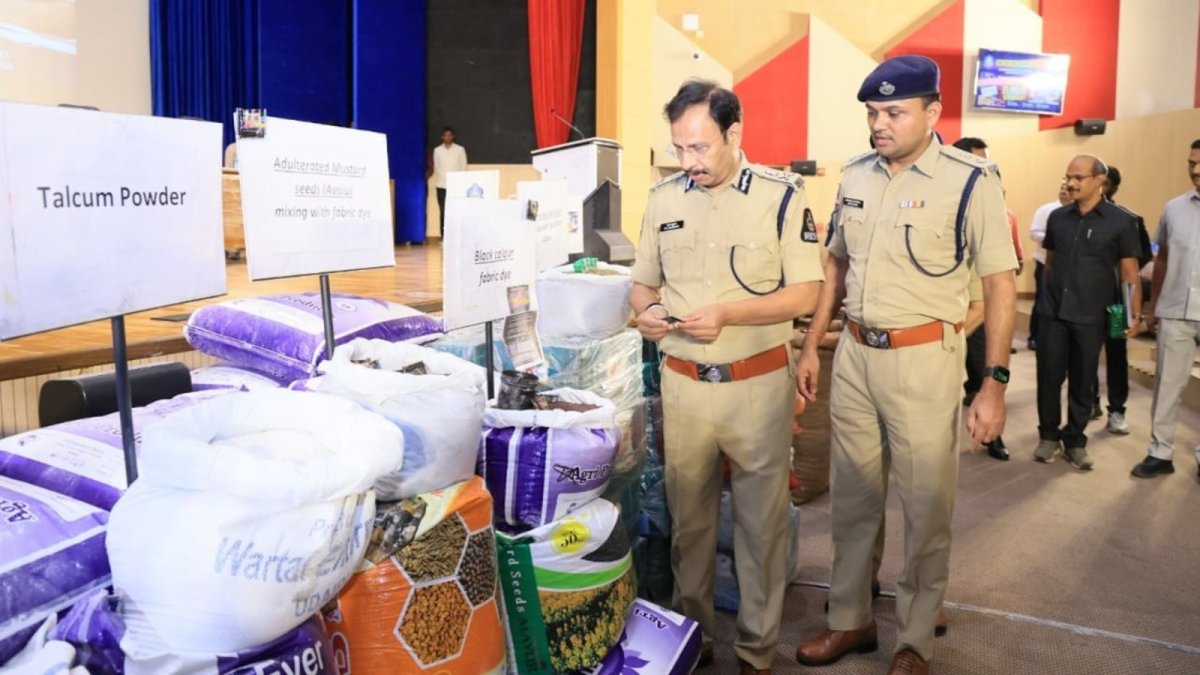
The Hyderabad Food Adulteration Surveillance Team (H-FAST) and Greater Hyderabad Municipal Corporation (GHMC) Food Safety officials have seized 25,300 kg of adulterated spices across 13 establishments in a single operation, marking one of the largest anti-adulteration drives in the city in recent years. Industrial-grade dyes labelled “poisonous” and “non-edible,” along with talcum powder and rice bran oil, were used to mask poor-quality stock.
The Hyderabad Food Adulteration Surveillance Team (H-FAST) and Greater Hyderabad Municipal Corporation (GHMC) Food Safety officials have seized 25,300 kg of adulterated spices across 13 establishments in a single operation, marking one of the largest anti-adulteration drives in the city in recent years. Industrial-grade dyes labelled “poisonous” and “non-edible,” along with talcum powder and rice bran oil, were used to mask poor-quality stock. This incident directly tests India’s Food Safety and Standards Act, 2006, and the enforcement capacity of state-level regulators in a country where spices form a daily dietary staple for hundreds of millions.
Hyderabad Spice Scam Exposes Gaps in Food Safety Enforcement: 25,300 kg Seized, Three Arrested
Hyderabad, Telangana – August 7, 2026 — The Hyderabad Food Adulteration Surveillance Team (H-FAST), operating under the Hyderabad Police Commissioner’s Task Force, conducted coordinated raids with GHMC Food Safety officials on 13 spice trading and processing units. Officers recovered 7,920 kg of ajwain, 6,700 kg of jeera, 550 kg of cloves, 2,280 kg of shajeera, 540 kg of saunf, 4,960 kg of mustard, and 2,350 kg of jeera dust, all found contaminated with prohibited substances.
Operation Scale and Itemised Seizures — Analytical Framing
H-FAST teams also confiscated more than 89 tonnes of raw materials including mustard, fenugreek and sesame seeds, plus synthetic dyes, shining powder, rice bran oil and three rolling machines. Three individuals — Rahul Bhati from Katedan, Vishal Panwar and Dulichand Kachhawa from Begum Bazaar — were arrested. Two cases were registered at Mailardevpally Police Station and one at Balapur Police Station under the Food Safety and Standards Act, 2006, and relevant sections of the Bharatiya Nyaya Sanhita, including provisions for attempt to commit culpable homicide invoked by Police Commissioner VC Sajjanar.
The itemised seizures of 7,920 kg ajwain, 6,700 kg jeera and 4,960 kg mustard alongside 89 tonnes of raw seeds point to an integrated adulteration supply chain that begins with bulk procurement of substandard or rejected lots. Processing units equipped with rolling machines can rapidly blend these materials with talcum powder, rice bran oil and non-edible dyes, converting low-value stock into apparently premium products for onward sale. The presence of three rolling machines in the raided facilities indicates capacity for sustained, high-volume output rather than sporadic small-scale activity.
Spice processing units of this type typically source rejected stock from mandis and exporters who cull material failing quality thresholds, then route it through informal networks to avoid detection. The 89 tonnes of raw mustard, fenugreek and sesame seeds recovered represent the upstream reservoir that feeds such operations, allowing repeated cycles of adulteration before finished spices reach retail. Coordinated raids across 13 establishments in one operation reveal how these units are interlinked, sharing raw material flows and distribution channels that extend beyond single-city boundaries.
Recovery of synthetic dyes and shining powder in industrial quantities further illustrates the deliberate masking of poor-grade inputs, with rolling machines enabling uniform coating that conceals visual defects. This scale of seizure in a single drive underscores the economic incentive structure: low-cost rejected seeds can be transformed into saleable inventory with minimal capital beyond the machinery and prohibited additives already on site.
What This Means for India
India exported spices worth approximately USD 4.6 billion in FY 2024-25 according to Spices Board data. Telangana serves as a major domestic trading and consumption hub. When enforcement teams recover 25,300 kg of contaminated stock in one city, the episode raises questions about upstream quality control across the national supply chain. Citizens who purchase spices from unregulated vendors face elevated risks of liver and kidney damage, gastrointestinal disorders, stomach ulcers, allergic reactions and long-term cancer exposure from industrial dyes never intended for human consumption.
The USD 4.6 billion export figure for FY 2024-25 positions spices as a significant contributor to India’s agricultural trade balance, yet domestic enforcement lapses in hubs such as Telangana directly affect the reputation of the entire sector. When 25,300 kg of adulterated material is seized in a single operation, it signals that quality-control failures at the processing stage can propagate through both export-oriented and local supply chains, eroding buyer confidence at multiple levels.
Telangana’s role as a trading hub amplifies the reach of any adulterated batch, because spices processed or warehoused in the state move onward to other regions for retail and further manufacturing. Repeated detections of industrial dyes therefore undermine consumer trust not only in local markets but also in the broader assurance that Indian spices meet uniform safety standards regardless of purchase point.
Domestic consumption patterns rely on affordable, widely available spices for daily cooking across income groups, making any systemic adulteration a public-health issue that extends beyond individual households to the integrity of the national food supply. The gap between the documented export value and the volume of contaminated stock recovered locally highlights the need for tighter linkage between export certification and domestic market oversight.
Health Risks and Regulatory Framework — Deeper Analysis
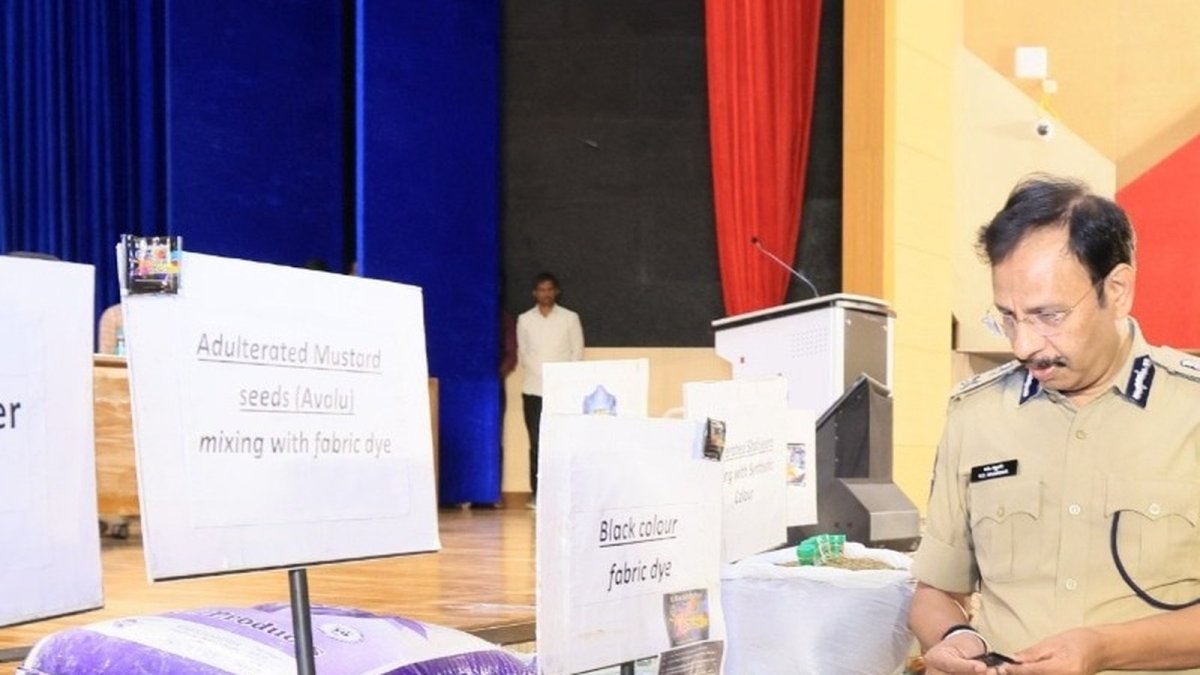
Lab tests confirmed that synthetic orange, red and green colours exceeded all permissible limits set by the Food Safety and Standards Authority of India (FSSAI). Rejected mustard seeds were mixed with talcum powder and oils; cloves and shajeera were coated with fabric dyes; ajwain was blended with industrial dyes. These practices violate the Food Safety and Standards Act, 2006, on misbranding and deceptive manufacturing. Since its formation roughly 140 days ago in March 2026, H-FAST has already conducted 659 raids, registered 202 FIRs and seized 246 tonnes of adulterated food products, with 232 cases referred to GHMC Food Safety authorities. The current seizure adds significantly to that cumulative total.
Industrial dyes such as metanil yellow and sudan dyes, when ingested regularly through contaminated spices, place cumulative stress on the liver and kidneys as these organs attempt to metabolise and excrete compounds never designed for human consumption. Over time, such exposure is associated with elevated risks of cellular damage that can progress to chronic organ impairment or increase the probability of certain cancers, particularly when non-edible colours accumulate in fatty tissues.
The Food Safety and Standards Act, 2006, empowers FSSAI to set permissible colour limits and mandates state authorities to enforce labelling and additive rules; any exceedance of these limits constitutes misbranding and deceptive manufacturing, both explicitly prohibited under the statute. Application of Bharatiya Nyaya Sanhita provisions, including those addressing attempt to commit culpable homicide, reflects the recognition that deliberate introduction of substances known to endanger life elevates the offence beyond routine regulatory violation.
Enforcement data from H-FAST’s first 140 days—659 raids yielding 246 tonnes seized—demonstrate that violations of FSSAI colour standards occur at a frequency requiring sustained, multi-agency intervention rather than isolated checks. The current operation’s recovery of dyes in industrial quantities alongside 25,300 kg of finished spices illustrates how regulatory gaps at the processing stage translate into direct population-level exposure risks.
Expert Perspectives and Enforcement Trends
Police Commissioner VC Sajjanar confirmed that provisions relating to culpable homicide were applied because the adulterants posed clear danger to life. FSSAI standards require state food safety commissioners to enforce labelling and additive rules, yet repeated detections of non-edible dyes in spices indicate persistent gaps between central standards and ground-level compliance. Earlier incidents, including the 2024 MDH/Everest ethylene oxide controversy, already damaged India’s global spice reputation; domestic lapses compound the challenge for both exporters and everyday consumers who rely on affordable, safe staples.
The 140-day H-FAST record of 659 raids, 202 FIRs and 246 tonnes seized, with 232 cases referred onward, establishes a quantitative baseline for the frequency of adulteration incidents across Hyderabad’s food supply. This pace of enforcement activity suggests that adulteration networks operate with sufficient scale and geographic spread to justify dedicated task-force resources rather than periodic inspections alone.
The 2024 MDH/Everest ethylene oxide episode illustrated how regulatory findings in one market segment can trigger export restrictions and reputational damage; domestic seizures of industrial dyes in spices add a parallel layer of concern for both international buyers and Indian consumers who expect consistent safety standards. Enforcement patterns emerging from H-FAST operations indicate that adulteration is not confined to isolated actors but reflects structural vulnerabilities in sourcing, processing and distribution that require coordinated upstream interventions.
Application of culpable-homicide provisions by Police Commissioner VC Sajjanar signals a shift toward treating severe food adulteration as a threat to life, aligning criminal law with the public-health mandate of the Food Safety and Standards Act, 2006. Continued referral of 232 cases to GHMC Food Safety authorities within the first 140 days underscores the volume of evidence generated by targeted raids and the necessity of sustained inter-agency coordination to convert seizures into lasting compliance improvements.
The Bottom Line
The 25,300 kg seizure and the arrest of three individuals demonstrate that targeted local operations can disrupt adulteration networks, yet the 246 tonnes already seized by H-FAST since March 2026 show the scale of the problem. Indian citizens, patients managing chronic conditions, and taxpayers funding enforcement agencies all bear the cost when substandard spices reach markets. Authorities continue to urge purchases only from licensed vendors and reporting of suspected cases through Dial 100 or the H-FAST helpline. Sustained investment in testing infrastructure and stricter upstream traceability remain essential if India is to protect both public health and its USD 4.6 billion spice export sector.
Consumers can reduce immediate exposure by verifying vendor licences displayed at point of sale and reporting any suspected adulteration directly through Dial 100 or the dedicated H-FAST helpline, thereby contributing real-time intelligence to ongoing surveillance efforts. Such reporting channels link individual vigilance to the larger enforcement apparatus that has already conducted 659 raids in 140 days.
Reforms required include expanded laboratory testing capacity at state level, mandatory traceability systems that track raw material from mandi to retail pack, and penalty structures calibrated to the volume and toxicity of adulterants recovered. Without these measures, the cumulative 246 tonnes seized by H-FAST will likely represent only a fraction of the adulterated stock still circulating.
Forward-looking enforcement in Indian cities will depend on integrating H-FAST-style task forces with FSSAI’s central standards and real-time data sharing across states, converting episodic raids into a continuous deterrent that safeguards both domestic consumers and the USD 4.6 billion export sector from repeated reputational and health shocks.
— By Dr. Raj Patel, Staff Writer
This article was produced with AI-assisted research and editorial support. Reporting is based on sources cited in the article.
What's Your Reaction?
 Like
0
Like
0
 Dislike
0
Dislike
0
 Love
0
Love
0
 Funny
0
Funny
0
 Wow
0
Wow
0
 Sad
0
Sad
0
 Angry
0
Angry
0

India/South Asia Correspondent at Global1.News. Analytical voice with a background in science and health journalism. Based in New Delhi, covering Indian politics, education, healthcare, technology, and policy. Breaks down complex data into clear, actionable reporting.















Comments (0)