
PM Modi Inaugurates Param Pragya AI Supercomputer at IIT Delhi
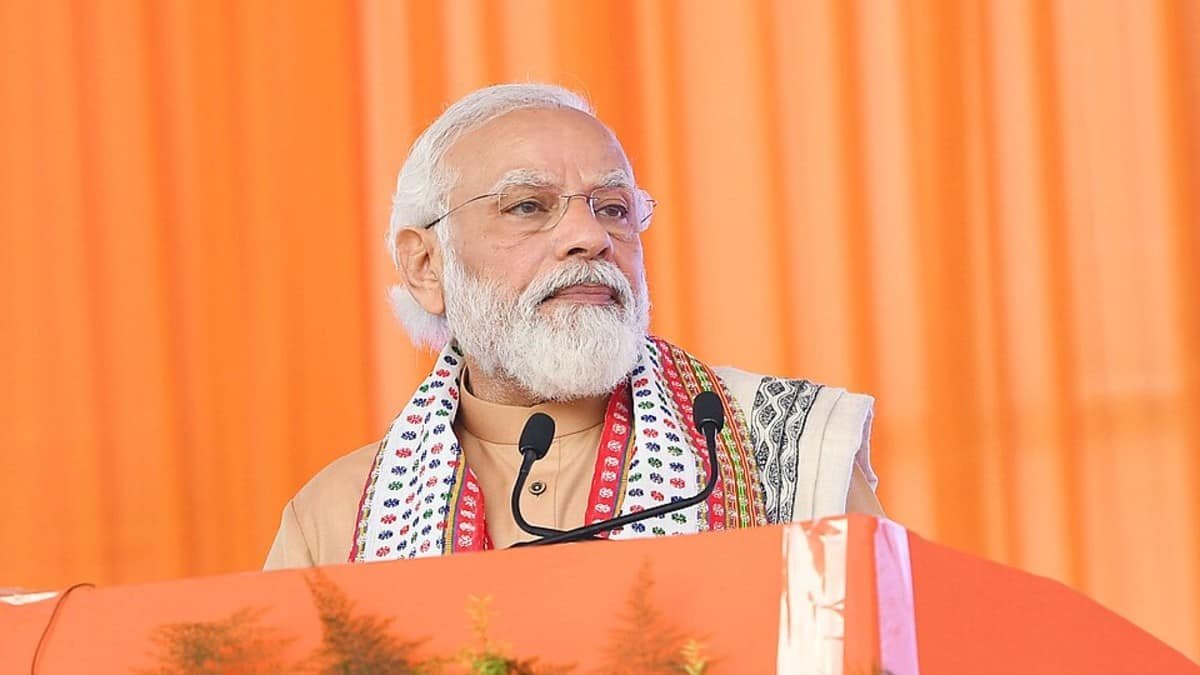
Prime Minister Narendra Modi will inaugurate the Param Pragya AI-powered supercomputing facility at IIT Delhi's Sonipat campus during the institute's 57th Convocation on August 8, 2026, marking a major leap in India's domestic high-performance computing capabilities.
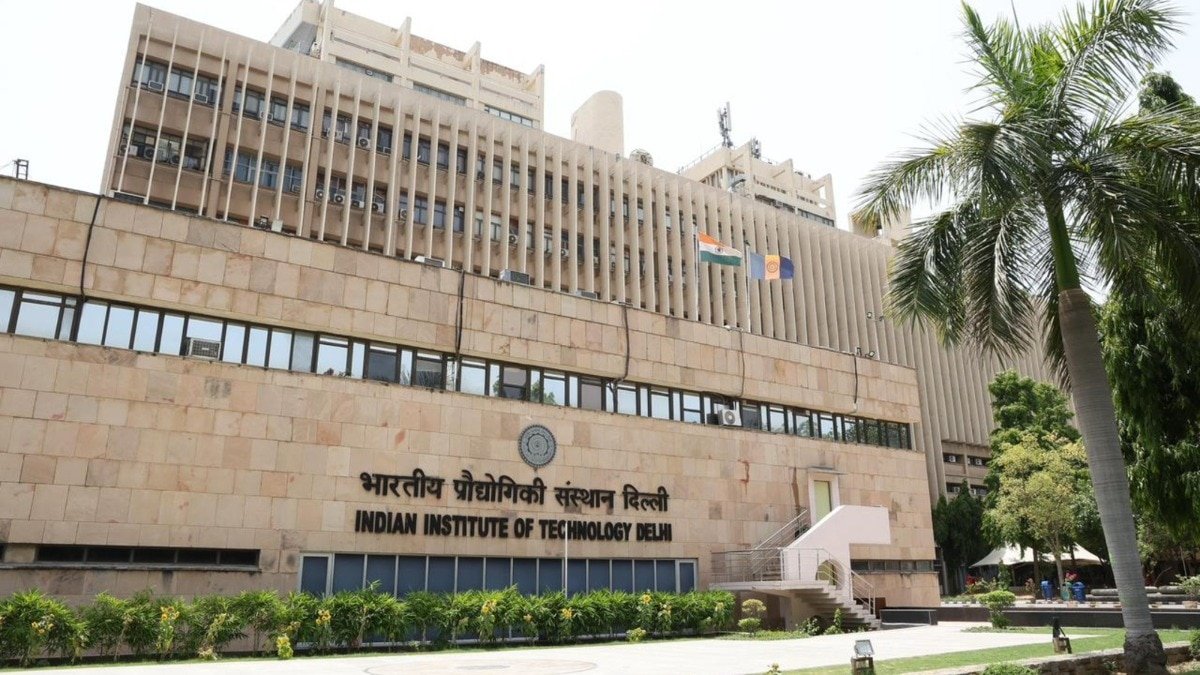
Prime Minister Narendra Modi will inaugurate the Param Pragya AI-powered supercomputing facility at IIT Delhi's Sonipat campus during the institute's 57th Convocation on August 8, 2026, marking a major leap in India's domestic high-performance computing capabilities. The event coincides with the graduation of 3,036 students, including 587 PhD scholars, underscoring the convergence of advanced infrastructure and a growing research workforce. This development directly supports national missions in AI and self-reliance by placing sovereign compute resources on an IIT campus for the first time.
PM Modi Launches Param Pragya at IIT Delhi Convocation
New Delhi – August 8, 2026 — Prime Minister Narendra Modi will serve as chief guest at the 57th Convocation of IIT Delhi on August 8, 2026, at 11 am, where he will address 3,036 graduating students and inaugurate the Param Pragya AI-powered supercomputing facility at the institute's Sonipat campus.
Convocation Details and Graduate Cohort
The ceremony marks a significant academic milestone for IIT Delhi, with the Prime Minister presenting the President's Gold Medal, Director's Gold Medal, Shankar Dayal Sharma Gold Medal, and Perfect Ten Gold Medals. The graduating class includes 587 PhD scholars, around 1,200 BTech students, and 1,200 master's students, representing nearly 10% growth over the previous year. Among the PhD cohort are 245 women scholars. Degrees will also go to the first batches of the Bachelor of Design, MA in Culture, Society and Thought, and Executive MBA programmes.
Param Pragya Supercomputing Facility
Modi will inaugurate Param Pragya, a state-of-the-art AI-powered high-performance computing system at the Sonipat campus. The PMO statement emphasises that the facility will boost capabilities in AI, data science, advanced computing, and interdisciplinary research while supporting computationally intensive projects. This aligns directly with the National Supercomputing Mission and the IndiaAI mission, strengthening India's push for technological self-reliance under Atmanirbhar Bharat. Placing such a facility directly at an IIT signals a move toward sovereign AI infrastructure that reduces reliance on overseas compute clusters.
The inauguration of Param Pragya at IIT Delhi's Sonipat campus marks a decisive step in decentralising high-performance computing under the National Supercomputing Mission. By placing an AI-focused facility directly on an IIT campus, researchers gain immediate access for training large language models, running data science experiments, computational biology simulations and climate modelling workloads that previously required overseas clusters or lengthy queue times at central facilities such as AIRAWAT's 13.17 petaflops installation. This proximity accelerates iteration cycles for the 587 PhD scholars graduating this year, directly supporting the institute's 676 ongoing sponsored projects and the Rs 700 crore in new research funding secured in the past year.
Sovereign AI infrastructure of this kind ensures sensitive datasets in healthcare collaborations with AIIMS and tribal-language translation tools like Adivani remain within national jurisdiction, aligning with Atmanirbhar Bharat priorities. The Sonipat location further extends IIT Delhi's physical footprint, complementing the Rs 100 crore RK Puram renovations and enabling scalable infrastructure for the first batches of Bachelor of Design and Executive MBA programmes while reducing dependence on foreign compute resources.
India's Supercomputing Trajectory
Param Pragya builds on C-DAC's PARAM lineage that began with PARAM 8000 in 1990, India's first giga-scale supercomputer, followed by PARAM 10000 in 1998 and PARAM Padma in 2002. PARAM Siddhi-AI achieved 63rd place on the TOP500 list in late 2020 with 4.6 PFLOPS Rmax. AIRAWAT at C-DAC Pune now delivers 13.17 petaflops peak performance on NVIDIA DGX A100 architecture and ranks 75th globally. The National Supercomputing Mission has coordinated successive PARAM deployments across academic and research institutions, scaling India's capabilities from the 1990 PARAM 8000 giga-scale system through PARAM 10000 and PARAM Padma to PARAM Siddhi-AI's ranking. Param Pragya's inauguration at IIT Delhi's Sonipat campus extends this lineage by delivering dedicated AI-focused infrastructure that supports computationally intensive research in data science and emerging technologies. This progression under NSM demonstrates how targeted investments have built distributed high-performance resources rather than isolated national machines. For Indian researchers, access to on-campus supercomputing addresses a persistent bottleneck where limited domestic capacity has constrained large-scale model training and interdisciplinary experiments in artificial intelligence.
IIT Delhi Research Milestones
In the past year, IIT Delhi executed 676 sponsored research projects and secured new funding exceeding Rs 700 crore. Researchers developed energy-efficient AI platforms, collaborated with AIIMS on healthcare technologies, and filed multiple patents. The institute showcased Adivani, India's first AI-based translation tool for tribal languages, and launched a joint MSc in Biological Sciences and PhD programme with Sorbonne University. Fourteen foreign-funded projects and Rs 100 crore renovation works at the RK Puram campus further expand capacity. Adivani directly advances digital inclusion by enabling preservation and accessibility of linguistic heritage that has historically remained outside mainstream digital platforms. The tool's showcase at an AI summit underscores IIT Delhi's role in developing language technologies tailored to India's diverse population. Collaboration with AIIMS on healthcare technologies translates these AI platforms into clinical applications, generating patents that bridge computational research with practical medical outcomes. The joint MSc in Biological Sciences and PhD programme with Sorbonne University strengthens science diplomacy by creating structured pathways for cross-border academic exchange. Together, these international partnerships integrate Indian institutions into global research networks, while the Rs 100 crore campus renovation pipeline expands domestic capacity for the coming decade.
Education and Globalisation Efforts
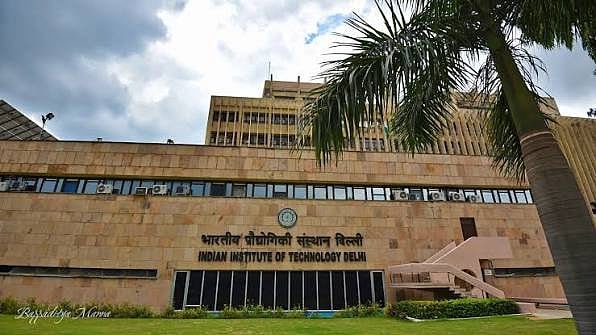
International student enrolment rose 45%, bringing 162 students from more than 13 countries. Under its Alliance Scheme, IIT Delhi signed MoUs with 21 institutions, including 18 NITs, to enable student and faculty exchanges. Pre-doctoral and small grant fellowships were introduced, while mental well-being programmes including yoga sessions and counselling support were expanded at the RK Puram and main campuses. The 3,036 graduating cohort, including 587 PhD scholars of whom 245 are women, signals a strengthening research workforce pipeline that feeds directly into India's AI and technology priorities.
The 45% rise in international enrolment, now 162 students from over 13 countries, signals India's strengthening position as a destination for advanced technical education amid shifting global study-abroad patterns. Combined with MoUs signed with 21 institutions including 18 NITs under the Alliance Scheme, this growth creates structured pathways for student and faculty exchange that knit the national technical education network more tightly together, allowing smaller NIT cohorts to tap IIT Delhi's research ecosystem without relocating to metro campuses.
Introduction of pre-doctoral fellowships provides an explicit on-ramp for master's students into research careers, complementing the nearly 10% increase in PhD numbers this year. Simultaneously, expanded mental-well-being infrastructure — yoga sessions, stress-management programmes and counselling — addresses the documented pressures of India's competitive examination culture, sustaining the productivity of a cohort that includes 245 women PhD scholars and supporting the 100-plus faculty members already listed in Stanford's top 2% scientists ranking.
Startup and Innovation Ecosystem
The institute has incubated nearly 500 startups, with 39 currently active in its incubation park holding a combined valuation of around Rs 6,000 crore and attracting nearly Rs 15 crore in recent investments. These figures reflect scalable pathways from laboratory prototypes to commercial entities that contribute to India's broader technology ambitions in AI and advanced computing. A collaboration with the National Sports University in Manipur supports sports technology development, while 100-plus faculty members appear on Stanford University's top 2% scientists list — a research quality foundation that underpins the entire ecosystem. Incubation hubs at IITs serve as critical nodes in the national startup network by concentrating talent, infrastructure and early-stage capital that together support job creation and technology diffusion across sectors.
Implications for Indian Students, Researchers and National Strategy
Param Pragya and the expanded research pipeline directly benefit Indian students and researchers by providing access to advanced AI infrastructure previously concentrated abroad. Taxpayers gain from accelerated domestic innovation that supports Atmanirbhar Bharat goals in semiconductors, healthcare and language technologies. The event underscores how IIT Delhi's output feeds into the broader IndiaAI mission, positioning the country to compete globally while retaining talent through enhanced facilities and industry linkages. Access to Param Pragya's AI-powered supercomputing at an IIT campus offers students and researchers domestic infrastructure previously available mainly through foreign collaborations, encouraging more to pursue research careers rather than immediate industry placements. This compute availability supports talent retention by linking advanced facilities with industry linkages and pre-doctoral fellowships introduced at the institute. Institutions like IIT Delhi anchor the ambition to become an AI manufacturing and research hub by aligning expanded research output, including 45% growth in international student enrolment, with national missions in semiconductors, healthcare and language technologies under the Atmanirbhar Bharat framework.
— By Dr. Raj Patel, Staff Writer
This article was produced with AI-assisted research and editorial support. Reporting is based on sources cited in the article.
What's Your Reaction?
 Like
0
Like
0
 Dislike
0
Dislike
0
 Love
0
Love
0
 Funny
0
Funny
0
 Wow
0
Wow
0
 Sad
0
Sad
0
 Angry
0
Angry
0

India/South Asia Correspondent at Global1.News. Analytical voice with a background in science and health journalism. Based in New Delhi, covering Indian politics, education, healthcare, technology, and policy. Breaks down complex data into clear, actionable reporting.














Comments (0)