
Hurricane Lala’s Devastating Toll on Hawaii: 2 Dead, 100 Homes Lost, and a State Bracing for More
The Big Island is cut off, the death toll is rising, and the full scale of Hurricane Lala’s wrath is only now coming into focus. As utility crews battle to restore power to over 100,000 customers and search teams comb through debris in the Ka'u district, officials are warning that the worst may not
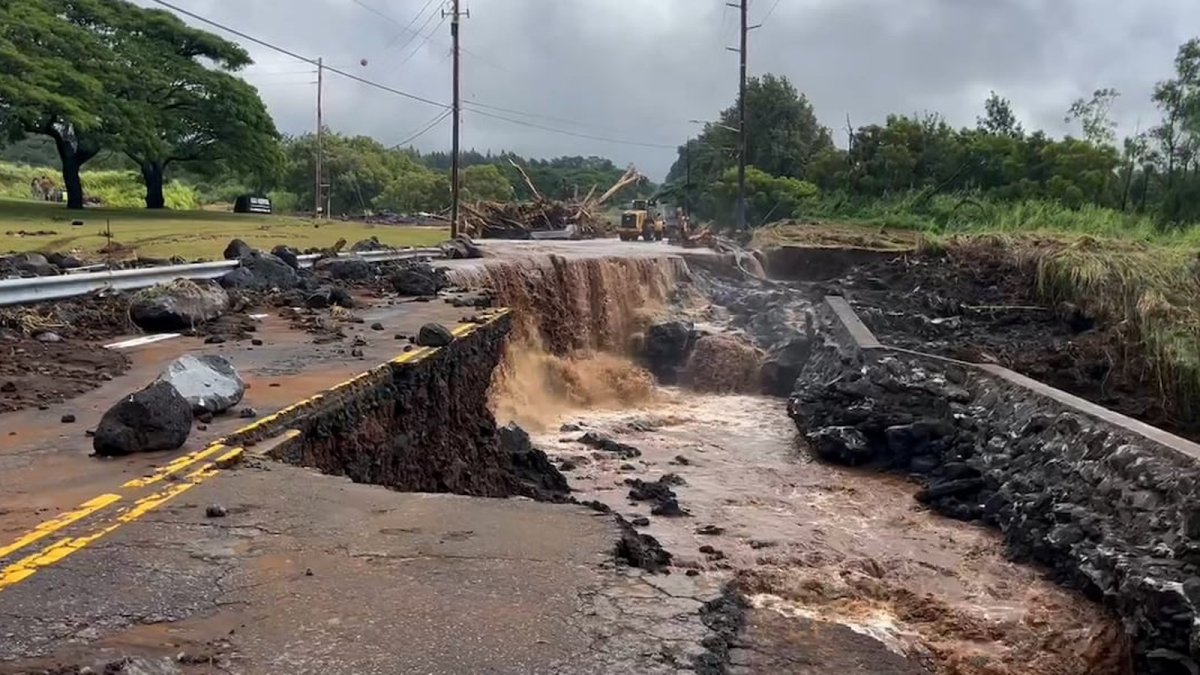
The Big Island is cut off, the death toll is rising, and the full scale of Hurricane Lala’s wrath is only now coming into focus. As utility crews battle to restore power to over 100,000 customers and search teams comb through debris in the Ka'u district, officials are warning that the worst may not be over, with the storm threatening to re-strengthen as it moves toward Oahu.
Hurricane Lala Leaves Trail of Destruction in Hawaii: Two Confirmed Dead, 100 Homes Lost, and a State on Edge as Storm Threatens to Reintensify
Honolulu, Hawaii – August 18, 2026 — Article continues...
The silence in Naalehu is broken only by the hum of generators and the distant whine of chainsaws. It is a sound of survival, but also of mourning. Hurricane Lala, a tempest that never technically made landfall but wreaked havoc like few storms in recorded history, has left a scar across the Hawaiian archipelago. We are learning this morning that the storm has claimed at least two lives, destroyed or damaged hundreds of homes, and severed entire communities from the rest of the island. This is not a drill, and this is not over. As Governor Josh Green and Hawaii County Mayor Kimo Alameda confirmed the first fatality on Monday, the state is now facing the grim reality of a long and difficult recovery, all while a weakened but still dangerous Lala churns toward the most populated islands in the chain.
The First Confirmed Fatality and a Community in Mourning
The human cost of Hurricane Lala became tragically concrete on Monday afternoon. Governor Josh Green and Hawaii County Mayor Kimo Alameda held a joint press conference to announce that a 90-year-old woman was found dead in Naalehu, a community on the southern tip of the Big Island that bore the brunt of the storm’s fury. The woman, whose family is being notified, was reported missing from her neighborhood in the immediate aftermath of the storm. Initial access to the area was difficult, hampering search efforts.
County fire crews and police officers conducted exhaustive searches of the Naalehu and Waiohinu regions throughout the weekend. It was not until Monday afternoon that specialized search and extraction teams from the Hawaii National Guard were deployed to assist in the grim task. Temporary Fire Chief Daniel Volpe detailed the tragic discovery to reporters, stating, "She was located, police responded right away. One of our ambulances did respond. Unfortunately, though, by the time she was located, she was found deceased." Volpe added, "We don't believe it is anything other than a result of the disaster at this time, but we will investigate it fully."
This heartbreaking news follows the confirmation of a second storm-related death: a person killed in a car accident on Saturday evening, as cited by Governor Green. The governor’s office has not released further details on that incident. As the state mourns, Hawaii Emergency Management Director Randy Collins is sounding a stark warning about the days ahead. "Many casualties often happen after the disaster," Collins said. "As people are cleaning things up, they're working with heavy equipment, chainsaws, generators. They're working around downed power lines and so forth. That's when the casualties come." His words are a chilling reminder that the danger is far from over.
Catastrophic Damage in Ka'u: "Complete and Utter Devastation"
The aerial assessment conducted by Mayor Kimo Alameda and Civil Defense Acting Administrator Darryl Oliveira has painted a picture of absolute ruin in the Ka'u district. The preliminary survey reveals that approximately 100 homes have been damaged or completely swept away on the Big Island alone. The infrastructure that binds the community together has been shattered, with six bridges either damaged or destroyed. Mayor Alameda did not mince words when describing the scene, calling it "devastation" in the Ka'u district. Earlier, he had warned of the worst, stating, "Several occupied homes may have been swept off their foundations, and based on that, civil defense has initiated a search and rescue mission."
The town of Pahala, home to an estimated 2,000 to 2,500 residents, has been left landlocked. The region’s only hospital, Ka'u Hospital, is now inaccessible after the retaining wall fronting the facility shifted and broke in two. The main artery, Highway 11, has collapsed in Pahala after floodwaters from Pa'au'au Stream burst through a rock wall, rushing onto the roadway and causing it to give way. There is no way in, and no way out. US Representative Jeanne Kapela, who represents the area, described the scene with raw emotion: "It's complete and utter devastation. Families have lost their homes; the entire community is impacted."
Deborah Funai Brown, a lifelong Pahala resident, stood amidst the piles of debris, rocks, and fallen trees that now line the town’s streets, and described the scene as "horrific" and "catastrophic." She noted that floodwaters had forged their own course through the town, carving new channels where streets once stood. For residents like Brown, the anxiety of being cut off from essential services and supplies is palpable. She remarked that it had been roughly 25 years since the community had seen destruction on this scale. The emotional and physical toll is immense, and the road to recovery will be long and arduous.
Power Grid Crippled: 111,000 in the Dark
As the sun rose on Monday, one of the most critical challenges facing the state became clear: a massive power outage. According to Hawaiian Electric, more than 111,000 customers were without electricity, a figure that CNN reported as high as 126,000. On the Big Island, nearly 70% of the island was plunged into darkness. The scale of the damage to the electrical grid is staggering, with downed high-voltage transmission lines presenting a complex and dangerous repair challenge.
Approximately 500 utility workers, including teams from the neighbor islands, are working around the clock to restore power. However, officials are cautioning that rural areas, particularly those with the most severe infrastructure damage, may face outages extending for weeks. The priority is to restore power to hospitals, shelters, and water pumping stations, but the sheer volume of work is immense. For residents in the hardest-hit areas, the lack of power means no refrigeration, no communication, and no air conditioning in the sweltering Hawaiian heat, compounding the misery of the disaster.
Dramatic Rescues Amidst Raging Floodwaters
Amidst the devastation, there are stories of incredible bravery and narrow escapes. In Wai'ōhinu, one person was rescued after being swept away along with her home. The woman had gone outside to reach her vehicle when floodwaters, rising with terrifying speed, pinned her and swept her approximately 100 yards from her property. She was found on Sunday morning with moderate injuries, awake and alert, and was taken by ground ambulance to a hospital. The two homes in the area were heavily damaged, with one completely washed off its foundation.
In another harrowing incident, an ambulance crew consisting of a paramedic and an EMT found themselves in mortal danger. Rising floodwaters pushed their vehicle against a guardrail, trapping them inside. With water levels continuing to climb, the crew made the decision to climb onto the roof of the ambulance. They were eventually evacuated by a National Guard high-water vehicle. No injuries were reported. Temporary Fire Chief Daniel Volpe praised the rescue, emphasizing the priority on human life: "The ambulance is there. Vehicles can be replaced. The people are what we're most concerned about."
Hawaii Island police also played a critical role in rescue efforts, helping three people who were stranded overnight without food or water around Kawa Flats on Highway 11. Officers used excavators to dig through the debris and reach the stranded individuals, a testament to the all-hands-on-deck approach to this disaster.
Unprecedented Rainfall and a "Particularly Dangerous Situation"
The sheer volume of water that fell on the Big Island is almost incomprehensible. The National Weather Service issued a Flash Flood Emergency for Naalehu, calling it a "Particularly Dangerous Situation" as rainfall rates approached an astonishing 5 inches per hour. The rain totals over the 48-hour period from August 14-16 are staggering. Laupahoehoe recorded a mind-boggling 43.54 inches of rain, with over 31 inches falling in a single 24-hour period. Nahuku saw more than 35 inches, and even Hilo airport recorded approximately 10 inches. AccuWeather reported that 48-hour totals topped 3.5 feet in some areas.
The storm’s impact was not limited to the coast. On the summit of Maunakea, winds howled at 140 mph, and snow fell, with wind chills dropping into the 20s. On Oahu, the Manoa stream recorded a record flow, triggering a county flash flood warning on Sunday. The Honolulu Fire Department responded to over 600 weather-related calls by noon on Sunday, including 147 downed trees, roofs blown off, downed power lines, and one swimmer rescue. The storm’s reach was vast, and its power was indiscriminate.
Shelters, Stranded Travelers, and a State on Pause
The human displacement caused by Lala is significant. At the height of the storm on Saturday, approximately 130 people fled their homes and sought refuge in shelters. As of Monday, 41 occupants remained at the Naalehu shelter, 13 at the Pahala shelter, and 15 others were sheltered with neighbors. These are the displaced, the ones who have lost everything or whose homes are no longer safe to occupy.
The storm has also thrown travel plans into chaos. Governor Green reported that over 190 flights in and out of Hawaii have been postponed, stranding tourists and residents alike. The economic impact of this disruption will be felt for months. The state is effectively on pause, with the focus squarely on emergency response and recovery. The closure of major highways, particularly the collapsed section of Highway 11, has created a logistical nightmare for the delivery of food, water, and medical supplies to the affected areas.
The Climate Context: A Warming Ocean and a Historic El Niño
Hurricane Lala did not form in a vacuum. It is the product of a rapidly changing climate and a powerful El Niño that is brewing in the central equatorial Pacific. NOAA is predicting a 69% chance of a "historic event that would exceed the strength of previous El Niño events dating back to 1950" when it peaks between October and December of this year. This El Niño is a major driver of Pacific hurricane activity, and its influence is already being felt.
Sea surface temperatures ahead of Lala were approximately 3 degrees Fahrenheit warmer than average. Scientists are clear that warmer waters and a changing climate likely increased the rainfall intensity of this storm, supercharging the atmosphere with moisture. This is not a hypothetical future scenario; it is happening now. The last major hurricane (Category 3 or higher) to hit Hawaii was Iniki in 1992, which killed at least six people and caused billions of dollars in damage. The last landfalling tropical system was Tropical Storm Olivia in 2018 on Maui. Hurricane Fausto menaced Hawaii in July of this year before weakening and skirting north. Lala is a stark reminder that Hawaii is not immune to the most severe impacts of a warming world.
What You Can Do Right Now
This is a moment for action, not despair. The people of Ka'u and the Big Island need our help. The road to recovery will be measured in years, not weeks. Here is what you can do today. First, donate to established Hawaii relief funds. Organizations like the Hawaii Community Foundation and the American Red Cross are on the ground and need financial support to provide immediate aid. Your dollars go directly to food, water, shelter, and long-term rebuilding efforts.
Second, check on your kupuna, your elders. They are the most vulnerable in this crisis, often isolated and without power. A simple phone call or a visit to ensure they have water, food, and medication can save a life. Third, and this is critical, prepare for the rest of the El Niño season. This storm is a warning shot. The 2026 hurricane season is far from over. Review your own emergency plan, stock your supplies, and know your evacuation routes. Do not wait until the next siren sounds. The time to prepare is now. We will get through this, but we will only get through it together.
This article was produced with AI-assisted research and editorial support. Sources: Hawaii News Now, CNN, The Guardian, The Weather Company, National Hurricane Center. By Jessica Ali, Staff WriterWhat's Your Reaction?
 Like
0
Like
0
 Dislike
0
Dislike
0
 Love
0
Love
0
 Funny
0
Funny
0
 Wow
0
Wow
0
 Sad
0
Sad
0
 Angry
0
Angry
0

Editor-in-Chief at Global1.News. Atlanta-based journalist who cuts through the BS and tells it like it is. Lead anchor, host, and the voice you hear when the spin stops and the truth starts.














Comments (0)