
Cameroon Lionesses Parade WAFCON Trophy: Yaounde Erupts in Celebration
Cameroon's Indomitable Lionesses paraded the WAFCON trophy through Yaounde after beating Malawi 3-0 in the final. The historic first title ends decades of heartbreak, earns a $2 million prize and books a place at the 2027 Women's World Cup in Brazil.
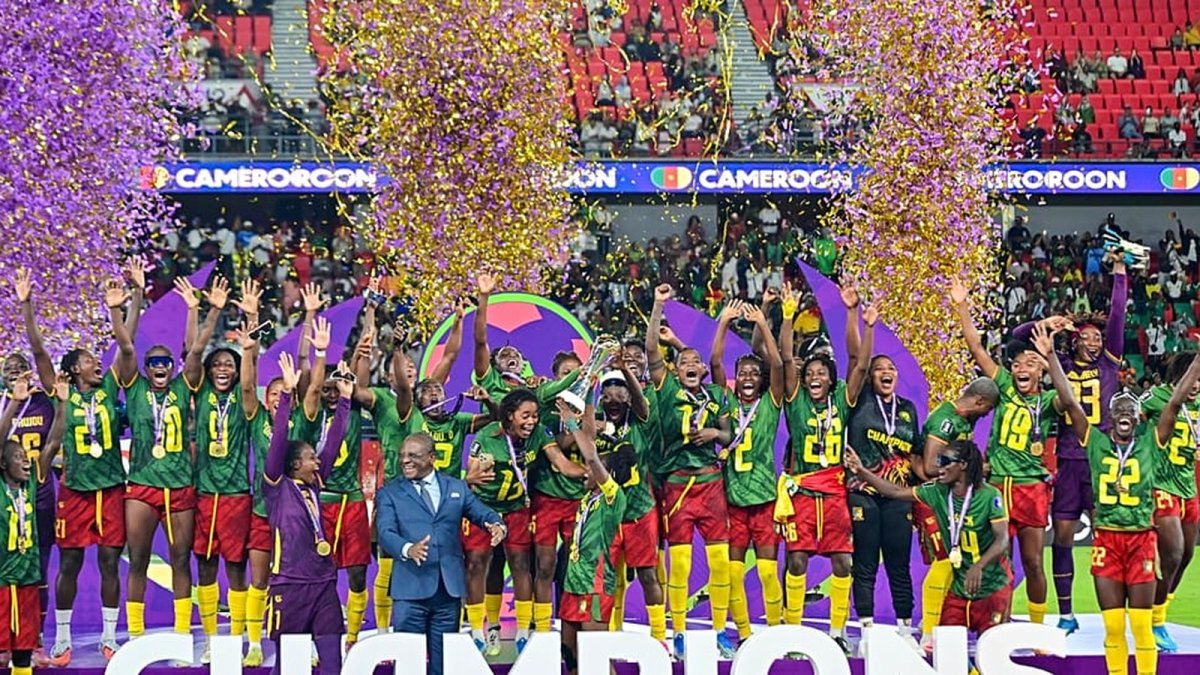
The Indomitable Lionesses of Cameroon have done it. After decades of heartbreak, three lost finals, and a tournament they nearly weren't even part of, they are champions of Africa. The streets of Yaounde erupted on Monday as the team touched down with the WAFCON trophy, ending years of continental hurt and rewriting the history books of African women's football in the process.
Cameroon's Lionesses Crowned Queens of Africa — A Nation Erupts in Joy After Historic WAFCON Triumph
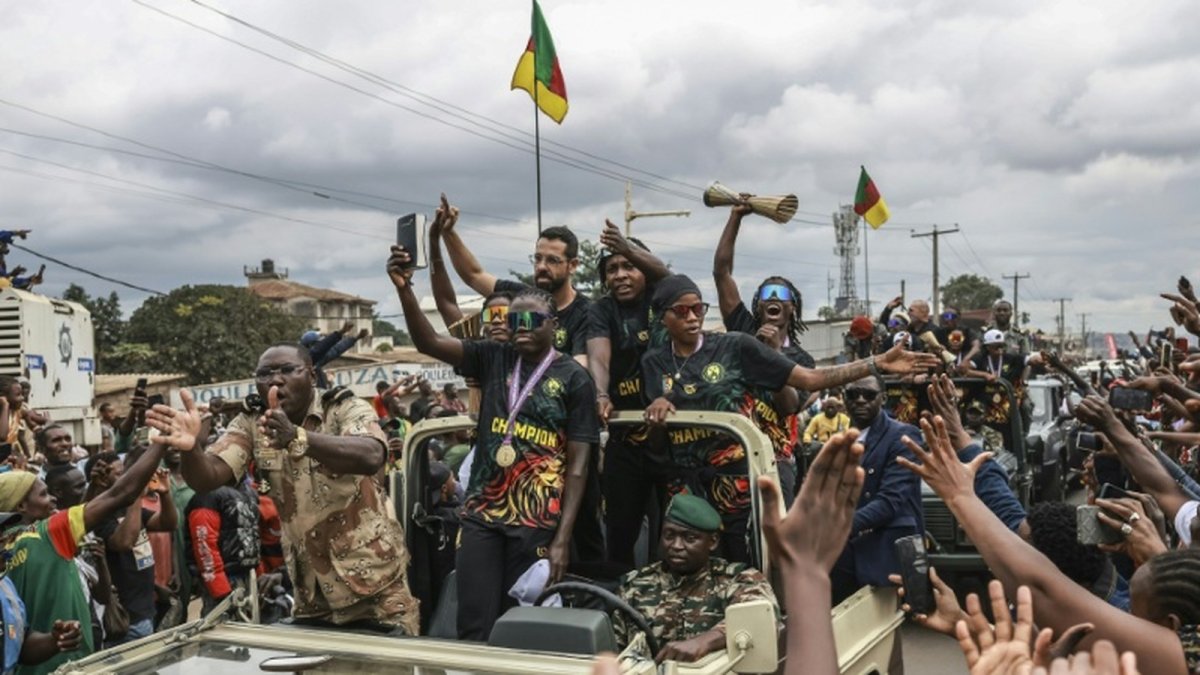
Yaounde, Cameroon — The roar began on the tarmac and never stopped. Hundreds of supporters surged past barriers at Yaounde's international airport on Monday afternoon as the Indomitable Lionesses stepped off the plane, the gleaming WAFCON trophy held high. Within hours, thousands had lined the capital's streets, dancing, singing, and waving Cameroonian flags as the team paraded through the city in an open-top vehicle, the weight of a nation's dreams finally lifted.
Section 1 — The Homecoming in Yaounde
This was not just a welcome. It was a release of decades of pent-up emotion. Lyndsay Tango, waiting at the airport with tears in her eyes, captured the mood perfectly: "We've been watching the games since the first game. We have seen them transform into butterflies. We are so happy, really. Long live the Lionesses!" The transformation she speaks of is literal — a team that grew in confidence through the group stage, then turned into an unstoppable force in the knockouts, conceding zero goals on the way to glory.
For many, this victory transcends sport. Arlette Missilisem, a young Cameroonian woman among the thousands celebrating, put it into sharp focus: "It validates what a woman can achieve beyond simply watching the children and staying at home. She can go beyond that. So this feeling is truly a joy for me as a young Cameroonian woman." This is the power of women's sport in 2026 — it changes perceptions, breaks barriers, and inspires a generation that has rarely seen itself reflected in continental champions.
The celebrations continued late into Sunday night and well into Monday, with music blaring from car horns and flags draped from balconies in several districts of Yaounde. Aline Mvogo, a 63-year-old housewife who made the trip to the airport, offered a veteran's perspective: "At the start of this competition, the girls were calm, and their mindset carried them to victory. They deserved it." Florence Manga, a 26-year-old communications student, admitted she was a late convert: "At the beginning of the tournament, I wasn't really following it. Little by little, I started to watch. I'm proud; I saw a strong and determined team." That is the story of this run — it captured a nation one game at a time.
Section 2 — How the Title Was Won
The final itself was a masterclass in clinical efficiency. At the Moulay Al Hassan Stadium in Rabat, Morocco, on Sunday, August 16, Cameroon dismantled Malawi 3-0. Marie Ngah Manga opened the scoring in the 20th minute, Naomi Ndjoah Eto doubled the lead just ten minutes later, and Ngah Manga completed her brace in first-half stoppage time (45+3). By the interval, the game was effectively over — Cameroon led 3-0 and never looked back.
But the final was merely the culmination of a campaign that defied logic. Placed in Group D, Cameroon beat Mali 2-1 and Ghana 1-0, becoming the first team to clinch knockout qualification after just two matches. A draw with Cape Verde secured top spot with seven points. Then came the real tests. In the quarter-finals, they faced defending champions Nigeria and won 1-0. In the semi-finals, against hosts Morocco in front of a hostile crowd, they ground out a 0-0 draw over 120 minutes and won 3-1 on penalties. The defence was impenetrable — not a single goal conceded in the entire knockout phase.
Section 3 — A Decade of Heartbreak Erased
To understand the magnitude of this achievement, you must understand the pain that preceded it. Cameroon had lost three previous WAFCON finals — in 2004, 2014, and 2016 — all to Nigeria. Worse, they had not scored a single goal in any of those finals. Three times they reached the summit; three times they were denied. The label of "eternal bridesmaids" hung heavy over this squad.
What makes this triumph even more remarkable is that the Lionesses weren't even supposed to be at this tournament. They had failed to qualify, but when CAF expanded the competition from 12 to 16 teams in November 2025, Cameroon were handed a second chance based on their FIFA ranking. They took that lifeline and turned it into a trophy. In doing so, they became just the fourth nation to win WAFCON — joining Nigeria, Equatorial Guinea, and South Africa — and only the third African country, after Nigeria and South Africa, to have won both the men's AFCON and the Women's AFCON. The Indomitable Lionesses are now, truly, indomitable.
Section 4 — The Stars of the Campaign
Every champion needs heroes, and this squad produced them at every turn. Monique Ngock, the 21-year-old midfielder, was named Player of the Tournament — a remarkable achievement for someone who also wore the captain's armband in the semi-final against Morocco after Colette Ndzana was substituted. Her energy, vision, and composure under pressure defined Cameroon's midfield dominance.
Between the posts, Michaely Bihina, 22, was nothing short of sensational. She made nine saves against Nigeria, saved three penalties in the shootout against Morocco — the first Cameroonian goalkeeper to do so in WAFCON history — and finished the knockout rounds with 12 saves without conceding a single goal. The Golden Glove was hers, and it was richly deserved. Marie Ngah Manga, with her brace in the final, took home Player of the Final honours, while head coach Valentine Nguele — appointed just two months before the tournament — orchestrated the entire miracle. A former Cameroon international who played at the 2006 WAFCON and earned her CAF A Licence in 2023, Nguele has written her name into Cameroonian sporting folklore.
Section 5 — South African Perspective
For South African fans, this tournament carried a bittersweet edge. Banyana Banyana, the defending champions, were eliminated by hosts Morocco in the quarter-finals — the very same Morocco side Cameroon then beat on penalties in the semis. There is no shame in losing to the eventual champions, but the manner of Banyana's exit will sting. They were the standard-bearers, the team that broke through in 2022, and their early departure leaves questions about the squad's evolution ahead of the 2027 World Cup.
Yet there is also pride in the broader African story. CAF President Patrice Motsepe, a South African, was on hand in Rabat to present medals alongside FIFA President Gianni Infantino, and the final was broadcast live in more than 85 countries, including via SuperSport for South African audiences. The growth of women's football on the continent is a South African success story too — Banyana's 2022 triumph paved the way, and now Cameroon has followed. The transformation of African women's football, from afterthought to continental spectacle, mirrors the transformation agenda that South African sport has championed for decades. When Cameroon's Lionesses lift the trophy, they lift the entire continent — and that includes Mzansi.
Section 6 — What's Next: Brazil 2027
The immediate reward is qualification for the 2027 FIFA Women's World Cup in Brazil, with all four WAFCON semi-finalists earning direct spots. For Cameroon, this will be a return to the global stage, and they will arrive with genuine belief rather than hope. The financial windfall is equally significant: champions receive US$2 million — double the previous winners' prize — with the total prize pool up 67% from $3.475 million to $5.8 million. Runners-up Malawi take home $750,000, and all 16 participating teams received $150,000 in participation funding. This is the economics of a sport finally being taken seriously.
For South African fans, the message is clear: the gap is closing, and the competition is rising. Banyana Banyana will need to regroup, rebuild, and respond. The 2027 World Cup in Brazil will feature an African contingent that is stronger, deeper, and more dangerous than ever before. Cameroon's triumph is not just their own — it is a warning shot to the rest of the continent that the old order has changed.
As the celebrations in Yaounde continue and the Lionesses savour their moment, the rest of Africa — and the world — has been put on notice. Cameroon are champions of Africa, and they are only just getting started. For South African football, the challenge is now clear: keep up, or be left behind.
By Dante Williams, Staff Writer
This article was produced with AI-assisted research and editorial support. Reporting is based on sources cited in the article.
What's Your Reaction?
 Like
0
Like
0
 Dislike
0
Dislike
0
 Love
0
Love
0
 Funny
0
Funny
0
 Wow
0
Wow
0
 Sad
0
Sad
0
 Angry
0
Angry
0

Breaking News and Investigations Correspondent at Global1.News. Based in London, covering global breaking news, security, and investigative stories. Known for digging deeper and connecting the dots across continents.










Comments (0)