
Houthi Strikes on Two Saudi Airports Kill Three and Wound 36
Attacks on Abha International Airport and Riyadh's King Khalid International Airport on 6-7 October 2026 killed three people and wounded 36, Saudi Arabia's General Authority of Civil Aviation says, as the Houthis claim both strikes and Yemen's war escalates.
Attacks on two Saudi airports across two days killed three people and wounded 36 others, the kingdom's civil aviation authority said Wednesday. The strikes hit Abha International Airport near the Yemen border and King Khalid International Airport in Riyadh. The Houthis claimed responsibility for both, while the Saudi-led coalition said it intercepted a ballistic missile aimed at the capital.
Houthi Strikes on Two Saudi Airports Kill Three and Wound 36
Riyadh, Saudi Arabia — Saudi Arabia's civil aviation authority confirmed Wednesday that Abha International Airport and King Khalid International Airport in Riyadh were attacked on 6 and 7 October, leaving three dead and 36 wounded. The Houthis claimed responsibility for both strikes, saying a ballistic missile hit Riyadh and drones and missiles hit Abha. The Saudi-led coalition said it intercepted a missile launched toward the capital and destroyed the launch platform over Sana'a.
Three Dead, Thirty-Six Wounded
Saudi Arabia's General Authority of Civil Aviation said three people were killed and 36 wounded across the two airports. At Abha International Airport, two women died — one a Moroccan resident and one an Algerian resident — and 28 others were wounded, including Saudi citizens and Bangladeshi and Filipino residents. At King Khalid International Airport in Riyadh, one person was killed, a Sudanese national, and eight others were wounded: five Saudi citizens, two Egyptian residents and one Pakistani resident. GACA said the injuries ranged from minor to severe and that the wounded were transferred to hospitals for treatment. The authority said both attacks caused material damage and that relevant authorities were assessing the extent of the damage and implementing safety measures. The casualty figures cover both airports, not any single building or terminal. Agence France-Presse reported that an Egyptian and an Algerian national were killed at Abha airport; the Associated Press and CNN, citing Saudi officials, named the two as Moroccan and Algerian. The reporting does not agree on that point.
What GACA Confirmed, and What It Did Not
GACA's statement confirmed the attacks, the casualties and the material damage. It did not blame any party. That distinction matters. The Saudi aviation authority described what happened on the ground: two airports hit, three dead, 36 wounded, damage under assessment. It stopped short of naming the Houthis as the attacker. The attribution came from elsewhere — from the Houthis themselves, who claimed the strikes, and from the Saudi-led coalition, which said it intercepted a ballistic missile launched toward the Riyadh area. Al Jazeera, citing Saudi civil aviation authorities, reported the attacks as Houthi strikes that killed three civilians and injured 36 others. The Associated Press said it could not independently verify the coalition's account. Saudi officials have disputed Houthi claims before: on 4 October, coalition spokesman al-Malki called a Houthi claim of an attack on an Aramco facility near Riyadh "misleading", Al Jazeera reported. The confirmed record and the claimed record are not the same document.
The Claim From Sanaa
Houthi military spokesman Brig. Gen. Yahya Saree claimed responsibility. He said the group targeted King Khalid International Airport in Riyadh with a ballistic missile, called the strike accurate and said it "led to a disruption of air traffic". He said the Houthis struck Abha airport with a combination of ballistic missiles and drones. Saree also said the group attacked Saudi military positions — the Dagharir camp in Jizan, the Aakifah camp in Asir and the Al-Mawsim camp in Jizan — claiming dozens of casualties among Saudi military personnel and that several weapons depots were set on fire. He said Saudi aircraft conducted 156 airstrikes and missile attacks in the previous 24 hours against targets in Sana'a and the provinces of Taiz, Sa'dah, Al-Jawf, Ma'rib and Amran, and put the cumulative number of Saudi air and missile attacks since the latest escalation at 1,798. He offered no evidence for any of it.
Riyadh's Airport, Hit Twice in a Week
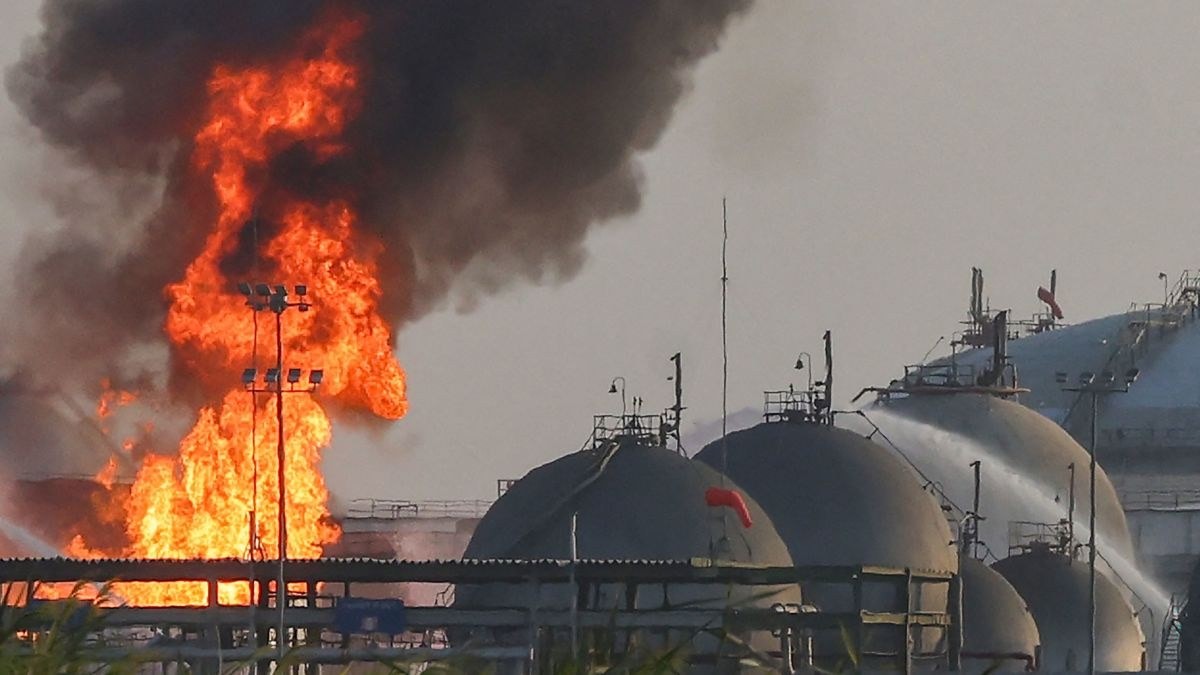
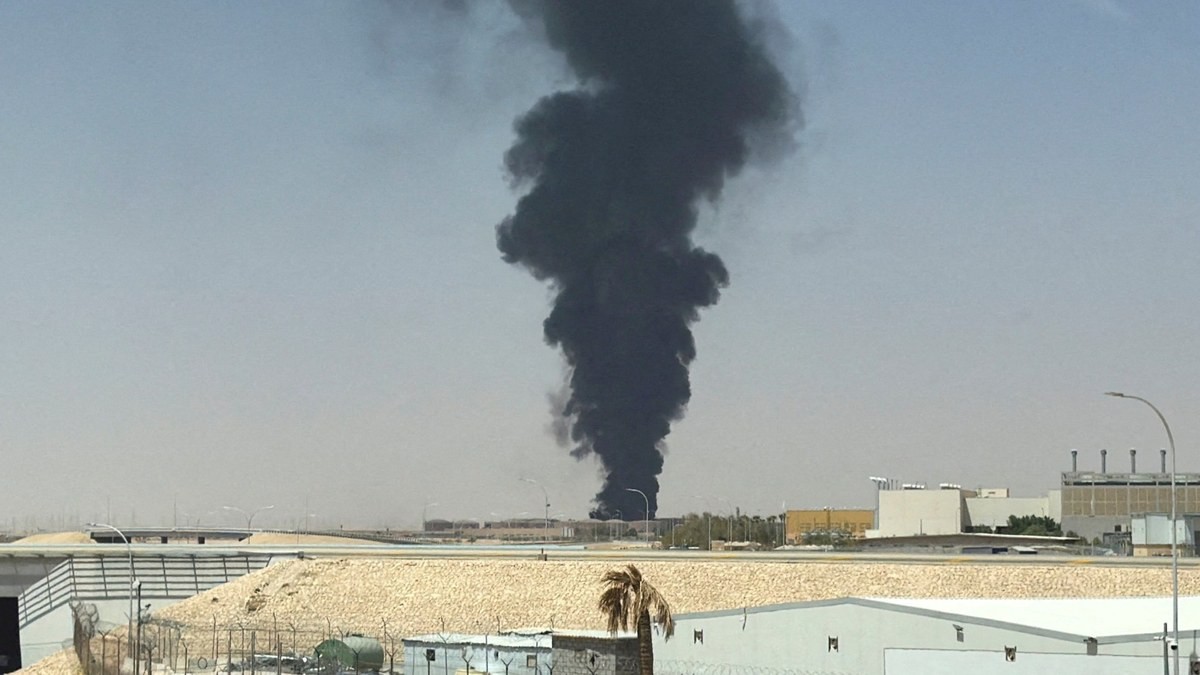
It is the second time this week that the Houthis claimed to have attacked the main airport in the Saudi capital. The Houthis said they struck King Khalid International Airport on the evening of Monday 5 October. At the time, Saudi authorities had not confirmed any hit, damage or disruption there. Then came Wednesday's GACA statement confirming attacks on both Riyadh and Abha. Riyadh is facing frequent temporary closures of its airspace, according to the tracking website Flightradar24. New cage-like fences have been erected around fuel tanks and other equipment of the Saudi state-run Aramco oil company near the capital's airport, according to observations reported by the Associated Press. The kingdom is the world's top oil exporter, and its oil and military assets have been targeted repeatedly in recent days. Earlier in the week, Saudi authorities confirmed attacks on King Abdullah bin Abdulaziz International Airport in Jizan and Najran International Airport, which caused material damage and injured three people.
A Warning to the Airlines
The Houthis' Humanitarian Operations Coordination Center warned "all airlines operating in Saudi Arabia's airspace" that the airspace was unsafe and would "become a theater of military operations". The warning was published by their Saba news agency and reported by TASS. Saree exempted only the airspace over Mecca and Medina. A threat from an armed group does not close any airspace — Saudi authorities decide what is open. Europe's aviation regulator EASA issued Conflict Zone Information Bulletin CZIB-2026-09 on 30 September, valid until 16 November, covering the Jeddah flight information region, the airspace of Saudi Arabia. EASA credits Saudi Arabia with managing its airspace effectively, using tactical deconfliction and emergency air traffic control measures known as ESCAT. EASA says the Houthis sharply increased the frequency and reach of their attacks in September, repeatedly targeting aviation-related infrastructure and showing they can strike as deep as the Riyadh, Tabuk and Yanbu areas. The United States Mission to Saudi Arabia issued a security alert on 7 October warning that continued Houthi attacks could result in flight cancellations, airspace closures and other travel disruptions.
Aden's Runway, and a Flight From Cairo
The Houthis attacked Aden's international airport with ballistic missiles and explosive-laden drones earlier on Wednesday, Yemen's Transport Ministry said. Explosions were heard by an AP journalist in Aden around 2 a.m. The rebels hit a military camp close to the city's airport with ballistic missiles, Saree said. Security authorities in Aden said the Houthis targeted the airport with two missiles, with no casualties. The airport is close to the seat of government. Yemen's Human Rights Ministry said one missile hit close to the runway just before the scheduled landing of a flight from Cairo. Flight 603, operated by Yemen's flagship airline, landed safely in Aden at 3:30 a.m., according to the flight tracking platform FlightAware. The ministry said the missile hit as other passengers were waiting to board their flight to the Saudi coastal city of Jeddah. Yemen's Saba news agency, citing transport authorities, said the Cairo flight was forced to divert to Jeddah in Saudi Arabia.
A Truce Shattered
The escalation has revived Yemen's civil war after a four-year ceasefire. Almost 1,000 people have been killed in the latest fighting, with over 200,000 displaced, according to the United Nations. The World Health Organization said this week that cholera and malnutrition cases are increasing, access to trauma care is more difficult, and some hospitals have shortages of surgical and other supplies. On Wednesday, new clashes in Yemen's west left at least 62 combatants dead, including 37 Houthis, military sources from both camps told AFP. Saba said the Houthis fired a missile at the city of Taiz, held by government forces, wounding five civilians. Taiz resident Al-Fateh al-Eisaei told AFP: "We went out into the street to check on the wounded and saw young civilians who had been hit. The Houthi shell landed in the middle of the street, right in an area crowded with civilians." Displaced families arriving at Al-Salam camp in Aden's Dar Sad district are facing shortages of water, bedding and other basic necessities.
The Oil Stakes and the Red Sea
Saudi Arabia and allied Yemeni forces launched a major ground and air offensive aimed at retaking territory the rebels seized a month ago along Yemen's western Red Sea coast and on the Bab el-Mandeb Strait. Those positions gave the Houthis better surveillance as they pursue a blockade of Saudi-linked shipping. On Monday, officials said forces of the Saudi-led coalition recaptured several key areas around the strait, through which about 12% of global trade transits. Fighting has centred in and around the crucial town of Dhubab, some 54 kilometres (33.5 miles) south of the port city of Mokha that the rebels seized last month, according to both the Houthis and Yemen's internationally recognised government. Two Houthi officials said on Wednesday that the rebels had regained control of key areas of Yemen's southwestern coast, including Dhubab and the nearby village of Al-Jadid, as well as the Bab el-Mandeb strait, after intensified fighting with Saudi-backed coalition forces. A government official denied the claims, which the AP could not independently verify.
Saudi Arabia Strikes Back
Saudi-led coalition spokesman Maj. Gen. Turki al-Malki said coalition air defences intercepted and destroyed a ballistic missile launched toward the Riyadh area, and that the coalition had tracked the missile's launch platform over Sana'a and would take action against it. The coalition said on X that it "destroyed the ballistic missile launch platform" used in the attack on Riyadh. The AP could not independently verify these claims. Al-Malki vowed "full operational support" to Yemeni government forces until the Houthis are "eliminated". The coalition has said 100 fighter jets were providing support. Another stated aim is to liberate Sana'a, Yemen's rebel-controlled capital. France 24 reported Saudi Arabia struck back after the deadly Houthi attacks; the coalition said it hit more than 80 Houthi military sites across Saada, Hodeidah, Jawf and Marib. The offensive began after the rebels seized Turbah town on a main road linking the provincial capital of Taiz, Yemen's third-largest city, with Aden, the seat of the internationally recognised government. Officials have said U.S. support has included intelligence sharing, target identification and planning.
What Comes Next
Yemen's government has announced a goal of retaking all Houthi territory, home to most of the country's population, much of it held for more than a decade. Houthi leader Abdul Malik al-Houthi criticised Saudi Arabia over its support for Yemen's government forces in a speech on Wednesday. He said the rebels were ready to support Palestinians in every way they can in case of "any new round of escalation" with Israel, expressing solidarity with Gaza on the third anniversary of Hamas's 7 October 2023 attack on Israel. The Institute for the Study of War, a Washington-based think tank, wrote in an analysis: "The Houthis believe that they can maximize Saudi economic costs and compel Saudi Arabia to surrender to Houthi demands by striking civilian infrastructure, such as oil facilities and airports." Watch for updated GACA damage assessments, any further coalition strikes on launch sites, and whether airlines adjust routes through Saudi airspace.
By Jessica Ali, Staff Writer
This article was produced with AI-assisted research and editorial support. Sources: Agence France-Presse, The Associated Press, Reuters, CNN, Al Jazeera, Al Bawaba, The Economic Times and Flightradar24.
What's Your Reaction?
 Like
0
Like
0
 Dislike
0
Dislike
0
 Love
0
Love
0
 Funny
0
Funny
0
 Wow
0
Wow
0
 Sad
0
Sad
0
 Angry
0
Angry
0

Editor-in-Chief at Global1.News. Atlanta-based journalist who cuts through the BS and tells it like it is. Lead anchor, host, and the voice you hear when the spin stops and the truth starts.













Comments (0)