
Why is the world turning on Cuba? DR expulsion is the fourth this year
PORT OF SPAIN, Trinidad — The Dominican Republic has ordered the expulsion of nine Cuban diplomatic officials and their families, marking the fourth major diplomatic rupture with Havana in a single year and deepening the isolation of the island nation as it grapples with its worst energy crisis in decades. The decision, announced on Thursday 13 August 2026 by the Dominican Foreign Ministry, gives the officials seven days to leave the country.
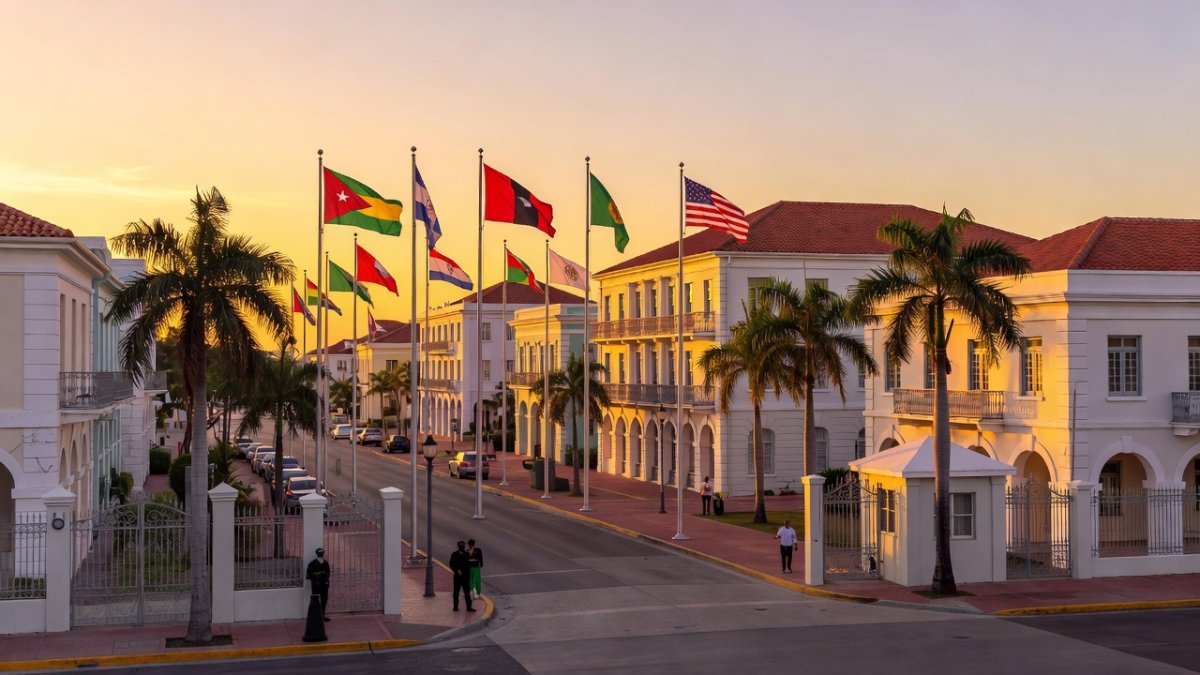
Why is the world turning on Cuba? DR expulsion is the fourth this year
PORT OF SPAIN, Trinidad — The Dominican Republic has ordered the expulsion of nine Cuban diplomatic officials and their families, marking the fourth major diplomatic rupture with Havana in a single year and deepening the isolation of the island nation as it grapples with its worst energy crisis in decades.
The decision, announced on Thursday 13 August 2026 by the Dominican Foreign Ministry, gives the officials seven days to leave the country. Havana insists the figure is ten officials, not nine, and has roundly condemned the measure as an act of "submission" and "subordination" to United States policies against Cuba.
For the Caribbean region, the move raises uncomfortable questions about the growing pressure on small nations to pick sides in an increasingly polarised geopolitical landscape — and about what happens when the weight of Washington's influence comes to bear on neighbours who have long maintained cordial, if complex, relations with Cuba.
A diplomatic rupture without explanation
The Dominican Foreign Ministry offered no reasons for the expulsion, stating only that the action was taken under the terms of the 1961 Vienna Convention on Diplomatic Relations. Officials said the matter would be handled "with due discretion through established diplomatic channels to preserve relations between the two countries," and that no further details would be provided as it involves diplomatic communications. Cuba's Foreign Ministry responded with characteristic defiance, declaring: "There is no reason whatsoever to justify this decision by the Dominican authorities." The statement insisted that Cuban diplomats have always acted in strict adherence to the Vienna Convention and with absolute respect for the laws of the Dominican Republic. The silence from Santo Domingo on the rationale has fuelled speculation across the region. In the absence of an official explanation, observers are left to connect the dots: the expulsion comes just months after the launch of the "Shield of the Americas," a geopolitical and regional security initiative spearheaded by US President Donald Trump at a summit in Doral, Florida, in March 2026.The Shield of the Americas and a region choosing sides
Around 17 countries signed onto the joint security declaration at that March summit. Cuba was conspicuously absent, excluded due to political differences and increased tensions between Washington and Havana. Trinidad and Tobago's Prime Minister Kamla Persad-Bissessar attended the summit, according to Guardian reporting on the event, placing this country firmly within the orbit of the new initiative. The Dominican Republic's expulsion of Cuban diplomats in August is not an isolated incident. It follows a pattern of conservative Latin American governments cutting ties with Havana while proclaiming their alignment with the Trump administration. In March, Ecuador expelled all Cuban diplomatic staff in Quito with a 48-hour deadline after declaring the ambassador persona non grata. That same month, Costa Rica closed its embassy in Havana. In July, the new government of Colombia announced the severance of relations with Cuba and Nicaragua. The Dominican Republic's action in August is therefore the fourth major diplomatic rupture with Cuba this year. For Caribbean nations watching from the sidelines, the message is clear: the political winds have shifted, and small states are being asked to make choices that were once comfortably deferred.Abinader's hardening stance toward Havana
Dominican President Luis Abinader has been tightening his critical stance against Cuba for some time. In a May interview with Infobae, he stated that Cuba is "obviously not a democratic state." In October 2025, the Dominican Republic excluded Cuba from the 10th Summit of the Americas held in Punta Cana, along with Nicaragua and Venezuela. And in July 2026, the DR was among 30 countries that abstained from a UN vote demanding an urgent debate on the US embargo against Cuba. The trajectory is unmistakable. Santo Domingo has moved from diplomatic distance to outright expulsion, and the symbolism will not be lost on other Caribbean Community (CARICOM) member states that have historically maintained relations with Havana. Miguel Mejía, the Dominican Republic's former Minister for Regional Integration Policies, has called the measure extreme, comparing it only to the rupture imposed during the 31-year dictatorship of Rafael Leonidas Trujillo that ended in 1961. Mejía has demanded that the Dominican government explain to the Dominican people the real reasons for the decision — a call that resonates far beyond the borders of the DR.A Caribbean balancing act
For Trinidad and Tobago, the situation presents a delicate diplomatic challenge. Prime Minister Persad-Bissessar's attendance at the Shield of the Americas summit signals a willingness to engage with Washington's regional security agenda. Yet this country has long maintained pragmatic relations with Cuba, including cooperation in health, education, and energy sectors. The question now facing Port of Spain and other CARICOM capitals is whether the Dominican Republic's action sets a precedent. Will other governments in the region come under similar pressure to sever or downgrade their diplomatic presence in Havana? And what does it mean for the principle of non-interference and the peaceful settlement of disputes that CARICOM has long championed? Cuba's Foreign Ministry has framed the expulsion as an act of submission to US policies against Havana, amid an energy and financial blockade that has crippled the island's economy. The timing is particularly poignant: Cuba is simultaneously enduring its worst energy and fuel crisis in decades, with severe shortages affecting daily life across the island. The diplomatic isolation is unfolding against a backdrop of rolling blackouts, long fuel queues, and mounting hardship for ordinary Cubans.Celebration in Washington, concern in the region
Cuban-American congressman Carlos A. Giménez has celebrated the Dominican Republic's decision, calling it a historic gesture of democratic strength. His words reflect the view from Washington, where the Trump administration has made clear its intention to isolate Cuba further and pressure regional allies to follow suit. But in the Caribbean, the mood is more cautious. The expulsion of diplomats is a serious step in international relations, one that carries consequences for trade, travel, and people-to-people ties. The Dominican Republic and Cuba share close cultural and familial connections, and the rupture will be felt by ordinary citizens on both sides of the Windward Passage. There is also the question of regional cohesion. CARICOM has historically maintained a policy of engagement with Cuba, with several member states hosting Cuban medical brigades and cooperating on disaster preparedness and technical assistance. The Dominican Republic is not a CARICOM member, but its actions reverberate throughout the region.What lies ahead for Cuba and the Caribbean
As the seven-day deadline approaches, the expelled Cuban officials and their families will be making arrangements to leave Santo Domingo. The Dominican Foreign Ministry says it will continue to handle the matter with due discretion through established diplomatic channels, but the damage to bilateral relations is already done. For the wider Caribbean, the episode serves as a reminder of the region's vulnerability to external pressures. Small island developing states must navigate a world of competing superpowers, where allegiances are tested and diplomatic relationships can be severed with little warning. The question of why the world is turning on Cuba has no simple answer. It involves the Trump administration's aggressive posture toward Havana, the rise of conservative governments in Latin America, and the broader dynamics of a geopolitical contest that shows no signs of abating. What is clear is that the Caribbean is no longer a bystander in this contest. From the Shield of the Americas summit in Doral to the expulsion of diplomats in Santo Domingo, the region is being drawn into a new alignment — and the choices made in the coming months will shape the political landscape for years to come. For now, Cuba stands more isolated than at any point in recent memory, its diplomats expelled from Quito, its embassy closed in San José, its relations severed with Bogotá, and now its officials ordered out of Santo Domingo. The energy crisis continues to bite, and the blockade shows no sign of lifting. The Caribbean watches, and waits, and hopes that the region's tradition of dialogue and diplomacy will prevail over the forces of division. By Sharon Sahatoo, Staff WriterThis article was produced with AI-assisted research and editorial support. Sources: AP News, Reuters, Caribbean360.
What's Your Reaction?
 Like
0
Like
0
 Dislike
0
Dislike
0
 Love
0
Love
0
 Funny
0
Funny
0
 Wow
0
Wow
0
 Sad
0
Sad
0
 Angry
0
Angry
0

Sharon Sahatoo
Caribbean Correspondent at Global1.News. Based in Port of Spain, Trinidad, covering Caribbean politics, economy, energy, climate, and culture. Amplifying the voices and stories of the Caribbean region.










Comments (0)