
House Sends Trump the Graham Russia Sanctions Bill, With 100 Percent Tariffs Hanging Over Putin's Oil Buyers
The House passed the Lindsey O. Graham Sanctioning Russia and Iran Act 262-159, sending it to President Trump with authority for tariffs up to 100 percent on the top five buyers of Russian oil and gas. No tariff has been imposed yet.
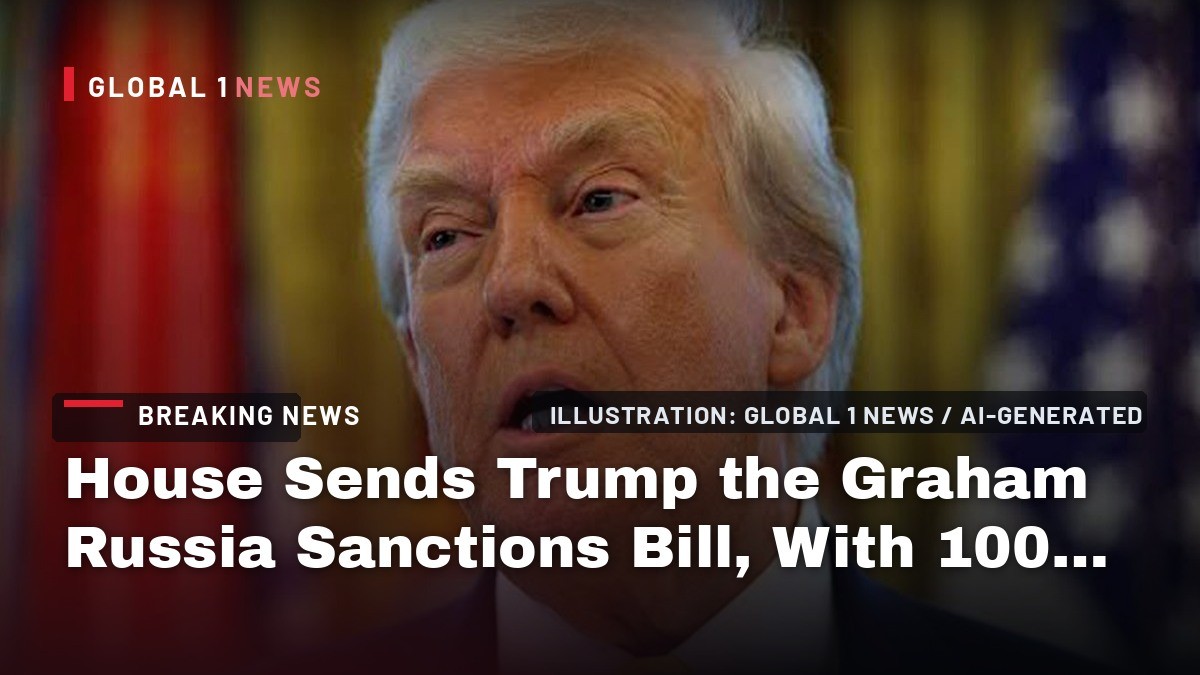
Folks, the House of Representatives just handed President Donald Trump the most sweeping Russia sanctions package to reach his desk since he returned to the White House. The bill carries Lindsey Graham's name, and it carries a threat aimed squarely at the countries still buying Vladimir Putin's oil. Here is what matters: it passed, it is not law yet, and no tariff has been imposed on anyone.
House Sends Trump the Graham Russia Sanctions Bill, With 100 Percent Tariffs Hanging Over Putin's Oil Buyers
Washington, D.C. - September 17, 2026 - The Lindsey O. Graham Sanctioning Russia and Iran Act of 2026 cleared the House on Wednesday by a vote of 262 to 159. It now goes to President Trump for his signature.
The Vote
The House passed the bill on Wednesday, 16 September 2026, 262 votes to 159. The Senate had already passed the same measure 86 to 11 on 7 August 2026. It now goes to President Donald Trump for his signature. It runs 61 pages.
The procedural path was not smooth. The House Rules Committee removed a key procedural hurdle on Monday, 14 September, allowing the bill to be brought to a vote. On Tuesday the House voted 214 to 211 to set up the final Wednesday vote, with two Democratic lawmakers unexpectedly crossing the aisle to vote with the Republican majority.
Only a week earlier, the bill's fate was considered uncertain, amid divisions in both parties over handing Trump greater tariff authority ahead of the November midterm elections. It is the most significant congressional action in support of Ukraine since Trump returned to the White House.
Speaker Mike Johnson told reporters on Monday: "I have always been in favor of the Russia sanctions bill. But we had to build a consensus around it, and I think we have it."
What the Bill Actually Does
The legislation imposes primary and secondary sanctions on Russia and on actors supporting Russia's war in Ukraine. It targets Russian officials, oligarchs, their family members, foreign persons, Russian banks and financial institutions, and Russia's "shadow fleet" of tankers and shell corporations used to move oil despite existing sanctions.
It directs the president to impose tariffs of up to 100 per cent on the top five importers of Russian oil or natural gas, replacing the blanket 500 per cent tariff in the 2025 version of the measure. It also lets the president waive sanctions in the national interest.
Speaker Mike Johnson, in a separate statement: "For too long, Putin has bankrolled this devastating war with money and resources from countries willing to look the other way, and today, that ends."
Senator Richard Blumenthal of Connecticut, who wrote the bill with Graham: "To Vladimir Putin - we have your number. And to Ukraine - you are not alone." Blumenthal said he hopes the sanctions will help force Putin to the negotiating table and end the war.
Senator Jeanne Shaheen, who played a major role backing the bill: "Today is a big day. Congress has just sent an unmistakable message to Putin."
The 100 Percent Tariff, and the 15 Percent Door
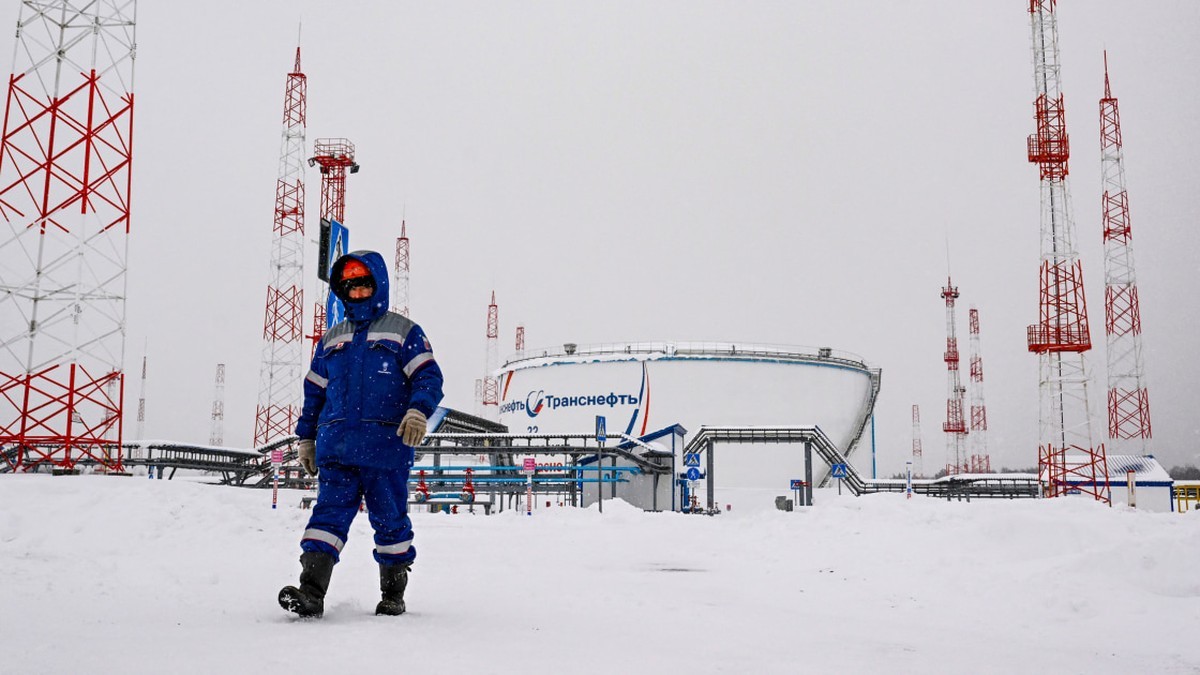
Here is the mechanics, and they matter more than the headlines. The targets are the top five countries by total volume of Russian-origin crude oil or natural gas imports in the 12 months preceding enactment of the law. They also include countries that have knowingly made new purchases of Russian crude oil after 30 days from the date the bill becomes law. A country among the top five "facilitating Russian oil sanctions evasion" is eligible too.
There is an exemption. Countries whose Russian natural gas import was less than 15 per cent of Russia's total gas exports, and that have taken significant steps to reduce those imports, are shielded.
Read this next part carefully. The bill does not itself impose a 100 per cent tariff. It grants the executive branch discretionary authority to levy such tariffs under defined statutory conditions if Trump invokes it.
The non-partisan Center for Strategic and International Studies, quoted by NBC News, called the provision "the act's most consequential new authority," describing it as "a more measured instrument" than the 2025 version. The Atlantic Council said the bill would "authorize the Trump administration to impose tariffs of up to 100 percent on Chinese imports on national security grounds if China continues purchasing Russian oil."
Who Is Actually in the Crosshairs
India and China rank among the foremost purchasers of Russian crude, and supporters explicitly identified both as principal targets of the tariff clauses. Hindustan Times names the likely targets as India, China, Slovakia, Hungary and Azerbaijan. No country has been legally designated, and no tariff has been imposed.
The Centre for Research on Energy and Clean Air, cited by the BBC, found that between December 2022 and August 2026, China accounted for half of Russia's crude exports, India 37 per cent, Turkey 5 per cent and the EU 5 per cent.
The Global Trade Research Initiative, a Delhi-based think tank, reported that Russia supplied 30.3 per cent of India's crude, worth $40.8bn out of a total of $134.7bn. In July, Russian crude accounted for more than half of India's imports.
The tariff would hit India through Indian exports to America, not as a tax on Russian crude entering India. The impact would be felt through Indian exporters, the rupee, refinery margins and the trade balance. Earlier rounds of Trump tariffs on Indian goods peaked at 50 per cent in 2025 before being reduced.
India's Ministry of External Affairs spokesperson Randhir Jaiswal said at a press briefing in Delhi: "I want to reiterate once again that as far as energy sourcing is concerned by India, that is based on our national interest."
Ajay Srivastava, a former Indian trade official who runs GTRI, called the bill "a blunt and dangerous attempt to pressurise India to sign the bilateral trade agreement on one-sided terms," adding: "India buys Russian oil to secure affordable energy for 1.4 billion people, not to finance war."
A Bill With Graham's Name On It
Lindsey Graham, Republican of South Carolina, died on 11 July 2026 at his home in Washington, aged 71. His office said preliminary findings pointed to an aortic dissection. The District of Columbia medical examiner attributed the death to an aortic dissection caused by arteriosclerotic cardiovascular disease.
He had just returned from a NATO summit in Turkey, where he celebrated his birthday, and a visit to Ukraine, where he met President Volodymyr Zelensky in Kyiv. Trump called Graham a "true American Patriot," and the White House flag was lowered to half-staff.
Graham spent more than a year negotiating the sanctions package, and essentially a full year bringing Trump on board. He finalised an agreement with the White House before his death, paving the way for Senate passage.
His sister, Darline Graham, Republican of South Carolina, now holds his Senate seat and introduced the bill, S.5025, on 21 July 2026. Cosponsors included Richard Blumenthal, Democrat of Connecticut, Ted Budd, Republican of North Carolina, and Kevin Cramer, Republican of North Dakota, along with 56 Senate colleagues. Over 60 senators from both parties supported it. Graham's death narrowed the Republican Party's Senate majority to 52 to 47.
Two Years of Gridlock, Eight Days of Motion
A version of the bipartisan bill had been stalled by the Trump administration for over a year. US Ambassador Sergio Gor said last month that Trump's support for the bill had been "muted" even as legislators sought to give the president expanded tariff authority. Recent reports in US media indicate the White House may have played a key role in pushing the bill by inducing Democratic lawmakers to vote for it.
Senator Kevin Cramer of North Dakota: "Vladimir Putin and the Iranian regime have spent decades testing the resolve of the free world, and too many times the free world has come up short in those tests - but not today."
Not everyone is celebrating. Representative Don Beyer of Virginia: "Yes they will be able to say 'we stood with Ukraine' in the immediate aftermath. But when Donald Trump hits our allies with new tariffs and waives sanctions on Russia, the propaganda victory for Putin will be lasting, and the damage will be embedded in U.S. law."
Representative Gregory Meeks of New York, ranking member of the House Foreign Affairs Committee: "We cannot grant the President more tariff power that, we know, he will abuse." Meeks said the tariffs would cost at least $3,000 per American family, assuming Trump restricted them to the top five importers of Russian oil. He argued the president already had the power to sanction Russia and was not using it.
Representative Steny Hoyer of Maryland: "If we fail to pass this bill, there will be cheers in the Kremlin and tears in Kyiv." Senate opponents included Elizabeth Warren, Bernie Sanders and Republican Rand Paul, concerned about the sweeping powers it gives the president.
Iran Rides Along
Trump gave his nod to the bill after it incorporated his push for a five-year extension of existing sanctions on Iran. The legislation extends the Iran Sanctions Act of 1996 and strengthens sanctions on entities investing in Iran's energy sector.
The package is formally the "Sanctioning Russia and Iran Act," uniting penalties against Putin and Iran, "whose malign cooperation enables Russia's war in Ukraine," according to a press release from Cramer's Senate office. The Iran extension was the price of White House support, and it is now fused to the Russia provisions in a single 61-page bill on the president's desk.
The Truce That Lasted Two Days
Trump said on Monday, 14 September, that Ukraine and Russia had agreed not to hit each other's energy targets. Neither side has confirmed such an agreement. The Kyiv Independent reported that day: "Trump claims Ukraine, Russia agree to halt strikes on energy targets, Kyiv unaware of deal."
Trump on 13 September told Zelensky to stop targeting Russian diesel infrastructure, saying the attacks were causing a shortage that is "hurting the world." Diesel prices in the US soared to a record $6.23 per gallon over the weekend.
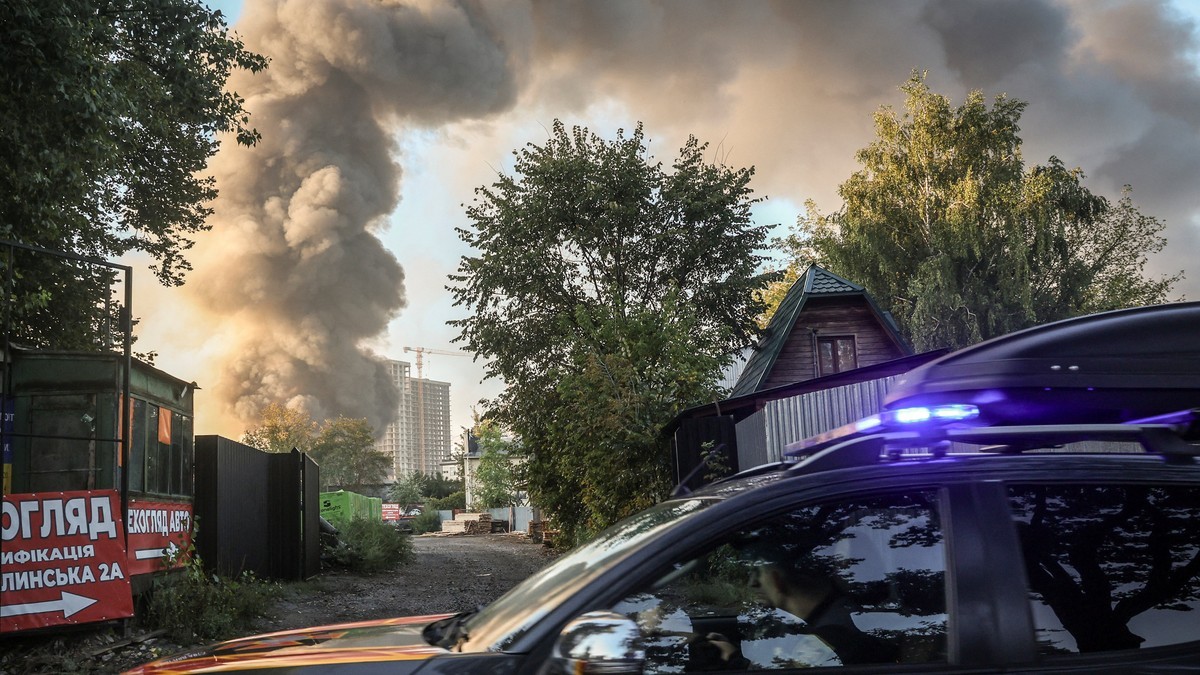
Then came the night of 16 to 17 September, the night after the House vote. Russia struck Kyiv, Odesa and Zaporizhzhia. At least 18 people were injured, including 12 in Kyiv, among them two children, according to Kyiv Mayor Vitali Klitschko. Damage was reported to residential buildings, warehouses and facilities near gas stations. Russia's Defence Ministry said it struck metallurgical and radioelectronic industry enterprises, the military-industrial complex, and energy and transport infrastructure in the three regions, as well as naval vessels.
In the same overnight window, Ukrainian drones struck the Slavneft-Yanos oil refinery in Yaroslavl, about 250 km north-east of Moscow, and a military airfield in Rostov-on-Don. Fires broke out at both sites. The extent of the damage at Yaroslavl was not immediately clear. The plant is owned by Slavneft, which is jointly controlled by Rosneft and Gazprom Neft.
Zelenskyy said the Yaroslavl strike was a joint operation by Ukraine's security service, its military intelligence agency and the Unmanned Systems Forces. Ukrainian strikes on Russian energy facilities have produced a summer of fuel shortages inside Russia, forcing export restrictions and adding to shortages of gasoline, diesel and jet fuel on world markets. Ukraine says refineries are legitimate military targets.
Zelenskyy, in a social media post ahead of the vote: "During the war, it is sometimes better to make a not-so-perfect decision than to do nothing."
What Moscow Says
The Kremlin's public comments this week were about the energy truce, not the sanctions bill, and they were made on 15 September, before the House vote. Kremlin spokesman Dmitry Peskov called Trump's suggestion a "very good idea," but said it would take more than that to bring down global fuel prices.
"It is necessary to ensure safe commercial shipping and navigation here, including for oil tankers. The Kyiv regime has so far shown no inclination to guarantee such security," Peskov said. "And the second thing that needs to be done is, of course, to lift sanctions against Russia and these unlawful restrictions on energy supplies. Only then will the world be adequately supplied with these petroleum products, global markets will stabilise, and prices will move lower."
Peskov said Russia would stay in touch with the Americans about Trump's proposal. On the sanctions bill itself, Moscow has said nothing on the record.
What Comes Next
The bill is on Trump's desk. He has not signed it. Until he does, none of this is law, and no tariff exists.
If he signs, the clock starts. The tariff targets are calculated on the 12 months preceding enactment. The 30-day window for new purchases kicks in. The 15 per cent gas exemption gets tested against real import data. And the waiver authority sits in the president's hands the entire time.
Michael Kugelman, senior fellow at the Atlantic Council, told the BBC the bill "could have major problematic impacts for India, and at the worst possible time, amid sensitive final-stage trade talks and shaky broader relations."
Critics said the tariff provisions could let Trump target allies in the European Union and elsewhere, and that Americans would pay through higher prices at the cash register. Supporters say the pressure is the point. Watch the signature, then watch the first designation - that is when the threat becomes real for the countries still buying Putin's oil.
By Jessica Ali, Staff Writer
This article was produced with AI-assisted research and editorial support. Sources: AP, Reuters, BBC News, The Hindu, Hindustan Times, NBC News, Kyiv Independent, Ukrainska Pravda, Ukrinform, Cramer for Senate.
What's Your Reaction?
 Like
0
Like
0
 Dislike
0
Dislike
0
 Love
0
Love
0
 Funny
0
Funny
0
 Wow
0
Wow
0
 Sad
0
Sad
0
 Angry
0
Angry
0

Editor-in-Chief at Global1.News. Atlanta-based journalist who cuts through the BS and tells it like it is. Lead anchor, host, and the voice you hear when the spin stops and the truth starts.










Comments (0)