
Many Nepalis swept away in the floods aren't officially dead, leaving families in limbo
When the flood that surged across the China‑Nepal border last month engulfed villages along the Bagmati River, the physical devastation was evident: homes reduced to mud, schools collapsed, and roads to the district of Rasuwa cut off for days.
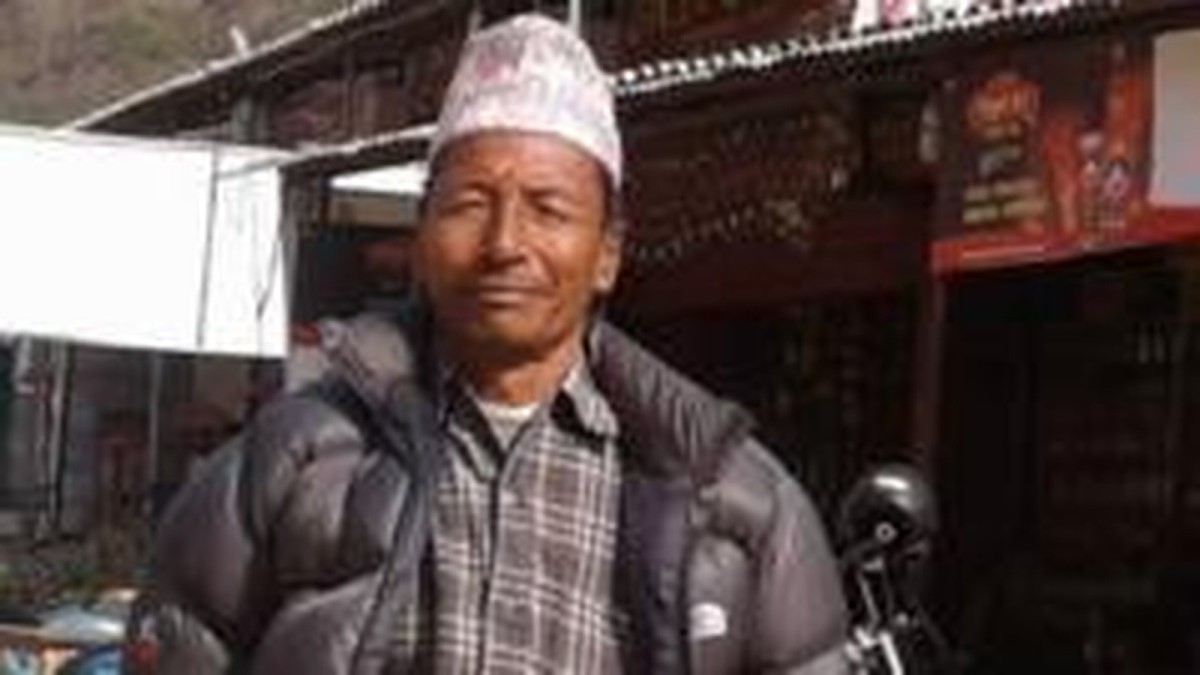
When the flood that surged across the China‑Nepal border last month engulfed villages along the Bagmati River, the physical devastation was evident: homes reduced to mud, schools collapsed, and roads to the district of Rasuwa cut off for days. Yet the lingering trauma for families like that of Madan Lal Lawat in Betrawati lies not only in the loss of loved ones but in a legal limbo that prevents them from accessing compensation, inheriting property, or even confirming death. The situation exposes a gap between Nepal’s outdated civil code and the realities of climate‑driven disasters, a gap that is now testing the resilience of a nation already strained by reconstruction costs.
Human loss and the ritual of symbolic mourning
At Kathmandu’s Pashupatinath temple, a crowd gathered beside the Bagmati River to honour relatives swept away by the flood. Because many bodies remain unrecovered, Hindu tradition dictates the creation of an effigy from sacred kusha grass, allowing families to perform last rites despite the absence of a corpse. For Lawat, whose brother Mangal disappeared while warning neighbours, the ritual offers a semblance of closure, but it cannot replace the legal certainty a death certificate provides.
Lawat survived because he was driving his bus outside his village when the waters struck. Five of his relatives, including his brother, were caught in the surge and remain missing. With more than 5,000 people still unaccounted for, the government has already ended rescue operations, leaving families to navigate grief and bureaucracy simultaneously.
The legal definition of death in Nepal
Nepal’s Civil Code, specifically Section 40, presumes a person dead only after twelve years of disappearance. The law includes limited exceptions, yet none address sudden, large‑scale disasters such as the recent flood. Constitutional law expert Bipin Adhikari notes that the code was originally designed for cases where individuals abroad lose contact for years, not for rapid, climate‑related catastrophes where communication technology is readily available.
Consequently, families cannot obtain death certificates without a formal declaration of death, a prerequisite for any state‑provided assistance. Lawat’s attempt to secure a certificate at his local municipality was rebuffed, with officials citing ongoing internal discussions. The result is an administrative nightmare that stalls the distribution of even modest compensation.
Compensation scheme and its constraints
The government’s disaster relief package includes up to 25,000 rupees for funeral costs, a bereavement payment of roughly 200,000 rupees for the first death in a family, and an additional 100,000 rupees for each subsequent death. However, these sums are contingent on the presentation of an official death certificate. Without it, families remain ineligible, despite the urgency of rebuilding homes and livelihoods.
Even when bodies are recovered, identification is slow. Over 1,400 bodies have been retrieved, but Nepal lacks the capacity for large‑scale DNA processing. In some instances, authorities have taken DNA samples and buried the remains with markers, awaiting family claims. This procedural lag further delays compensation and prolongs uncertainty for survivors.
Scale of material damage and economic pressure
Assessments indicate that 7,570 private buildings were damaged or destroyed, affecting nearly 33,000 residents based on census data. The Bidur municipality, which includes Betrawati, reports more than 3,000 damaged or destroyed structures—the highest count among Nepal’s local governments. The national estimate for damage to personal belongings alone stands at £123 million, translating to an average loss of about £14,800 per household, though this figure is derived from modelling rather than precise household surveys.
Reconstruction costs are projected to reach up to £3.6 billion, representing more than ten percent of Nepal’s gross domestic product. Prime Minister Balen Shah has highlighted the enormity of this burden, urging the international community to provide grant‑based assistance rather than additional loans. The country’s low greenhouse‑gas emissions contrast sharply with its high vulnerability to climate‑induced disasters, a disparity that underpins Shah’s plea for climate‑justice financing.
Local government response and calls for reform
Bidur’s mayor, Rajan Shrestha, has pressed the prime minister’s office to resolve the death‑certificate impasse, warning that families could wait up to twelve years before accessing any relief. “Everything is on hold,” Shrestha told the BBC, underscoring how legal rigidity stalls recovery efforts. He emphasised that officials must operate within legal boundaries to avoid future liabilities, yet also acknowledged the urgent need for legislative adaptation.
The home ministry has signalled readiness to amend the law if required, and the prime minister’s office described itself as “aware of the difficulties” families face in “exceptional circumstances, including disasters.” However, concrete timelines or specific amendment proposals have not been disclosed, leaving local authorities and affected families in a state of anticipation.
Broader implications for disaster policy in South Asia
Nepal’s predicament illustrates a broader challenge for South Asian nations confronting increasingly frequent climate‑driven floods. Legal frameworks that were drafted in an era of slower communication now clash with the rapidity of modern disasters. The inability to swiftly certify death not only hampers financial aid but also impedes inheritance processes, property transfers, and social stability.
Experts suggest that revising civil codes to incorporate disaster‑specific provisions could streamline relief distribution. Such reforms would need to balance the risk of premature death declarations against the humanitarian imperative of timely assistance. Nepal’s experience may serve as a case study for regional policymakers seeking to align legal structures with climate resilience strategies.
Path forward for the families and the nation
For Lawat and thousands of other families, the immediate priority is to secure death certificates so that compensation can be claimed and rebuilding can commence. The procedural bottleneck at municipal offices highlights the need for clear, disaster‑responsive guidelines that can be activated swiftly after a catastrophe.
At the national level, the government must translate its expressed willingness to amend the law into actionable legislation. Simultaneously, it should invest in forensic capacity—particularly DNA analysis—to expedite identification of recovered bodies. Internationally, Nepal’s appeal for grant‑based support underscores the necessity of climate finance mechanisms that address both reconstruction and the legal‑administrative gaps exposed by such events.
Until these reforms materialise, families like the Lawats will continue to navigate a painful limbo, honouring the dead through symbolic rites while waiting for the state to recognise their loss on paper. The resolution of this legal deadlock will be a crucial test of Nepal’s ability to adapt its institutions to the realities of a warming world.
This article was produced with AI-assisted research and editorial support. Reporting is based on the source material cited below. Sources: BBC News Asia; bbc.co.uk; Global1.News (07 October 2026).
By Kenji Tanaka, Staff Writer
What's Your Reaction?
 Like
0
Like
0
 Dislike
0
Dislike
0
 Love
0
Love
0
 Funny
0
Funny
0
 Wow
0
Wow
0
 Sad
0
Sad
0
 Angry
0
Angry
0

Japan Correspondent at Global1.News. Tokyo-based voice covering Japanese politics, technology, economy, and culture. Tracks the intersection of tradition and innovation in one of the world's most dynamic societies.












Comments (0)