
From sombre to comic, the infinite range of Anant Nag
Veteran Kannada actor Anant Nag, who was honoured with the Dadasaheb Phalke Award this week, responded to the momentous announcement with a calm that reflected decades of stage and screen experience.
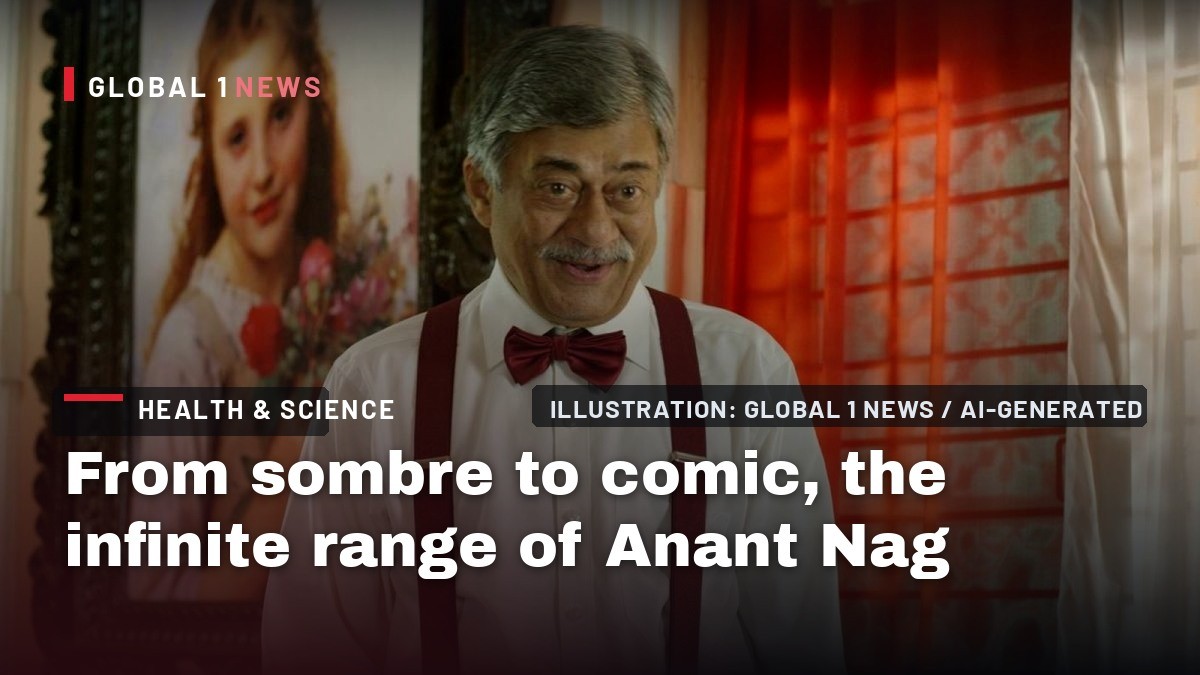
Veteran Kannada actor Anant Nag, who was honoured with the Dadasaheb Phalke Award this week, responded to the momentous announcement with a calm that reflected decades of stage and screen experience. When asked how he felt, the 78‑year‑old thespian said he “felt normal, was breathing, was alive”, adding that nothing else was happening inside his head. The measured reply, delivered in the same matter‑of‑fact tone that characterised his earlier reaction to the Padma Bhushan, underscored a career built on steady professionalism rather than flamboyant self‑promotion.
From theatre boards to the nation’s highest cinematic honour
Anant Nag’s journey began on the boards of regional theatre, where he performed in more than fifty plays across multiple languages. This multilingual foundation honed his diction, pronunciation and an ability to inhabit diverse cultural contexts—skills that later distinguished him in Kannada cinema. After a successful theatre stint, he transitioned to film, initially drawing on the socially‑conscious Hindi cinema of Shyam Benegal and M.S. Sathyu. Benegal, who cast Nag in Ankur, Nishanth and Manthan, praised his capacity to convey complex emotions with “realistic elegance”. Such early exposure to parallel cinema equipped Nag with a subtle acting style that mainstream Kannada directors later described as the “Bengali style of acting”.
Over a career spanning more than fifty years, Nag’s adaptability allowed him to move effortlessly across genres—from the lyrical drama of Hamsageethe to the comic timing of the Ganesha series. Directors such as Duniya Suri have lauded his “impeccable range”, noting that his performance in the noir crime drama Kadipuddi demonstrated a seamless blend of gravitas and nuance. This versatility contributed to his historic recognition as the second Kannada actor, after the legendary Dr Rajkumar, to receive the Dadasaheb Phalke Award, the country’s highest honour in cinema.
Political forays and cultural advocacy
Beyond the silver screen, Anant Nag ventured into public service, reflecting a tradition of artists entering Karnataka’s political arena. He first served as a Member of the Legislative Council (MLC) before being elected as a Member of the Legislative Assembly (MLA). In the J.H. Patel cabinet, Nag held the portfolio of Bangalore Development Minister, where he was involved in urban planning and infrastructure initiatives. His political stint, though brief compared to his artistic career, underscored a commitment to civic engagement and highlighted the porous boundaries between cultural influence and policy‑making in the state.
His advocacy for the Kannada language has been a constant thread. Colleagues such as Yogaraj Bhat, who worked with Nag on the iconic Mungaru Male (2006), describe him as an “ambassador of the Kannada language”. Nag’s deep respect for linguistic heritage is evident in his meticulous dialogue delivery, a skill honed during his theatre days when memorising lengthy soliloquies was routine. This linguistic fidelity has helped preserve and popularise Kannada culture, especially as the state navigates the pressures of globalization and the push for multilingual education.
Collaborations that reshaped Kannada cinema
Throughout his career, Nag has partnered with filmmakers who pushed the boundaries of mainstream storytelling. His work with his late brother Shankar Nag on films such as Accident and Minchina Ota illustrated a willingness to experiment, even when the projects were commercial risks. The brotherly duo’s willingness to venture into unconventional narratives laid groundwork for later experimental cinema in Karnataka.
Later collaborations with new‑generation directors cemented Nag’s relevance to younger audiences. Director K.M. Chaitanya, who called Nag “the scientist of acting” during their work on the thriller Aatagara (2015), highlighted how Nag’s seemingly effortless performances were underpinned by meticulous craft. In Godhi Banna Sadharana Mykattu (2016), Nag portrayed an elderly man grappling with Alzheimer’s, delivering a performance that critics have called one of his finest. Filmmakers such as Hemanth Rao note that Nag can translate a complex literary character into a vivid on‑screen presence, reinforcing his status as a bridge between classic literature and contemporary cinema.
Comic timing as disciplined craft
Although often remembered for his subtle, serious roles, Nag’s comic talent has been equally celebrated. In the Ganesha series directed by Phani Ramachandra, his effortless humour stemmed from disciplined practice. He explained to The Hindu that delivering a funny line requires a “careful balance between rushing through it and slowing it down”, emphasizing the importance of timing and word choice. This analytical approach to comedy mirrors his broader acting philosophy: every line, whether in a tragedy or a farce, must be calibrated for impact.
The actor’s monologue in Rishab Shetty’s Sarkari Hiriya Prathamika Shaale Kasargodu (2019), delivered in a single take, exemplifies this precision. The scene, in which Nag’s character champions the cause of government schools, combined political relevance with theatrical flair, resonating with audiences amid ongoing debates about public education funding in Karnataka.
National reach through television
For viewers outside the Kannada film circuit, Anant Nag’s most enduring legacy may be his role in the beloved television series Malgudi Days. Directed by his brother Shankar and based on R.K. Narayan’s short stories, the series introduced Nag to a pan‑Indian audience, showcasing his ability to convey everyday Indian sensibilities. The show’s national broadcast helped bridge regional cinema with the broader Indian cultural imagination, reinforcing the actor’s status as a versatile storyteller capable of transcending linguistic barriers.
This exposure also contributed to a broader appreciation of regional narratives in the national media landscape, aligning with recent policy initiatives that encourage the production of regional language content for all‑India platforms. Nag’s participation in Malgudi Days thus intersected with a larger movement toward linguistic diversity in Indian television programming.
Legacy and future relevance
Anant Nag’s career reflects a confluence of artistic integrity, linguistic advocacy, and civic responsibility. His receipt of the Padma Bhushan earlier this year, followed by the Dadasaheb Phalke Award, signals institutional recognition of a body of work that has consistently championed Kannada culture while embracing national narratives. As the Indian film industry increasingly integrates digital distribution and multilingual streaming, Nag’s model of linguistic fidelity combined with adaptive performance offers a template for regional actors seeking broader platforms.
Looking ahead, the actor’s influence is likely to persist through the many protégés he has inspired. Directors such as Rishab Shetty and K.M. Chaitanya, who have worked with Nag on socially resonant projects, continue to shape Karnataka’s cinematic landscape. Moreover, his political stint underscores the potential for cultural figures to inform policy, especially in areas like education and language preservation. In an era where Indian cinema is negotiating global streaming markets and domestic linguistic diversity, Anant Nag’s career stands as a testament to the power of grounded, versatile artistry.
This article was produced with AI-assisted research and editorial support. Reporting is based on the source material cited below. Sources: The Hindu; thehindu.com; Global1.News (17 September 2026).
By Dr. Raj Patel, Staff Writer
What's Your Reaction?
 Like
0
Like
0
 Dislike
0
Dislike
0
 Love
0
Love
0
 Funny
0
Funny
0
 Wow
0
Wow
0
 Sad
0
Sad
0
 Angry
0
Angry
0
India/South Asia Correspondent at Global1.News. Analytical voice with a background in science and health journalism. Based in New Delhi, covering Indian politics, education, healthcare, technology, and policy. Breaks down complex data into clear, actionable reporting.













Comments (0)